Oweynagat Cave and the Irish Origins of Samhain and Halloween

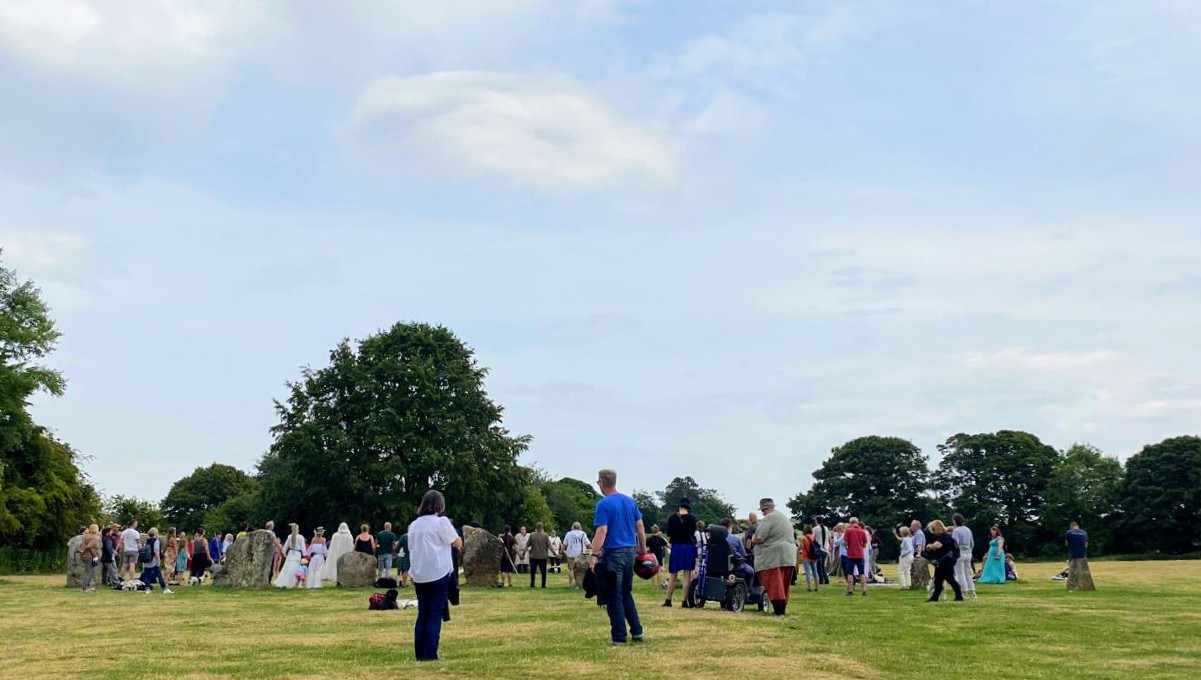
(Neopagans in Ireland celebrating Samhain. Image Credit: Unknown author, CC BY-SA 4.0, via Wikimedia Commons)

Tucked away in the beautiful scenic landscape of County Roscommon, Ireland, lies a mysterious and legendary cave known as “Oweynagat” (pronounced “Oen-na-gat”), also known as ‘Cave of the Cats’. This ancient cave is believed to be the mythical entrance to the Otherworld, Ireland’s Gate to Hell, a supernatural realm in Irish mythology. Oweynagat is one of the most important places linked to the ancient Celtic festival of “Samhain”, the forerunner to the modern Halloween. Steeped in lore and shrouded in mystery, Oweynagat is a powerful symbol of Ireland’s ancient spiritual heritage and the very origins of Halloween.

The Mythology of Oweynagat

Oweynagat is part of Rathcroghan, a major archaeological complex that served as a royal site for the ancient Irish kingdom of Connacht. This area comprises over 250 archaeological features; it is an area surrounded by many ancient sites, monuments, holy wells and standing stones. Rathcroghan is deeply linked to Queen Medb, a famous warrior queen in Irish mythology, and features heavily in stories of the “Ulster Cycle”, one of the four great story cycles of Irish mythology.

(An ogham stone which forms the lintel of Oweynagat Cave. Image Credit: Cathalpeelo, CC BY-SA 4.0, via Wikimed)

Oweynagat is often described in these tales as the “gateway to the Otherworld.” Irish mythology describes the cave as a place where powerful forces of the supernatural were said to reside. During Samhain, it was believed that the veil between the human world and the Otherworld was at its thinnest, allowing spirits, fairies, and other entities to pass through more easily. The cave itself was seen as a physical gateway through which supernatural beings could enter the mortal realm, making it a focal point for rituals and lore featuring Samhain.

One of the most famous legends associated with Oweynagat in relation to Samhain is known as ‘The Adventures of Nera”. One Samhain night, Ailill and Medb, ancient rulers of Rathcroghan, dared anyone to tie a rope around the foot of a captive hanging on a nearby gallows. They promised a reward to anyone who succeeded. Nera, a brave warrior, accepted this challenge. Decked out in his armour, he approached the captive and managed to tie the rope, only for the captive to come to life, asking Nera for a drink as a last request.

Nera agreed and carried the captive on his back to find water. As they passed three houses, each were marked by strange omens such as a lake of fire surrounding one, the captive finally drank from a slop bucket in one of the homes. In a final act of revenge, he spat his last sip on the faces of the house’s occupants, who died instantly. Returning the captive to his execution site, Nera then witnessed a horrifying vision of his home in flames and his people slain by an otherworldly army. When he followed this mysterious army into the underworld of Oweynagat, he found himself before a faery king.

(Underworld Army. Image Credit: Bing AI)

The faery king ordered Nera to bring wood daily to a house within the faery mound, where Nera met and married a faery woman. She shared many of the secrets of the faery world, warning him that his vision of his people’s demise could come true if he didn’t alert them. When Nera finally returned, only moments had passed in the human world despite his long stay in the faery mound.

Ailill and Medb, taking Nera’s warning seriously, prepared to attack the faery mound the next Samhain. Nera returned to his faery wife, who revealed she was pregnant with his child and encouraged him to escape with his family from the faery realm before the attack. He agreed and watched as the men of Connacht destroyed the faery mound, retrieving the powerful Crown of Briun, one of Ireland’s three great treasures.

Nera, however, remained forever tied to the faery world, never to be seen again in the mortal realm. The tale ends with his fate sealed, waiting in the faery mound until the end of time. The cave has since been claimed to be the birthplace of Halloween due to this story being set at Samhain.
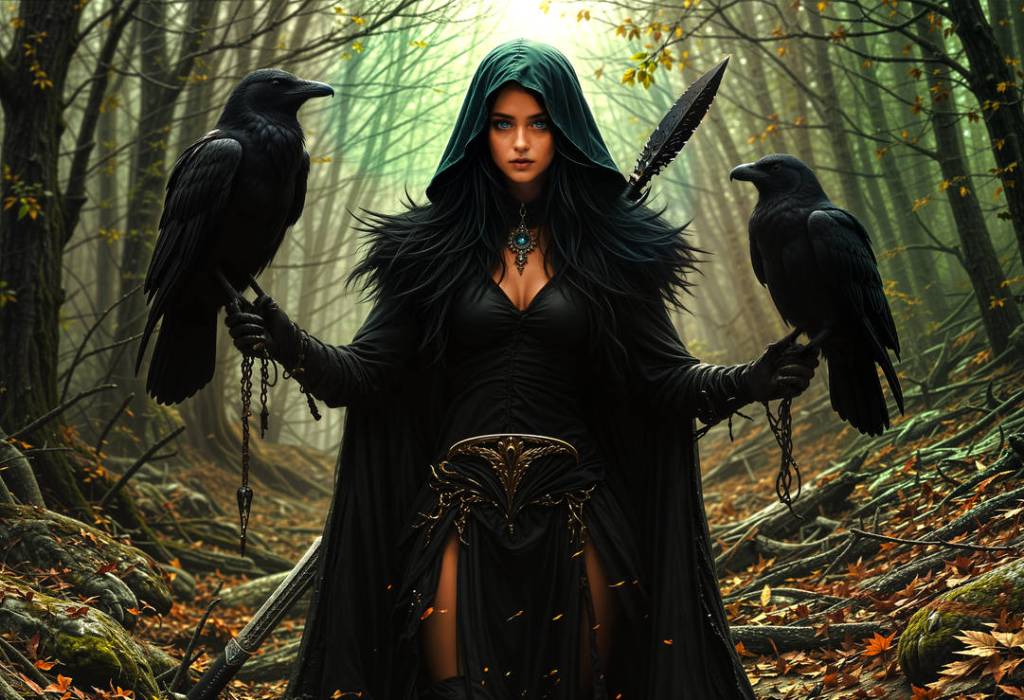
(The Morrigan. Image Credit: Nabilsai, 2024)

Another legend relating to the cave at Oweynagat is that it is the home of the Morrígan, a Celtic war goddess who, according to tradition, emerges from the cave each Samhain to bring chaos to the land.  Ailill and Medb’s cats, who were supposed to roam out of Oweynagat on Samhain, are among the other mythological animals connected to the cave. They represent the chaos and the forces of nature that were thought to be let loose on this night.

Samhain: The Roots of Halloween

Samhain celebrations have a long history that predates written records. Samhain heralded the start of the dark of winter and the conclusion of the harvest season for the Celts. It was thought to be observed between October 31st and November 1st, sunset to sunset. Due to it being a transitional period, there was thought to be little separation between this world and the Otherworld. The veil thinned, enabling communication between living people and supernatural entities.

According to legend, Oweynagat cave is thought to become a portal to the otherworld at this time of year, where faeries and mortals may enter each other’s respective worlds. According to folklorist and professor, Dorothy Bray, “Samhain was a time charged with great supernatural energy and ordinary natural laws were suspended. The idea of the otherworld developed into the idea of the afterlife, so Samhain became a time when the worlds of life and death meet, when the souls of the dead return and can be seen.”  


(Offerings to the spirits of the ancestors. Image Credit: ©E.Holohan 2024)

According to local archaeologist and historian, Daniel
Curley, “Monsters and manifestations would emerge, led by the goddess Morríghan,
to create a world ready for winter, including birds with foul breath that would
strip leaves from trees. Locals would stay indoors in fear of being dragged
into the other world when the ghouls had finished ravaging the land. If you had
to go outside you wore a costume and mask to look hideous. That way you would
be left alone and not dragged into the otherworld.”

Feasting, bonfires, and rituals honouring the ancestors were all part of Samhain. People made food and drink offerings outside their homes to calm any wandering spirits who were thought to be free to roam on this night. People sometimes wore frightening masks or costumes to either ward off or blend in with any supernatural creatures that had passed over into our world, and bonfires were lit to guide the way to lost spirits.

From Samhain to Halloween

Many ancient traditions were adapted and reinterpreted to conform to Christianity as it expanded over Ireland. On November 1st, the Church created All Saints’ Day, which is a day to commemorate saints and martyrs. The night before was called All Hallows’ Eve, which later transformed to “Halloween.”

Samhain rituals gave rise to modern Halloween traditions including trick-or-treating, pumpkin carving, and the wearing of spooky costumes. Wearing costumes to ward off any lost spirits gave rise to the Halloween custom of dressing up as monsters, ghosts, or other terrifying creatures. The modern custom of “trick-or-treating,” in which youngsters knock on doors looking for sweet treats, evolved from the habit of leaving out food offerings.

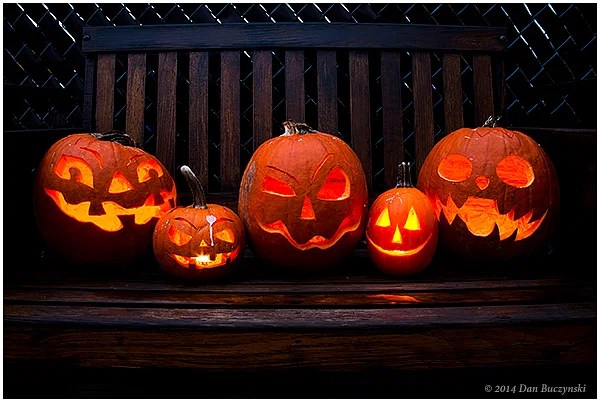
(Jack-O-Latern. Image Credit: Toby Ord, CC BY-SA 2.5, via Wikimedia Commons)

The jack-o’-lantern, another popular Halloween custom, has Irish origins too. In order to ward off evil spirits, people in Ireland used to carve swedes and place candles inside to make glowing lanterns. This custom was carried to America by Irish immigrants in the 19th century, and it eventually developed into the pumpkin lanterns we are accustomed to today

Oweynagat Cave Today

A trip to Oweynagat Cave provides a window into the past for those who are interested in learning more about the Irish origins of Halloween. Although the cave appears to be damp, murky and unassuming, it is simple to see why ancient humans sensed a power in its presence. Visitors may feel the weight of centuries’ worth of history, rituals and legend hanging in the air when they first enter Oweynagat cave.

Today, Halloween is mainly about entertaining costumes, sweets and light-hearted frights. However, Halloween’s origins lie much deeper; it has to do with ancestors, the cycles of nature, and myths surrounding the invisible realm. Oweynagat Cave is a mysterious reminder of the mythical beginnings of this well-known festival, as well as Ireland’s contributions to a festival now observed world over.

It is easy to imagine the ghosts of Rathcroghan’s ancient lands and possibly the cave’s mythical cats emerging from the depths of Oweynagat cave as Samhain draws near, serving as a powerful reminder that the real spirit of Halloween continues to reverberate throughout Ireland’s ancient landscapes.


Reference list

Whispers of the Ancient: An Autumn Expedition to the Enigmatic White Horse of Uffington, the Ridgeway, and Wayland’s Smithy

(White Horse of Uffington. Image Source: superdove CC BY-NC-SA)

As the days grow cooler and the nights draw in, and early winter rolls out over the land, please come with me on a journey back in time and an autumn ramble through the ancient landscape of Uffington in Oxfordshire. On this journey over chalk hills and across ancient trackways, I am joined by my husband and also by Emma, from Weird Wiltshire blog fame, who is accompanied by her furry sidekicks Bingo Jones the Jack Russell and Buddy Love the lurcher.

Our adventure begins at the National Trust car park below White Horse Hill, on an unusually warm autumn afternoon. We set off to make our way up towards the impressive equine chalk geoglyph, passing local wildlife including grazing sheep, and a tiny common lizard basking in the autumn sunlight.

(Common Lizard. Image Source: ©E.Blackshaw)

History of the White Horse

The Uffington White Horse is a 109 metre (360 foot) figure sprawling over the slope of the chalk Downs of Oxfordshire. The chalk outlines of this geoglyph were created by cutting into the turf and removing it to expose the gleaming white chalk below. This icon was designed to be seen from far away and can be seen from at least 15 miles away as it gallops and leaps across the Berkshire Downs.

This chalk figure is around 3,000 years old, and is one of the oldest hill figures in the country. It has been maintained over this long period by the local population through the process of ‘scouring’. This is where plants and grasses growing over the chalk outlines are cut away regularly to maintain their shape. This was often done around midsummer and would include a country fair, feasts, and festivals to mark the occasion. It sounds like it was a really lively local event.

(The approach to the White Horse. Image Source: ©E.Blackshaw)

The figure is a strange, stylized, and elongated horse which is reminiscent of ancient cave paintings of animals. This truly ancient white horse is also striking in its resemblance to the stylized figures of horses on Iron Age coins and metalwork. Soil samples taken from the lowest levels of the chalk date the Horse to the end of the Bronze Age or the start of the Iron Age, between 1200-800 BC.

Author GK Chesterton (1874-1936), who wrote ‘Ballad of the White Horse’ (1911), summed up the age of the ancient geoglyph perfectly:

Before the god that made the gods,

had seen their sunrise pass,

the White Horse of the White Horse Vale,

was cut out of the grass.

The White Horse sits in a landscape full of archaeology and ancient monuments, from Neolithic burials, through Bronze Age settlements, to later Iron Age defences. It is clear that this area and this chalk symbol have been a significant place for millennia.

Some say this ancient figure resembles a dragon more than a horse and this has resulted in myths and legends relating to dragons at nearby features which we will hear about further along on our journey.

Myths and Legends of the White Horse

There is still much debate as to the purpose of the Uffington White Horse. The location could have had a ritual or religious purpose as a possible Celtic shrine, connected to the worship of Epona the horse goddess, or may represent something else sacred.

In Europe and Asia, there is an ancient history of horses being associated with the sky and sun. The Sun Horse pulls the sun through the sky, either drawing it on the back of a chariot or pulling it directly. The horse pulls the sun through the underworld, leaving the world in darkness, before rising once more at dawn. Perhaps the White Horse is an ancient symbol of this sacred sun horse, leaping across the landscape, or a totem of an ancient horse cult.

It could also have had political significance as a meeting point between 3 great tribal kingdoms in the area. This may have served as a warning against trespass or to mark a meeting point for trade and diplomacy. Others have posited that the White Horse represents the battle standard of the Saxon ruler Alfred Hengist. Hengist is Old English for “stallion”.

(Weird White Horse and Foal. Image Source: Bing Image Creator)

Legend has it that the Uffington White Horse is a mare and that her foal was also etched into a nearby hill, which has now been lost to nature. It is said that at night the horse and foal come down to feed at the slope below known as the Manger. The mare and foal also drink at nearby Woolstone Wells, which are said to be formed from a hoofprint from the mythical horse.

Another local superstition describes how if you stand on the eye of the Uffington White Horse and turn around three times clockwise, eyes closed and while making a wish, you will have that wish come true. However, this is no longer advised due to damage that can be caused to the beautiful, ancient chalk figure.

Dragon Hill

From the brow of White Horse Hill, we can see a small flat-topped mound known as ‘Dragon Hill’. Local people maintained for centuries that the chalk hill figure was in fact a portrait of a dragon killed by St George on this hill. The blood of the slain dragon is reputed to have fallen onto the hill, poisoning the soil forever. A bare patch of ground on the top of the mound testifies to this corrupted, poisoned earth.

(Dragon Hill seen from near the White Horse. Image Source: ©E.Heard.)

There are also stories that King Arthur is not dead, but instead lies sleeping, and will one day awake when England is in grave danger. It is said that when King Arthur awakes, the Uffington horse will rise up and dance in delight on Dragon Hill.

Uffington Castle

As we climb to the brow of White Horse Hill, on our way towards the ancient trackway, we pass the earth ramparts and ditch of the former Iron Age hill fort known as Uffington Castle, which still looms protectively over the Vale of the White Horse. Past excavations have indicated that it was probably built in the 7th or 8th century BC and continued to be occupied throughout the Iron Age. Pottery found on the site suggests that the fort was used throughout the Iron Age and into the Roman era. This hillfort was a strategic location that commanded the Ridgeway, the prehistoric track that runs from Overton Hill to Ivinghoe Beacon. It is clear that whoever held the Ridgeway track would control the West of England, so much so that some people believe that Uffington was Mount Badon, where King Arthur is said to have defeated the Saxons. However, little is yet known about the use of Uffington Castle, and archaeologists are now looking at the possibility that it is less a defensive structure, but rather a spiritual centre.

The Ridgeway

(Walking the Ridgeway Image Source: ©E.Heard)

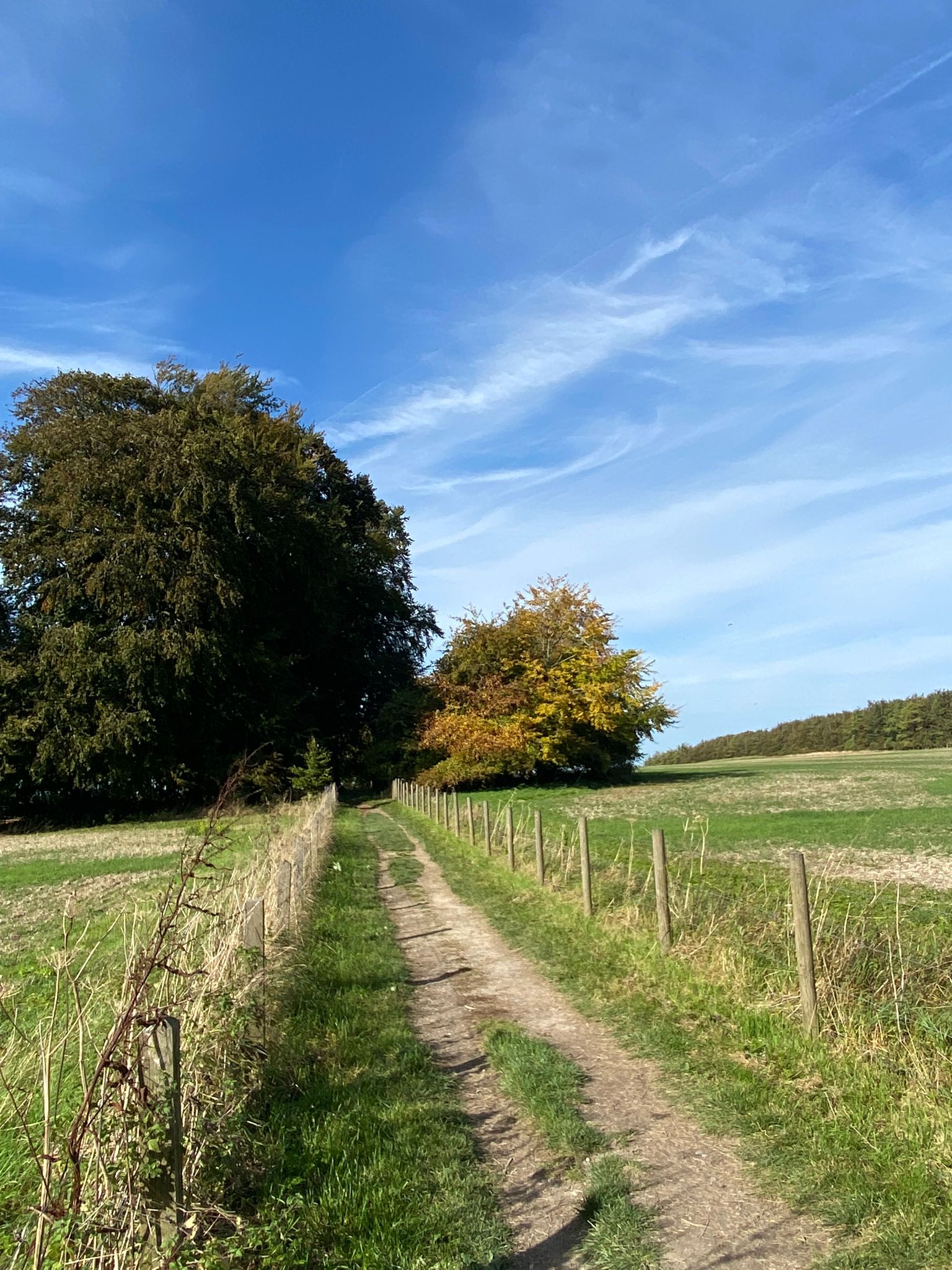
We pass over the top of the hill and through a gate to join the ancient pathway known as ‘The Ridgeway’. The Ridgeway, an ancient trackway, holds profound historical importance and deep cultural significance that spans millennia. As Britain’s oldest road, it traces its roots back to prehistoric times, serving as a vital route for trade, pilgrimage, and communication. This ancient route, which stretches for 87 miles across chalk hills, meanders through picturesque landscapes, connecting the River Thames to the Avebury stone circle and beyond. The Ridgeway has witnessed the footsteps of countless generations, from Neolithic settlers to Roman soldiers, medieval pilgrims, and modern-day ramblers. Its historical significance lies not only in its utilitarian function but also in its cultural role, reflecting the evolving human narratives of the region. Today the Ridgeway continues to beckon walkers and history enthusiasts alike, inviting them to traverse its timeless path and connect with the living tapestry of the past, to experience the ancient history embedded in the landscape of Oxfordshire and beyond.

(Devil’s Coach Horse Beetle. Image Source: ©E.Blackshaw)

Walking Westwards along the route, we pass leafy hedgerows brimming with ripe berries and encounter a devil’s coach horse beetle scuttling along the track, perhaps going about its namesake’s business.

Wayland’s Smithy

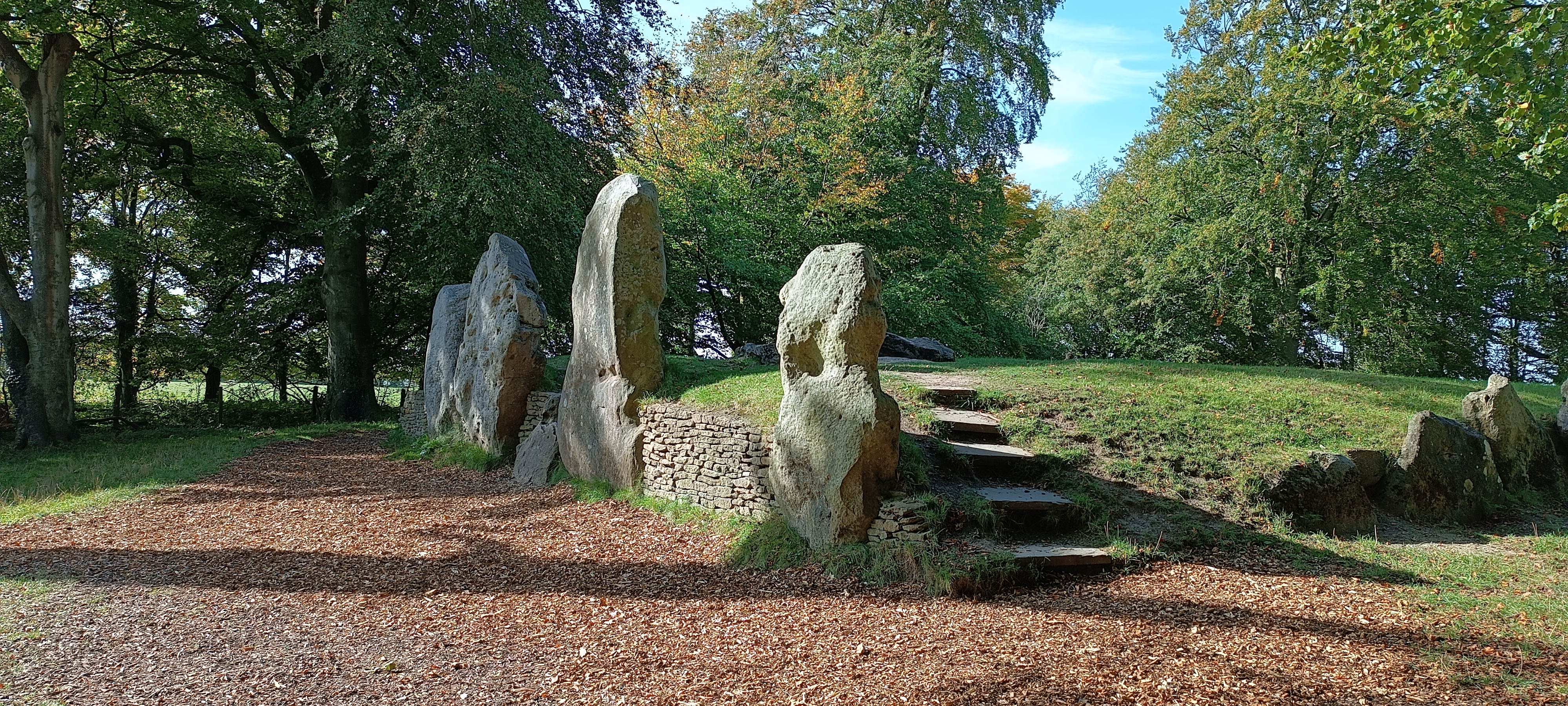
After following the Ridgeway for a mile and a half, we reach our ultimate destination, the remarkable long barrow of Wayland’s Smithy. Wayland’s Smithy is a mysterious Neolithic earth and stone structure once believed to be the home of a Saxon and Norse god of metalwork. Wayland the smith features in Germanic and Norse mythology and his legend may have been brought to England by Norsemen centuries after the long barrow was originally constructed.

(Wayland’s Smithy. Image Source: ©E.Blackshaw)

As legend has it, Wayland was captured by Swedish King Ndud, and was disfigured and tortured before being forced to work for him in the royal smithy. Wayland eventually escaped his enslavement by killing the king’s sons, and using their skulls as drinking bowls, before raping the king’s daughter and escaping using a flying cloak or metal wings that he created using his metalwork skills.

Wayland escaped to England and built himself a smithy at the isolated location where the long barrow stands. Feeling embarrassed of his disfigured appearance he was able to hide himself away from public view while carrying on his smithy trade. However, Wayland was eventually found by King Ndud’s men and was killed. He managed to take out eight of the Norsemen with his smithing hammer before he was overpowered and legend has it that the eight skeletons that were found in the excavations of the long barrow in 1919 were these men.

(Wayland Smith. Image Source: Bing Image Creator )

Despite this end, is said that the spirit of Wayland still resides at Wayland’s Smithy and he will shoe any traveller’s horse if the horse and a coin are left at the Smithy overnight. Even today, coins can be found left in the holes of the stones, more for luck now, than for shoeing horses.

Wayland Smithy is also associated with the nearby Uffington White Horse. It is said that once every hundred years the White Horse leaves its hill and gallops across the sky to be reshod by Wayland in his smithy. The Neolithic tomb could perhaps also be associated with the Sun Horse legend; the already 1000-year-old long barrow may have been reimagined by the people who carved the chalk geoglyph as a portal for the horse and sun to enter the Underworld.

(The entrance to the long barrow. Image Source: ©E.Heard)

We stop for a while at Wayland’s Smithy to soak in the calm, peaceful, almost otherworldly atmosphere of the location. This is one of my favourite places for peaceful reflection, and the fallen trees make an excellent spot to take tea and snacks, which we do. Importantly, before we leave, we place coins for luck and offering to Wayland on the stones. We then begin the long walk back up the gentle incline to the car park, stopping to forage some of the wild fruits and berries we find on the Ridgeway, in the hope of cooking up some delicious jams and jellies to remind us of our ramble.

On one of the last warm days of the year, before Autumn begins to bite, our ramble through the ancient landscape of the Vale of the White Horse, the Ridgeway, and Wayland’s Smithy leaves an indelible imprint on my memory. Surrounded by the mystical whispers of history, the air carries the essence of bygone eras, weaving tales of our ancient ancestors and their untold mysteries. The undulating hills and the enigmatic White Horse carved into the earth create a canvas of timeless beauty. As I stand amidst the ancient stones of Wayland’s Smithy, I feel a profound connection to the past. This autumnal adventure, with its awe-inspiring scenery and palpable sense of history, is a poignant reminder of the enduring allure of the past, forever etched in the landscape of Britain.

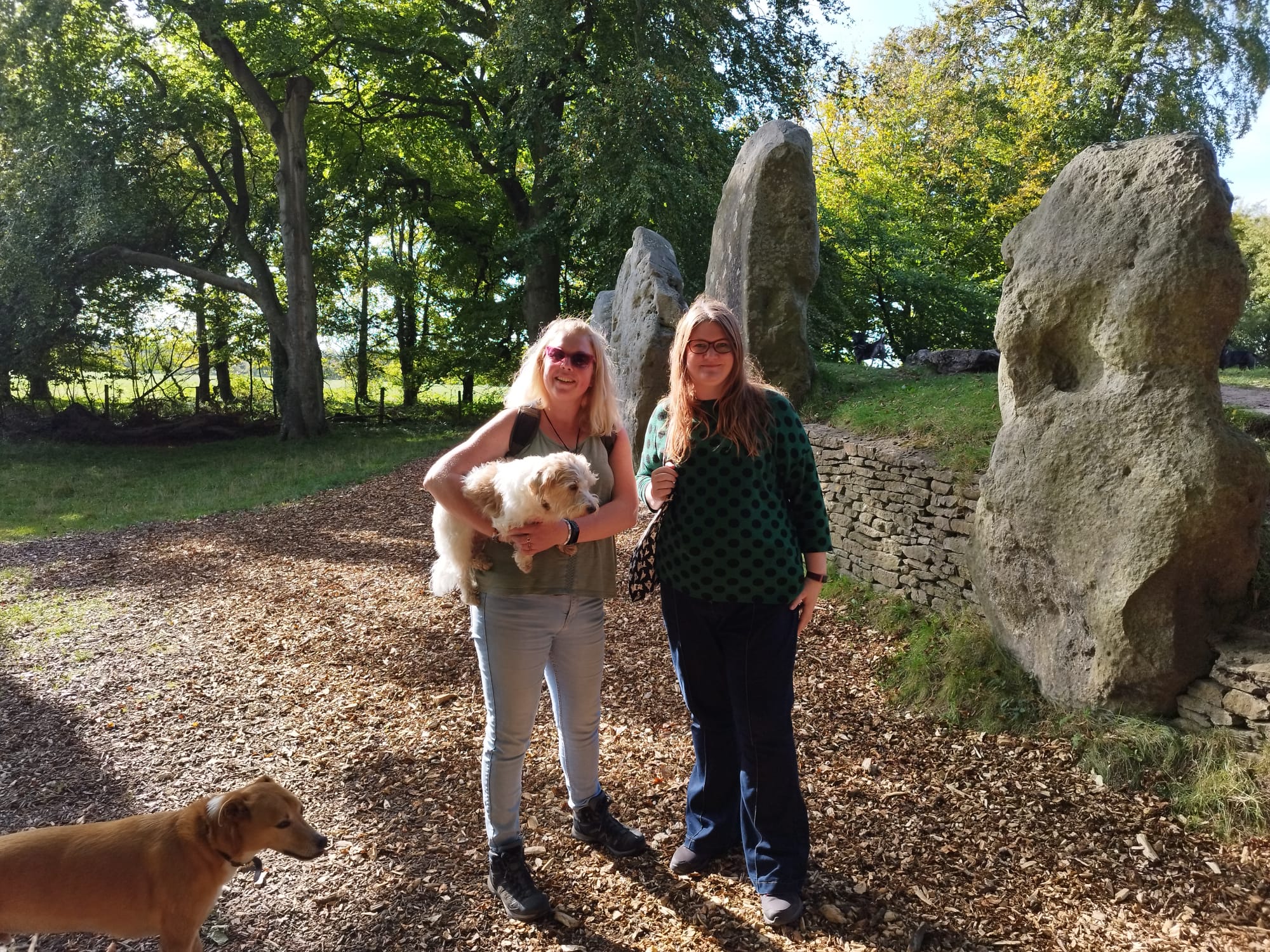
(Autumn Ramblers, the two Emmas. Image Source: ©E.Blackshaw)

Check out my travel companion Weird Wiltshire’s wonderful blog where she explores stories of ghosts and the paranormal, folklore, history and anything weird, found in Wiltshire and beyond:

https://weird-wiltshire.co.uk/

Reference list

The Legend of Stingy Jack: The Haunting Legend Behind the Halloween Jack-o’-Lantern

(Image Source: A traditional Irish turnip Jack-o’-lantern from the early 20th century. Photographed at the Museum of Country Life, Ireland. © Rannṗáirtí Anaiṫnid 2009)

Halloween, a time of ghosts, ghouls, and goblins, is a time when the veil between this world and the next is at its weakest and spirits roam the earth.  One legend looms large in the heart of Halloween itself – the macabre tale of Stingy Jack. This eerie figure from Irish folklore was the origin of the popular Halloween tradition of carving jack-o’-lanterns. Join me as I explore the dark legend of Stingy Jack and his connection to Halloween.

Who was Stingy Jack?

The legend of Stingy Jack originated from the depths of Irish folklore. Stingy Jack was a notorious trickster known for his deceit and cunning. Jack’s reputation for manipulation and shrewdness was so notorious that he even caught the eye of the devil himself.

The Legend and Faustian Bargain

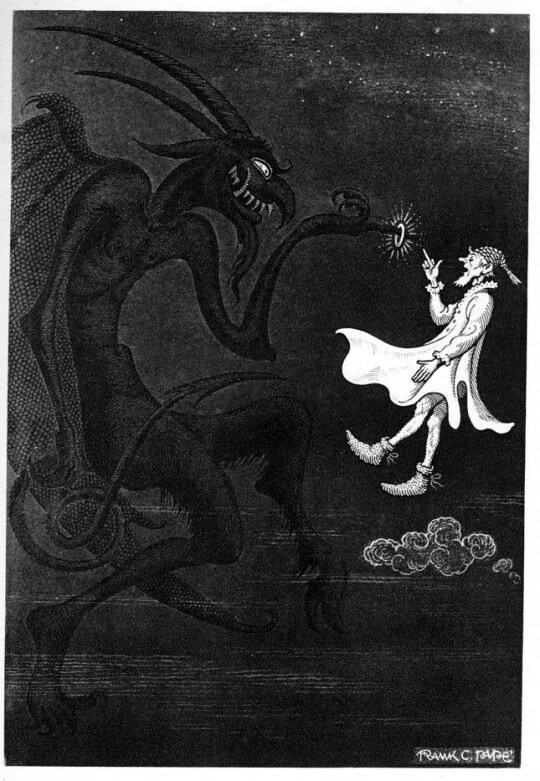
The legend has it that Jack was out one night after having a tipple in his local tavern when he stumbled upon Satan on a country road. The devil demanded his soul, but Jack pleaded to have a last drink of ale with him in the local pub.  After their drinking session, Jack used his cunning to trick the devil into transforming himself into a coin to pay for their drinks. Jack placed the devilish coin in his pocket where he kept a crucifix, thereby stopping the devil from returning to his true form.

(Image Source: PAPÉ, Frank C. “The Devil…Did for His Comfort Give Him a Ring”, illustration from Rabelais’ Gargantua and Pantagruel, 1927. © Halloween HJB 2020)

Jack was very pleased with himself and his wheeze, but eventually freed Satan. However, not one for missing a trick, Jack only agreed to free the devil after he had struck a Faustian bargain. Jack made a deal that the devil should spare his soul for ten years.

Ten years passed and Jack encountered Satan once again while he was stumbling home from the pub. Using his cunning once again, he asked to have a last snack of an apple from a nearby tree. The devil foolishly climbed the apple tree to fetch him an apple. Once up the tree, Jack surrounded its trunk with crucifixes, trapping the devil in its branches. Realising he’d been had, the devil pleaded to be let down, but not before agreeing never to take Jack’s soul. However, this bargain came with a haunting clause, one that would forever alter Jack’s fate.

Jack’s Just Desserts

Eventually, Jack’s drink-fuelled life came to an end and he died. His soul prepared to ascend to Heaven, however as he tried to enter the pearly gates he was stopped by St Peter. Jack, demanding to know why he could not enter Heaven, was taken to see God, who told him that due to his sinful lifestyle, trickery, and deceitful ways, he was not eligible for Heaven.

Jack then descended to the Gates of Hell and begged Satan for admission into the underworld. However, the devil, fulfilling his obligation to Jack, could not take his soul.  Jack was instead condemned to roam the earth in perpetual darkness. The devil, however, felt sorry for Jack and gave him an ember to light his way, which he placed inside a carved turnip to create a makeshift lantern. This eerie lantern forever guides his eternal search for a final resting place as he wanders the world between the planes of good and evil.

(Image Source: Carved Turnips, © opacity 2019)

The Birth of the Jack-o’-Lantern and Stingy Jack’s Influence on Halloween

Over time Stingy Jack’s turnip lantern became synonymous with Celtic Samhain and Halloween. Irish immigrants brought their traditions to America and soon discovered that the local pumpkins, larger and easier to carve, made ideal lanterns. This transformation from turnips to pumpkins gave birth to the iconic ‘Jack-O’-Lantern’ we know today.

As you prepare for Halloween and carve your pumpkin jack-o’-lanterns, remember the eerie folkloric origin of this beloved tradition.  Stingy Jack, with his cunning trickery and Faustian bargain, has left an enduring spark of folklore as his cursed spirit lights our way through the mysterious and magical night of Halloween. So, when you see those flickering jack-o’-lanterns, spare a thought for Stingy Jack forever condemned to wander the earth with only a lantern to light his way.

(Image Source: Jack-O’-Lanterns, ©macwagen – CC BY-NC-ND -2019)

References

A Journey into the Mystical World of Avebury Stone Circle

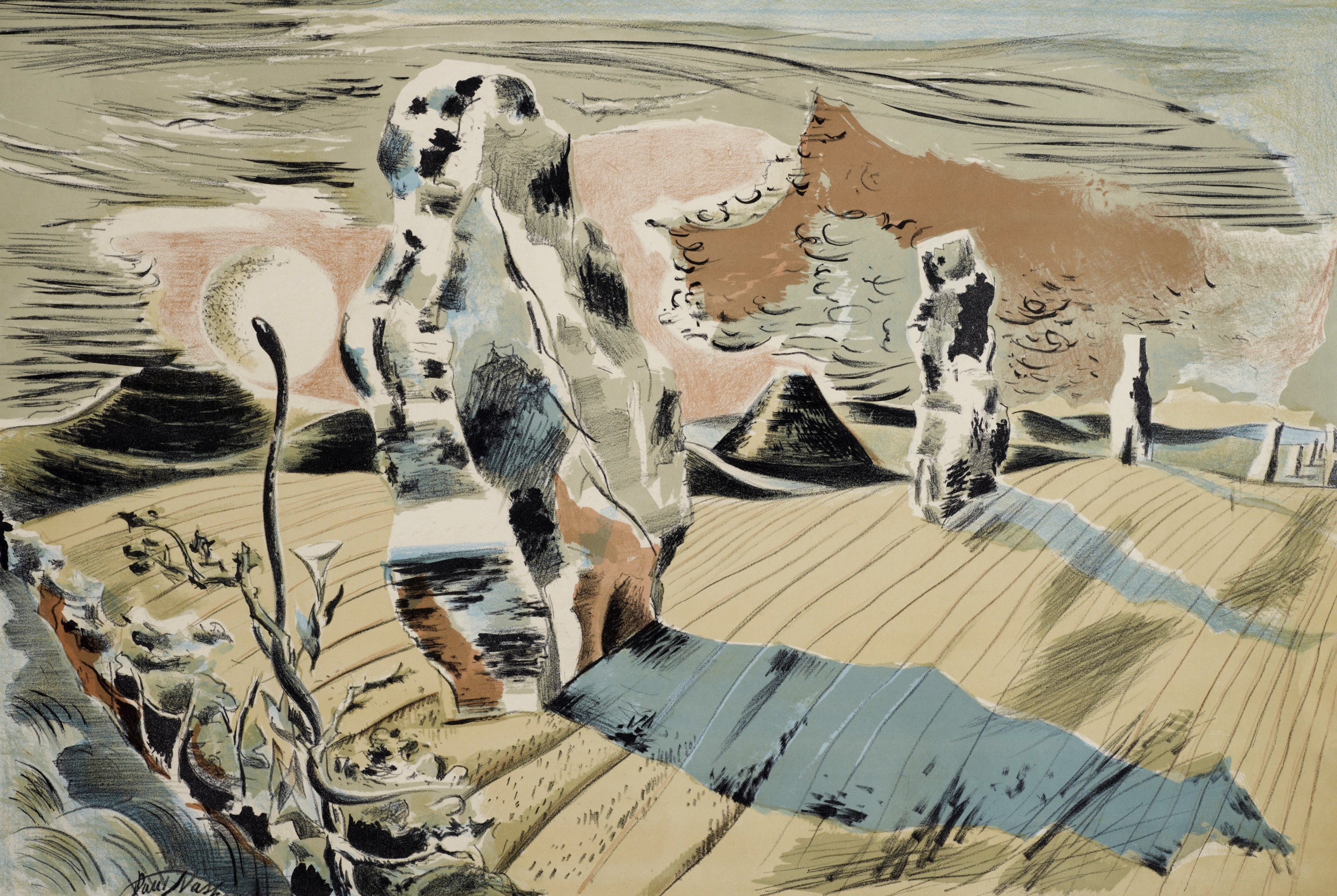
(Image source: Avebury (1937) by Paul Nash. Original from The Museum of New Zealand. Digitally enhanced by rawpixel.)

A few days before the summer solstice, I embarked on a captivating journey to the ancient marvels of Avebury, Silbury Hill, and the West Kennett Long Barrow. It was a trip filled with wonder, history, and a dash of the paranormal. Joining me were fellow bloggers, writers, podcasters, and enthusiasts of the mystical and unexplained.

The Red Lion Pub

(Image Source: Avebury Information Sign, © E.Holohan September 2020)

Our adventure began at the Red Lion pub, a white-washed and thatched hostelry encircled by the colossal stones. The pub itself is a point of paranormal interest due to reports of ghostly happenings within especially from their female phantom, Florrie. During the 17th-century English Civil War, Florrie was caught with another man by her husband who had returned from the war unannounced. He shot her lover and cut her throat, then threw her body down the well. Florrie’s ghost has haunted the pub ever since.

(Image Source: Florrie’s Well, © E.Holohan June 2023)

After enjoying refreshments in the pub, we headed out on our journey, wending our way through the ancient “Avenue”; a passage between sarsen sandstone pairs that leads to “The Sanctuary” on Overton Hill, over 1 mile east.

Silbury Hill

Our first stop was the enigmatic Silbury Hill, a massive artificial mound that has puzzled archaeologists for centuries. Its origins and purpose remain a mystery, fuelling speculation about its role in ancient ceremonies or astronomical significance. Standing before this colossal earthwork, we couldn’t help but wonder about the labour and dedication that went into its construction.

(Image Source: Silbury Hill, © E.Holohan June 2023)

Silbury Hill is also steeped in ghostly tales and legends. Some claim to have witnessed spectral figures near the hill, while others speak of eerie lights and mysterious sounds. While we didn’t encounter any supernatural occurrences during our visit, the sense of mystery surrounding Silbury Hill added an extra layer of intrigue to our adventure.

West Kennet Long Barrow

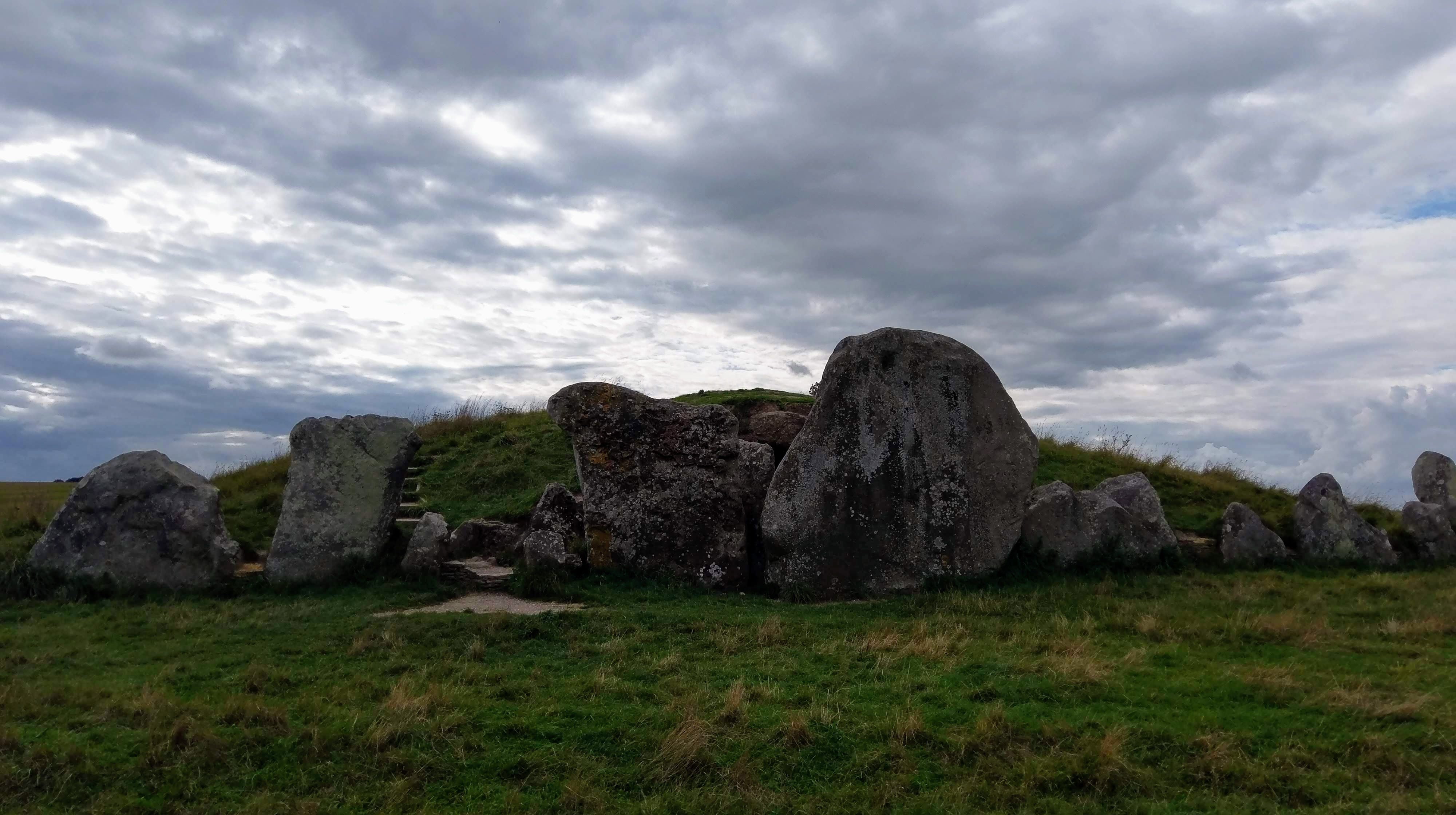
Our next stop was the haunting West Kennett Long Barrow, a Neolithic burial chamber that is around 6000 years old. As we entered the dimly lit chamber, we felt a palpable connection to the past. The long barrow’s ancient stones seemed to whisper stories of the souls laid to rest within.

(Image Source: West Kennett Long Barrow, © E.Holohan June 2023)

The West Kennett Long Barrow is also known for its eerie tales of ghostly apparitions and strange phenomena. Visitors have reported encounters with shadowy figures and a sense of unease within the chamber’s confines. While we didn’t experience anything out of the ordinary, the stories added a spine-tingling dimension to our visit especially with Weird Wiltshire’s Emma recounting her own paranormal experiences here.

(Image Source: View from inside the Long Barrow, © E.Holohan June 2023)

Long Barrow Race

It was here that three of the adventurous souls in our group decided to have a race next to the long barrow. With laughter, excitement, and much cheering, they sprinted past the long barrow with one member, Peter Laws, reigning victorious. It was a light-hearted moment amidst the solemnity of the site.

(Image Source: The Long Barrow Runner, © E.Holohan June 2023)

Avebury Stone Circle

Thoroughly famished from our journey up to the barrow, the group retraced our steps to the stone circle proper.  Avebury Stone Circle is a Neolithic ceremonial marvel that dates back to 2850 BC.  Encircling the picturesque village of Avebury, this stone circle is one of the largest in Europe, and it is shrouded in history and folklore.

As we wandered among the colossal stones, we couldn’t help but feel a sense of awe and reverence for the Neolithic people who raised them. Avebury’s history is steeped in mystery and legend. Some believe it to be a place of healing and spiritual power, while others associate it with ancient druidic ceremonies and pagan rituals. Our group decided to celebrate the upcoming summer solstice with a delightful picnic near the stones, a modern homage to the traditions of the past. As we dined amongst the towering megaliths, we exchanged stories of the paranormal and shared our love for these enigmatic structures.

(Image Source: Picnic at standing rock, © P.Laws June 2023)

Druidic Rituals

While at Avebury, we encountered a group of new-age pagan druids who were preparing for a pre-solstice ritual.  They were clad in flowing robes and carrying staffs adorned with symbols and we were fortunate enough to witness their ritual from afar. It was a reminder of the enduring spiritual connection people have with these ancient sites.

(Image Source: Druidic ceremony, © E.Holohan June 2023)

The Wishing Tree

After enjoying our picnic our group split into smaller bands who ventured out to explore different points of interest in Avebury. My band visited the Henge Shop to pick up some souvenirs of our trip and then ventured onwards again for a closer look at the stone circle and the set of venerable old trees said to have inspired J.R.R Tolkien’s ‘walking trees’ or Ents in “The Lord of the Rings”. We passed under the boughs of the wishing tree, where folk tie ribbons for wishes amongst its branches, and here also witnessed a handfasting ceremony.

(Image Source: Photo © Des Blenkinsopp (cc-by-sa/2.0)

As the sun dipped below the horizon, marking the end of this fine summer day, we left Avebury with a profound sense of wonder and connection to the past. Our journey had been a blend of history, folklore, and the paranormal, a testament to the enduring allure of these ancient sites. We may not have unravelled all their mysteries, but we left with a deep appreciation for the enduring power of these Neolithic wonders and also with a firm bond of friendship from our adventures within the stones.

(Image Source: The view from West Kennett Long Barrow, © E.Blackshaw June 2023)

Avebury’s rich history has captured the imaginations of many, and I believe that every visitor has a unique story to tell. Whether you’ve had a profound spiritual experience among the ancient stones or simply want to share your thoughts on the history and mysteries of Avebury, I invite you to join the conversation. Share your stories, thoughts, and insights with me today in the comments– together, we’ll continue to uncover the secrets of Avebury.

With thanks to Peter Laws (https://www.peterlaws.co.uk/), Owen Staton (Time Between Times: https://www.youtube.com/@TimebetweenTimes), Bethan Briggs-Miller (Eerie Essex https://www.buzzsprout.com/1827712), Emma Heard (Weird Wiltshire https://weird-wiltshire.co.uk/) Deborah Hyde (http://deborahhyde.com/), Melanie Hicks, Dr Delyth Badder ( The Folklore of Wales: Ghosts https://www.amazon.co.uk/Folklore-Wales-Ghosts-Delyth-Badder/dp/191527950X) , Gemma Oakley (https://www.alleyesthisway.com/), Dave Field, Aisling McCrudden and Ed Blackshaw.

References