Welcome to Ghost Catcher Isles, chronicling the weird, wonderful and eerie of the isles of Great Britain and the Republic of Ireland. Come with me on my adventures into the strange and paranormal
Back in April 2026, I had the pleasure of having my piece about the Lincolnshire Bigfoot published in ‘Not Of This Wold II: A Second Anthology of Weird Lincolnshire Writing’, edited by Kate Cherrell. I also had the opportunity to read an excerpt from it at the Not of this Wold event in Louth, which was a very new but lovely experience.
I first came across the Lincolnshire Bigfoot in December 2025, when I went to see ‘Uncanny Live: Fear of the Dark’ at the Bristol Old Vic. During the show, the subject of Bigfoot in Britain came up in response to an audience question, and Lincolnshire got a brief mention. I must admit, my first reaction was to laugh at the idea of Bigfoot wandering around Lincolnshire, but curiosity soon got the better of me. What particularly interested me wasn’t just the alleged sightings, but the landscape in which they took place, and how folklore, atmosphere and our perceptions can influence the way we experience a place.
I recently decided to record a new version of my reading at home, this time experimenting with atmospheric music and sound effects. It’s been an enjoyable little project and a chance to learn more about audio production, which is something I’m hoping to explore further in future.
You can listen to the finished recording below. It’s only a short excerpt from the original piece, so if it piques your curiosity, I hope you’ll consider picking up a copy of Not Of This Wold II, which features my writing alongside contributions from other writers.
Enjoyed the reading?
If you’d like to read the full Lincolnshire Bigfoot piece, you can find it in ‘Not Of This Wold II: A Second Anthology of Weird Lincolnshire Writing’, edited by Kate Cherrell.
The anthology brings together a collection of weird Lincolnshire writing from a range of contributors so there’s plenty more to discover beyond my little encounter with the county’s alleged Bigfoot!
(Image: Before the Tide Takes Them. Source: Places Remember, N.Higgins, 2026)
I recently had the chance to take a small part in a new audio drama podcast called Places Remember. The first episode, “Before the Tide Takes Them”, takes us to Happisburgh on the Norfolk coast and into the rather dark story of Jonathan Balls, better known as the Happisburgh Poisoner.
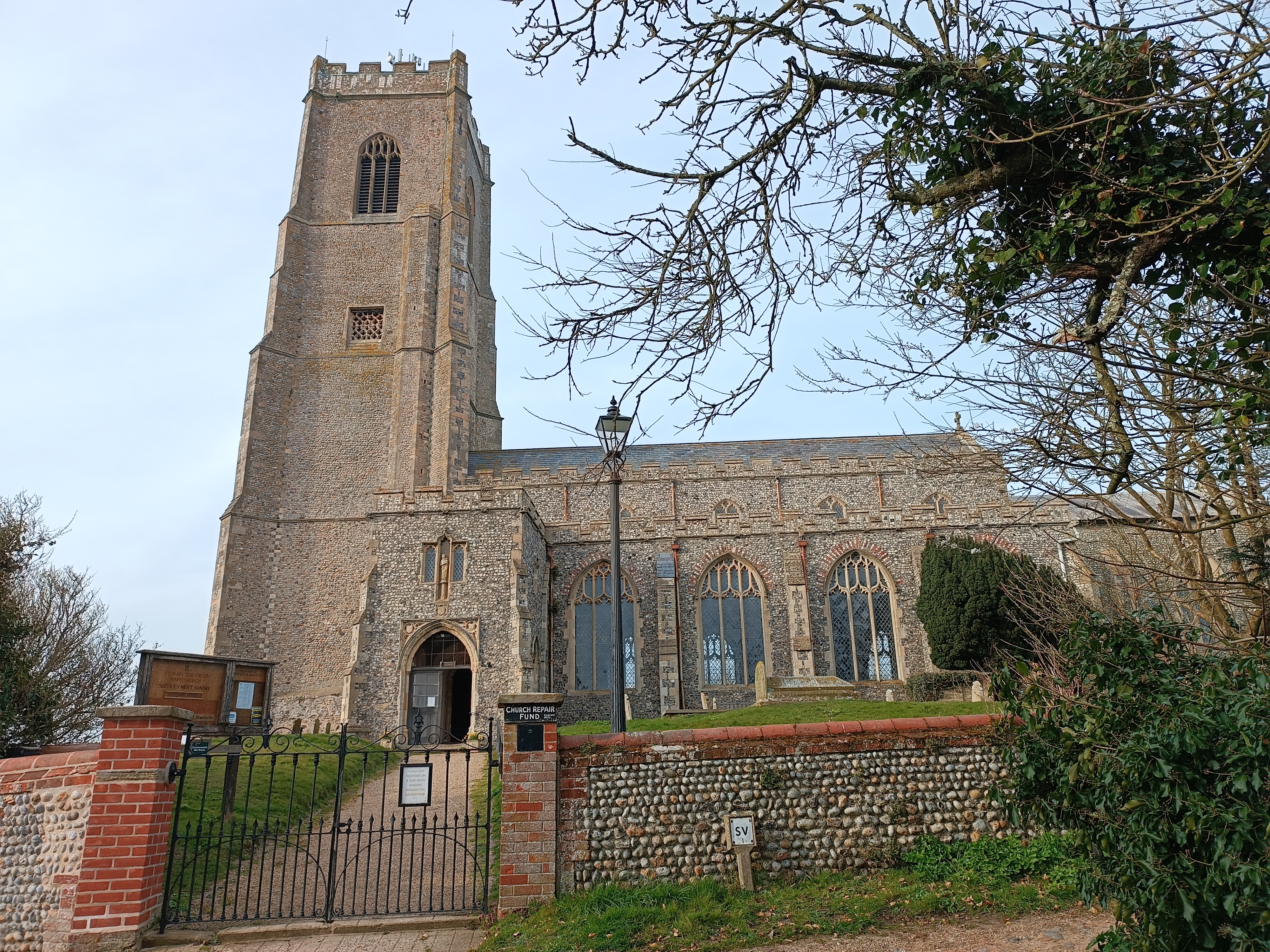
Happisburgh has always had a special place in my heart. My mum Sue was born there and spent her early years living in a little cottage in the village with my grandma Jean and my Irish grandad Terry. My great grandma, Nanny Winnie, also lived in Happisburgh and once worked as a barmaid at the Hill House pub. I grew up in a nearby village and have lots of childhood memories of visiting relatives in Happisburgh and playing at Nanny Winnie’s house. She now rests with her second husband Bob in St Mary’s churchyard.
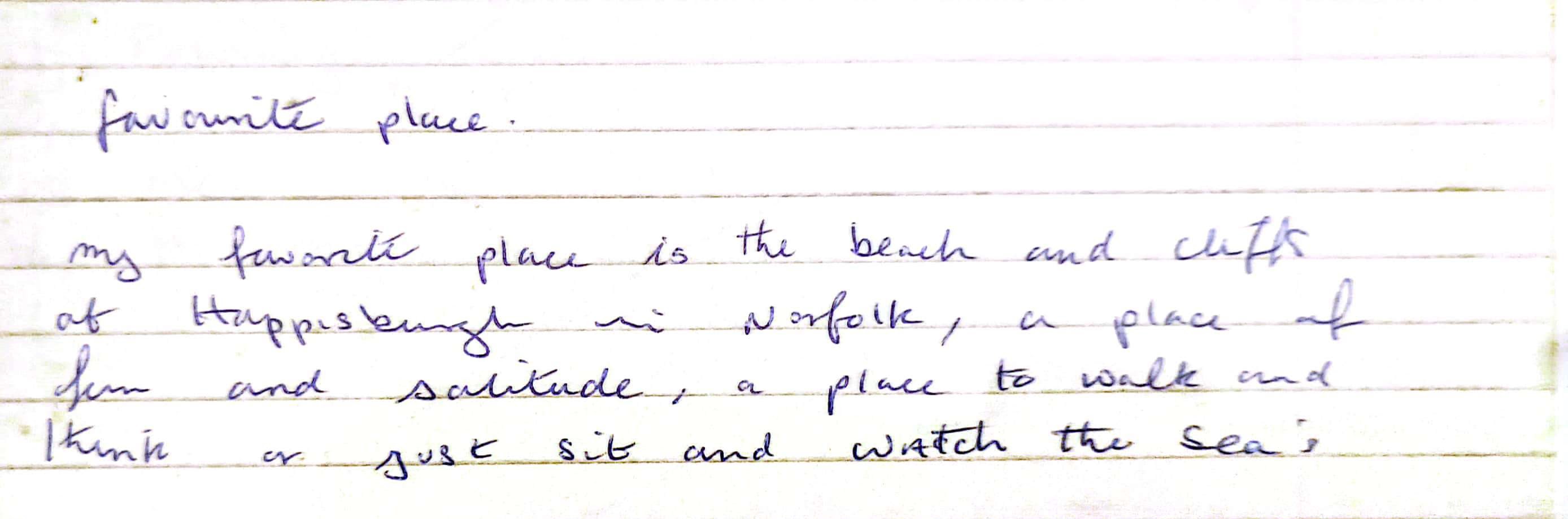
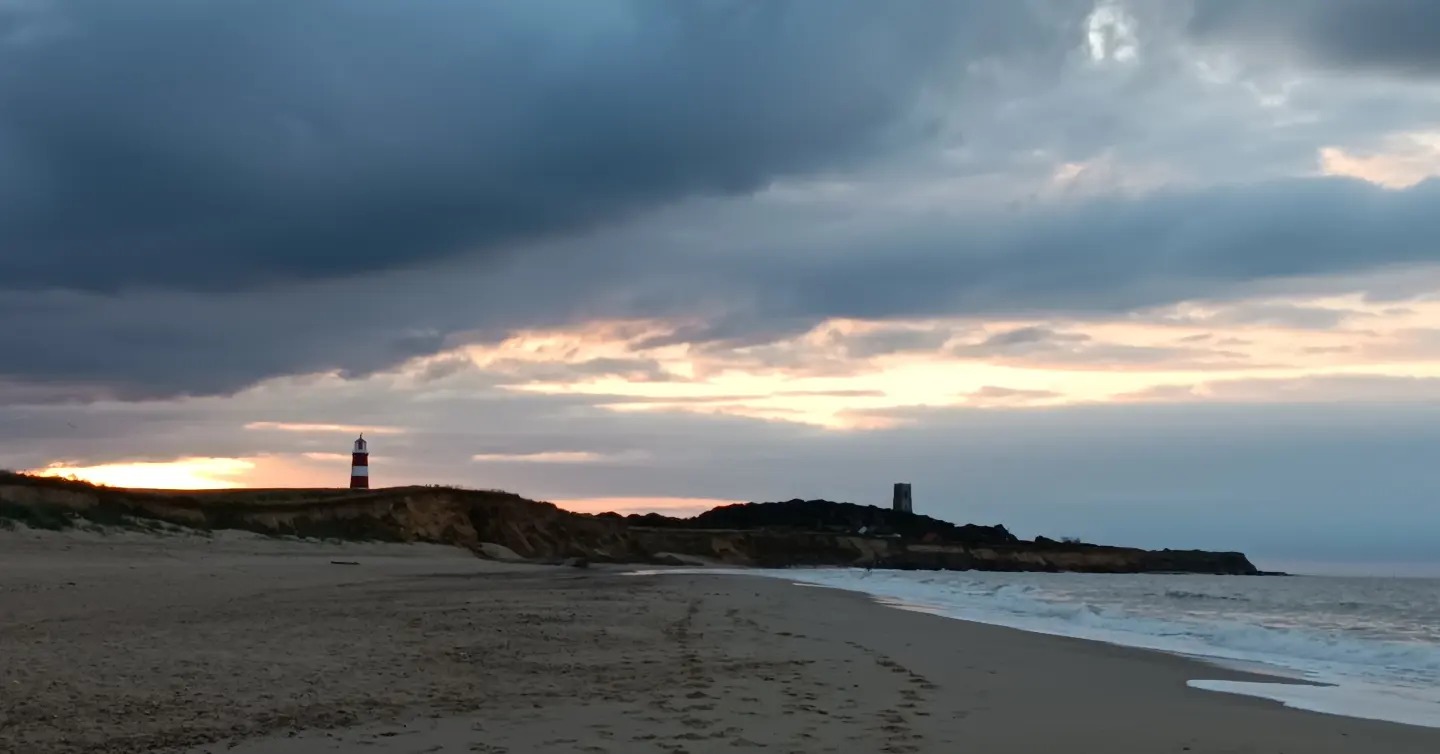
When I think of Happisburgh I think most of all of the beach. It was one of my mum’s favourite places, her “happy place”, and I have many memories of walking there with her. Then there is the wonderful candy-cane red and white lighthouse, standing like a lone sentinel over the village and coastline.
(Image: Handwritten extract from Susan M. Gayfer’s personal notebooks. Source: E.Holohan personal collection 2026)
Sadly it is also a coastline that is gradually disappearing. Coastal erosion has long been part of Happisburgh’s story, which makes the title “Before the Tide Takes Them” feel particularly appropriate. There is something quite poignant about preserving the stories of a place where the landscape itself is being slowly and steadily lost.
My mum loved the paranormal, Forteana, true crime and dark history, and she was fascinated by Happisburgh’s many strange stories. Jonathan Balls was a particular favourite of hers.
The story takes us back to the 1840s, when a disturbing series of deaths among Balls’ family and others in the village eventually raised suspicions of poisoning. Arsenic was discovered, questions began to be asked, and the story became considerably darker.
And then there is Jonathan Balls’ burial. Why, according to local tradition, did he want to be buried with a Bible, a plum cake, a fire iron, coal tongs and handkerchiefs?
I’m not going to tell you. You’ll have to listen!
(Image: St Mary’s, Happisburgh. Source: E.Holohan 2025)
My mum always wanted to know more about the case and, for reasons probably best described as dark tourism, was particularly keen to discover exactly where Balls was buried in Happisburgh churchyard. I think she would have been rather excited that I ended up taking part in an audio drama about him. She’d certainly have been grilling me for more information and poring over all the research on the website. And I strongly suspect she’d still be asking me where his grave was so we could go and find it.
So when Nigel told me he was thinking about a new project based around Happisburgh, I really wanted to be involved. I asked for a small role and ended up playing Maria Lambert, one of the gossiping villagers. It seems quite appropriate that my first venture into voice acting involved gossiping about suspicious happenings in a Norfolk village!
Some of the scenes were recorded online with other members of the cast, while for others I recorded my lines separately and sent them in. My husband Ed also got involved by playing Reverend Birch, so it was a first venture into voice acting for both of us. I was slightly nervous about hearing myself in the finished episode, but I was actually quite pleased with how I sounded. Even a little of my original Norfolk accent crept back in. I’m Norfolk Broads born and bred, although these days my accent is fairly neutral most of the time.
The whole cast did a great job, particularly considering that many of us hadn’t done voice acting before. The music and sound effects really bring it together, and I loved hearing the story gradually unfold. Nigel and Allison rounded it all off perfectly with their narration and deeper discussion at the end.
And this is only the beginning. Before the Tide Takes Them is the first part of a Happisburgh trilogy, combining original audio drama with discussion of the real history and research behind the story. The drama is based on historical events and contemporary newspaper reports, although characters, dialogue and some events have been imagined or adapted.
For me, being involved means a little more than simply having a small part in a podcast. Happisburgh is part of my family history and part of my childhood. It is the beach with memories of my mum, Nanny Winnie resting in the churchyard and that familiar lighthouse watching over a coastline that is slowly changing.
Being able to play even a tiny part in keeping one of its stranger stories alive feels rather special.
You can listen to “Places Remember: Before the Tide Takes Them” here:
It is also available through Spotify and Apple Podcasts.
There is also a new accompanying Places Remember website. This is still being populated, but Nigel and Allison are gradually adding historical sources, research and further information uncovered during their investigations, so it is well worth keeping an eye on as it develops:
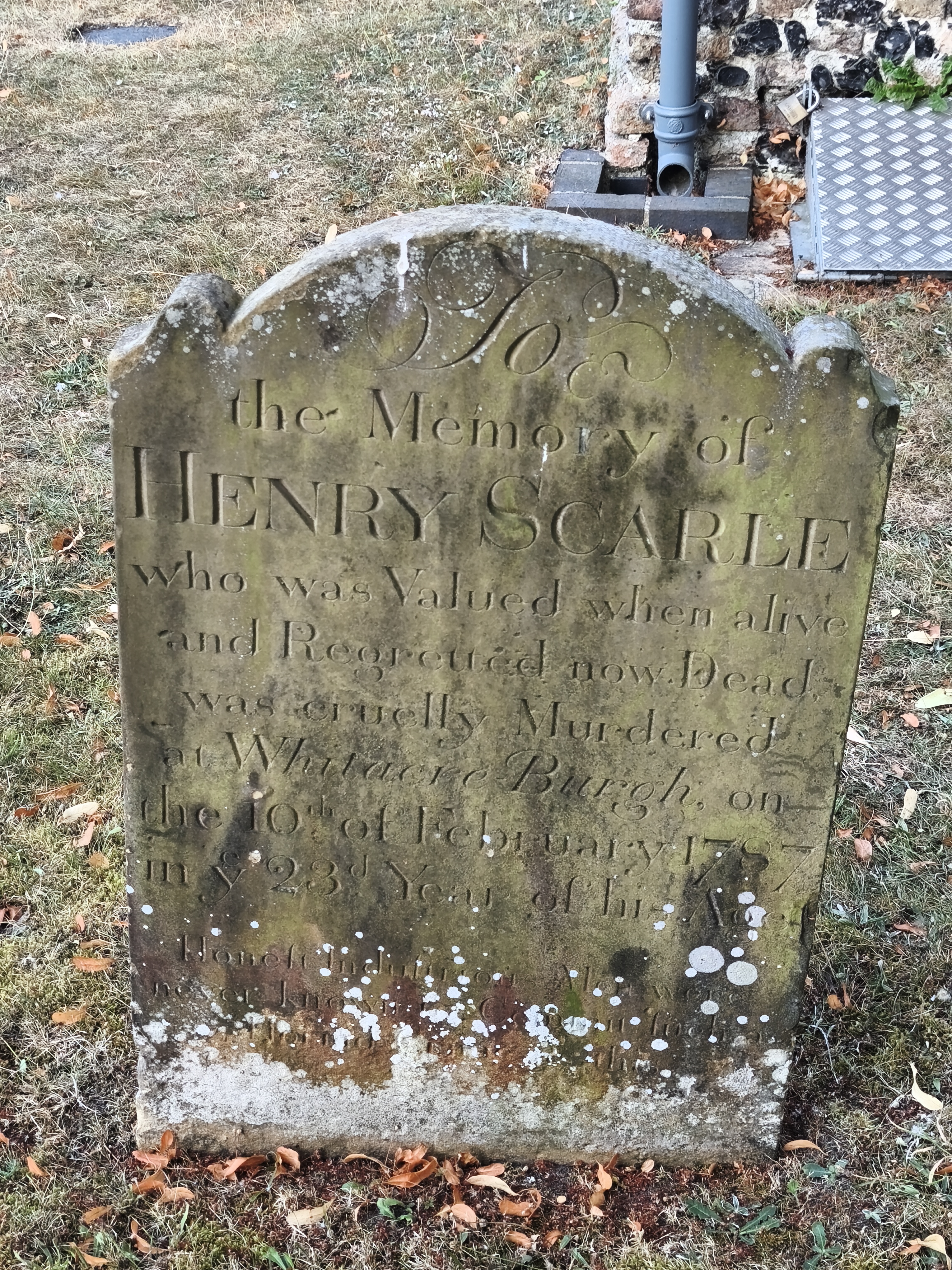
(Image: The grave of Henry Scarle. Source: E.Holohan 2026)
I was recently in Bungay in Suffolk for the Black Shuck Festival. Bungay is famous for its supernatural history, so this was naturally the attraction for me; however, while there, I also chanced upon another story which was completely unexpected.
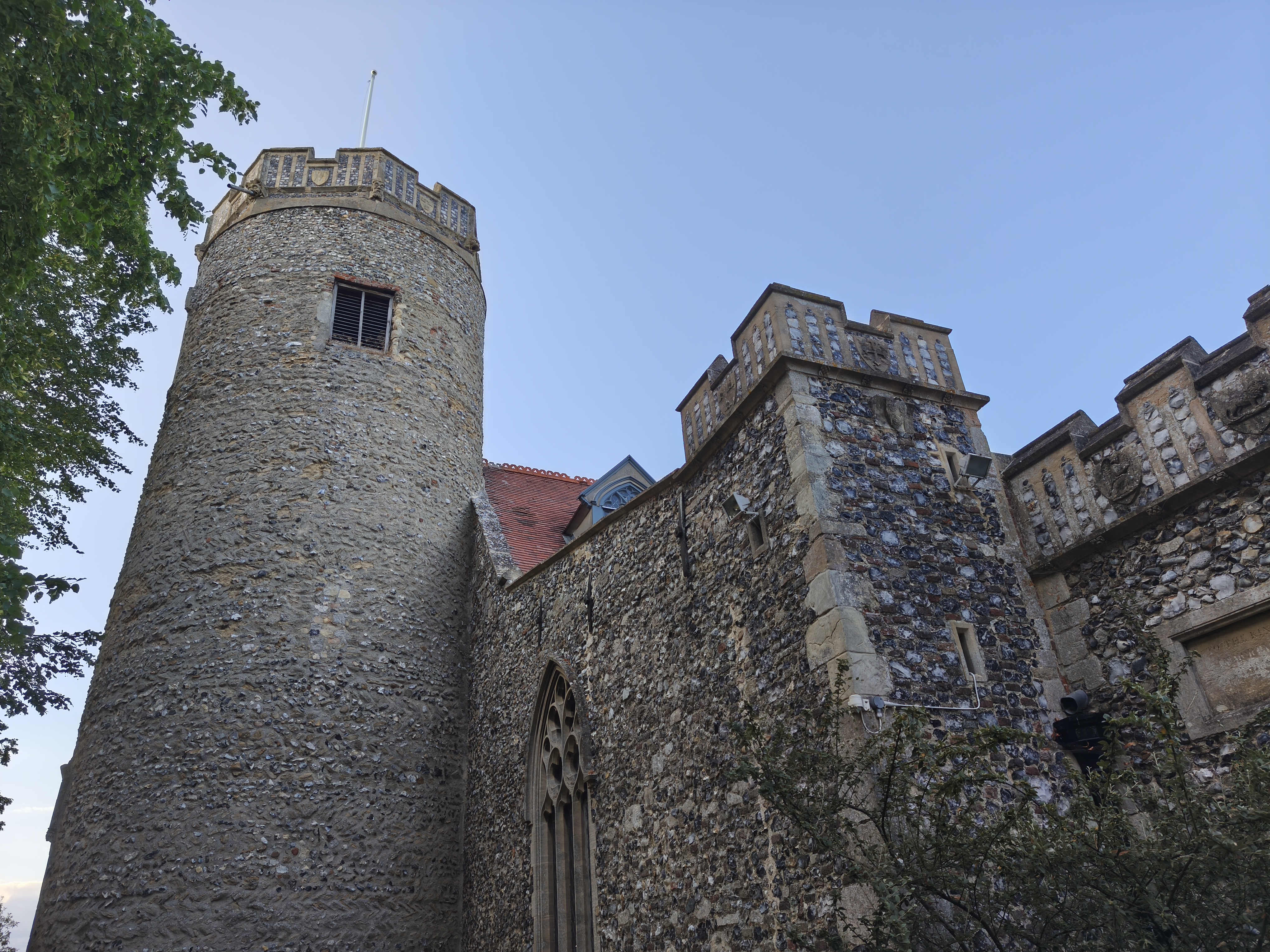
While in town, I walked past another church, one that isn’t so much in the limelight as the one just up the road, St Mary’s, with its demon dog association. This church is Holy Trinity Church, an ancient building with parts of it dating to late Saxon times but with considerable restoration over the years. Its 11th-century round tower is considered to be the oldest complete structure in Bungay. The tower is eye-catching with its flintwork and traces of herringbone masonry.
I love to poke around an old church and graveyard, so I decided to have a look around. Sadly, the church was closed up for refurbishment, so I couldn’t see inside. I did, however, decide to explore the exterior and graveyard. It was here among the gravestones that one inscription immediately caught my attention. The stone didn’t simply record a name and date; it said the man buried beneath had been murdered.
The Grave of Henry Scarle.
The headstone is unassuming and weathered, yet remarkably well preserved considering its age. Lichen obscures some of the inscription but the name Henry Scarle stands out in large letters. It was the words beneath his name that really caught my attention: cruelly murdered.
The full inscription is as follows:
“To the memory of Henry Scarle, who was valued when alive, and regretted now dead, cruelly murdered at Wheatacre Burgh, on the 10th February, 1787, in the 23rd year of his age: honest and industrious men were never known to commit such a horrid crime as this.”
My interest was piqued. Who was Henry Scarle? How was he murdered? And why had his violent death been recorded on his gravestone?
Henry Scarle was a 23 year old man employed as a waterman by the owner of the Bungay Staithe Navigation, a man called Matthias Kerrison. Scarle’s job was to handle the boats that transported corn, wood and other goods along the River Waveney and the surrounding waterways between the many towns and villages.
The Murder
In 1787, Scarle was with one of the wherries he’d moored in Wheatacre Burgh Staithe (now known as Burgh St Peter), when he discovered two men planning to rob the cargo. According to later accounts of the murder, that night he watched and waited for the robbers, but sadly they spotted him first, grabbed him violently, and bludgeoned him to death before hurling his lifeless body into the river.
His assailants fled, while Scarle’s body was later found floating in the river. They were eventually apprehended at Botesdale, a Suffolk village south-west of Diss, reportedly fleeing towards London. They were then taken to Norwich Castle Gaol.
The murderers were identified as William Hawk and Thomas Mayhew. Hawk was a Beccles man and a miller by trade, while Mayhew was a local man from Bungay and a waterman like his victim Scarle. Mayhew had previously robbed Mr Kerrison, Scarle’s employer, of some corn. Both were tried at Norwich and found guilty of the murder of young Henry Scarle on the 29th of March that year. Simon Stannard was also accused as an accomplice, but was later acquitted and therefore dodged the noose. Hawk and Mayhew were hanged the following day, on 30th March 1787.
The Strange Fate of Henry Scarle’s Body
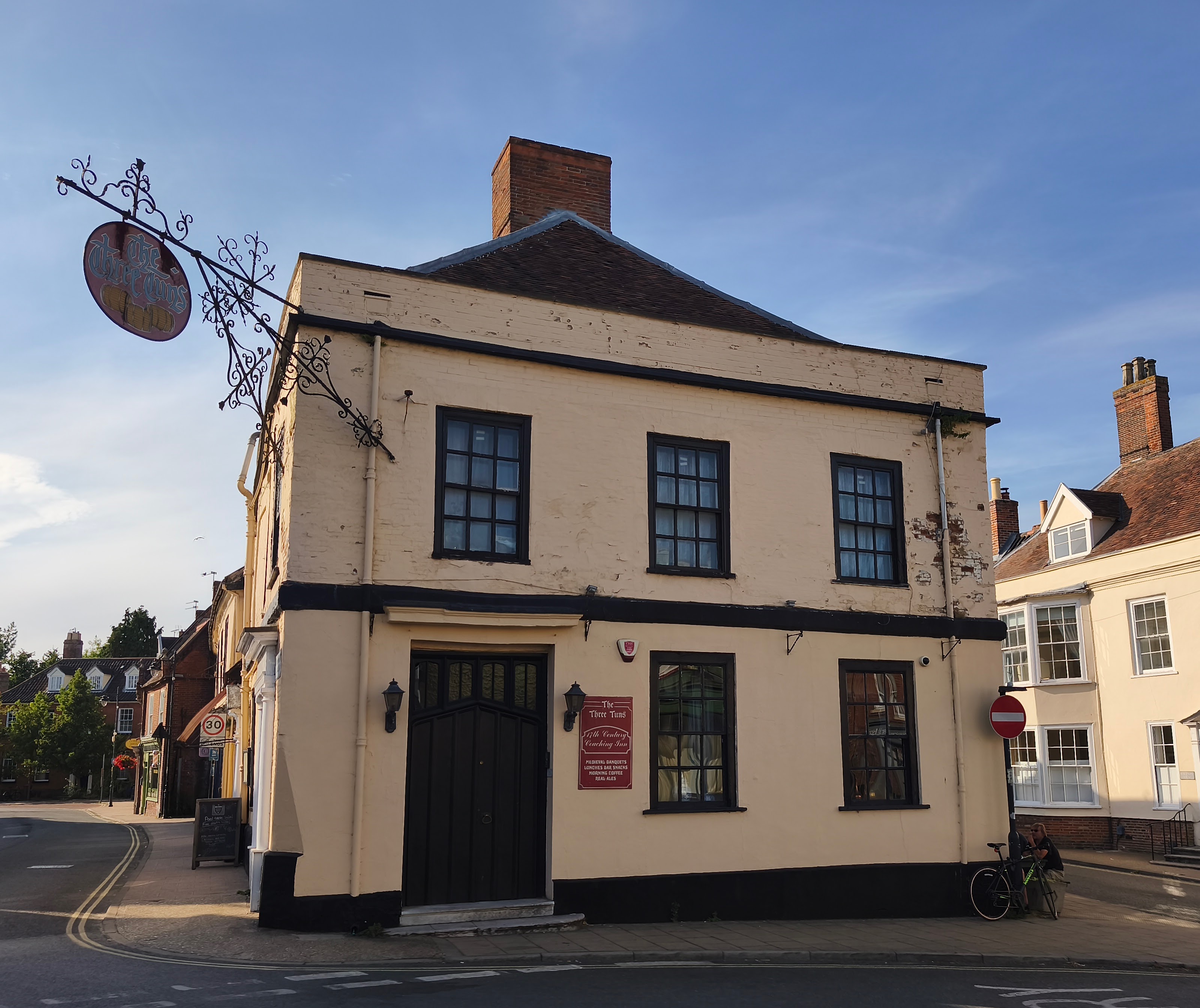
(Image: Three Tuns Pub. Source: E.Holohan 2026)
Henry Scarle’s employer, Matthias Kerrison, was said to be an enterprising man when it came to making money. According to later accounts, after his employee’s death, he realised he could profit from this situation and had his body exhibited on a bier in the Assembly Rooms at one of the local Bungay pubs, the Three Tuns. It is said he advertised this event as “a penny a peep” and many people from far and wide queued up to view the victim’s corpse. This must have been a horrendous and gruesome sight, as poor Henry Scarle had been beaten to death before his body was thrown into the river, where it remained for some time before being found. According to the story, the money raised from the viewings was used by Kerrison to respectfully bury the young man and to erect the gravestone that still stands in Holy Trinity churchyard to this day.
From Murder Victim to Ghost?
The Three Tuns pub, where Scarle’s body is said to have been exhibited, still stands in the centre of Bungay. The pub has since acquired quite a reputation for being haunted. In 1969, one paranormal investigator reportedly claimed that they had identified 24 different ghosts there, including highwayman Tom Hardy and Rex Bacon, who is said to have hanged himself at the top of the stairs there in 1682. I am sure you won’t be surprised to hear that another troubled spirit that is said to haunt the Three Tuns is that of our very own sad Henry Scarle.
I had gone to Bungay for the Black Shuck Festival and certainly hadn’t expected to come away researching the murder of a young waterman who died more than 200 years ago.
What started with an interesting inscription on an old gravestone led me to a brutal murder, the rather macabre tale of Henry’s body being put on public display, and finally the suggestion that he may still haunt the very pub where his body was exhibited.
Whether Henry Scarle really does haunt the Three Tuns is another matter, but his story is certainly a fascinating and rather sad piece of Bungay’s history. It also shows exactly why I can never resist having a poke around an old churchyard. You really don’t know what stories you might stumble across.
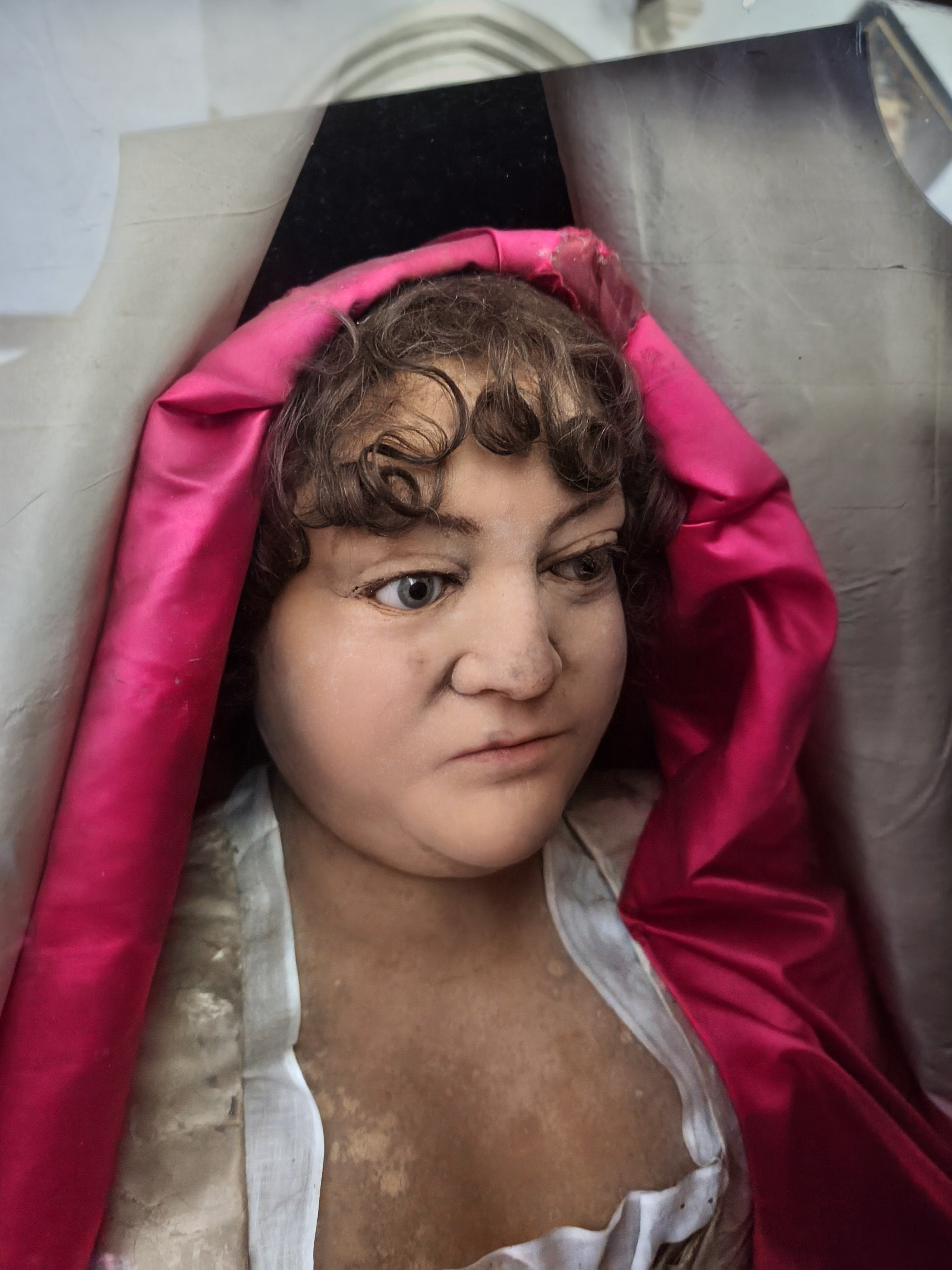
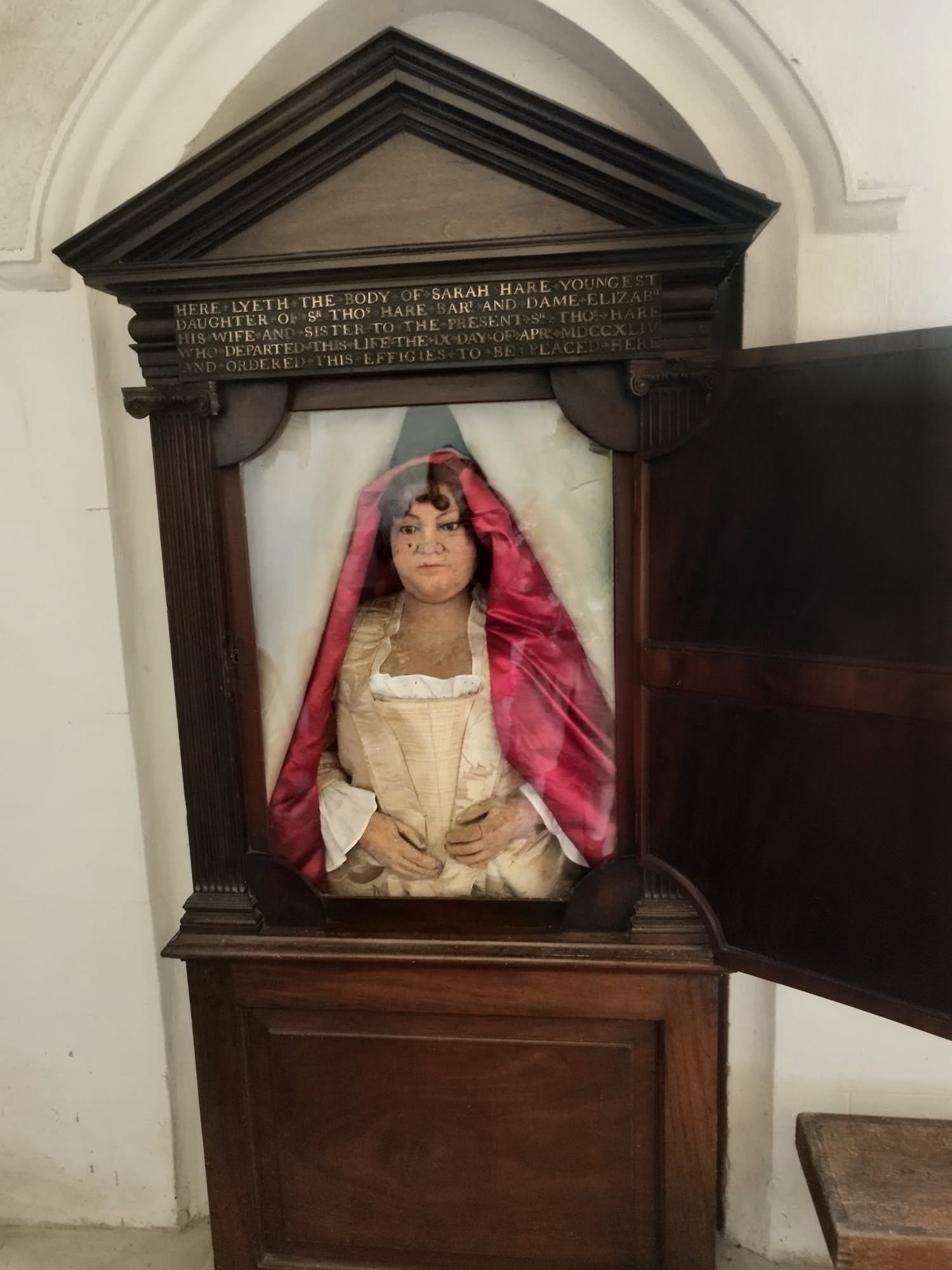
(Image: Effigy of Sarah Hare. Source: E.Holohan 2026)
When I was a child, I had a fascination with the strange corners of history, and this, of course, has continued on into adulthood. The books I borrowed from the library were full of ghosts, folklore, unexplained mysteries and curious historical oddities. Among all the photographs that lodged themselves in my imagination, save for the spontaneous human combustion foot photo, one stood out above the rest. It was the wax effigy of Sarah Hare.
I remember being quite unsettled by it. In a time before I’d ever heard the phrase “uncanny valley,” I already knew exactly how it felt. She looked too real to be a statue yet far too lifeless to be a person. I found her slightly repulsive, but I could never quite look away.
So, when I recently found myself in Norfolk, visiting Holy Trinity Church at Stow Bardolph was top of my list. I wanted to see whether the real thing would have the same effect as those childhood photographs. And it absolutely did.
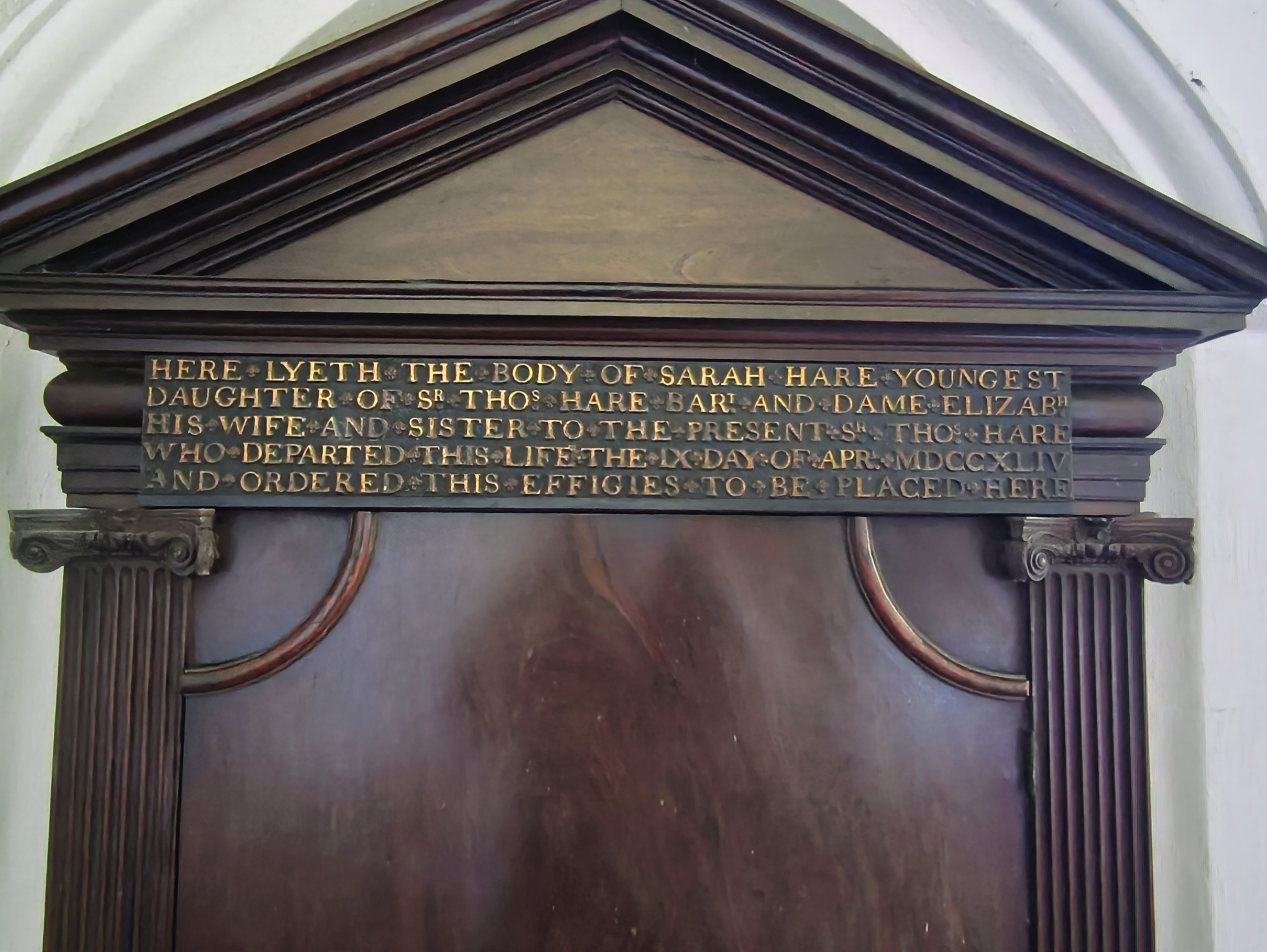
(Image: Inscription on Cabinet. Source: E.Holohan 2026)
Sarah Hare was the youngest daughter of Sir Thomas Hare of Stow Hall. She never married, so was what was once called a “spinster”, and lived a fairly ordinary life. In 1744, aged 55, she died from blood poisoning after pricking her finger while sewing. Later, locals claimed it was divine punishment for the crime of sewing on a Sunday, although the far more likely explanation is that the wound simply became infected.
The year before her death she wrote a remarkably detailed will. Alongside gifts to the poor of the parish, she made one very unusual request. She wanted her face and hands reproduced in wax, her own hair placed upon her head, and the finished effigy displayed in a mahogany cabinet with a glass front close to where she was buried.
She wrote: “I desire to have my face and hands made in wax with a piece of crimson satin thrown like a garment in a picture, hair upon my head and put in a case of Mahogany with a glass before and fix’d up so near the place were my corps lyes as it can be with my name and time of death put upon the case in any manner most desirable…“
If she did not arrange it during her lifetime, she instructed that it should be done after her death. Her family honoured those wishes. If you don’t ask, you don’t get, I suppose. And oh boy, did she get.
Today visitors to the Hare family mausoleum find a plain mahogany cabinet tucked into one corner. Nothing about it hints at what lies inside. Then the doors are opened, and there she is…
No photograph quite prepares you for seeing Sarah face to face. Her blue eyes seem fixed upon you. Her skin shows every wart and blemish. Her double chin has not been smoothed away. She wears one of her own silk gowns along with the crimson satin she specifically requested, and what is thought to be her own hair frames her face beneath an old fashioned wig.
(Image: Effigy of Sarah Hare. Source: E.Blackshaw 2026)
It is an astonishingly honest portrait, unadulterated by an idealising sculptor. In a time when many memorials celebrated wealth, beauty or achievement, Sarah chose something altogether different by asking to be remembered exactly as she was.
I wondered what her motives were. Was it vanity? I doubt it. If anything, the effigy avoids vanity completely. Nothing has been softened or flattered. Every blemish and imperfection remains. Perhaps it was simply a desire not to disappear entirely. After all, most of us hope to leave some trace that we were here, whether through family, creative work or acts of kindness. In Sarah’s case, she chose wax.
The effect is incredibly eerie. There is something deeply unsettling about meeting the gaze of someone who died almost three centuries ago, particularly when they appear so strikingly human.
There is also something strangely moving about it. Sarah has spent nearly 300 years silently watching visitors come and go. Seasons have changed and decades have flashed by. Yet Sarah still waits behind those cabinet doors. Time has not been entirely kind. The wax has required careful conservation and rodents once damaged her clothing before restoration work in the 1980s. Even so, she survives as the only funerary wax effigy in England outside Westminster Abbey.
Sarah Hare achieved the immortality she wanted, although probably in a way she could not have ever imagined. Thousands of curious visitors now make the journey to Stow Bardolph simply to meet her and look into her eyes.
As I left the Hare Chapel, I thought back to the child who had first stared uneasily at her photograph all those years ago. The real Sarah Hare was every bit as uncanny as I’d hoped she would be. Sometimes the strangest places really do live up to their reputation.
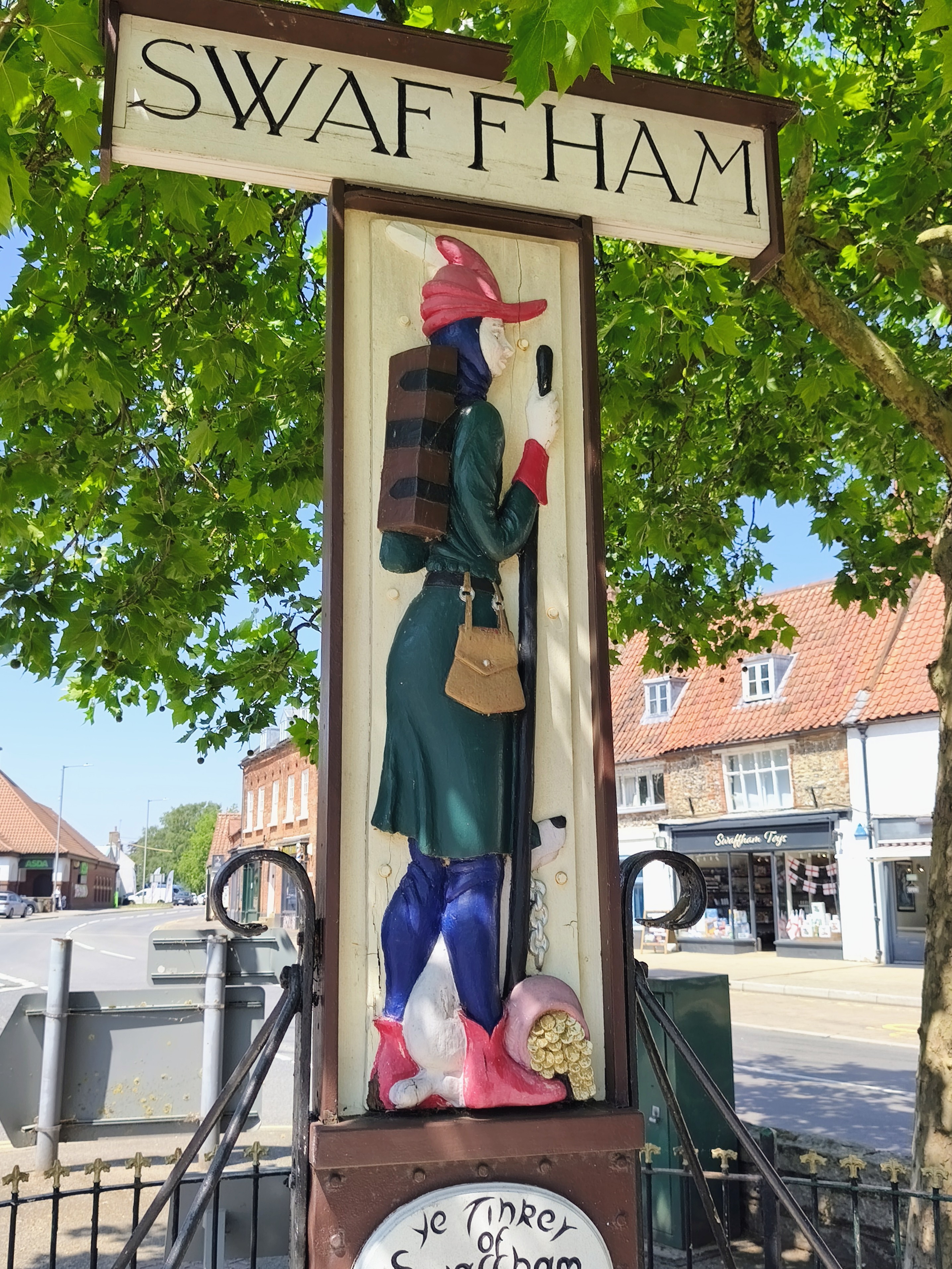
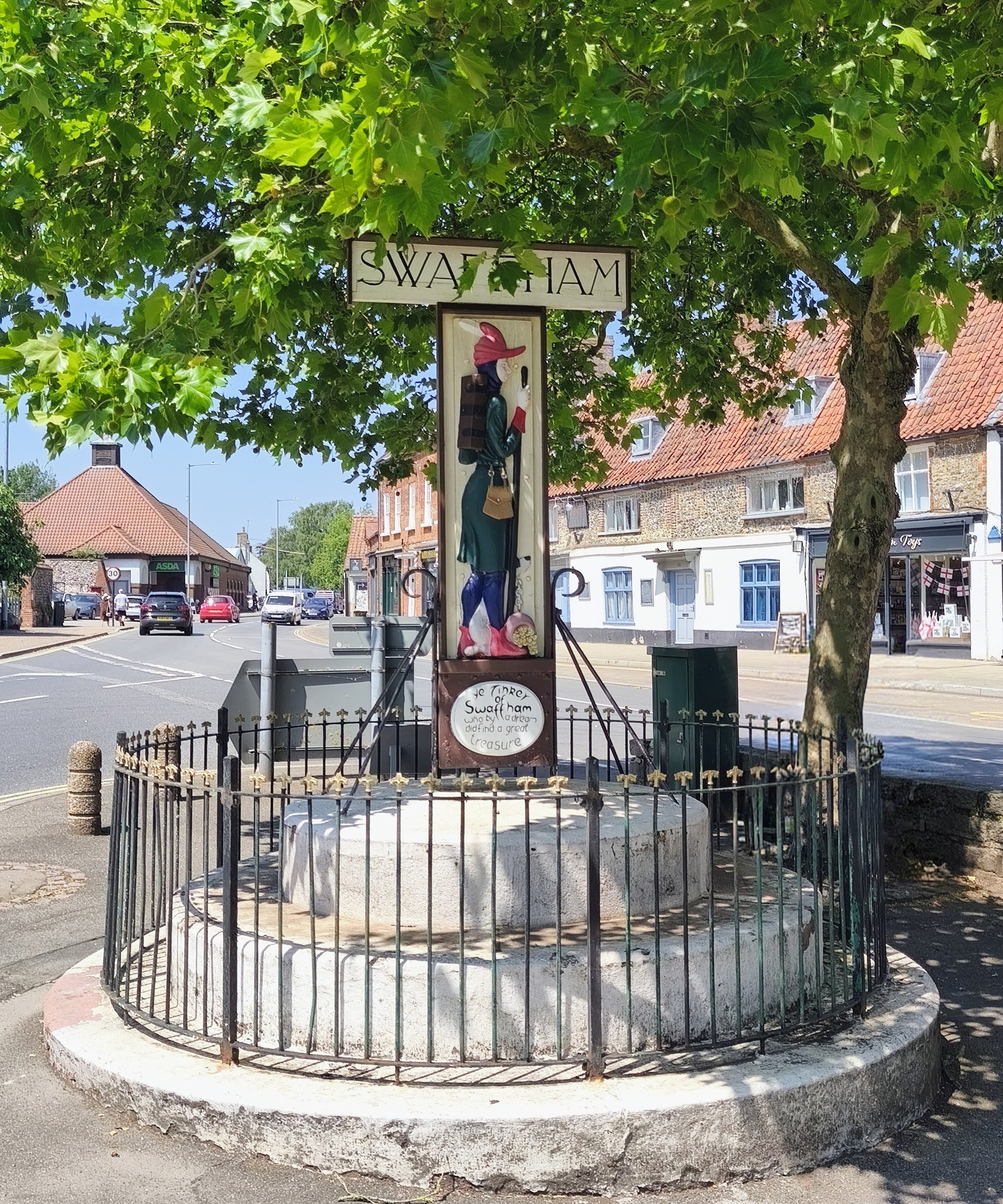
(Image: Swaffham Town Sign. Source: E.Holohan 2026)
A Story That Stayed With Me
When I was at primary school in rural Norfolk I remember hearing one of the first Norfolk folktales that ever captured my imagination: the Pedlar of Swaffham.
The story fascinated me. Over the years, I came to realise that although it felt so familiar to me, it was not nearly as well known elsewhere. Many people had heard of the famous tale of Dick Whittington and his cat, but very few people I met had ever heard of the Pedlar of Swaffham and his hound. Yet, as we shall discover, this story belongs to a much wider tradition of folklore and shares surprising similarities with legends from elsewhere.
I can still picture myself sitting cross legged on the classroom floor, listening intently as my teacher recounted the almost magical story of a poor pedlar whose life was transformed after following a dream. Then came the part that amazed me. My teacher told us that the story was based on a real person, and that the pedlar had paid for the rebuilding of the church in Swaffham. Better still, she said, you could still see him on the town sign.
To a child, that was extraordinary. How could someone who seemed to belong in a fairy tale have actually existed?
Stories like this have a way of staying with you, lodging themselves in your imagination. The Pedlar of Swaffham certainly did for me. Decades later while visiting Norfolk, I decided it was finally time to visit Swaffham itself to see whether I could still find traces of the legend and perhaps even of the man behind it.
Looking for the Pedlar
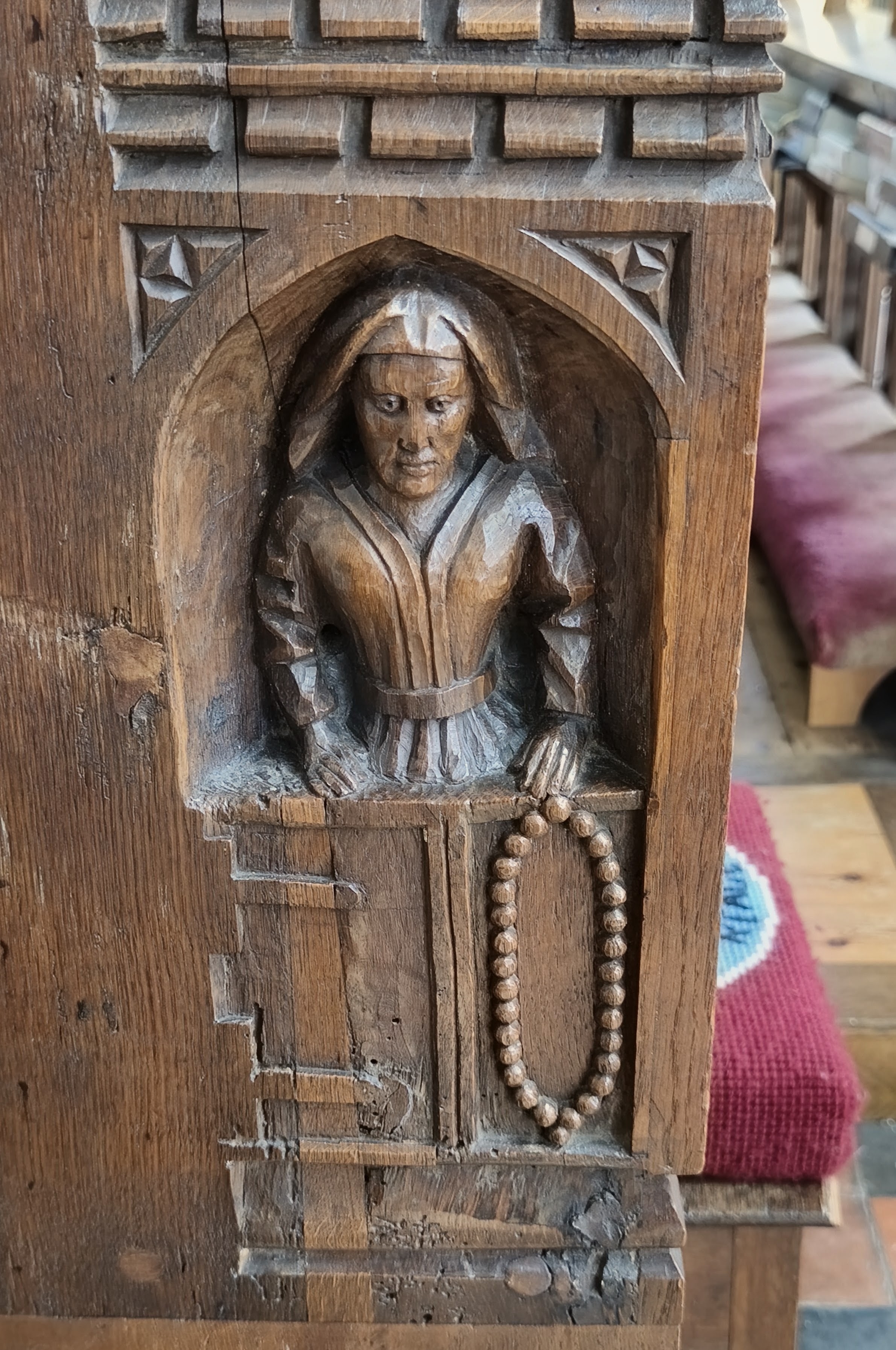
(Image: Carving believed to be John Chapman. Source: E.Holohan 2026)
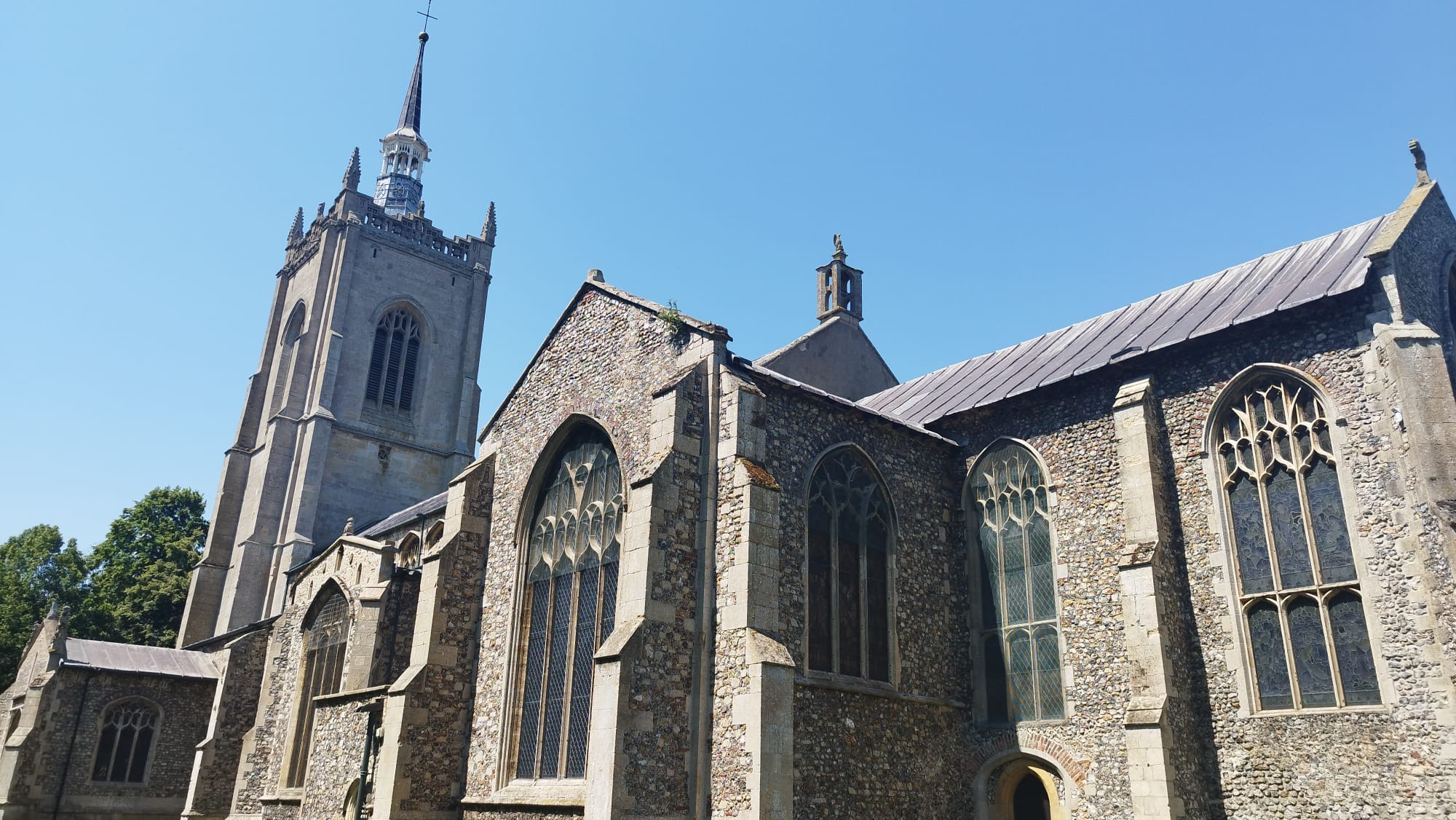
While researching both the folklore and the historical origins of the Pedlar of Swaffham, I discovered that St Peter and St Paul’s Church contains carvings believed to depict the historical John Chapman, the man thought to have inspired the legend. That made the church my first destination.
Walking from the marketplace down a wide lane, the great tower of St Peter and St Paul’s gradually came into view, rising above the surrounding buildings. Stepping inside, I was immediately struck by the magnificent hammerbeam roof stretching overhead. The church was quiet, filled with the sort of peaceful atmosphere that encourages you to slow down and take everything in with reverence.
I then began my search for the famous carvings.
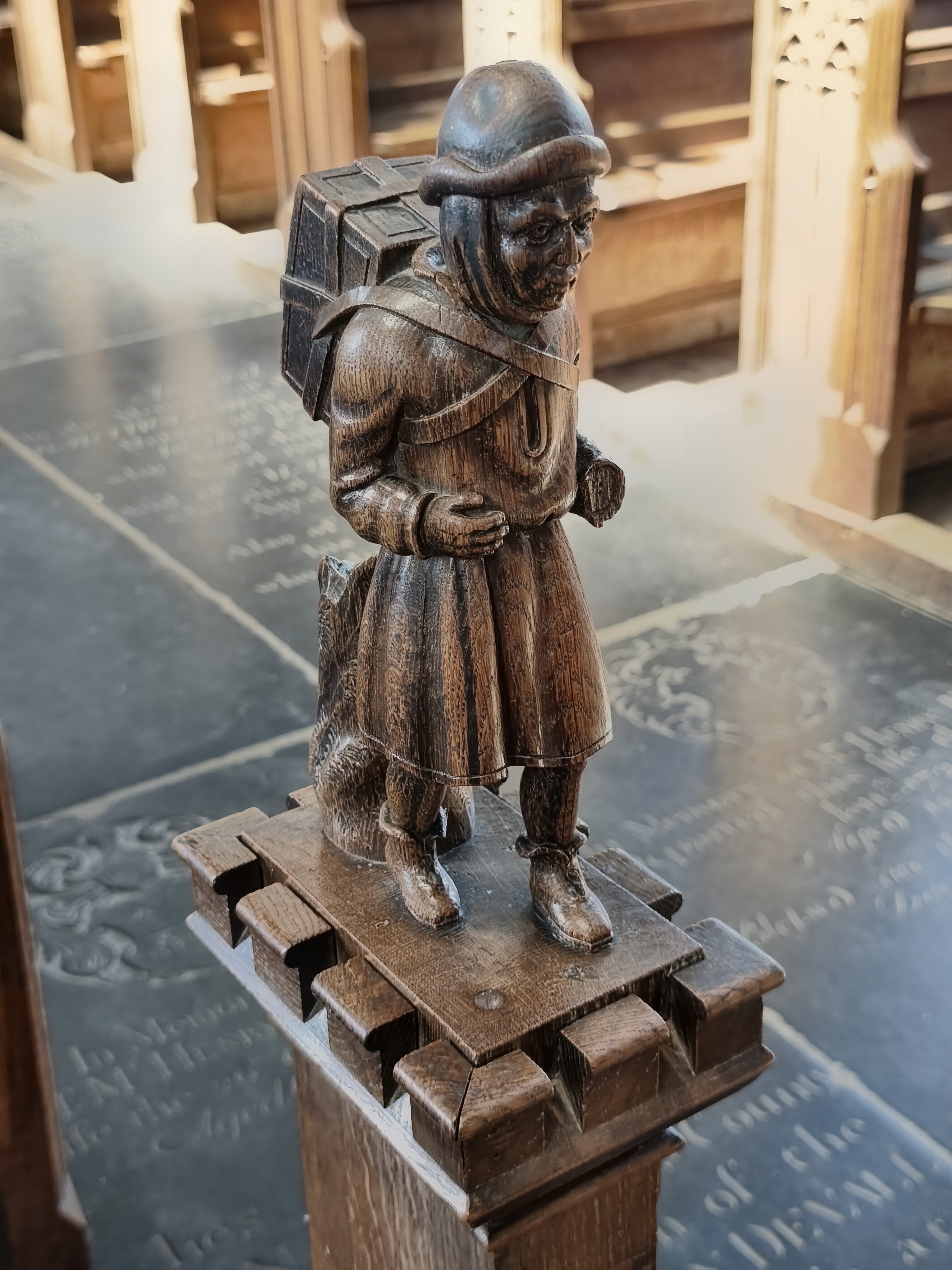
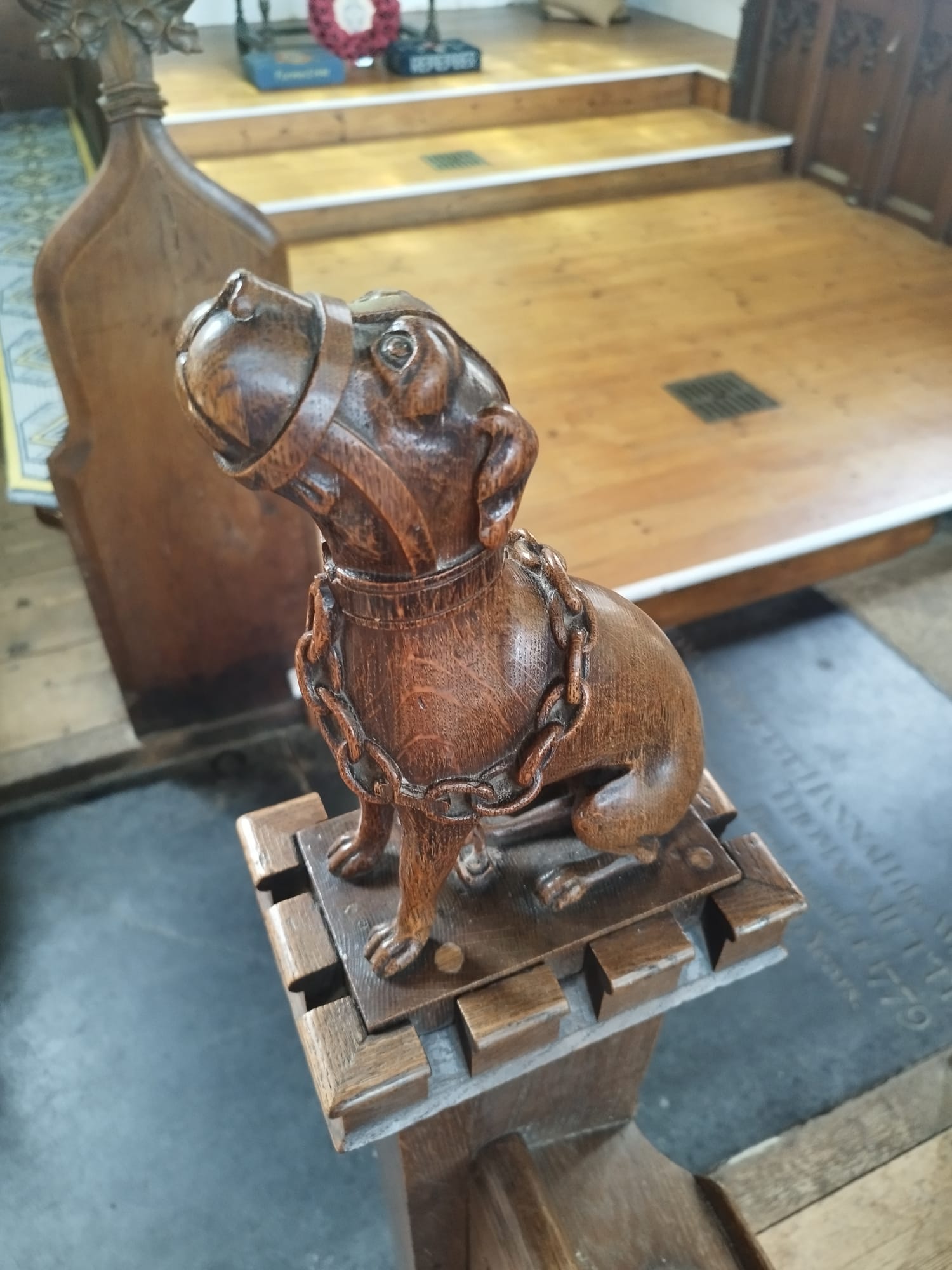
The first I found were on the bench ends. Some showed a folkloric depiction of the Pedlar of Swaffham wearing his close fitting rolled brim hat and carrying his pack. Nearby were carvings of his faithful dog. They were wonderful to see, but they were not the figures I had come looking for.
Further into the church, I finally found them. The carvings believed to represent the historical John Chapman show him peering from a window, while his wife looks out from a balcony above. It felt strangely moving to come face to face with someone who had lived in my imagination since childhood.
The Church Behind the Legend
The history of the man in the carving is closely linked to the history of the church itself.
(Image: St Peter and St Paul’s Church, Swaffham. Source: E.Blackshaw 2026)
St Peter and St Paul’s Church was rebuilt during the fifteenth century, funded by a number of wealthy local benefactors. Among them was John Chapman, whose generosity helped finance the work and whose likeness is thought to survive within the church.
It is here that history and folklore begin to merge. The documented life of John Chapman became entwined with the local legend until it became difficult to separate the historical benefactor from the legendary pedlar. Together, they created one of Norfolk’s most loved folk stories.
Who was John Chapman? Why did he become known as the Pedlar of Swaffham? How did the story of one Norfolk merchant become one of England’s most enduring folktales?
Settle in and let us follow the dream that turned an ordinary pedlar into a legend.
The Pedlar’s Dream
John Chapman was a pedlar, a travelling merchant, who wandered around Norfolk in the fifteenth century, taking his goods from one market to another. On market days he would join the other traders selling everything from brooches and combs to silver mirrors, eggs, spices, mustard and freshly baked bread. With his packhorse loaded with wares, John would leave Swaffham early in the morning and spend the day selling what he could. He’d then stay overnight in simple lodgings and return home the next day.
One day he came home tired and disappointed. Business had been very poor and he had not sold a single thing, not even one copper pan.
After his meal he complained to his wife that money was becoming short and trade was getting harder. The long journey had worn him out, so he went straight upstairs to bed.
That night he had the strangest dream.
(Image: Pedlar of Swaffham bench end. Source: E.Holohan 2026)
The dream was so vivid that it felt completely real. A man appeared to him over and over again, telling him that if he travelled to London Bridge and stood there, he would hear something that would lead him to his fortune.
When he woke the dream stayed with him. He tried to put it out of his mind, but it kept returning. The next day he thought about it again. Then the day after that. The more he tried to ignore it, the more it seemed to pop into his head.
Eventually he could stand it no longer.
“I have to go to London Bridge,” he told his wife.
She thought the whole idea sounded preposterous, but she could see he had made up his mind. If travelling all that way would finally put the dream to rest, then she was not going to stop him.
So John packed a few clothes and some food for the journey, called to his faithful dog, and set off on the long road to London.
After many days of walking he finally arrived in the hustle and bustle of the great city. Before long he found London Bridge, but it was nothing like the bridge we know today. In those days it was lined with houses and shops, with people living and working all along it. It was one of the busiest places in England.
John found a place to stand and waited.
He watched everyone who passed, listening carefully to every conversation. Surely someone would say the words he had travelled all this way to hear.
One day passed. Then another. Still nothing happened.
On the third day a shopkeeper noticed him and asked why he had been standing on the bridge for so long.
John admitted that he was there because of a dream. The shopkeeper just laughed.
“My friend,” he said, “if I believed dreams, I’d be as foolish as you. Only a few nights ago I dreamed I should travel to the home of a man called John Chapman in Swaffham and dig beneath the tree behind his house. According to my dream, I’d find a great treasure there. But you don’t see me rushing off to Norfolk, do you?”
(Image: Chapman’s dog. Source: E.Holohan 2026)
The shopkeeper laughed again and went back to his business.
John stood speechless, scarcely believing his own ears. Without wasting another moment, he turned around and began the journey home.
As soon as he reached Swaffham he grabbed a spade and hurried to the apple tree behind his house. He dug as quickly as he could, hardly expecting to find anything, yet still hoping.
Then his spade struck something hard.
He uncovered a chest buried beneath the earth, filled with gold coins. He and his wife were overjoyed. But carved into the lid was an inscription in Latin that neither he nor his wife could understand. He started to worry that this might not be his fortune, but perhaps a curse inscribed. Hoping someone might recognise the words, John placed the chest in his window.
It wasn’t long before some educated young men who knew the language happened to pass by. They read the inscription and translated it.
“Under me doth lie, another much richer than I.”
John didn’t need telling twice.
He returned to the tree and dug even deeper. Soon he pulled up another chest, this one far larger than the first. Inside were coins, jewels and riches beyond anything he had ever imagined.
The pedlar’s fortune had finally been found.
According to the legend, John Chapman became one of Swaffham’s wealthiest men. Grateful for his good fortune, he helped pay for the rebuilding of St Peter and St Paul’s Church.
Whether every detail really happened is impossible to know. Over the centuries, history and folklore have become intertwined. More than five hundred years later, the pedlar remains a symbol of Swaffham and is immortalised on the town sign. Visitors can still find the carvings said to represent the pedlar and his loyal dog, and his story continues to be told in Swaffham and far beyond.
As I walked from the church, I thought my journey with the Pedlar had come to an end. In reality, it was only just beginning. While researching the Swaffham legend I had come across another story of a prophetic dream and hidden treasure, but this time from a place with a very personal connection to my own life.
It made me wonder whether the Pedlar of Swaffham is just one version of a much older story, one that has travelled across countries and centuries.
That is a journey I’ll be exploring in the next part of this series.
(Image: Swaffham Town Sign. Source: E.Holohan 2026)
Sources
Dixon, Geoffrey M. Folk Tales and Legends of Norfolk. Minimax Books Ltd, 1 Dec. 1998.
Westwood, Jennifer, and Jacqueline Simpson. The Lore of the Land : A Guide to England’S Legends, from Spring-Heeled Jack to the Witches of Warboys. London, Penguin Books, 2006.
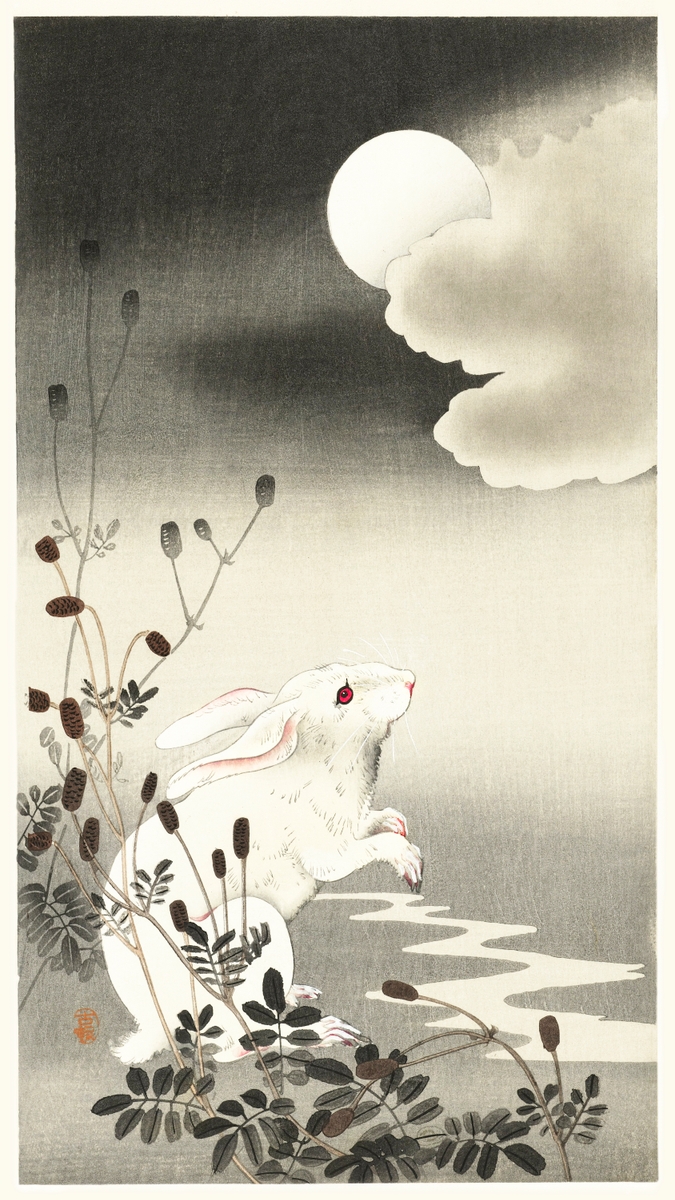
(Image: Rabbit at full moon (1900 – 1930) by Ohara Koson (1877-1945). Source: The Rijksmuseum. Digitally enhanced by rawpixel.)
On quiet spring evenings, when the light begins to fade into dusk, hares emerge at the edges of fields and lope out from the hedgerows. For centuries, people across Britain and Ireland have watched these mysterious creatures and wondered if what they were seeing was just an animal, or something more.
At Easter, the cheerful Easter bunny visits, bringing us gifts of colourfully wrapped chocolate eggs. Children run in excitement around gardens, peering under hedges and amongst the golden daffodils, looking for these jolly treats left by the benevolent bunny. The Easter Bunny is the soft and fluffy, Victorian popularised version of something much older that has haunted the human imagination since ancient times. The hare bounds out to us from the shadows of Easter folklore as a symbol of renewal, fertility, and spring abundance. Beneath these positive symbols, however, there lies something far darker and much more superstitious. Across Britain and Ireland, we find that stories persist of spectral hares glimpsed from the dark treelines at dusk, tales of long-eared restless spirits still bound to the land, and beliefs that these creatures are portents of ill fortune. From the rugged cliffs of Cornwall to the windswept coastal tracks of Cumbria, these uncanny creatures blend both folklore and haunting.
The White Dobbie of Bardsea, Cumbria
Our first legend takes place on stormy nights on the coastal road between Bardsea and Ramside in Cumbria. Here, local lore tells of a sinister phantom known as “White Dobbie”. This is no kindly household spirit. This is something far more disturbing. The White Dobbie appears as a gaunt, sorrowful-looking pilgrim with feverish eyes. Running ahead of him is a ghostly-looking scraggy white hare with bloodshot eyes. The mere sight of this ghoulish hare is said to be enough to terrify dogs and cause them to run away howling.
One local tale involving the White Dobbie happened within the sanctity of the church in Bardsea. A female bellringer here witnessed the spectral white hare leaping around the belfry as she tolled the passing bell for a death. The ominous White Dobbie stood next to her, sinisterly whispering, “Who for this time?” The phantom hare then leapt into the Dobbie’s pocket and stared out at her menacingly. The spectres only disappeared when two other people arrived at the belfry, surprising them. However, stories still tell of the Dobbie and the hare making appearances when the passing bell is rung or haunting the coastal roads. Local theories suggest that the Dobbie is the ghost of a murderer doomed to forever wander as punishment for their sin, while the hare contains the restless soul of their unfortunate victim. Cumbria, however, is not the only place where hares take on a more sinister form.
The Bolingbroke Hare, Lincolnshire
We turn our gaze across the country to Bolingbroke Castle in Lincolnshire, which is famously associated with a phantom white hare. In the 17th century, antiquarian Gervase Holles described a hare spirit that frequented the castle and grounds as “a certain truth” known to the local people. Local legend tells us that the hare is a transformed witch who had once been imprisoned at the castle. Historical accounts suggest the ghostly hare would leap over people or run between their legs, while any dogs sent after it would return to their owner crying. The spectral hare was frequently hunted by hounds, but could never be caught. Even to this day, some claim that the hare can be seen in the area during March, a month often linked with hares in folklore.
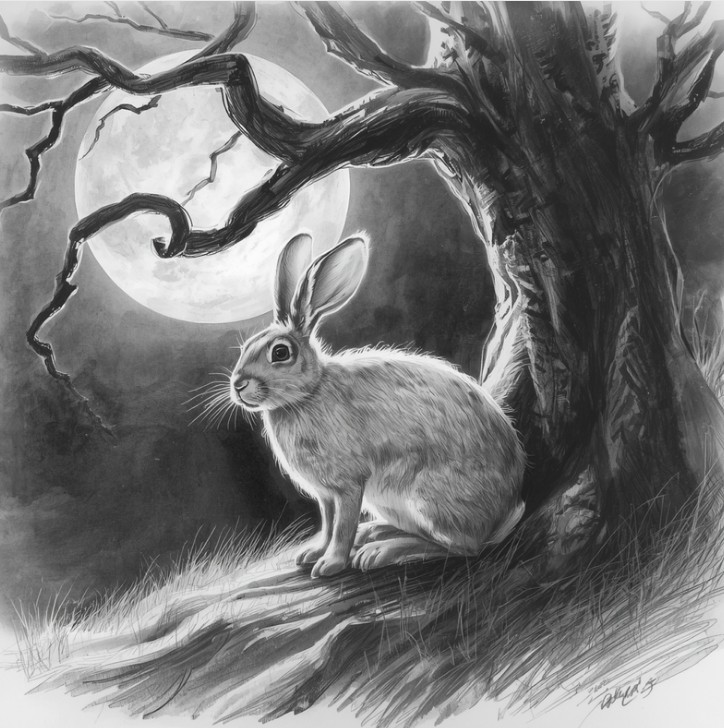
(Image: Hare at night. Source: Canva 2026)
Spectral Hares of Cornwall
Cornwall is rich in ghostly hare legends, but one such old traditional Cornish story tells the sad tale of “The Maiden’s Ghost”. A young woman who loved unwisely, died broken hearted after being deceived by her lover. Still forlorn, she is said to haunt her former suitor in the guise of a hare. The phantom hare was said to follow him everywhere, but could not be seen by anyone but him. As with all folklore, there are different versions of the tale. While the spectral hare sometimes saves her betrayer’s life, the haunting ultimately leads to his doom.
The “White Hare of Looe” is one fine example of the Maiden’s Ghost. The white hare here is a ghostly apparition that is said to be the spirit of a girl who took her own life after being jilted by a local man. The hare is said to roam the road between Talland Bay and one of the oldest pubs in Looe, The Jolly Sailor.
According to tradition, the white hare is the ghost of a girl called Sarah who fell head over heels in love with a local lad. Sadly, that local lad was handsome, easily bored, and had a roving eye. Despite promising to marry Sarah, he called off the wedding as he had fallen for the barmaid of the Jolly Sailor. This was too much for Sarah to bear, and stricken with heartbreak, she took her own life.
Sarah’s grief was too strong and extended beyond death, as her spirit returned in the form of a ghostly white hare. The apparition haunted the old road, and she would follow her former lover to and from the pub.
The hare would sometimes appear in front of her ex-lover and his new lady, and he began to suspect that the hare was much more than a curious living animal. The hare would gaze at him with sorrowful eyes, and guilt and shame weighed on him. After a time, the lad became sick and died from an unknown illness. Since then, it is said that meeting a white hare in this region may bring bad luck, misfortune, and sometimes death. Just imagine walking along that coastal road at night and catching a glimpse of something white moving ahead of you…
Shapeshifting, Otherworldly Beings
Hares lead a shadowy existence, preferring to feed in the fading light of dusk or at night, which lends a natural air of mystery to them as animals. The ancient Celts, for example, revered them as sacred creatures that were connected to divination and the otherworld. Hares roam on the periphery of our vision and between the boundaries of day and night. Perhaps that’s why they are sometimes viewed as liminal beings, creatures that exist in the boundary between this world and the otherworld. This makes them ideal animals for ghost stories as they travel easily through the night, passing through the veil.
These curious creatures are also famous in northern European folklore as being one of the most common disguises of witches. In the past, it was widely believed that witches could shapeshift by transforming into animals, especially hares, so they could roam the countryside unseen. Some historical court records even highlight this belief, for example, at the trial of Julian Cox in 1663, where witnesses claimed to have seen a hare disappear only to be replaced by a woman. Another recurring theme in shapeshifting stories involves hunters wounding a fleeing hare, only to later find a local woman with an identical wound. The connection to shapeshifting blurs the line between human and animal, and human and spectral. Does this link to witches, therefore, reinforce hares as a symbol of the supernatural?
Unlike many other animals, hares may more often appear as ghosts and apparitions because of the transition in their status from revered, almost deity creatures, to devilish monsters. Some folklorists note that the gods of one era often become the devils of another. It’s not hard to imagine that hares may have once been seen as divine animals by early peoples, but later became objects of fear, suspicion, and ill omens under new belief systems as new religions took over.
Phantom hares are sometimes believed to contain the souls of the dead. In the Bardsea legend, for example, the white hare was thought to hold the unquiet spirit of the murdered victim. They are also seen as omens of tragedy, as their appearance in folklore is often a warning of a fatal accident or approaching storm. Rather than just a common animal ghost, this makes them a source of omens and portents. It was considered especially unlucky to see white hares at the turn of the 19th century, as they were believed to foretell misfortune or doom to the onlooker.
No Ordinary Animal
Hares have always existed on the edge of things. They move between the boundaries between field and woodland, day and night, and the familiar and the unknown. It is therefore no surprise that folklore places them between two worlds as well: part animal, part spirit, and sometimes even containing a human’s soul.
From melancholy ghost stories in Cornwall to ominous sightings on quiet Cumbrian roads, these creatures carry more than just the symbolism of spring with them. They encapsulate something older and something less simple to explain. They bring unease and a feeling that not everything we see in the gloaming belongs entirely to this world. If you happen to catch sight of one at dusk, and see it watching back, you might hesitate and wonder whether you’ve seen just an ordinary animal, or something more.
A tale of jealousy, violence, and a spectral hound.
(Image: Dead Maids Junction on the A36. Source: Maurice Pullin 2008)
Some place names are scenic. Others are puzzling. And then there are those that stop you mid-journey.
“Dead Maids.”
I first noticed the name while travelling through the quiet Wiltshire countryside near Salisbury, at a crossroads on the A36. Surrounded by rolling fields and woodland, nothing about the landscape seems sinister at first glance. Yet names like Dead Maids Crossroads, Black Dog Woods, and Black Dog Hill suggest something darker beneath the surface: a story rooted in violence, grief, and restless spirits.
In this stretch of countryside between Warminster and Bath, folklore seems to cling to the hedgerows, and the veil between history and haunting feels unnervingly thin.
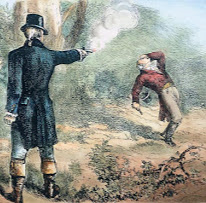
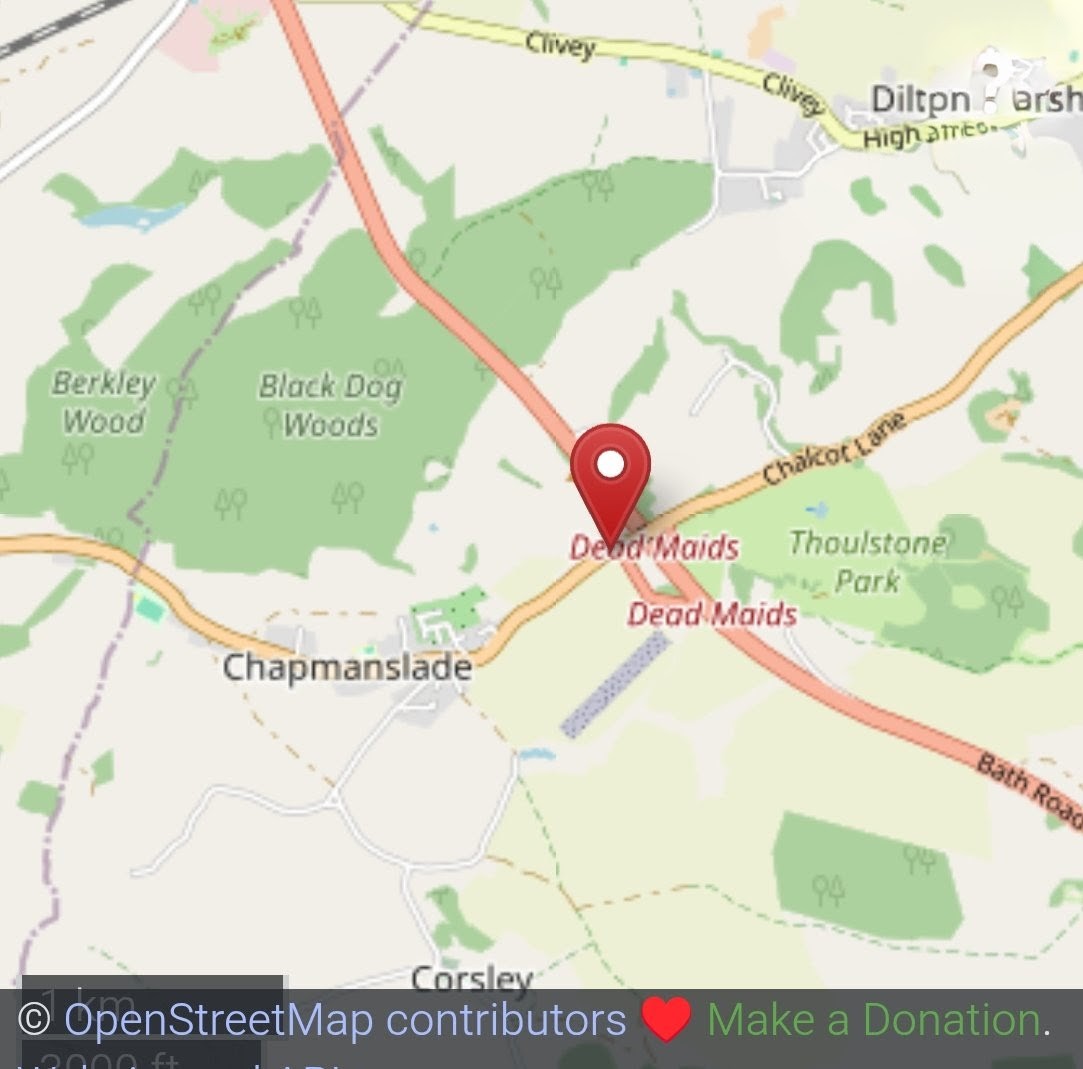
The most widespread legend of the area at Chapmanslade and Dilton Marsh is linked to the crossroads, known as “Dead Maids”. Local folklore tells of a farmer’s daughter, perhaps from what is now called “Dead Maids Farm”, who found herself in a love triangle, pursued by two eligible suitors between the late eighteenth and early nineteenth centuries. Initially, neither man knew of the other, and the farmer’s daughter enjoyed the affections of both for a time. Inevitably, this deception was unmasked, and the men quarrelled over who should win the hand of the girl in marriage. The girl could not choose between them, and it was agreed that a duel would decide the issue once and for all.
At dawn, the two suitors faced one another on a windswept hill while the faithful black dog of one of the men quietly watched on. The pistols were fired, and one of the men fell, shot through and killed instantly. As he fell, his trusty dog, driven by despair, exacted immediate justice on the apparent victor of the duel. The beast, desperate to avenge his master, savaged the victor and tore out his throat before vanishing into the dense, shadowed woods: never to be seen alive again.
Buried at the Crossroads
After the duel, the farmer’s daughter, grief-stricken and distraught at the violence she had incited, tragically took her own life. In those days, people who had ended their own lives were denied burial in consecrated ground, sometimes being interred at parish boundaries or crossroads. The multiple directions of crossroads were believed to confuse any troubled spirit, preventing it from rising and finding its way back to haunt the living.
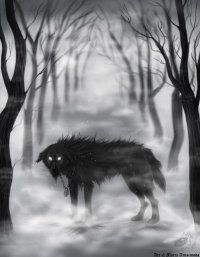
It is from this tragedy that the crossroads got its name, and it is said that the unfortunate dog later died of grief in those same woods, now named “Black Dog Woods”, and haunts them even to this day.
(Image: Map of Black Dog Wood & Dead Maids. Source: OpenStreetMap 2025)
The Black Dog of the Hill
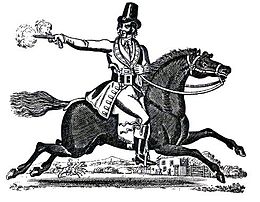
Yet the tale of the duel and the grieving dog is not the only explanation for the name “Black Dog Hill”. Some claim it was the very hill where the sad duel was fought, but others tell the tale of a dastardly highwayman who hid in the shadows here. Before the A36 was straightened in the 1970s, the road here used to twist and turn up the hill. These sharp bends provided ideal cover for highwaymen.
One particular rogue would lie in wait in the darkness with his companion, a large, highly trained black dog. As a stagecoach slowed down to navigate the bend, the beast would leap onto the vehicle and sink its teeth into the driver’s neck, bringing the coach to a halt. While the carriage was at a standstill, the highwayman would rob the passengers with little resistance.
One day, however, the highwayman’s reign of fear was cut short when he was eventually shot dead. The fate of his trusty canine accomplice remains a mystery, but there are those who say Black Dog Hill is now haunted by a spectral black hound.
Whether born from tragedy at dawn or the violence of highway robbery, the black dog lingers here in local memory. Perhaps it is merely the human need to impose meaning on cruel twists of fate such as these. Or perhaps something older moves through these woods after dark.
Today, traffic passes quickly over Dead Maids Crossroads. Drivers rarely slow, and few know the stories attached to the name on the signpost. But folklore has a way of outlasting roads, maps, and modern scepticism.
And if you find yourself travelling that stretch at dusk, you might glance towards the treeline. Just in case something dark and doglike is watching from the shadows.




Leave a Reply