Pirates, Witches and Ghostly Knights: Exploring Great Yarmouth’s Darker Side

(Image: Haunted Seaside Resort. Source: WordPress 2025)

Great Yarmouth isn’t just a seaside town of sugar donuts and amusement arcades; it’s a place rich in weird tales, ghostly sightings, and strange histories. From pirates to witches, from mystics to mummies, the town bubbles with secrets that float through its streets and graveyards. Join me as we walk through Great Yarmouth’s darker side, exploring haunted corners, overlooked tragedies, and uncanny stories.

Our journey begins in the heart of Great Yarmouth, where the imposing St Nicholas’ Church stares out over the town like a sentinel. Its stones have witnessed hundreds of years of worship, but it has also seen scenes of witchcraft, piracy, and ghostly happenings.

Stop 1: St Nicholas Church, Great Yarmouth

(Image: St Nicholas Church, Gt Yarmouth. Source: E.Holohan 2023)

This church is said to be the biggest parish church in the United Kingdom. Once belonging to a Benedictine priory, its construction of was completed in 1119. Although very little of the original Benedictine church now stands, the base of the current tower is Norman. Expansions and changes were made during the Middle Ages. In the 13th century, the aisles were widened. In the 14th century, the south porch was constructed. In the 15th century, the north wall was equipped with additional windows.

In the 16th century, the church was split into three sections, each of which was used by a different denomination. When the church was renovated in the 19th century, these sections were once again connected. However, a large portion of this work is no longer visible because the majority was completely destroyed by bombing and fire in 1942. Reconstruction of the inside took place from 1957 to 1960.

In the graveyard: English Pirate Attack

(Image: Headstone of David Bartleman. Image: E.Holohan 2023)

In the graveyard here, we find a gravestone that has a rare inscription that refers to an English pirate attack:

“To the memory of David Bartleman, Master of the Brig Alexander and Margaret of North Shields, who on the 31st of Jan 1781 on the Norfolk Coast with only three 3 pounders and ten men and boys nobly defended himself against a cutter carrying eighteen 4 pounders and upwards of a hundred men commanded by the notorious English pirate Fall and fairly beat him off. Two hours after the enemy came down upon him again, when totally disabled, his mate Daniel MacAuley, expiring with the loss of blood and himself dangerously wounded, he was obliged to strike and ransome. He brought his shattered vessel into Yarmouth with more than the honour of a conqueror and died here in consequence of his wounds.  On the 14th of February following in the 25th year of his age”.

This stone, dedicated to the remembrance of David Bartleman, Master of the brig Alexander & Margaret of North Shields, is tucked away in the old church graveyard. On 31st January, 1781, Bartleman bravely defended himself against a cutter with eighteen four-pounder cannons and a crew of up to 100 men while sailing the Norfolk coast with a crew of ten men and boys and only light armament of three-pounders. Fall, an infamous English pirate, commanded the Cutter attacking.

This triumph was fleeting, though, as two hours later Fall’s Cutter struck the unfortunate Brig once more. The battle raged on until the Alexander & Margaret was fully incapacitated. Captain Bartleman found himself in a desperate situation; he had no choice but to surrender and pay a ransom to ensure the safety of his ship and crew. His first mate, Daniel MacAulay, was seriously injured and rapidly losing blood, leaving the captain with little choice to make the difficult decision to pay to secure their release. Then, on 14th February 1781, at the age of 25, he brought his proud but broken vessel into Yarmouth, where he passed away from his wounds.

A stone was placed above the tomb by his father, Alexander Bartleman, to honour the bravery of his son’s death, the courage of his loyal mate, and the notoriety of Fall the Pirate.

Daniel Fall, also known as Fall the Pirate or John Fall, first gained fame in November 1780 when he captured two colliers from Lowestoft South Roads. At that time, he was known as “the noted Daniel Fall, a smuggler and captain of a large privateer.” The frigate Pegasus set sail from Yarmouth in pursuit but failed to locate him. An article in the Ipswich Journal reported that a 20-gun American cutter privateer had seized two large merchant ships off Pakefield, but the man-of-war ‘Fly’ from Hollesley Bay intercepted and took back the stolen goods.

(Image: Pirate Ships Battle. Source: WordPress 2025)

Fall was known to sail under American colours, suggesting that the privateer mentioned might have been his ship. By February 1781, around the time of the attack on the brig Alexander & Margaret and death of David Bartleman, he was spotted on one of the Harwich packet ships, where he raised the American flag and displayed letters of marque from America, France, and Holland. Shortly after, it was reported that Fall, now known as the ‘rebel commodore’, was operating off Orford Ness with a squadron of Dunkirk-based privateers.

In early June 1781, Fall captured the Prince of Wales using two cutters: the Liberty, which he had recently stolen from a Scottish port, and the Fearnought, which he commanded.

By April 1782, Fall was reported to be heading into the Irish Sea, but after that, he seemed to disappear from the pages of history. No further sightings or reports of his activities surfaced along the East Coast. What happened to the notorious pirate Fall after his last raid: did he perish in battle like his poor opponent David Bartleman, or vanish into obscurity?

Witches Memorialised

Also in the churchyard we find the memorial plaque commemorating the five women hanged at North Denes during the Matthew Hopkins Witch Trials who were buried here; Bridget Howard, Margaret Blackbourne, Alice Clisswell, Elizabeth Bradwell, and Elizabeth Dudgeon. They are located in the churchyard’s north side. Why were the supposed witches buried here, in consecrated ground, when most others accused of such crimes were cast out to the crossroads?
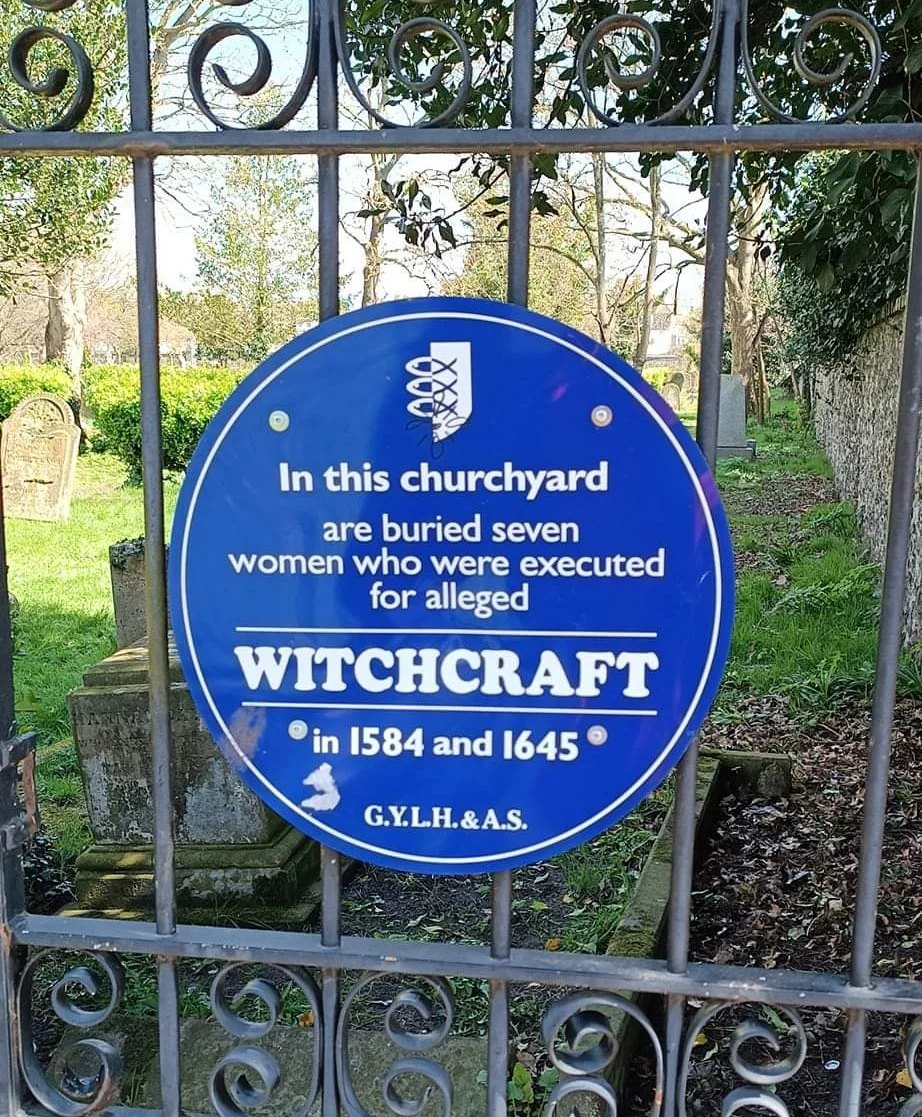
(Image: Witches Memorial plaque. Source: E.Holohan 2023)

The history of Great Yarmouth is associated with the 17th-century witch hunts, especially in 1645 when Matthew Hopkins, the so-called Witchfinder General, paid the town a visit. Many people, both men and women, were tried for witchcraft at this time, and some of them were found guilty and put to death. The five women were hanged at nearby North Denes during these Witch Trials. Many of the accused in Great Yarmouth, according to historians, were simply social misfits or victims of unrelated disputes, not actual practitioners of witchcraft.

It has never been explained why the supposed witches were buried in the churchyard. According to a long-standing custom, people who are found guilty of crimes, including witchcraft, are typically buried in unconsecrated ground or at a crossroads, where their spirits would be flummoxed and unable to return and cause trouble in a society that values godliness.

In reality, according to Christian tradition, outcasts and suicides were the only people buried on the north side of a churchyard. The unbaptised, excommunicated, strangers, vagrants, executed criminals, and people suspected of practicing witchcraft were all included in this proclamation. This was frequently called “lying out of the sanctuary” or “burial without the sanctuary.” The saying “the devil walks in dark places” stems from ancient times, and was initially used to describe the darker parts of a churchyard, particularly the north side of a building.

Thomas Vaughn: Body Snatcher

Also at the graveyard we can see the plaque remembering local body snatcher, Thomas Vaughn. Ten remains were taken from Great Yarmouth’s St. Nicholas Churchyard in 1827 by Thomas Vaughn and his two accomplices. In the end, he was imprisoned, but only for half a year! For more on this, read on for Body Snatchers Row 6.
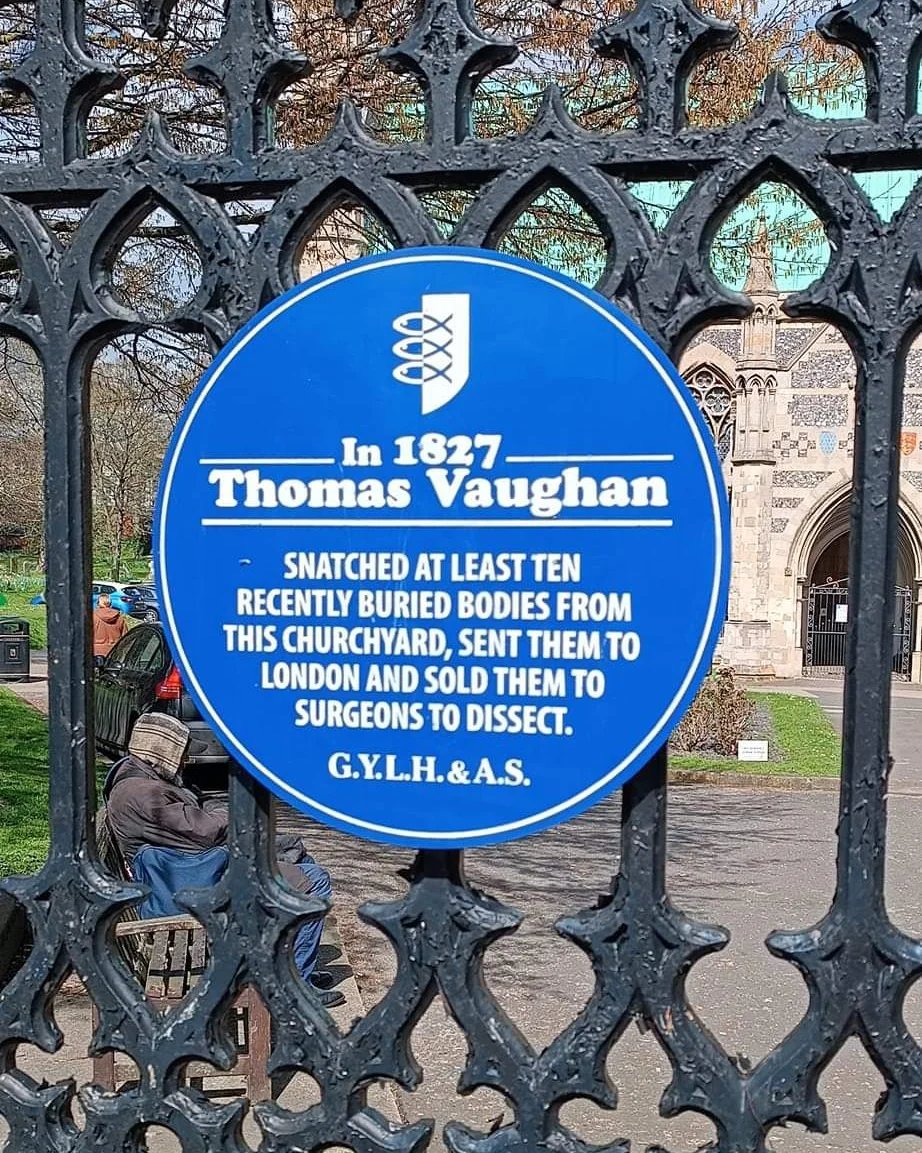
(Image: Thomas Vaughn plaque. Source: E.Holohan 2023)

Oliver Tomkins: Cannibal Victim

Situated in the graveyard you can see the grave marker of Oliver Tomkins. There is likely no body buried under the marker, as this Great Yarmouth citizen, about 120 years ago, was rewarded by cannibals for his attempts to spread the word of God by being killed, dismembered, cooked, and eaten. This was all within hours of Oliver Tomkins’ final diary entry following his arrival on a Papua New Guinean island inhabited by cannibals: “they tried hard to persuade us to come ashore…we promised we would visit their village in the morning.”  The reward for his visit to the village was to be his host’s dinner!
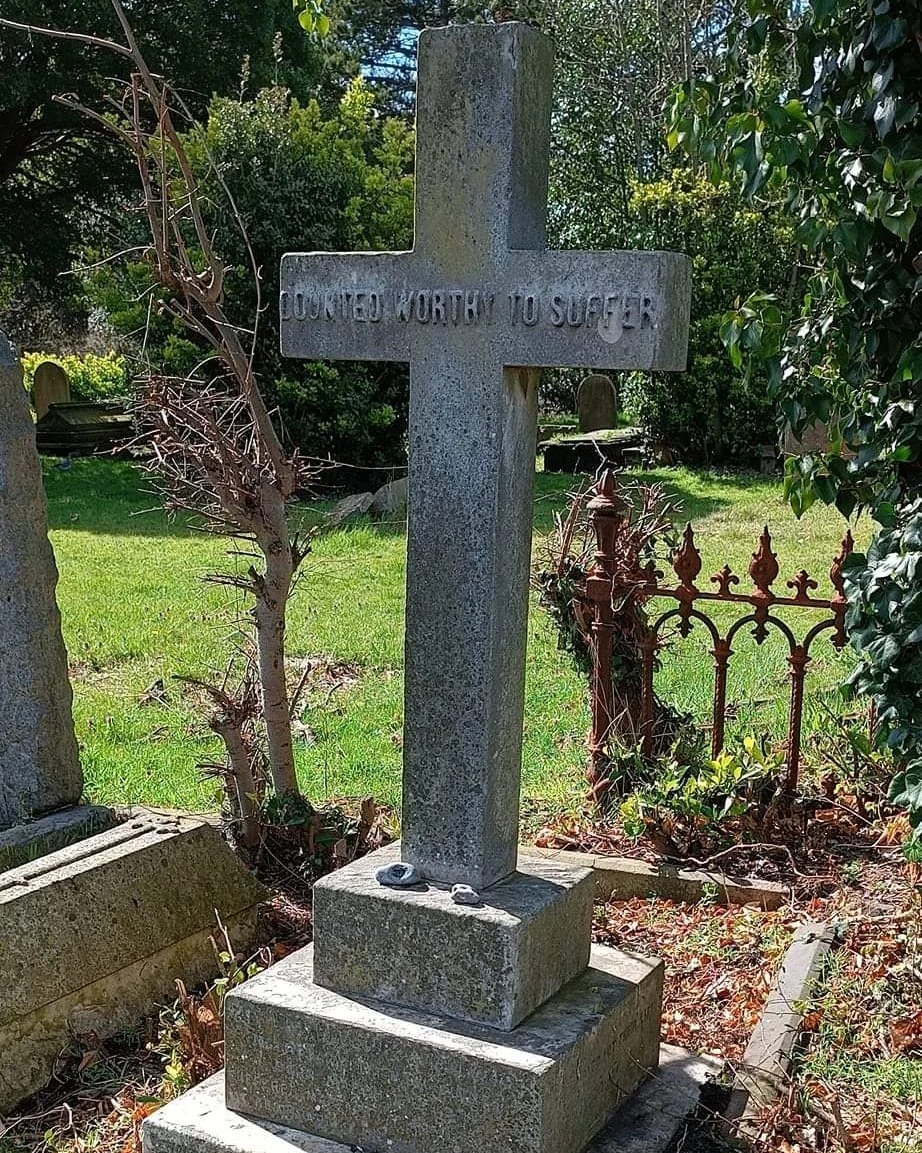
(Image: grave marker of Oliver Tomkins. Source: E.Holohan 2023)

Mystic: Margery Kempe

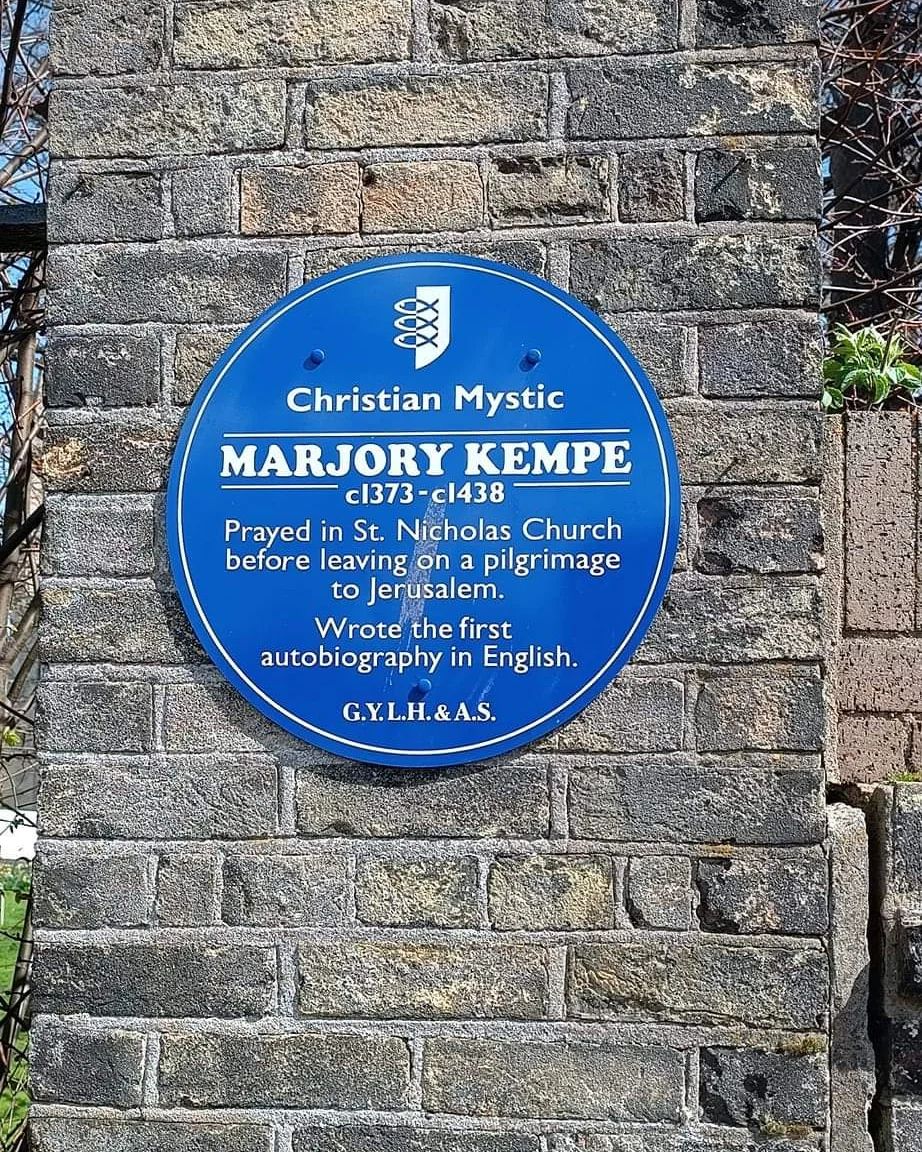
(Image: Marjory Kempe plaque. Source: E.Holohan 2023)

Next up at St Nicholas’ Churche we find Margery Kempe’s blue plaque.

Many believe that “The Book of Margery Kempe,” written by the English Christian mystic Margery Kempe (c. 1373–after 1438), is the first autobiography in the English language. Kempe’s domestic struggles, her extensive pilgrimages to holy sites in Europe and the Holy Land, and her mystical interactions with God are all chronicled in her book.

Margery Kempe was considered a mystic due to her profound and personal relationship with God. This was marked by visions, conversations with Jesus, Mary, and other religious figures, and via active participation in biblical events through these visions. She also embraced a highly devotional and pious lifestyle, which included prolonged weeping, fasting, and pilgrimages, which were all seen as evidence of her spiritual connection

Kempe prayed in St Nicholas church before leaving on a pilgrimage to Jerusalem and a blue plaque now commemorates this.

Churchyard Hauntings

As well as being a place of rest, the church graveyard is also known for its unquiet residents. According to legend, at the height of “Egyptomania,” in the 1900s, a well-wisher donated the coffin of an ancient Egyptian princess to the Priory school next door to Great Yarmouth Minster. People were fascinated by mummies in this period because they believed that the ancient bodies had supernatural abilities. Some mummies were even ground into a dust for use as medicine or shown at gruesome “unwrapping parties.” Mummies were the height of fashion at this time!

Unfortunately, many mummies suffered in Europe’s humid environment after being removed from their natural hot, dry resting places. The princess mummy was kept in its case on display in a classroom, but it was eventually agreed that the only sensible thing to do when the mummy inside started to smell was to bury it in the church graveyard.
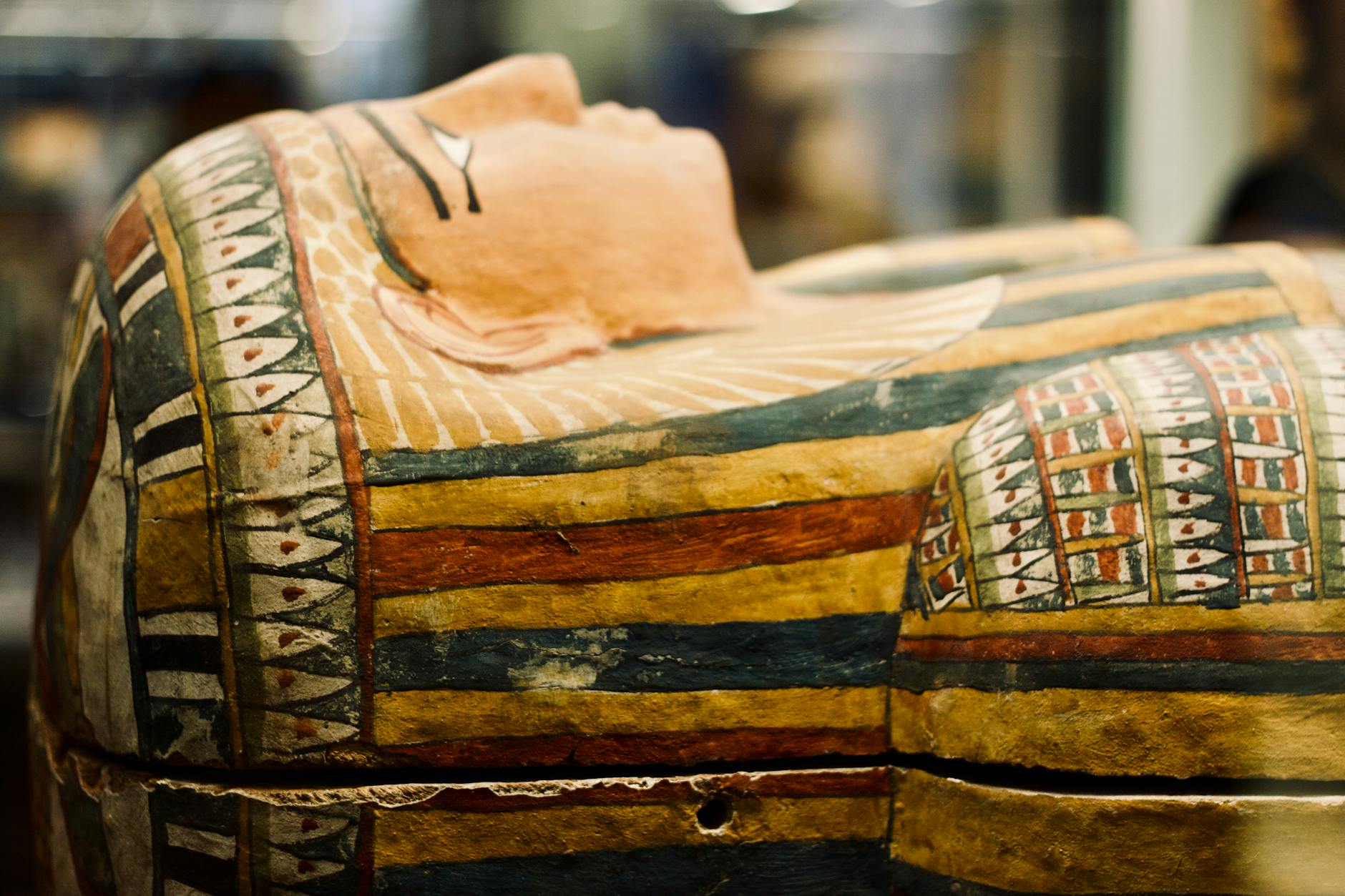
(Photo by antonio filigno on Pexels.com)

The Vicarage and St. Nicholas’ Church started to experience after dark knocking noises on their doors shortly after the burial; an investigation into the tapping noises revealed no reason.

The vicar was frequently confused and anxious when he answered the vicarage door to no one after hearing loud bangs. A decision was made to return the mummy to its casket since the noises were becoming unbearable and seemed to be coming from nowhere.

A mummified arm that had been mistakenly left behind when the body was hurriedly buried in the middle of the night was discovered when the box was opened. It seems, it had been begging to be freed and reunited with its body! The noises stopped and there was finally peace once the arm was interred with the rest of the body. The arm left behind; was it an accident, or something more sinister keeping the dead from their rest?

(Image: Ghostly knights. Source: WordPress 2025)

Along with tales of unquiet mummies, the churchyard also has takes of spectral horsemen. Ghostly apparitions were allegedly wreaking havoc in the graveyard in October 1922. A woman reported to the local police that she had witnessed three ghosts in shining armour riding horses across the churchyard.

As word spread, hundreds of people returned night after night to catch a glimpse through the railings, wanting to see these spirits for themselves. However, no further apparitions were seen. A bet was made to anyone who would camp out in the churchyard and to keep watch for the knights, but it was never taken up and the town’s citizens ultimately lost interest.

From the graveyard’s shadowy corners, we make our way down to Row Six. At first glance, it’s just another of Great Yarmouth’s narrow passageways, but this one earned a gruesome reputation as ‘Body Snatcher’s Row’.

Stop 2: Row Six- Body Snatcher’s Row

(Image: Body Snatchers Row sign. Source: E.Holohan 2023)

Row six, Body Snatchers’ Row, leads from St Nicholas’ churchyard to Northgate Street and is a reminder of when human bodies were stolen to order for anatomical dissection in London. In 1827, Thomas Vaughn, a resident of Row six, and his two henchmen, stole ten bodies from the churchyard. Vaughan was employed by Sir Astley Cooper, a surgeon to Queen Victoria. Vaughan used sawdust to conceal the bodies and transported them to London, where they were used for medical training purposes.  Vaughan was tried at the Norwich assizes and received only 6 months imprisonment for this offence. He was later transported to Australia having been caught in possession of clothing he had taken from a corpse. In those days, sadly, theft of property was seen as a far more serious offence than stealing dead bodies.

Leaving behind the grisly world of stolen corpses, we come to a calmer, more literary stop. At 37–39 King Street, we arrive the birthplace of Anna Sewell, the author of Black Beauty. This is a house where tales of compassion for animals meet stories of ghostly presences

Stop 3: Anna Sewell House and The Man in the Window

The author of Black Beauty was born at Anna Sewell House on Church Plain, in Great Yarmouth. In 2021, Redwings Horse Sanctuary purchased the house, which dates to the 16th or 17th century. The property is now used by Redwings to highlight Anna Sewell’s renowned novel and her influence in animal protection.
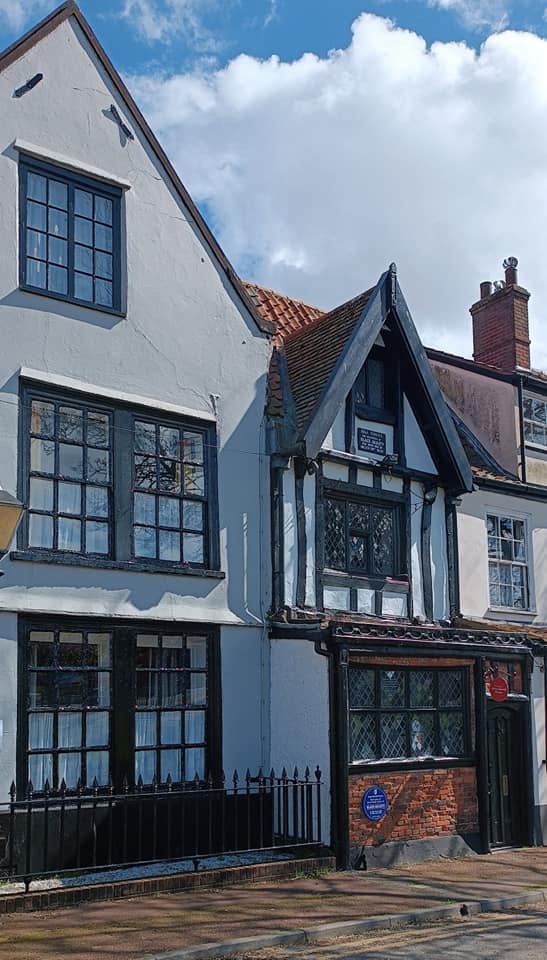
(Image: Anna Sewell’s birthplace in Church Plain. Source: E.Holohan 2023)

On 24 November 1877, for just £40 and without a royalty condition, Anna Sewell sold Jarrold & Sons the entire rights to her book “Black Beauty”. “Black Beauty: his grooms and Companions, the autobiography of a horse” was the title under which the book was published. Since then, the book has sold about 30 million copies worldwide, making it the sixth best-selling book in the English language.

The adventures and misfortunes of a horse named Beauty are the subject of Anna’s tale, which was penned at the White House on Spixworth Road in Old Catton. The story was written in the first person from Beauty’s point of view. Anna survived long enough to learn of its success, but she was never able to witness the book’s eventual bestseller status. In April 1878, she passed away in Old Catton, Norwich, and was buried at the Quaker Chapel in nearby Buxton Lamas, where Anna had family.

In Great Yarmouth, a woman once reported that she saw a strange apparition in the window of the birthplace of the Black Beauty author. According to the eyewitness, Professional psychic medium Freda Joy, a man with “period features” who may have been the sibling of author Anna Sewell can be seen in photos shot seconds apart. Joy stated: “I couldn’t believe what I saw.  I took the pictures within seconds apart and saw what looked like an image of man in the window.”

From this modest town house to a building spectacle, our path now takes us to the Hippodrome, Britain’s only surviving purpose-built circus, where sounds of joyful laughter mingle with shadows of the ghost of its flamboyant creator

Stop 4: The Hippodrome Circus, Where the Showman Goes On

The Great Yarmouth area has a long history of circuses, with travelling circuses appearing as early as 1815 and resident circuses from 1845.

(Image: Hippodrome Circus, Great Yarmouth. Souce: E.Holohan 2023)

The Great Yarmouth Hippodrome, built in 1903, is a landmark and Britain’s only surviving purpose-built circus building that still regularly hosts circus performances. Designed by Ralph Scott Cockrill, it features a unique, sinking ring that can be transformed into a pool for water spectacles. The Hippodrome was the inspiration of George Gilbert, a former circus performer who became a successful showman. The building’s facade features Art Nouveau details, including terracotta and brickwork.

The Hippodrome has hosted a variety of entertainment, including water shows, stage plays, cinema, and cine variety. During wartime, the Hippodrome was even used as a military practice shooting range.  The ghost of showman George Gilbert is also said to walk the upper balcony of the Hippodrome.

Peter Jay bought the building in 1979, restoring the circus floor that sinks into a water feature in 1981 when he presented his first show.  The Jay family continue to produce Circus Spectaculars four times a year, with Jack Jay as ringmaster and producer and Ben Jay as manager. The Hippodrome houses a collection of historical artifacts, props, and other circus memorabilia, curated by Peter Jay.

From the Hippodrome Circus, we make our way walking south on St George’s Road, turn left onto South Quay. Here we enjoy the scenic views along the quay.

Stop 5: A Stroll Along the South Quay

Take a stroll down the historic South Quay. It has been said that there were so many boats leaving Yarmouth in 1913 that you could cross the river from by leaping from one boat to another. The magnificent buildings along the river are a reminder of this port’s history. The Old Merchant’s House and the Great Yarmouth Row Houses are located just off South Quay.

The Rows were a network of winding alleyways where port workers lived.
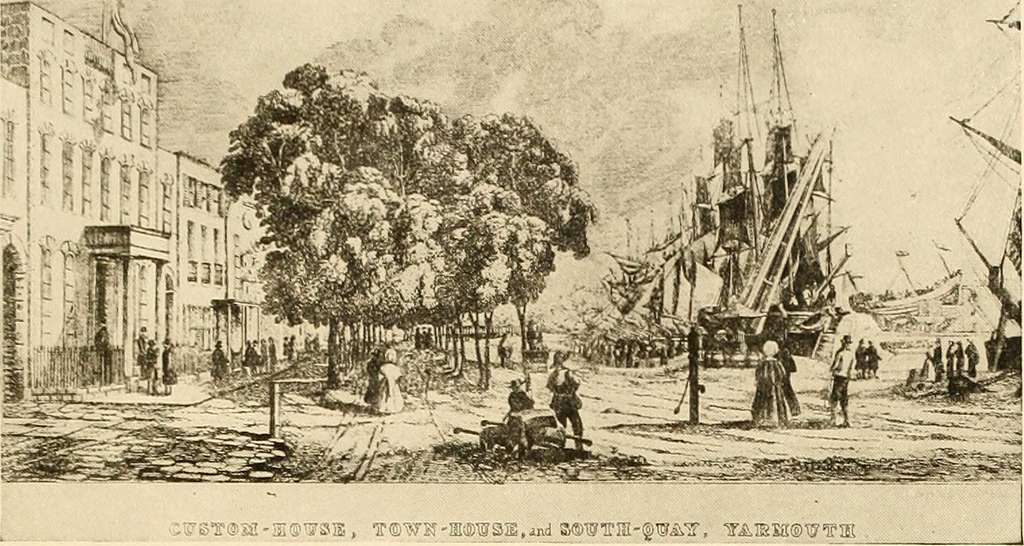
(Image: The South Quay, circa 18th or 19th Century. Source: getarchive.net 2025)

The South Quay Elizabethan House has a reputation for being haunted. Some have called it a “hotbed of paranormal activity”. The Elizabethan House Museum is a historic 16th-century house, which showcases Elizabethan domestic life. It was constructed by affluent trader Benjamin Cowper in 1596, and when Cowper’s fortune grew, it was expanded in the early 1600s. In 1635, the mansion was bought by the town bailiff and local businessman, John Carter. Shortly before the Civil War, it developed as a meeting spot for Parliamentarians, most famously hosting a meeting in 1648 to discuss the future of King Charles I. John Carter’s sons, John and Nathaniel, inherited the house after his death in 1667 and remained there until their deaths in the early 1700s.

The house is said to have a history of paranormal events, including sightings of a ghostly woman, and reports of disembodied voices and unexplained noises The Elizabethan House is a popular location for ghost hunts and paranormal investigations due to its reputation as a haunted location.

As we continue west along the South Quay and head a little deeper through the side streets, we now encounter the Time and Tide Museum, located at 5 South Quay.

Stop 6: Time and Tide Museum

(Image: Reconstructed Victorian Row. Source: E.Holohan 2023)

The Time and Tide Museum is housed in one of the best-preserved Victorian herring curing facilities in the United Kingdom.

The Tower Fish Curing Works, which was first constructed in the mid 1800s and expanded in 1880, is now home to the Time and Tide Museum. The works finally closed their doors in 1988 and The Tower Fish Curing Works was acquired in 1998 with the goal of turning it into a museum. This museum now showcases the history of Great Yarmouth, its herring business and social history.

At this museum you can discover Great Yarmouth’s varied history, its rich maritime and fishing heritage and some of the fascinating characters who made their living from the sea. You can even wander through a reconstructed Victorian ‘Row’ and see inside a fisherman’s home. You can soak in the atmosphere of the 1950s quayside, and hear exciting tales of shipwrecks and gripping rescues.  The museum also contains some items of Fortean interest, such as the walking cane of Robert Hales, the East Somerton Giant.

Finally, we retrace our steps by walking north along South Quay, turning right onto St Nicholas Road and then heading back to the church.

And so, our walk comes full circle, to St Nicholas’ Church. In just a short wander through Great Yarmouth’s streets, we’ve uncovered tales of pirates and body snatchers, witches and mystics, circus ghosts and cannibal victims. This is a town where history and folklore blur, where the past is never quite at rest. Next time you stroll along these cobbles or pause by the quay, perhaps you’ll sense it too: the unseen layers of Great Yarmouth’s darker side.

(Image: The Spook Express, Joyland. Source: E.Holohan 2023)

Reference List


Leave a comment

Spooky Happenings in a Welsh Cottage: Things that Cry Out in the Night.

(Image: View from Pen y Fan © E.Holohan)

Although I write this blog on the unexplained and eerie, I am very much ‘team on the fence’ when it comes to ghosts and the paranormal. I am open to the idea and very accepting of other peoples’ experiences. I believe those who have had these experiences have, on the whole, experienced something they could not explain. Whether their experience was of a ghost or something that can be explained by more natural and scientific causes is another matter and open for debate. I believe that most can be explained by science, even if science cannot yet explain some instances. I hold on to the possibility, however, that a small percentage could be something more eerie. Through this, though, I have never really had an experience myself that I could not adequately explain. That is, until now.

The Cosy Cottage Retreat in Wales

The night in question was one of those nights that leaves you with a shiver down your spine and a story you’ll be telling for years. Picture this: a quaint, charming terraced cottage nestled in the quiet countryside of Wales, the kind of place that feels like a cosy retreat from the hustle and bustle of daily life. My husband Ed and I decided to spend a couple of days here, looking forward to some peace, relaxation and to explore the Welsh hills and valleys of Bannau Brycheiniog (Brecon Beacons). But what we got was something entirely unexpected.

An Unsettling First Night

We arrived at the cottage in the early evening and enjoyed a blissful evening snuggled up in front of a roaring log fire, listening to podcast stories and planning our next day’s adventure up Pen y Fan Mountain.  We soon retired to bed so we could rest well before our energetic plans for the next day.

It was in the early hours of the night when Ed got up to use the bathroom. I was having one of those nights where you just can’t seem to get comfortable, tossing and turning, wrestling with the pillows. Frustrated, I switched the bedside lamp on to rearrange the pillows, taking the chance to do this while Ed was out of the room and wouldn’t be disturbed by the light. As the narrow spiral staircase was right next to the bathroom, I decided to leave the light on to help Ed find his way back without risking a tumble in the dark.

After a time, I was getting sleepy again. I decided to switch the lamp off and settle down, hoping to finally drift off. That’s when it happened.

Through my earplugs, I heard the loud sound of a male crying out. For me to hear it through earplugs, it had to be really quite loud. My heart raced as I immediately thought something had happened to Ed—maybe he’d fallen down those steep, shadowy stairs. I jumped out of bed and rushed to check on him, my mind racing with worry.

To my surprise, Ed was still in the bathroom, perfectly fine and completely unaware of the noise. When he came back to bed, I asked him if he’d made any noises—maybe a yawn or something else that might explain the eerie sound. He hadn’t. He hadn’t heard a thing. I glanced at the clock next to my bed; it was 2:20am.

I felt very spooked by this, so much so that I sent Ed downstairs to investigate the ground floor of the cottage in case an intruder had got in. He inspected it and it was all clear. We listened for any sounds from neighbours or outside, but not a peep. It took me some time, but I finally settled down again and had a fitful night’s sleep.

The next day we tried to figure out what could have caused the sound. Was it a neighbour? An animal outside? Some old building creaks or the boiler acting up? None of these seemed to fit. The more we thought about it, the less sense it made.

(Image: Log fire ©E.Holohan)

A Restless Second Night

The next night, we kept our ears open, listening for any clues that might solve the mystery of that unsettling cry. We listened out for the sound of the building setting, the noise of the toilet flush, and the boiler heating. The neighbours were very quiet once again and apart from a very quiet sound of a local cat, there were few noises outside in this tranquil village. One thought we had was that it might be the sound of the chimney cooling following the fire being put out downstairs. I stayed up a while to listen out for this, but there were no further unusual sounds.

The second night in the cottage I fell to sleep more easily as I was exhausted from our hike up Pen Y Fan. I hoped for a blissful night of solid rest. This was once again not to be the case.

In the night I have a very vivid dream that old, withered crone-like hands with long fingernails were pawing at my chest in the bed. I fought against these hands and cried out for them to go away and for Ed to help me. I managed to wake myself up and I was in a cold sweat. Ed also stirred and I asked if I could put the lamp on for a time so I could calm myself and sleep again. I glanced at the bedside alarm and it was around 2:20am. That sent a shiver down my spine, as it was at a similar time to the eerie cry I had heard the night before.

(Image: Night Hag. Bing AI generated)

It took some time, but I eventually fell asleep and caught some rest. But the next morning I was very pleased to be leaving that cottage once and for all. It’s funny how a place that feels so warm and welcoming during the day can take on an entirely different character in the dead of night. I looked forward to a night in my own peaceful bed again.

Leaving the Cottage with Unanswered Questions

Ed and I every so often would try to come up with different explanations for what I experienced. Was it a hypnagogic hallucination, where I hallucinated the sound of a man crying out as I was falling asleep? I feel that I was still pretty wide awake when it happened, however, having only just switched the light out and settled back into bed. None of the sounds of the building or local area seemed to fit with this sound either.

The withered hand dream, although also frightening, is a bit more explainable. I do suffer on and off with sleep paralysis. Sleep paralysis is a state, during waking up or falling asleep, in which a person is conscious but in a complete state of full-body paralysis. It is common during sleep paralysis for people to have very frightening vivid hallucinations and feelings of an ominous presence. My sleep paralysis usually presents as a vivid hallucination of a dark, ominous figure in my room, approaching the bed. Sometimes it has red eyes, sometimes not. One common hallucination that has seeped into folklore is the belief in the “Old Hag” who sits on the sleeper’s chest and suffocates them. This is believed to be where the term ‘hag-ridden’, to be afflicted by nightmares or anxieties, stems from. I’ve never had a dream of crone-like hands before, so it did unnerve me due to its difference. Was I visited by the “Old Hag” of sleep paralysis that night, or was it something more supernatural within those walls grasping for me in the night?

For now, the cottage holds onto its secrets, and I’m left with a chill that has nothing to do with the cool night air.  I can’t help but wonder about the stories those old walls could tell. Maybe that night, I got a small glimpse into one of them.

References

Drumbeats of the Past: Uncle Gerald’s Fateful Meeting with the Hickling Drummer Boy

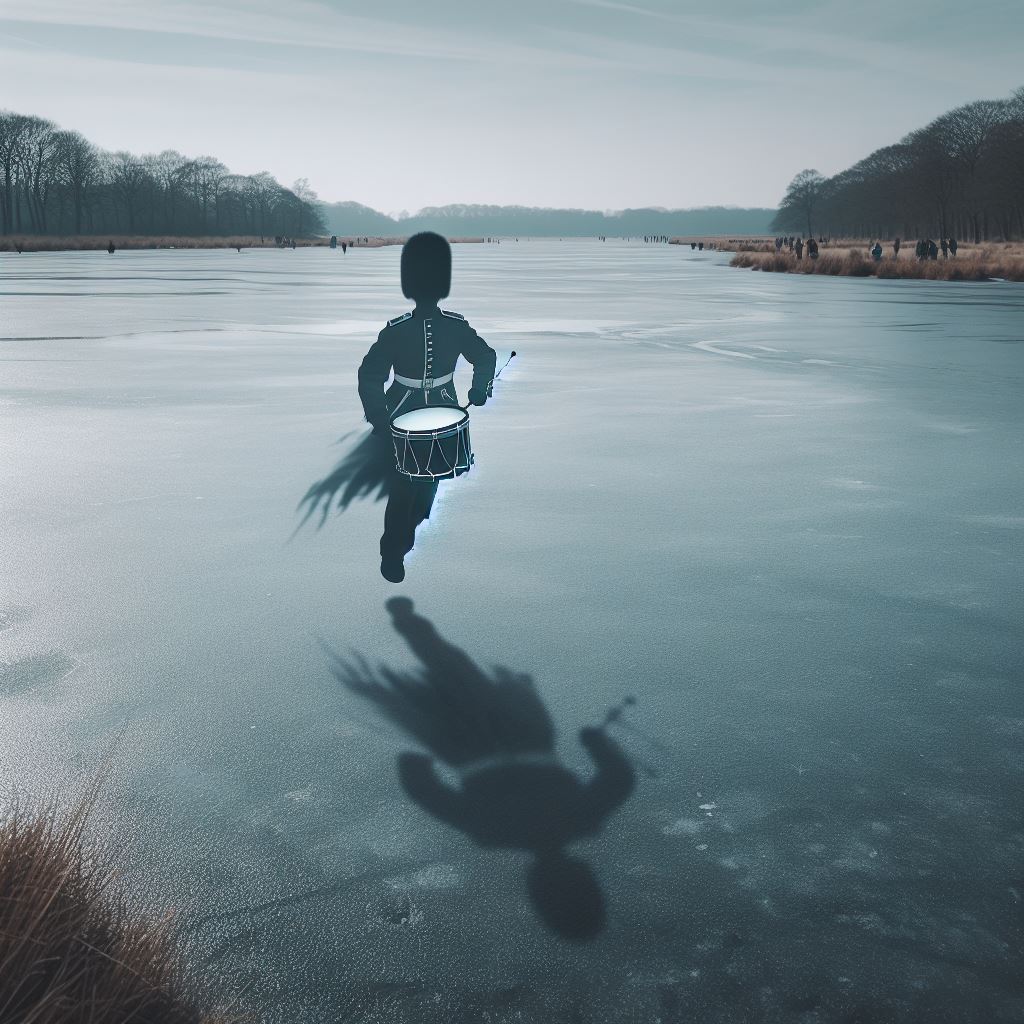
(Phantom Drummer. Image Source: Bing Image Creator)

My step-uncle Gerald lived in the village of Hickling, nestled in the heart of the Norfolk Broadlands. He was one of the few remaining reed cutters, a job with a long, proud tradition in the area but sadly dying out as fewer people needed thatch for their homes.

(Gerald Nudd 1940-1999. Artist unknown. Image Source: ©E.Holohan)

It was back in the mid-1990s that my step-uncle spent his day on Hickling Broad, the local body of water, slicing through reeds as the sun dipped below the horizon. One evening, the air grew cold and he witnessed a spectral figure gliding across the Broad.

(Hicking Broad, Norfolk. Image Source: John Fielding)

Now, being Hickling born and bred and from a family whose ancestry here stretched back as far as the Norse settlers, Gerald realised in horror that he was witnessing a local legend recreating its ethereal journey across the Broad.

Local folklore has it that during the winter of 1815, shortly before the battle of Waterloo, a local drummer boy from Potter Heigham returned home on leave. While back he fell passionately in love with a local girl from a wealthy and influential family. The girl’s father, knowing the drummer boy was poor, refused to allow the relationship and any thought of marriage.

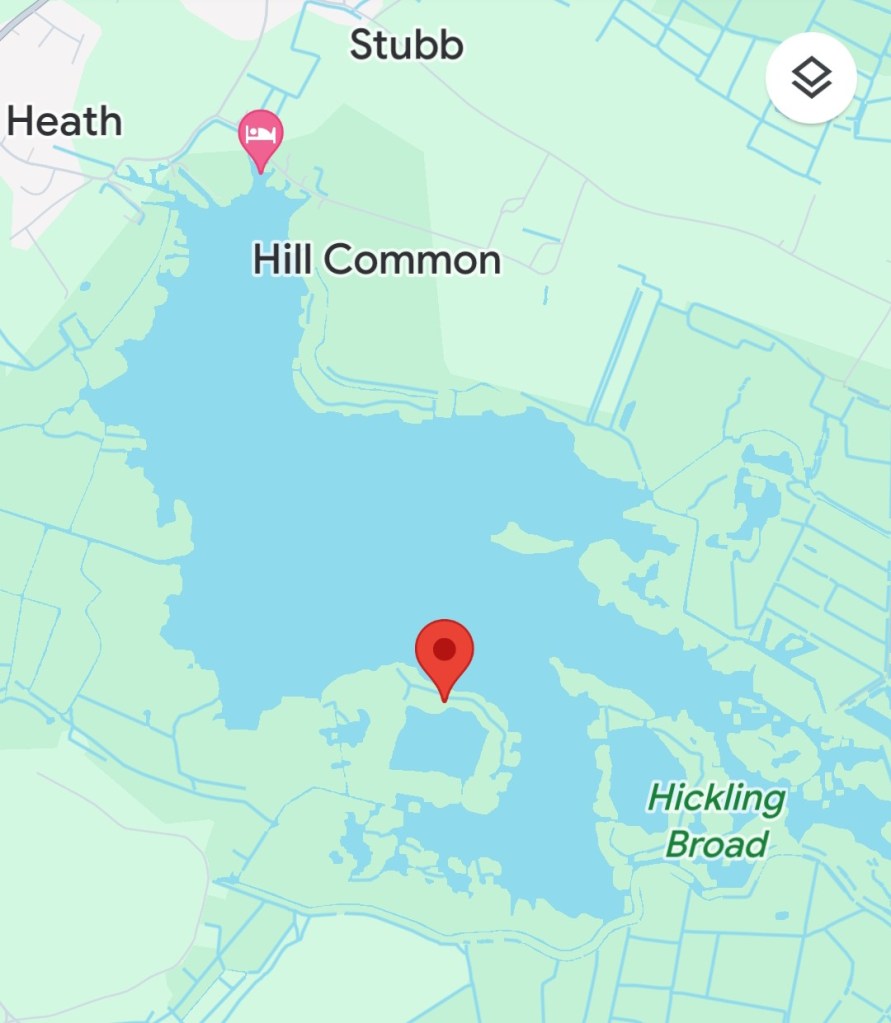
Undeterred by this, the star-crossed lovers continued to meet in secret every night in a little hut at Swim Coots on the edge of Hickling Broad. When the winter turned icy and the Broad froze over, the drummer boy skated over the ice, wearing his bright yellow scarlet trimmed coat, and would beat his kettle drum to signal his approach.

(The view from Swim Coots Mill. Image Source: Bart Horeman cc-by-sa/2.0)

One frozen February evening the girl waited at Swim Coots as usual and listened out for the drum beat of her paramour. But this time the drum beat suddenly stopped and there was an eerie silence. The ice had cracked and the drummer boy had plunged through and drowned in the freezing waters of the Broad.

It is said that the girl rushed to the edge of the frozen Broad to find her lover and was relieved to see the shivering boy skating towards her. As she held out her hands to help him ashore, she felt his icy touch and the drummer boy disappeared.

The unfortunate drummer boy was not found for several days when a lifeless body was pulled from the Broad clad in a yellow coat with scarlet trim.

(Hickling Broad with Swim Coots marked. Image Source: Google Maps 2023)

Since then, it is said that on some cold winter nights in February, the eerie sound of a rhythmic drum tattoo and the swishing of skates can be heard, as the ghostly drummer boy tries to keep his date with his sweetheart.

After observing in shock the gliding figure, Gerald quickly downed his tools and fled back to the village where he decided to visit the Greyhound Inn for a stiff, nerve-settling drink. As Gerald recounted the haunting sight of the ghostly drummer boy to the sceptical pub patrons, the line between reality and spirits blurred. Was it the ethereal presence of the supernatural he witnessed, or a distorted vision fuelled by the spirits from his glass?

The locals in the pub dismissed his tale, attributing it to his well-known predilection for whisky. However, Gerald couldn’t shake the chilling memory, leaving him wondering if the haunting beats of the drummer boy would forever echo in his consciousness or fade away like the dissipating spirits in his empty whisky glass.

References

Whispers of the Ancient: An Autumn Expedition to the Enigmatic White Horse of Uffington, the Ridgeway, and Wayland’s Smithy

(White Horse of Uffington. Image Source: superdove CC BY-NC-SA)

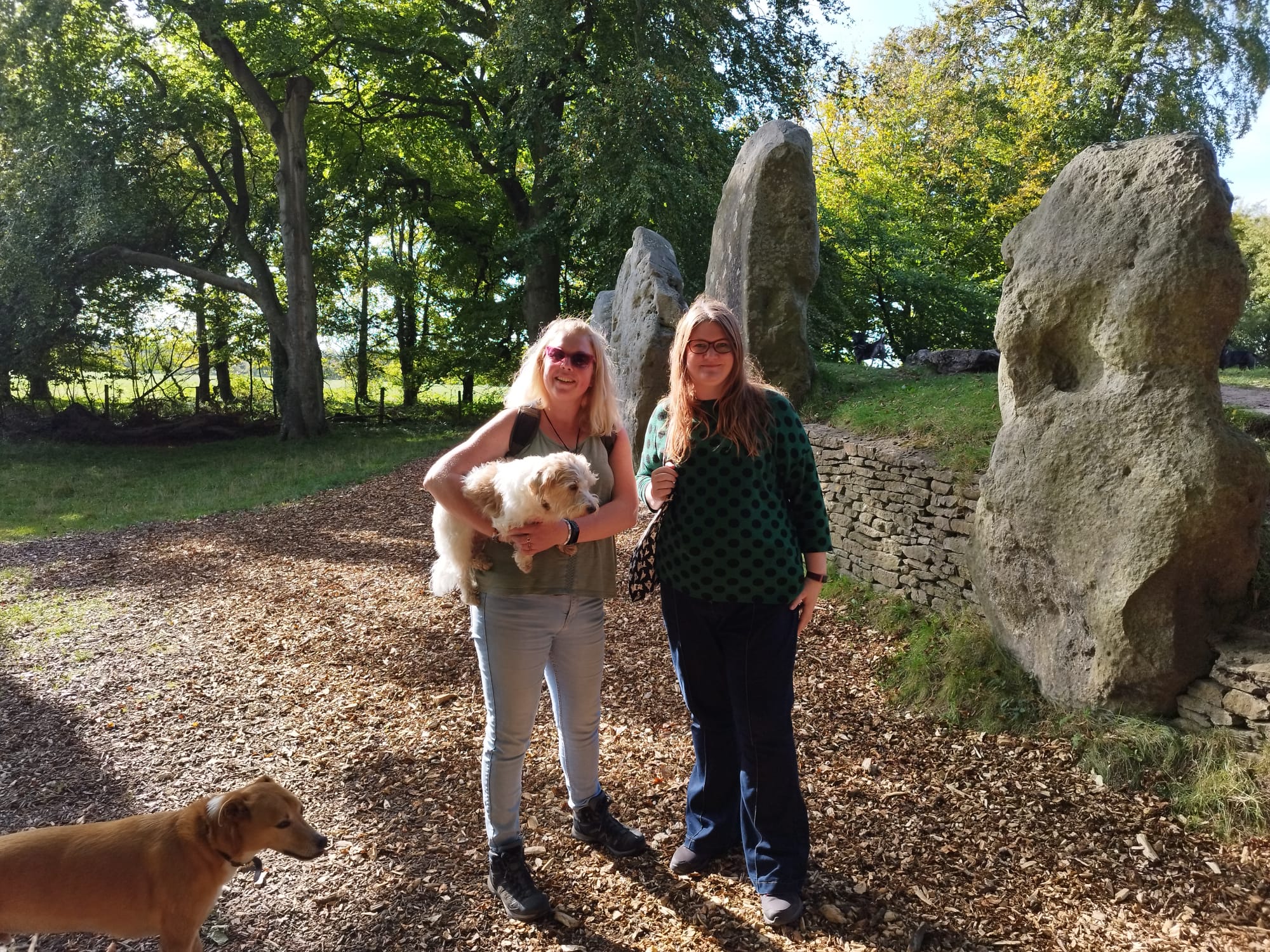
As the days grow cooler and the nights draw in, and early winter rolls out over the land, please come with me on a journey back in time and an autumn ramble through the ancient landscape of Uffington in Oxfordshire. On this journey over chalk hills and across ancient trackways, I am joined by my husband and also by Emma, from Weird Wiltshire blog fame, who is accompanied by her furry sidekicks Bingo Jones the Jack Russell and Buddy Love the lurcher.

Our adventure begins at the National Trust car park below White Horse Hill, on an unusually warm autumn afternoon. We set off to make our way up towards the impressive equine chalk geoglyph, passing local wildlife including grazing sheep, and a tiny common lizard basking in the autumn sunlight.

(Common Lizard. Image Source: ©E.Blackshaw)

History of the White Horse

The Uffington White Horse is a 109 metre (360 foot) figure sprawling over the slope of the chalk Downs of Oxfordshire. The chalk outlines of this geoglyph were created by cutting into the turf and removing it to expose the gleaming white chalk below. This icon was designed to be seen from far away and can be seen from at least 15 miles away as it gallops and leaps across the Berkshire Downs.

This chalk figure is around 3,000 years old, and is one of the oldest hill figures in the country. It has been maintained over this long period by the local population through the process of ‘scouring’. This is where plants and grasses growing over the chalk outlines are cut away regularly to maintain their shape. This was often done around midsummer and would include a country fair, feasts, and festivals to mark the occasion. It sounds like it was a really lively local event.

(The approach to the White Horse. Image Source: ©E.Blackshaw)

The figure is a strange, stylized, and elongated horse which is reminiscent of ancient cave paintings of animals. This truly ancient white horse is also striking in its resemblance to the stylized figures of horses on Iron Age coins and metalwork. Soil samples taken from the lowest levels of the chalk date the Horse to the end of the Bronze Age or the start of the Iron Age, between 1200-800 BC.

Author GK Chesterton (1874-1936), who wrote ‘Ballad of the White Horse’ (1911), summed up the age of the ancient geoglyph perfectly:

Before the god that made the gods,

had seen their sunrise pass,

the White Horse of the White Horse Vale,

was cut out of the grass.

The White Horse sits in a landscape full of archaeology and ancient monuments, from Neolithic burials, through Bronze Age settlements, to later Iron Age defences. It is clear that this area and this chalk symbol have been a significant place for millennia.

Some say this ancient figure resembles a dragon more than a horse and this has resulted in myths and legends relating to dragons at nearby features which we will hear about further along on our journey.

Myths and Legends of the White Horse

There is still much debate as to the purpose of the Uffington White Horse. The location could have had a ritual or religious purpose as a possible Celtic shrine, connected to the worship of Epona the horse goddess, or may represent something else sacred.

In Europe and Asia, there is an ancient history of horses being associated with the sky and sun. The Sun Horse pulls the sun through the sky, either drawing it on the back of a chariot or pulling it directly. The horse pulls the sun through the underworld, leaving the world in darkness, before rising once more at dawn. Perhaps the White Horse is an ancient symbol of this sacred sun horse, leaping across the landscape, or a totem of an ancient horse cult.

It could also have had political significance as a meeting point between 3 great tribal kingdoms in the area. This may have served as a warning against trespass or to mark a meeting point for trade and diplomacy. Others have posited that the White Horse represents the battle standard of the Saxon ruler Alfred Hengist. Hengist is Old English for “stallion”.

(Weird White Horse and Foal. Image Source: Bing Image Creator)

Legend has it that the Uffington White Horse is a mare and that her foal was also etched into a nearby hill, which has now been lost to nature. It is said that at night the horse and foal come down to feed at the slope below known as the Manger. The mare and foal also drink at nearby Woolstone Wells, which are said to be formed from a hoofprint from the mythical horse.

Another local superstition describes how if you stand on the eye of the Uffington White Horse and turn around three times clockwise, eyes closed and while making a wish, you will have that wish come true. However, this is no longer advised due to damage that can be caused to the beautiful, ancient chalk figure.

Dragon Hill

From the brow of White Horse Hill, we can see a small flat-topped mound known as ‘Dragon Hill’. Local people maintained for centuries that the chalk hill figure was in fact a portrait of a dragon killed by St George on this hill. The blood of the slain dragon is reputed to have fallen onto the hill, poisoning the soil forever. A bare patch of ground on the top of the mound testifies to this corrupted, poisoned earth.

(Dragon Hill seen from near the White Horse. Image Source: ©E.Heard.)

There are also stories that King Arthur is not dead, but instead lies sleeping, and will one day awake when England is in grave danger. It is said that when King Arthur awakes, the Uffington horse will rise up and dance in delight on Dragon Hill.

Uffington Castle

As we climb to the brow of White Horse Hill, on our way towards the ancient trackway, we pass the earth ramparts and ditch of the former Iron Age hill fort known as Uffington Castle, which still looms protectively over the Vale of the White Horse. Past excavations have indicated that it was probably built in the 7th or 8th century BC and continued to be occupied throughout the Iron Age. Pottery found on the site suggests that the fort was used throughout the Iron Age and into the Roman era. This hillfort was a strategic location that commanded the Ridgeway, the prehistoric track that runs from Overton Hill to Ivinghoe Beacon. It is clear that whoever held the Ridgeway track would control the West of England, so much so that some people believe that Uffington was Mount Badon, where King Arthur is said to have defeated the Saxons. However, little is yet known about the use of Uffington Castle, and archaeologists are now looking at the possibility that it is less a defensive structure, but rather a spiritual centre.

The Ridgeway

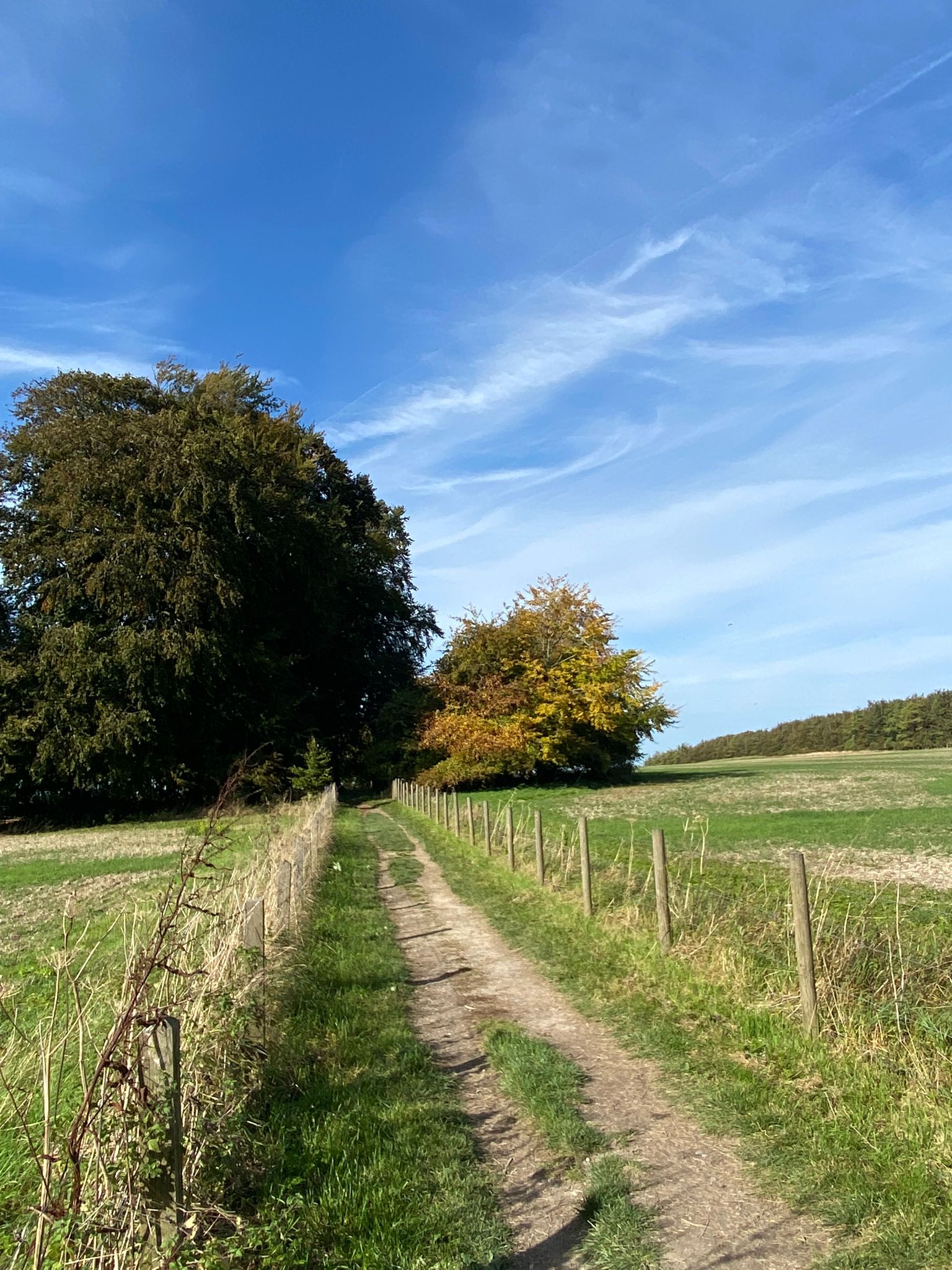
(Walking the Ridgeway Image Source: ©E.Heard)

We pass over the top of the hill and through a gate to join the ancient pathway known as ‘The Ridgeway’. The Ridgeway, an ancient trackway, holds profound historical importance and deep cultural significance that spans millennia. As Britain’s oldest road, it traces its roots back to prehistoric times, serving as a vital route for trade, pilgrimage, and communication. This ancient route, which stretches for 87 miles across chalk hills, meanders through picturesque landscapes, connecting the River Thames to the Avebury stone circle and beyond. The Ridgeway has witnessed the footsteps of countless generations, from Neolithic settlers to Roman soldiers, medieval pilgrims, and modern-day ramblers. Its historical significance lies not only in its utilitarian function but also in its cultural role, reflecting the evolving human narratives of the region. Today the Ridgeway continues to beckon walkers and history enthusiasts alike, inviting them to traverse its timeless path and connect with the living tapestry of the past, to experience the ancient history embedded in the landscape of Oxfordshire and beyond.

(Devil’s Coach Horse Beetle. Image Source: ©E.Blackshaw)

Walking Westwards along the route, we pass leafy hedgerows brimming with ripe berries and encounter a devil’s coach horse beetle scuttling along the track, perhaps going about its namesake’s business.

Wayland’s Smithy

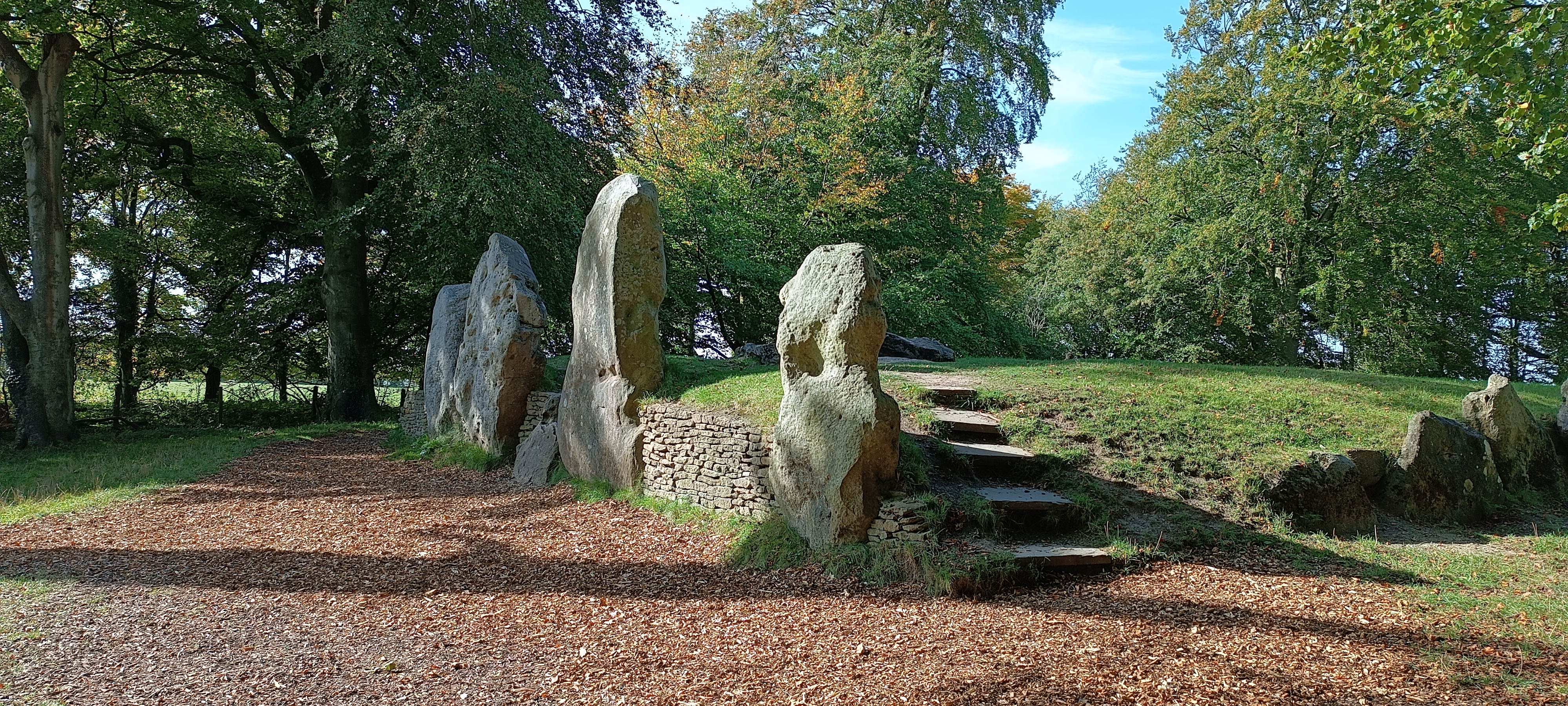
After following the Ridgeway for a mile and a half, we reach our ultimate destination, the remarkable long barrow of Wayland’s Smithy. Wayland’s Smithy is a mysterious Neolithic earth and stone structure once believed to be the home of a Saxon and Norse god of metalwork. Wayland the smith features in Germanic and Norse mythology and his legend may have been brought to England by Norsemen centuries after the long barrow was originally constructed.

(Wayland’s Smithy. Image Source: ©E.Blackshaw)

As legend has it, Wayland was captured by Swedish King Ndud, and was disfigured and tortured before being forced to work for him in the royal smithy. Wayland eventually escaped his enslavement by killing the king’s sons, and using their skulls as drinking bowls, before raping the king’s daughter and escaping using a flying cloak or metal wings that he created using his metalwork skills.

Wayland escaped to England and built himself a smithy at the isolated location where the long barrow stands. Feeling embarrassed of his disfigured appearance he was able to hide himself away from public view while carrying on his smithy trade. However, Wayland was eventually found by King Ndud’s men and was killed. He managed to take out eight of the Norsemen with his smithing hammer before he was overpowered and legend has it that the eight skeletons that were found in the excavations of the long barrow in 1919 were these men.

(Wayland Smith. Image Source: Bing Image Creator )

Despite this end, is said that the spirit of Wayland still resides at Wayland’s Smithy and he will shoe any traveller’s horse if the horse and a coin are left at the Smithy overnight. Even today, coins can be found left in the holes of the stones, more for luck now, than for shoeing horses.

Wayland Smithy is also associated with the nearby Uffington White Horse. It is said that once every hundred years the White Horse leaves its hill and gallops across the sky to be reshod by Wayland in his smithy. The Neolithic tomb could perhaps also be associated with the Sun Horse legend; the already 1000-year-old long barrow may have been reimagined by the people who carved the chalk geoglyph as a portal for the horse and sun to enter the Underworld.

(The entrance to the long barrow. Image Source: ©E.Heard)

We stop for a while at Wayland’s Smithy to soak in the calm, peaceful, almost otherworldly atmosphere of the location. This is one of my favourite places for peaceful reflection, and the fallen trees make an excellent spot to take tea and snacks, which we do. Importantly, before we leave, we place coins for luck and offering to Wayland on the stones. We then begin the long walk back up the gentle incline to the car park, stopping to forage some of the wild fruits and berries we find on the Ridgeway, in the hope of cooking up some delicious jams and jellies to remind us of our ramble.

On one of the last warm days of the year, before Autumn begins to bite, our ramble through the ancient landscape of the Vale of the White Horse, the Ridgeway, and Wayland’s Smithy leaves an indelible imprint on my memory. Surrounded by the mystical whispers of history, the air carries the essence of bygone eras, weaving tales of our ancient ancestors and their untold mysteries. The undulating hills and the enigmatic White Horse carved into the earth create a canvas of timeless beauty. As I stand amidst the ancient stones of Wayland’s Smithy, I feel a profound connection to the past. This autumnal adventure, with its awe-inspiring scenery and palpable sense of history, is a poignant reminder of the enduring allure of the past, forever etched in the landscape of Britain.

(Autumn Ramblers, the two Emmas. Image Source: ©E.Blackshaw)

Check out my travel companion Weird Wiltshire’s wonderful blog where she explores stories of ghosts and the paranormal, folklore, history and anything weird, found in Wiltshire and beyond:

https://weird-wiltshire.co.uk/

Reference list

The Care Home Entity

Photo by Pedro Figueras on Pexels.com

I’ve been interested in the paranormal since I was a child, even joining an amateur paranormal investigation team in Ireland for a year when I lived in Dublin, though remaining firmly in the ‘sceptic’ camp. The experiences I want to describe to you happened to my mother when I was around 13 years old and it is where my interest in the paranormal began.

My mum has worked as a care assistant and later in managerial roles in elderly people’s residential care homes in Norfolk for most of her adult life. She has had several unusual, creepy and unexplained experiences in several places, but the one that left its mark on her and me the most was in a care home in a busy touristic town on the Norfolk Broads. This care home was in a very old building that had once been part of a landed estate, and it comprised of gardens, a large house with multiple rooms and converted stables/sheds.

My mum worked as a relief assistant manager there for a period and part of the job required that she sleep over night. She had slept in different rooms in the main building before and had odd experiences; she had had her things moved and nightclothes folded and put on the bed on occasion and upon asking no staff had admitted to moving them. She said this room felt safe and friendly, like there was a friendly poltergeist there who wanted to be helpful. In one certain room, she had woken in the night to hear crying from the room above. Upon investigation, she was told that there was nobody in the room above. Although creepy, her experiences in these rooms did not leave her shaken and she was generally happy to sleep in them.

It was however, when my mum was required to sleep in the rooms in the converted stables/sheds that she had the experiences that left her shaken and scared. I remember seeing my mum when she returned from work the afternoon after her first night in that room and she looked awful. She looked exhausted and shaken up but would not tell me what had happened to her. It took her around 3 days for her to finally gain the strength to speak about it as she felt she would not be believed. I believe she experienced something in that room that she could not explain.

My mum told me that she had felt uncomfortable in that room from the first time she went in. She said it felt cold and unfriendly. On that first night she had finished up her tasks for the night and had gone to her room to settle in for the night. She said she had the bedside lamp on and was propped up in bed reading, which is her custom to help her relax before sleep. She said it felt cold in the room and she noticed something odd from over the top of her book. She said she saw a grey mist coalescing near the window and between the end of the bed. She felt frozen with fear and watched the mist grow until around 5ft in height, like figure. The mist seemed to shuffle towards her and this was more than enough for my mum and she told me she shot out of the bed and out of the room. She refused to return that night and slept as best she could in a chair in one of the lounges. She spoke to the night staff and they disclosed that other people had had strange experiences in that room.

Sadly, my mum had to return to that room as part of her job, so she decided she had to live with whatever was in the room. She said following that first incident she experienced knocking and banging on the door, but nobody there and staff confirming nobody had been to her room. She heard knocking and banging inside the room too, sometimes waking her up. She was so frightened she spoke to a local vicar about what to do and began sleeping with a Bible next to the bed and a glass of water to represent life.

Other relief assistant managers also had to slept in that room and at least 2 others disclosed that they had had experiences in there. One lady had felt what felt like someone get in bed beside her and somehow pass through her. Another had felt something pulling the duvet from the end of the bed.

My mum spoke to some locals who said that they believed an Italian prisoner of war had worked on the estate and had died in the stables. Could he still be there trying to get attention?

My mum said throughout the time she worked there she continued to experience things in that room, but they did calm after she spoke to it. She became so fed up with her sleep being disturbed and feeling afraid that she literally spoke to it, or at least to the room, telling it that she wasn’t there to harm it, she had to stay there for her job and if it ceased bothering her, she would not bother it. This seemed to calm things in there somewhat from then on and she was able to sleep with less disturbance.

The building there is no longer a care home for the elderly, but has a similar use, so she prefers to keep the place anonymous as she doesn’t want to cause alarm to anyone who stays there now. I wonder if the entity in that room and the spirits in the other rooms are still active?

The Whispering Mummies of St Michan’s Church, Dublin

In 2010 I took my mother on a visit to an unusual and macabre attraction in Dublin: the mummies of St Michan’s church. Located near Dublin’s Four Courts, St Michan’s church is Dublin’s oldest parish church north of the River Liffey. Founded in 1095 and named after a Danish Bishop and built on the site of an ancient oak grove, the present church dates from 1685. Until the 16th century monks from Christchurch Cathedral the church congregation and from 1547 it was part of Christchurch Cathedral parish. Restored in 1998, St. Michan’s now belongs to the Protestant Church of Ireland. The church retains many of its original features such as the galleried interior and organ. The organ dates from 1724 and is one of the oldest in Ireland that is still in use. It is claimed that Handel practised for the first performance of ‘Messiah’ on this very organ.

Beneath the church lay the vaults, which are the main attraction to the church. Here many of Dublin’s most influential families from the 17th-19th centuries were interred. The Shears brothers, who were executed by the British following the Rising of 1798 and a copy of the execution warrant is also on display in the crypt, where it instructs the condemned men to be hung, drawn and quartered. Also interred in the vault are the Earl’s of Leitrim who lay in highly decorated coffins. Many of the bodies deposited in the vault are in such an excellent state of preservation that their features are discernible and they bones and skin intact. The conditions for mummification are caused by a combination of the dry atmosphere of the vaults, methane gas emanating from the ground and the limestone walls which are resistant to moisture acting together to dry out the bodies. The most famous mummies in the vault are those of the alleged crusader, the thief and the nun. The crusader, mummy believed to have been a soldier returned from the Crusades, has had his legs broken and crossed, in order for it to fit the coffin. He lies with one of his hands is lifted slightly in the air and legend has it that those who touch his finger will have good fortune. The mummy known as the thief has had his feet cut off and his right forearm is missing, some say as punishment for his crime. Recent scientific and historical research however, has disputed the validity of the stories surrounding the crusader and the thief.

Our visit to the church was on a wet and dismal day in June. After looking around the church our tour guide and 6 other people entered the underground vaults through a metal door and clambered down some very wet steps. There was a passage in front of us and in the dim light, alcove areas could be seen which contained the ornate coffins of the well to do departed. The tour guide explained who the coffins belonged to, what the family names and crests were and then we moved on toward the end of the passage, where we saw the open coffins and the mummified bodies. Towards the end of the tour my mother wandered to the end of the passage where there was a part that had not been excavated. She told me that while she was peering into this area she became aware of voices around her, “a sort of whispering, murmuring noise” and felt it was rather oppressive in the passage. She said she began to sense that there were many people around her, pressing close, which was not the case. She remembers “I did not feel frightened, just aware of this whispering and I could not make out any words, but I felt as if I was in a press of people. There was no wind entering the passage the metal door had been firmly shut behind us and I could not account for the noises.”

It is interesting to note that there have been previous reports of strange whisperings and voices heard within the vaults, as well as reports of being touched by unseen hands. Could it be that the vaults contain the restless spirits of the dead, or is it more likely that visitors to the vaults experience movements and sounds caused by ‘infrasound’? Infrasound refers to extreme bass waves or vibrations with a frequency below the audibility range of the human ear. Although these waves cannot be heard by the human ear, they can be felt and have been shown to produce a range of effects in some people including anxiety, extreme sorrow, and chills. Perhaps this would account for my mother’s feeling of oppressiveness in the passageway, the feeling of being in a press of people and hearing ghostly whispers.

Haunted vaults or not, my mother is undeterred: “I very much enjoyed it. I would not mind going again, but I certainly would not want to be there on my own….”

Visitor Information

Address: Church Street, Dublin, Dublin, Ireland

Public transport: Bus: 134 from Abbey St.

Tours: Mon-Fri 10-12:45, 2-4:45, Sat 10-12:45

Admission Prices:
Adults €4.00
Children €3.00
Students and Seniors €3.50
Family (2 Adults + 2 Children) €12.00

References

2009-2014 Ghost Catcher UK & Ireland© All rights reserved. All my posts are copyright and if you do wish to refer to them or use anything from them on your site, please credit this site.

333 Phenomena

Photo by Ivan Oboleninov on Pexels.com

Over the years there have been frequent reports of a variety of unusual phenomena experienced between 3-4am, particularly heightened at 3:33am. Such phenomena as individuals waking up at this time for no logical reason, reported experiences of ‘sleep paralysis’ and more frequent reports of paranormal activity are associated with this time frame.

3am is often referred to as “Dead Time” or the “Devil’s Hour” as it is the time when paranormal activity is at its peak. Demons are said to be more active at this time rather than spirits. The popular Christian theory is that Jesus Christ died at 3pm, the opposite of 3am, and so 3am is the most active time for demons who wish to defy Christ and mock the Holy Trinity.

3:33am is thought to be the time for the ultimate mockery of the Holy Trinity with it also being half of 666; the number of the Beast. It is said at this time the veil between the world of the living and the world of the dead is at its thinnest, allowing demons and spirits to communicate or cross over more easily than at other times.

Those who research the field of the paranormal state that spirits can be active 24/7 and that there is no concrete evidence to indicate that 3am is more active than any other time.  However, paranormal activity may appear to occur more often at night as conditions of darkness are more suitable for conducting paranormal research. It is easier to see light anomalies or apparitions in the darkness and many items of paranormal research equipment are better able to pick up on activity in dark conditions.  The senses are also intensified at night, which may give the impression that there is more paranormal activity occurring at that time due to everyday noises and tricks of the light creating mistaken paranormal experiences.

It has also been noted that many deaths occur between 3-5am as it is at this time that the body’s immune system is more vulnerable. Those who are terminally ill or very elderly are more likely to pass away at this time due to the body being weakened. Some researchers cite this as a theory as to why more spirits are active at this time, correlating with their times of death.

333 phenomena has also been reported by individuals who recognise repeated patterns of these numbers in their daily life such as waking up at 3:33am or seeing these numbers everywhere. Due to the theory that these numbers are a mockery of the Holy Trinity, individuals may have assigned religious meaning to these numbers causing psychological suggestion and leading the subconscious to pick out these patterns. This can go as far as subconsciously programming the body to wake up at this time.

It does seem naive for anyone to be able to claim that 3pm was the exact time of the death of Jesus, as at present religious scholars still disagree on what date this even took place. Therefore it seems imprudent for the number 3 to be ascribed mystical and religious meaning. Historically many people believed that midnight, the ‘witching hour’, was a period of greater activity for witches, demons and ghosts, with people avoiding going out at night due to this.  It seems likely that our primeval fear of the dark, when early humans were more vulnerable to predators, has been retained and as a consequence superstition and religion has been used to apply meaning to our fear of the dark and the unknown.

2009-2014 Ghost Catcher UK & Ireland© All rights reserved. All my posts are copyright and if you do wish to refer to them or use anything from them on your site, please ask permission first