Spooky Happenings in a Welsh Cottage: Things that Cry Out in the Night.

(Image: View from Pen y Fan © E.Holohan)

Although I write this blog on the unexplained and eerie, I am very much ‘team on the fence’ when it comes to ghosts and the paranormal. I am open to the idea and very accepting of other peoples’ experiences. I believe those who have had these experiences have, on the whole, experienced something they could not explain. Whether their experience was of a ghost or something that can be explained by more natural and scientific causes is another matter and open for debate. I believe that most can be explained by science, even if science cannot yet explain some instances. I hold on to the possibility, however, that a small percentage could be something more eerie. Through this, though, I have never really had an experience myself that I could not adequately explain. That is, until now.

The Cosy Cottage Retreat in Wales

The night in question was one of those nights that leaves you with a shiver down your spine and a story you’ll be telling for years. Picture this: a quaint, charming terraced cottage nestled in the quiet countryside of Wales, the kind of place that feels like a cosy retreat from the hustle and bustle of daily life. My husband Ed and I decided to spend a couple of days here, looking forward to some peace, relaxation and to explore the Welsh hills and valleys of Bannau Brycheiniog (Brecon Beacons). But what we got was something entirely unexpected.

An Unsettling First Night

We arrived at the cottage in the early evening and enjoyed a blissful evening snuggled up in front of a roaring log fire, listening to podcast stories and planning our next day’s adventure up Pen y Fan Mountain.  We soon retired to bed so we could rest well before our energetic plans for the next day.

It was in the early hours of the night when Ed got up to use the bathroom. I was having one of those nights where you just can’t seem to get comfortable, tossing and turning, wrestling with the pillows. Frustrated, I switched the bedside lamp on to rearrange the pillows, taking the chance to do this while Ed was out of the room and wouldn’t be disturbed by the light. As the narrow spiral staircase was right next to the bathroom, I decided to leave the light on to help Ed find his way back without risking a tumble in the dark.

After a time, I was getting sleepy again. I decided to switch the lamp off and settle down, hoping to finally drift off. That’s when it happened.

Through my earplugs, I heard the loud sound of a male crying out. For me to hear it through earplugs, it had to be really quite loud. My heart raced as I immediately thought something had happened to Ed—maybe he’d fallen down those steep, shadowy stairs. I jumped out of bed and rushed to check on him, my mind racing with worry.

To my surprise, Ed was still in the bathroom, perfectly fine and completely unaware of the noise. When he came back to bed, I asked him if he’d made any noises—maybe a yawn or something else that might explain the eerie sound. He hadn’t. He hadn’t heard a thing. I glanced at the clock next to my bed; it was 2:20am.

I felt very spooked by this, so much so that I sent Ed downstairs to investigate the ground floor of the cottage in case an intruder had got in. He inspected it and it was all clear. We listened for any sounds from neighbours or outside, but not a peep. It took me some time, but I finally settled down again and had a fitful night’s sleep.

The next day we tried to figure out what could have caused the sound. Was it a neighbour? An animal outside? Some old building creaks or the boiler acting up? None of these seemed to fit. The more we thought about it, the less sense it made.

(Image: Log fire ©E.Holohan)

A Restless Second Night

The next night, we kept our ears open, listening for any clues that might solve the mystery of that unsettling cry. We listened out for the sound of the building setting, the noise of the toilet flush, and the boiler heating. The neighbours were very quiet once again and apart from a very quiet sound of a local cat, there were few noises outside in this tranquil village. One thought we had was that it might be the sound of the chimney cooling following the fire being put out downstairs. I stayed up a while to listen out for this, but there were no further unusual sounds.

The second night in the cottage I fell to sleep more easily as I was exhausted from our hike up Pen Y Fan. I hoped for a blissful night of solid rest. This was once again not to be the case.

In the night I have a very vivid dream that old, withered crone-like hands with long fingernails were pawing at my chest in the bed. I fought against these hands and cried out for them to go away and for Ed to help me. I managed to wake myself up and I was in a cold sweat. Ed also stirred and I asked if I could put the lamp on for a time so I could calm myself and sleep again. I glanced at the bedside alarm and it was around 2:20am. That sent a shiver down my spine, as it was at a similar time to the eerie cry I had heard the night before.

(Image: Night Hag. Bing AI generated)

It took some time, but I eventually fell asleep and caught some rest. But the next morning I was very pleased to be leaving that cottage once and for all. It’s funny how a place that feels so warm and welcoming during the day can take on an entirely different character in the dead of night. I looked forward to a night in my own peaceful bed again.

Leaving the Cottage with Unanswered Questions

Ed and I every so often would try to come up with different explanations for what I experienced. Was it a hypnagogic hallucination, where I hallucinated the sound of a man crying out as I was falling asleep? I feel that I was still pretty wide awake when it happened, however, having only just switched the light out and settled back into bed. None of the sounds of the building or local area seemed to fit with this sound either.

The withered hand dream, although also frightening, is a bit more explainable. I do suffer on and off with sleep paralysis. Sleep paralysis is a state, during waking up or falling asleep, in which a person is conscious but in a complete state of full-body paralysis. It is common during sleep paralysis for people to have very frightening vivid hallucinations and feelings of an ominous presence. My sleep paralysis usually presents as a vivid hallucination of a dark, ominous figure in my room, approaching the bed. Sometimes it has red eyes, sometimes not. One common hallucination that has seeped into folklore is the belief in the “Old Hag” who sits on the sleeper’s chest and suffocates them. This is believed to be where the term ‘hag-ridden’, to be afflicted by nightmares or anxieties, stems from. I’ve never had a dream of crone-like hands before, so it did unnerve me due to its difference. Was I visited by the “Old Hag” of sleep paralysis that night, or was it something more supernatural within those walls grasping for me in the night?

For now, the cottage holds onto its secrets, and I’m left with a chill that has nothing to do with the cool night air.  I can’t help but wonder about the stories those old walls could tell. Maybe that night, I got a small glimpse into one of them.

References

Drumbeats of the Past: Uncle Gerald’s Fateful Meeting with the Hickling Drummer Boy

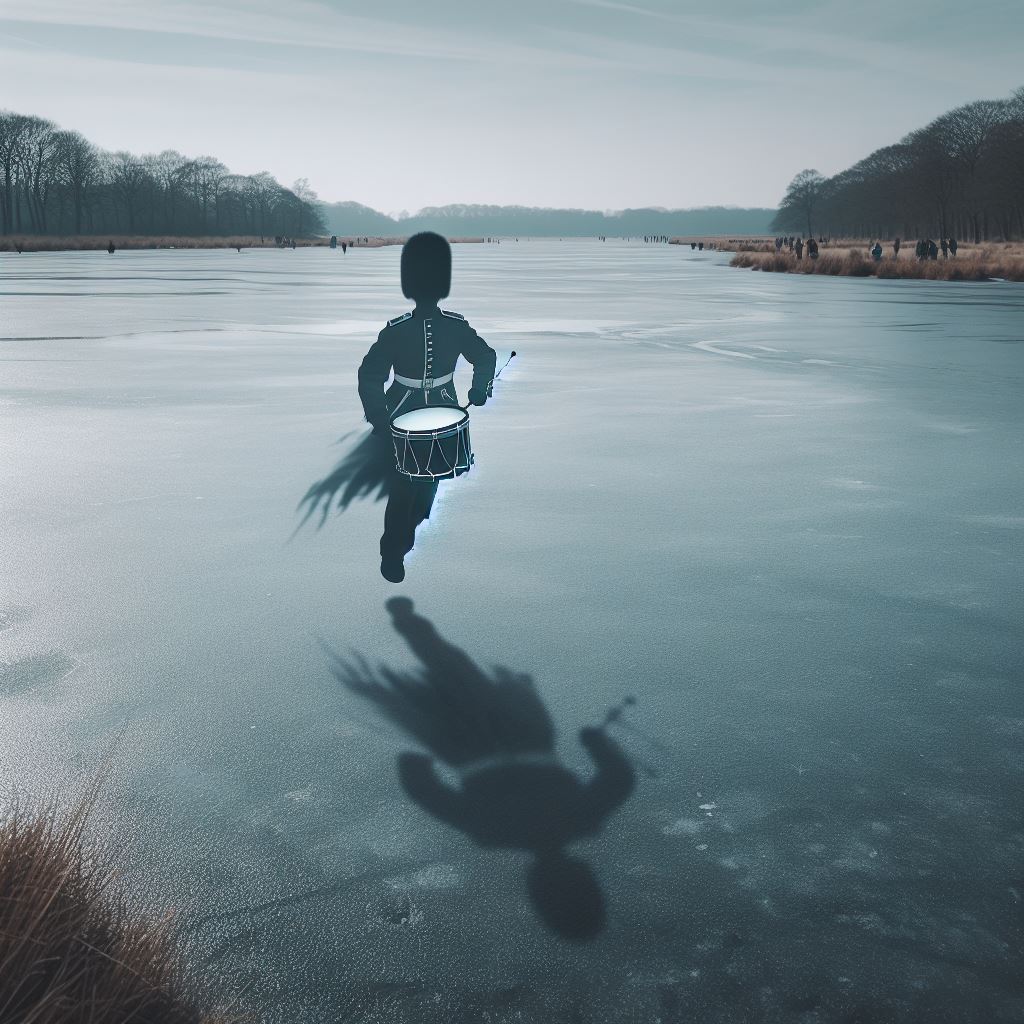
(Phantom Drummer. Image Source: Bing Image Creator)

My step-uncle Gerald lived in the village of Hickling, nestled in the heart of the Norfolk Broadlands. He was one of the few remaining reed cutters, a job with a long, proud tradition in the area but sadly dying out as fewer people needed thatch for their homes.

(Gerald Nudd 1940-1999. Artist unknown. Image Source: ©E.Holohan)

It was back in the mid-1990s that my step-uncle spent his day on Hickling Broad, the local body of water, slicing through reeds as the sun dipped below the horizon. One evening, the air grew cold and he witnessed a spectral figure gliding across the Broad.

(Hicking Broad, Norfolk. Image Source: John Fielding)

Now, being Hickling born and bred and from a family whose ancestry here stretched back as far as the Norse settlers, Gerald realised in horror that he was witnessing a local legend recreating its ethereal journey across the Broad.

Local folklore has it that during the winter of 1815, shortly before the battle of Waterloo, a local drummer boy from Potter Heigham returned home on leave. While back he fell passionately in love with a local girl from a wealthy and influential family. The girl’s father, knowing the drummer boy was poor, refused to allow the relationship and any thought of marriage.

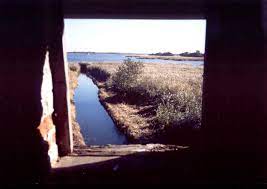
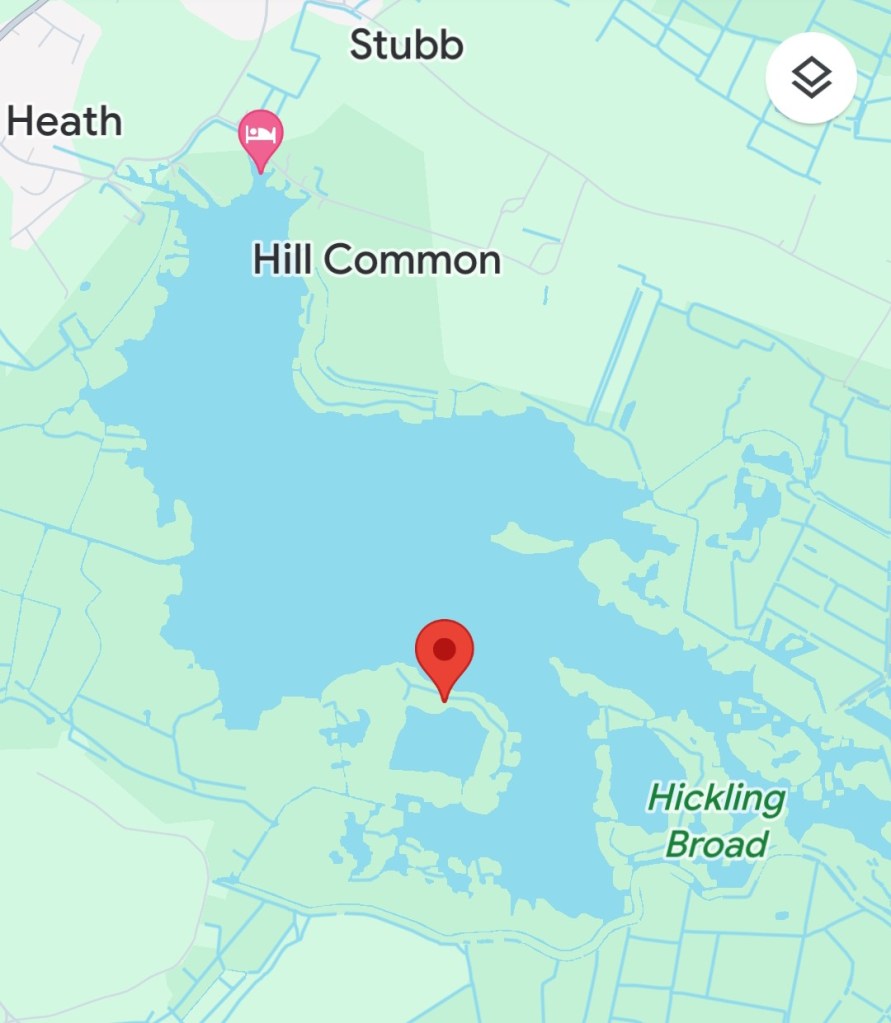
Undeterred by this, the star-crossed lovers continued to meet in secret every night in a little hut at Swim Coots on the edge of Hickling Broad. When the winter turned icy and the Broad froze over, the drummer boy skated over the ice, wearing his bright yellow scarlet trimmed coat, and would beat his kettle drum to signal his approach.

(The view from Swim Coots Mill. Image Source: Bart Horeman cc-by-sa/2.0)

One frozen February evening the girl waited at Swim Coots as usual and listened out for the drum beat of her paramour. But this time the drum beat suddenly stopped and there was an eerie silence. The ice had cracked and the drummer boy had plunged through and drowned in the freezing waters of the Broad.

It is said that the girl rushed to the edge of the frozen Broad to find her lover and was relieved to see the shivering boy skating towards her. As she held out her hands to help him ashore, she felt his icy touch and the drummer boy disappeared.

The unfortunate drummer boy was not found for several days when a lifeless body was pulled from the Broad clad in a yellow coat with scarlet trim.

(Hickling Broad with Swim Coots marked. Image Source: Google Maps 2023)

Since then, it is said that on some cold winter nights in February, the eerie sound of a rhythmic drum tattoo and the swishing of skates can be heard, as the ghostly drummer boy tries to keep his date with his sweetheart.

After observing in shock the gliding figure, Gerald quickly downed his tools and fled back to the village where he decided to visit the Greyhound Inn for a stiff, nerve-settling drink. As Gerald recounted the haunting sight of the ghostly drummer boy to the sceptical pub patrons, the line between reality and spirits blurred. Was it the ethereal presence of the supernatural he witnessed, or a distorted vision fuelled by the spirits from his glass?

The locals in the pub dismissed his tale, attributing it to his well-known predilection for whisky. However, Gerald couldn’t shake the chilling memory, leaving him wondering if the haunting beats of the drummer boy would forever echo in his consciousness or fade away like the dissipating spirits in his empty whisky glass.

References

Whispers of the Ancient: An Autumn Expedition to the Enigmatic White Horse of Uffington, the Ridgeway, and Wayland’s Smithy

(White Horse of Uffington. Image Source: superdove CC BY-NC-SA)

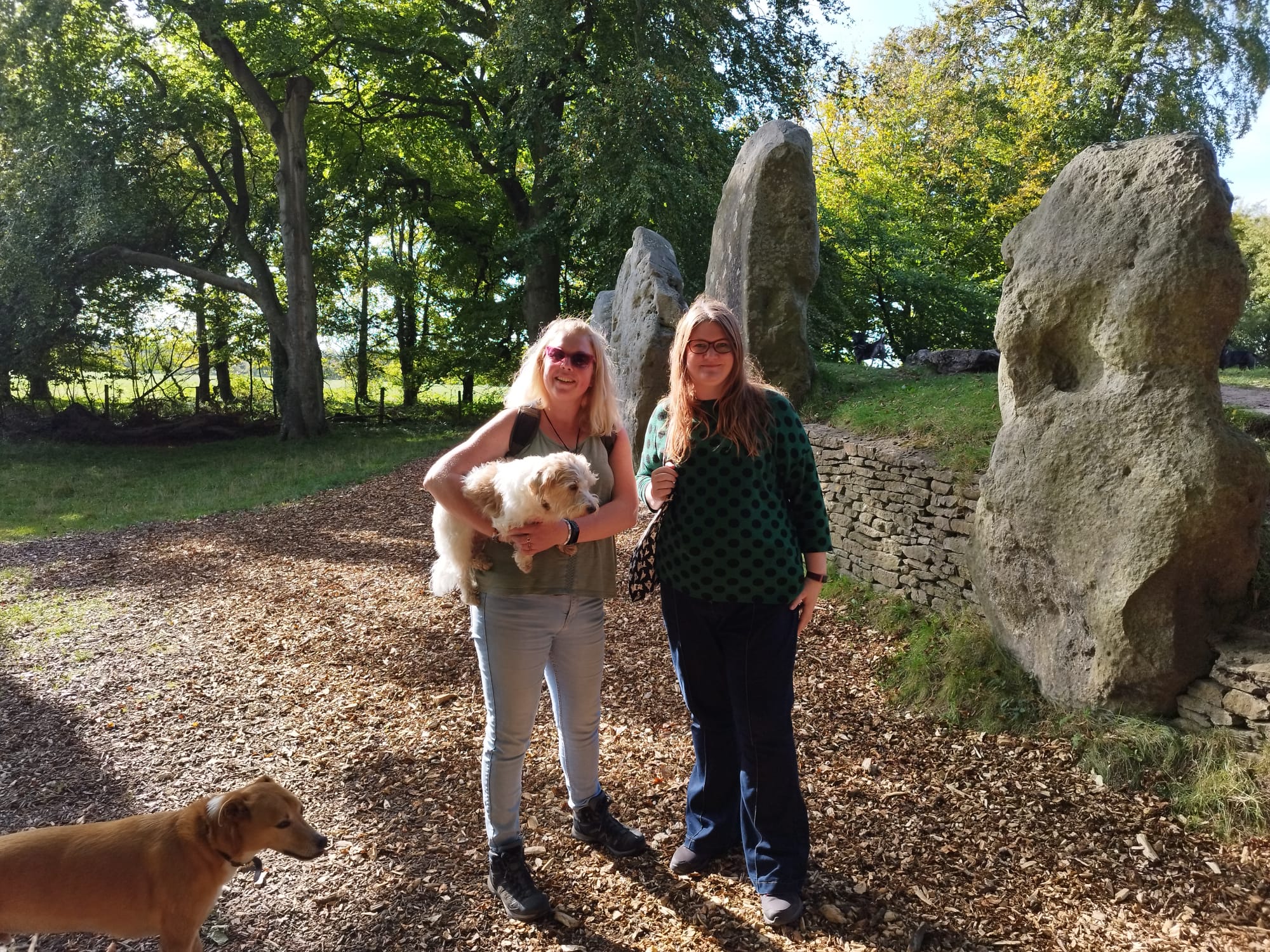
As the days grow cooler and the nights draw in, and early winter rolls out over the land, please come with me on a journey back in time and an autumn ramble through the ancient landscape of Uffington in Oxfordshire. On this journey over chalk hills and across ancient trackways, I am joined by my husband and also by Emma, from Weird Wiltshire blog fame, who is accompanied by her furry sidekicks Bingo Jones the Jack Russell and Buddy Love the lurcher.

Our adventure begins at the National Trust car park below White Horse Hill, on an unusually warm autumn afternoon. We set off to make our way up towards the impressive equine chalk geoglyph, passing local wildlife including grazing sheep, and a tiny common lizard basking in the autumn sunlight.

(Common Lizard. Image Source: ©E.Blackshaw)

History of the White Horse

The Uffington White Horse is a 109 metre (360 foot) figure sprawling over the slope of the chalk Downs of Oxfordshire. The chalk outlines of this geoglyph were created by cutting into the turf and removing it to expose the gleaming white chalk below. This icon was designed to be seen from far away and can be seen from at least 15 miles away as it gallops and leaps across the Berkshire Downs.

This chalk figure is around 3,000 years old, and is one of the oldest hill figures in the country. It has been maintained over this long period by the local population through the process of ‘scouring’. This is where plants and grasses growing over the chalk outlines are cut away regularly to maintain their shape. This was often done around midsummer and would include a country fair, feasts, and festivals to mark the occasion. It sounds like it was a really lively local event.

(The approach to the White Horse. Image Source: ©E.Blackshaw)

The figure is a strange, stylized, and elongated horse which is reminiscent of ancient cave paintings of animals. This truly ancient white horse is also striking in its resemblance to the stylized figures of horses on Iron Age coins and metalwork. Soil samples taken from the lowest levels of the chalk date the Horse to the end of the Bronze Age or the start of the Iron Age, between 1200-800 BC.

Author GK Chesterton (1874-1936), who wrote ‘Ballad of the White Horse’ (1911), summed up the age of the ancient geoglyph perfectly:

Before the god that made the gods,

had seen their sunrise pass,

the White Horse of the White Horse Vale,

was cut out of the grass.

The White Horse sits in a landscape full of archaeology and ancient monuments, from Neolithic burials, through Bronze Age settlements, to later Iron Age defences. It is clear that this area and this chalk symbol have been a significant place for millennia.

Some say this ancient figure resembles a dragon more than a horse and this has resulted in myths and legends relating to dragons at nearby features which we will hear about further along on our journey.

Myths and Legends of the White Horse

There is still much debate as to the purpose of the Uffington White Horse. The location could have had a ritual or religious purpose as a possible Celtic shrine, connected to the worship of Epona the horse goddess, or may represent something else sacred.

In Europe and Asia, there is an ancient history of horses being associated with the sky and sun. The Sun Horse pulls the sun through the sky, either drawing it on the back of a chariot or pulling it directly. The horse pulls the sun through the underworld, leaving the world in darkness, before rising once more at dawn. Perhaps the White Horse is an ancient symbol of this sacred sun horse, leaping across the landscape, or a totem of an ancient horse cult.

It could also have had political significance as a meeting point between 3 great tribal kingdoms in the area. This may have served as a warning against trespass or to mark a meeting point for trade and diplomacy. Others have posited that the White Horse represents the battle standard of the Saxon ruler Alfred Hengist. Hengist is Old English for “stallion”.

(Weird White Horse and Foal. Image Source: Bing Image Creator)

Legend has it that the Uffington White Horse is a mare and that her foal was also etched into a nearby hill, which has now been lost to nature. It is said that at night the horse and foal come down to feed at the slope below known as the Manger. The mare and foal also drink at nearby Woolstone Wells, which are said to be formed from a hoofprint from the mythical horse.

Another local superstition describes how if you stand on the eye of the Uffington White Horse and turn around three times clockwise, eyes closed and while making a wish, you will have that wish come true. However, this is no longer advised due to damage that can be caused to the beautiful, ancient chalk figure.

Dragon Hill

From the brow of White Horse Hill, we can see a small flat-topped mound known as ‘Dragon Hill’. Local people maintained for centuries that the chalk hill figure was in fact a portrait of a dragon killed by St George on this hill. The blood of the slain dragon is reputed to have fallen onto the hill, poisoning the soil forever. A bare patch of ground on the top of the mound testifies to this corrupted, poisoned earth.

(Dragon Hill seen from near the White Horse. Image Source: ©E.Heard.)

There are also stories that King Arthur is not dead, but instead lies sleeping, and will one day awake when England is in grave danger. It is said that when King Arthur awakes, the Uffington horse will rise up and dance in delight on Dragon Hill.

Uffington Castle

As we climb to the brow of White Horse Hill, on our way towards the ancient trackway, we pass the earth ramparts and ditch of the former Iron Age hill fort known as Uffington Castle, which still looms protectively over the Vale of the White Horse. Past excavations have indicated that it was probably built in the 7th or 8th century BC and continued to be occupied throughout the Iron Age. Pottery found on the site suggests that the fort was used throughout the Iron Age and into the Roman era. This hillfort was a strategic location that commanded the Ridgeway, the prehistoric track that runs from Overton Hill to Ivinghoe Beacon. It is clear that whoever held the Ridgeway track would control the West of England, so much so that some people believe that Uffington was Mount Badon, where King Arthur is said to have defeated the Saxons. However, little is yet known about the use of Uffington Castle, and archaeologists are now looking at the possibility that it is less a defensive structure, but rather a spiritual centre.

The Ridgeway

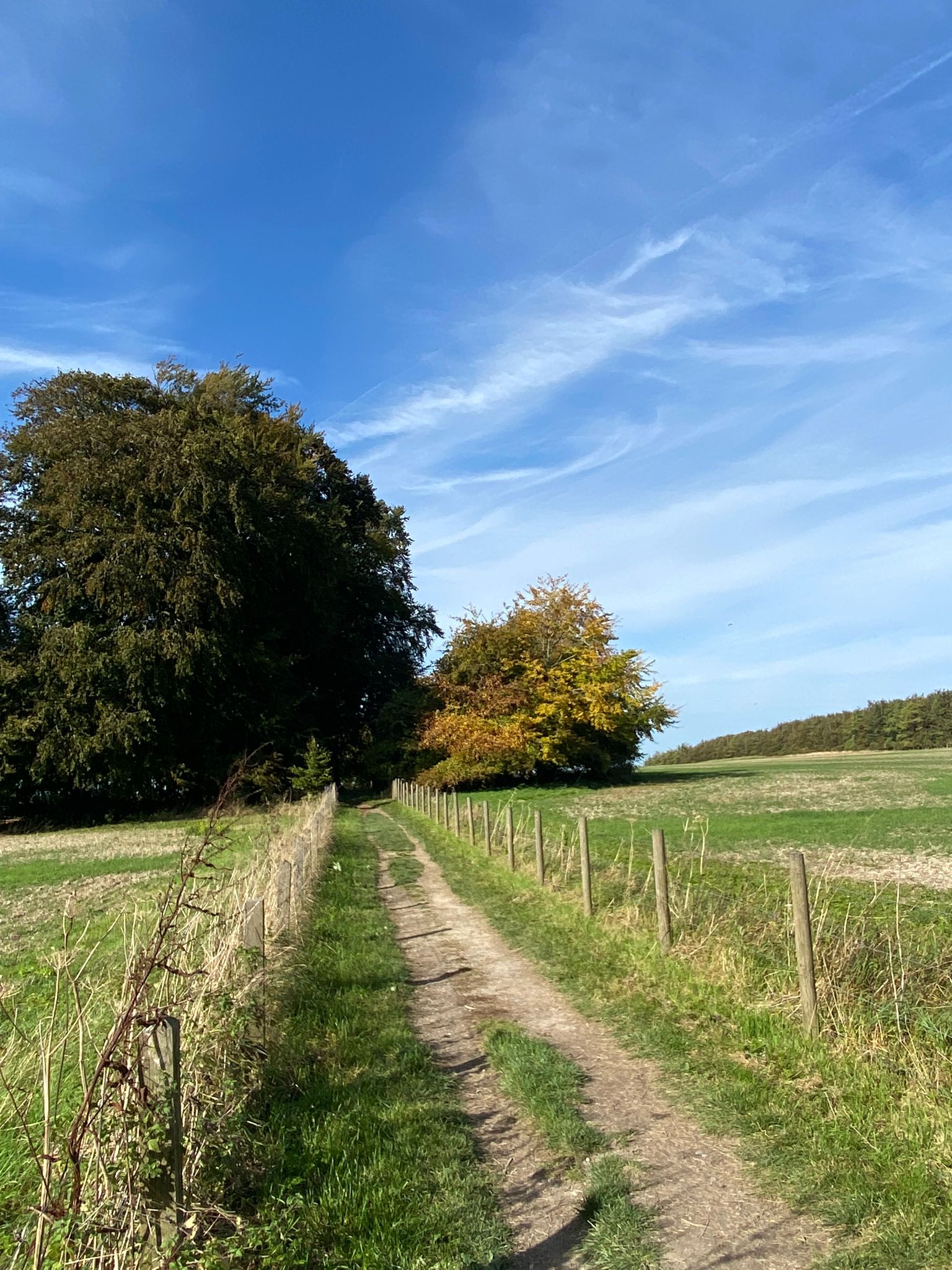
(Walking the Ridgeway Image Source: ©E.Heard)

We pass over the top of the hill and through a gate to join the ancient pathway known as ‘The Ridgeway’. The Ridgeway, an ancient trackway, holds profound historical importance and deep cultural significance that spans millennia. As Britain’s oldest road, it traces its roots back to prehistoric times, serving as a vital route for trade, pilgrimage, and communication. This ancient route, which stretches for 87 miles across chalk hills, meanders through picturesque landscapes, connecting the River Thames to the Avebury stone circle and beyond. The Ridgeway has witnessed the footsteps of countless generations, from Neolithic settlers to Roman soldiers, medieval pilgrims, and modern-day ramblers. Its historical significance lies not only in its utilitarian function but also in its cultural role, reflecting the evolving human narratives of the region. Today the Ridgeway continues to beckon walkers and history enthusiasts alike, inviting them to traverse its timeless path and connect with the living tapestry of the past, to experience the ancient history embedded in the landscape of Oxfordshire and beyond.

(Devil’s Coach Horse Beetle. Image Source: ©E.Blackshaw)

Walking Westwards along the route, we pass leafy hedgerows brimming with ripe berries and encounter a devil’s coach horse beetle scuttling along the track, perhaps going about its namesake’s business.

Wayland’s Smithy

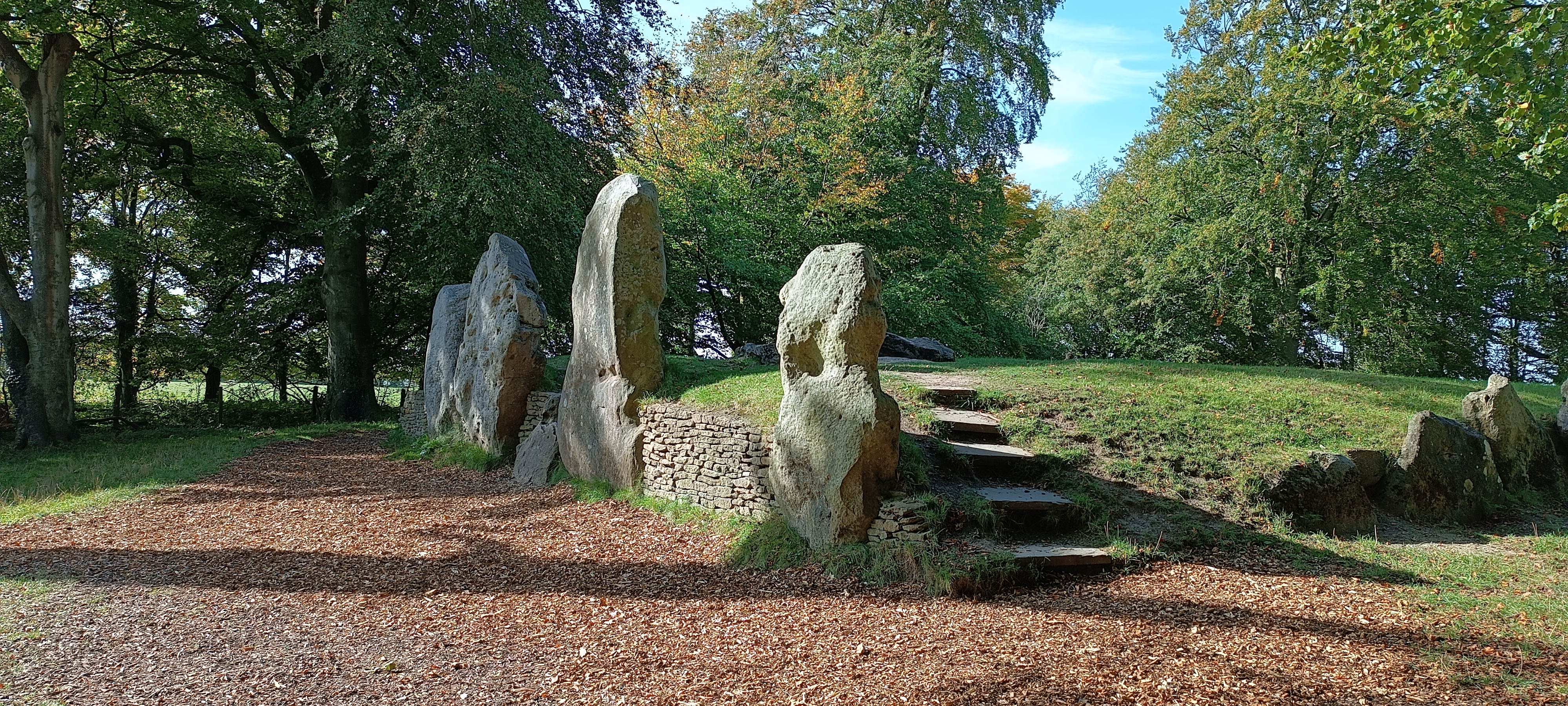
After following the Ridgeway for a mile and a half, we reach our ultimate destination, the remarkable long barrow of Wayland’s Smithy. Wayland’s Smithy is a mysterious Neolithic earth and stone structure once believed to be the home of a Saxon and Norse god of metalwork. Wayland the smith features in Germanic and Norse mythology and his legend may have been brought to England by Norsemen centuries after the long barrow was originally constructed.

(Wayland’s Smithy. Image Source: ©E.Blackshaw)

As legend has it, Wayland was captured by Swedish King Ndud, and was disfigured and tortured before being forced to work for him in the royal smithy. Wayland eventually escaped his enslavement by killing the king’s sons, and using their skulls as drinking bowls, before raping the king’s daughter and escaping using a flying cloak or metal wings that he created using his metalwork skills.

Wayland escaped to England and built himself a smithy at the isolated location where the long barrow stands. Feeling embarrassed of his disfigured appearance he was able to hide himself away from public view while carrying on his smithy trade. However, Wayland was eventually found by King Ndud’s men and was killed. He managed to take out eight of the Norsemen with his smithing hammer before he was overpowered and legend has it that the eight skeletons that were found in the excavations of the long barrow in 1919 were these men.

(Wayland Smith. Image Source: Bing Image Creator )

Despite this end, is said that the spirit of Wayland still resides at Wayland’s Smithy and he will shoe any traveller’s horse if the horse and a coin are left at the Smithy overnight. Even today, coins can be found left in the holes of the stones, more for luck now, than for shoeing horses.

Wayland Smithy is also associated with the nearby Uffington White Horse. It is said that once every hundred years the White Horse leaves its hill and gallops across the sky to be reshod by Wayland in his smithy. The Neolithic tomb could perhaps also be associated with the Sun Horse legend; the already 1000-year-old long barrow may have been reimagined by the people who carved the chalk geoglyph as a portal for the horse and sun to enter the Underworld.

(The entrance to the long barrow. Image Source: ©E.Heard)

We stop for a while at Wayland’s Smithy to soak in the calm, peaceful, almost otherworldly atmosphere of the location. This is one of my favourite places for peaceful reflection, and the fallen trees make an excellent spot to take tea and snacks, which we do. Importantly, before we leave, we place coins for luck and offering to Wayland on the stones. We then begin the long walk back up the gentle incline to the car park, stopping to forage some of the wild fruits and berries we find on the Ridgeway, in the hope of cooking up some delicious jams and jellies to remind us of our ramble.

On one of the last warm days of the year, before Autumn begins to bite, our ramble through the ancient landscape of the Vale of the White Horse, the Ridgeway, and Wayland’s Smithy leaves an indelible imprint on my memory. Surrounded by the mystical whispers of history, the air carries the essence of bygone eras, weaving tales of our ancient ancestors and their untold mysteries. The undulating hills and the enigmatic White Horse carved into the earth create a canvas of timeless beauty. As I stand amidst the ancient stones of Wayland’s Smithy, I feel a profound connection to the past. This autumnal adventure, with its awe-inspiring scenery and palpable sense of history, is a poignant reminder of the enduring allure of the past, forever etched in the landscape of Britain.

(Autumn Ramblers, the two Emmas. Image Source: ©E.Blackshaw)

Check out my travel companion Weird Wiltshire’s wonderful blog where she explores stories of ghosts and the paranormal, folklore, history and anything weird, found in Wiltshire and beyond:

https://weird-wiltshire.co.uk/

Reference list

An Eerie Encounter with the Dullahan’s Death Coach

Lawrence Holohan and unknown young lady, possibly a granddaughter

When I was a teenager, still in high school, I became very interested in my Irish heritage and began tentatively researching my family tree. My grandfather was from Thomastown in County Kilkenny and married my grandmother after he met her in Norfolk while stationed there with the RAF. Sadly, he died quite young, only a few months before my mother was born. I think not knowing my grandfather was what made me even more determined to look into my Irish roots and the first port of call was talking to my grandaunt Phila, my grandfather’s younger sister. Phila was a fountain of family history knowledge, providing me with a family tree drawn from memory and writing down a few memories and stories about the relatives she remembered. One such story has intrigued me since and has led me to further research and create this blog post.

Lawrence Holohan was Phila’s grandpa, my 2nd great-grandfather. He was born in 1870 in Thomastown in the county of Kilkenny in Ireland. He lived in an area near Bennetsbridge, not far from Thomastown, called Newhouse. Records trace his ancestors back to this area at least until the turn of the 19th century.

My grandaunt wrote down quite a few of her memories about him, but the one that captivated me the most was this story, as follows:

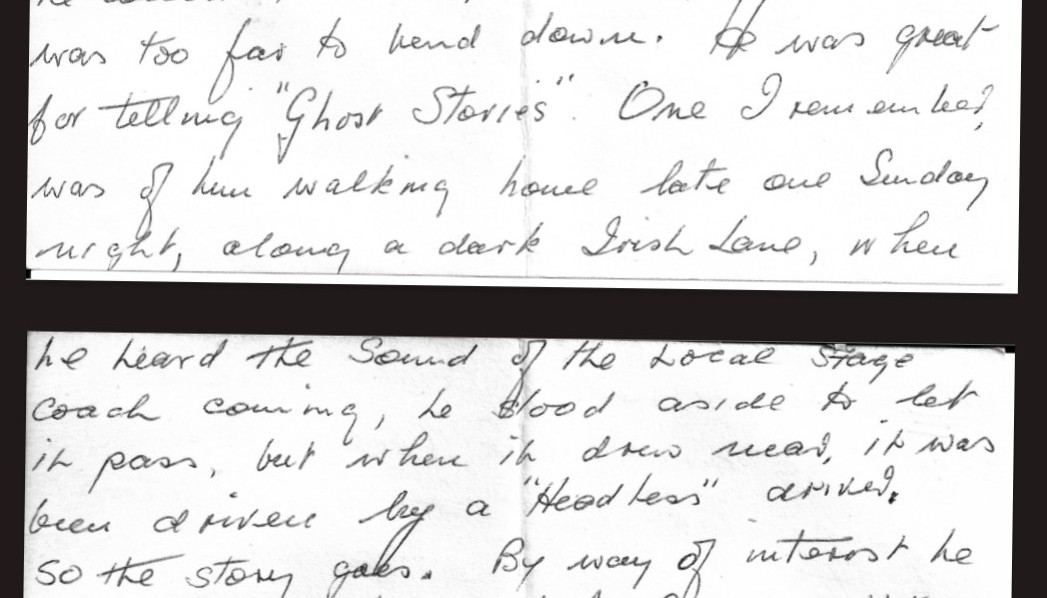
“He was great for telling ‘ghost stories’. One I remember was of him walking home late one night, along a dark Irish lane, when he heard the sound of the local stagecoach coming. He stood aside to let it pass, but when it drew near, it was being driven by a ‘headless’ driver, so the story goes.”

Aunty Phila’s handwritten notes

Lawrence died in 1956 and Phila has also now sadly passed away, so I cannot find out any more information on this wonderful ghost story from them, however, I have been able to look into some of the folklore of Ireland concerning headless coach drivers and headless horsemen.

It seems that stories of the headless coach have some history in the Bennettsbridge area, as I found a story originating from there in the National Folklore Collection, UCD. This was located in their Schools’ Collection and was written by 13-year-old Mary Nolan of nearby Danesfort in 1938:

“Headless Coach

In ancient times the old Irish people believed in many mythical things. They believed in Fairies and the “Headless Coach” and many things like that.

It is said that people in those days saw the ‘Headless Coach’ and this is the description they have of it. The Coach was very big and there was supposed to be dead people on it. The horses that were drawing it had no heads and that is why it was called the ‘Headless Coach’.

In the middle of the night some people heard it and they said it came up the Bennetts – Bridge road and it went down the Stoneyford road and it stopped at the Protestant Church. The people did not know where it came from.

The Coach made great noise as it travelled. Old people say it has to pass along the same way every four years.

People long ago told many stories about the ‘Headless Coach’ and they were kept by tradition.”

Was this the same apparition that Lawrence saw on that lonely lane, making its way to take a soul? It sounds as if the Headless Coach was a regular visitor along the roads he would have walked as a young man and he would have grown up hearing stories of its deathly journeys.

Ireland is a land shrouded in rich folklore, where tales of otherworldly beings and ghostly spectres abound. Among the many fascinating and eerie stories, two figures stand out for their chilling presence and association with death: the Dullahan and the Cóiste Bodhar Death Coach.

The Dullahan: The Headless Horseman

Dullahan, the headless horseman via Wikipedia (Croker, Thomas Crofton (1834) “XXIX. The Headless Horseman” in Fairy legends and traditions of the south of Ireland, John Murray, p. 239)

In Irish legend, the Dúlachán or Dullahan is a terrifying figure, often referred to as the “Gan Ceann” or “Headless One.” This malevolent being is said to roam the countryside, heralding imminent death with his appearance. The Dullahan was thought to be a sign of death, similar to the folklore of the banshee. Unlike the Banshee, which is known to warn of a coming death in certain families, the Dullahan does not come just to warn; he is the harbinger of someone’s certain death.  The Dullahan is depicted as a headless horseman, carrying his detached head under his arm or holding it high up in the air. The head’s eyes are said to be constantly moving, peering into the distance and revealing the fate of those whose demise is drawing near.

The first mention of the Dullahan appears in Thomas Crofton Croker’s book Fairy Legends and Traditions of the South of Ireland in 1828 and he is described as follows in the tale “The Headless Horseman”:

   ” ..such a head no mortal ever saw before. It looked like a large cream cheese hung round with black puddings: no speck of colour enlivened the ashy paleness of the depressed features; the skin lay stretched over the unearthly surface almost like the parchment head of a drum. Two fiery eyes of prodigious circumference, with a strange and irregular motion, flashed like meteors.”

Clothed in a tattered, black cloak, the Dullahan wielded a whip made from a human spine, which he used to strike fear into anyone who crossed his path. His horse’s hooves were said to spark flames as they gallop, leaving a sinister trail of fire in their wake. When the Dullahan stopped riding, it was believed that a soul was about to pass into the afterlife. It is claimed that witnesses would hear their name being called out, and if they looked back, they were destined to die.

Despite his forbidding demeanour, the Dullahan was said to be fearful of gold and would avoid areas where these precious metals are present. As a result, people would sometimes leave offerings of gold to protect themselves from the dreaded fate he carried.

Croker’s tale “The Headless Horseman” provides the best depiction of the Dullahan, presented with good humour. The protagonist of the story is Charley Culnane, who while out riding at night witnessed the apparition of a disembodied head of a horse ridden by the figure of a headless spectral rider:

“A figure, whose height (judging as well as the obscurity of the night would permit him) he computed to be at least eight feet, was seated on the body and legs of a white horse full eighteen hands and a half high … his vision failed in carrying him further than the top of the collar of the figure’s coat, which was a scarlet single-breasted hunting frock …]see further he could not, and after straining his eyes for a considerable time to no purpose, he exclaimed, with pure vexation, “By the big bridge of Mallow, it is no head at all he has!

“Look again, Charley Culnane, said a hoarse voice, that seemed to proceed from under the right arm of the figure.

Charley did look again, and now in the proper place, for he clearly saw, under the aforesaid right arm, that head from which the voice had proceeded, and such a head no mortal ever saw before.”

Surprisingly Charley then decided to challenge the headless horseman to a race, much to the delight of the ghostly rider:

“A hundred years it is since my horse and I broke our necks at the bottom of Kilcummer Hill, and ever since I have been trying to get a man that dared to ride with me, and never found one before.”

The horseman disappeared without taking Charley’s life and rewarded him with the promise of supernatural assistance in any future races in which Charley would take part.

There are also legends and tales concerning the “Headless Coach”, or in Irish Cóiste Bodhar, with its driver being the Dullahan.

The Cóiste Bodhar Death Coach: Harbinger of Doom

The Cóiste Bodhar, also known as the “Silent Coach” or “Death Coach”, is by legend a ghostly coach drawn by a team of headless, skeletal horses, and it travels silently through the night to collect the souls of the departed. Like the Dullahan, the Cóiste Bodhar is a harbinger of death and signals the end of a person’s life.

The sight of the Cóiste Bodhar is said to bring an eerie stillness to the surroundings as if nature itself is holding its breath. The coach is often described as being adorned with funereal symbols, and its windows are said to be draped in mournful black. Those who witness the spectral procession may be overcome with a sense of foreboding, as they know that someone’s demise is imminent.

In some versions of the tale, the Cóiste Bodhar is driven by a Dullahan, further intertwining the stories of these two chilling entities. According to WB Yeats in his book  Irish Fairy and Folk Tales (1893), the Dullahan drives the coach:

“This is a most gruesome thing. He has no head, or carries it under his arm. Often he is seen driving a black coach called coach-a-bower (Ir. Coite-bodhar), drawn by headless horses. It rumbles to your door, and if you open it a basin of blood is thrown in your face. It is an omen of death to the houses where it pauses. Such a coach not very long ago went through Sligo in the gray of the morning, as was told me by a sailor who believed he saw it. In one village I know its rumbling is said to be heard many times in the year.”

According to Croker, the Dullahan could be heard driving the Death Coach particularly hard on some nights when there were souls to be collected:

“The following account of the Dullahans and their coach was communicated to the writer by a lady resident in the neighbourhood of Cork:–

“They drive particularly hard wherever a death is going to take place. The people about here thought that the road would be completely worn out with their galloping before Mrs. Spiers died. On the night the poor lady departed they brought an immense procession with them, and instead of going up the road, as usual, they turned into Tivoli: the lodge-people, according to their own account, ‘were kilt from them that night.’ The coachman has a most marvellously long whip, with which he can whip the eyes out of anyone, at any distance, that dares to look at him. I suppose the reason he is so incensed at being looked at, is because he cannot return the compliment, ‘pon the ‘count of having no head. What a pity it is none but the Dullahans can go without their heads! Some people’s heads would be no loss to them, or anyone else.”

One compelling story by Croker concerning the Death Coach is that of “Hanlon’s Mill”. The protagonist Michael Noonan was walking back from Ballyduff, Co Cork from his trip to a shoemaker and passed the ruined mill of “Old Hanlon”. The ruin surprisingly seemed to be issuing clacking noises as if it were working away. Mick then met his neighbour Darby who asked him to take the horse and cart back. Mick passed by the River Awbeg and here noticed that the moon reflected on a pool of water had disappeared.  When he turned, he then saw, following beside his cart, a black coach drawn by six headless black horses, driven by a headless coachman clothed in black:

“How was Mick astonished at finding, close along-side of the car, a great high black coach drawn by six black horses, with long black tails reaching almost down to the ground, and a coachman dressed all in black sitting up on the box. But what surprised Mick the most was, that he could see no sign of a head either upon coachman or horses.”

The next morning, Mick received news from a local huntsman that Master Wrixon of Ballygibblin had died suddenly after a fit. So, according to legend, the appearance of the “Headless Coach” foreshadowed an imminent death once again.

Photo by u0410u043du0442u043eu043d u0425u0430u0442u043au0435u0432u0438u0447 on Pexels.com

Another interesting story occurred in 1876 in county Clare, collected by Thomas Johnson Westropp, in his 1910 “A Folklore Survey of County Clare”.  Here a servant for the MacNamara family of Ennistymon House was taking a stroll late at night when he heard the rumbling of wheels along the lane. Confused as to what vehicle would be out at such a late time of night, he then realised it must be the Cóiste Bodhar.

The servant then quickly ran and opened the three gates leading to Ennistymon House and threw himself face down on the ground as the death coach hurtled past him. Without stopping at Ennistymon House, it drove into the distance until it was out of sight and no longer heard. A day later news arrived that Sir Admiral Burton MacNamara had died in London.

Despite their fearsome reputation, the Dullahan and Cóiste Bodhar serve as a reminder of the ancient beliefs and superstitions that have shaped Irish culture. Did Lawrence Holohan really witness the Death Coach passing by on its solemn journey? Did it come to take the soul of a family member or friend of his? The answers are now lost in time. However, what we do know is that legend of the Dullahan and the Death Coach continues to captivate and frighten those who hear their eerie hoofbeats or the rumbling of wheels echoing in the darkness, making them two of the most enduring and haunting figures in Irish folklore.

Photo by Hakan Erenler on Pexels.com

I dedicate this post to my mother Susan Gayfer (01/06/1956-24/07/2023) who passed away suddenly and unexpectedly the on the day I finished writing the first draft and had been excited to read the finished product. She sadly did not live to read it.

References

A Paranormal Night of Discovery at The Mount Without, Bristol

Earlier this year I was lucky enough to secure tickets to a paranormal night of discovery event being held in the atmospheric venue that is ‘The Mount Without’. This was a two-part event hosted by the marvellous Dr Kate Cherrell. The first part of the event was an introduction to Victorian Spiritualism introduced by Kate and the second part of the event was a paranormal investigation, co-hosted by Kate and Jamaica Inn paranormal investigator Karin Beasant, giving attendees the chance to try their hand at experiments and contacting spirits from beyond the veil.

The Mount Without

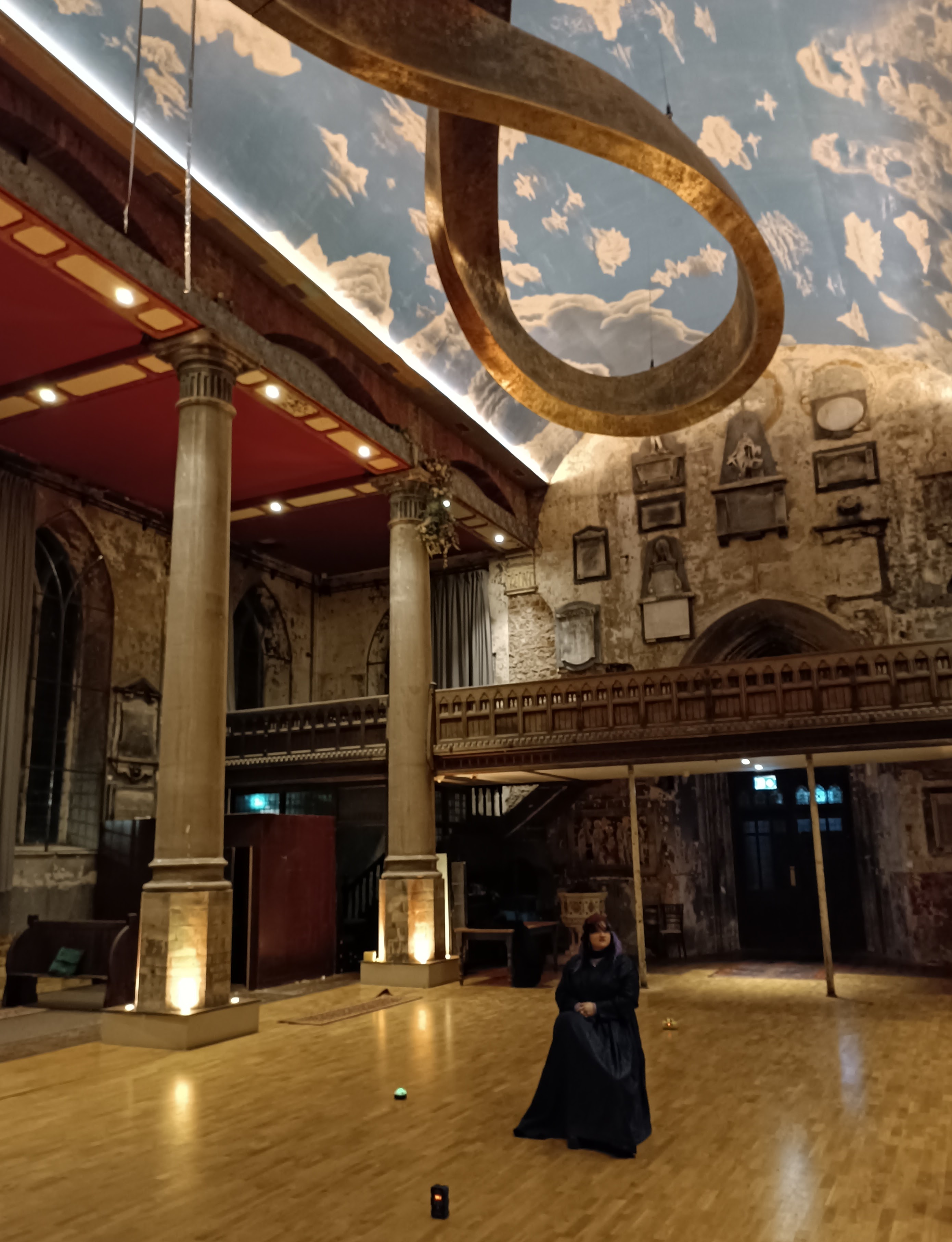
Saint Michael the Archangel on the Mount Without is an impressive church standing proud on St Michael’s Hill, looking over the city of Bristol. The first church on this site was likely Norman and built in 1147 by Robert Fitzhamon, who is famed for also building Tewksbury Abbey. The church was originally built outside the city walls and was therefore known as “The Mount Without”. The original church was then rebuilt in 1460 and the clock tower you see now is from that period.

Over the years the city of Bristol slowly grew up and around the church, as St Michael’s Hill became more populated with merchants and other residents. By 1775-1777 the church became too small to take the growing congregation and so the main body of the church was demolished and rebuilt by local builder, Thomas Paty. Around this time new graves were also created in the crypt and tombstones reused as ‘under slabs’ for the new graves. As the living population of Bristol grew, so did the population of the dead interred at the Church.

During the second world war, the church was damaged twice during the Bristol Blitz. In 1940 a 1000lbs bomb fell within feet of the Church and in 1941 an incendiary device set the roof alight destroying it. The church was repaired and in use until 1999 but the congregation dwindled over the years and was finally closed by the diocese.

The church lay empty, until squatters moved in and set it ablaze in October 2016. The dramatic blaze took at least 15 fire engines and many firefighters to extinguish. I could see the smoke from the blaze billowing in the sky near my home not too far away.

In 2017 the diocese wanted to find a new use for the building and asked for design bids from businesses, philanthropists and entrepreneurs. The church was finally reclaimed as the creative venue and events space that we see now, where it hosts artists, music and holistic events. This wonderful gothic revival church has been a gathering place for the people of Bristol for over 900 years and looks set to continue with that legacy.

An Introduction to Victorian Spiritualism

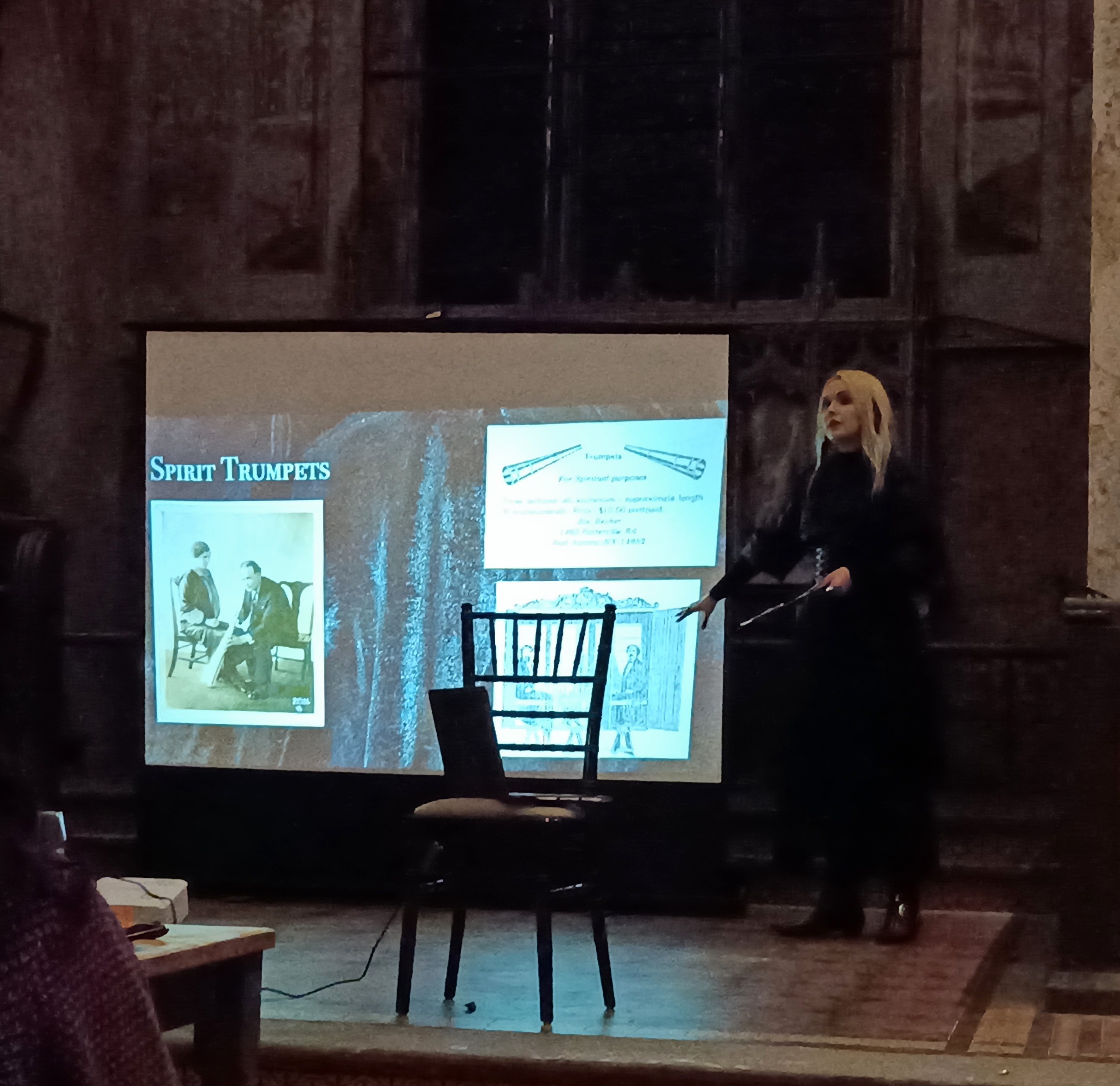
The evening kicked off with the introduction to Victorian spiritualism talk by Dr Kate Cherrell. This was a fascinating, informative and entertaining talk introducing us to the strange world of Victorian spiritualism including its history and types of spirit contact made in the 19th century. This was brought to life with a slide show, props and Kate’s sharp humour. I personally enjoyed hearing about spirit trumpets, the Fox sisters of Hydesville and witnessing Kate’s ectoplasm demonstration.

Spirit trumpets for example, or ‘séance trumpets’, were metal cones placed in the centre of a table during a séance to amplify any sounds issuing forth from the spirit realm. Sometimes a spirit would speak through a medium, who would bring the trumpet to their mouth to speak through. What larks!

The Paranormal Investigation

The second half of the night was the paranormal investigation; a chance to have hands on experience of communing with the spirit world. This started off with investigator Karin explaining the various gadgets, devises and paraphernalia used in investigation; from EMF readers, spirit boxes and motion sensors to planchettes and Ouija boards.

We split up into two groups and my group started off in the crypt with some table tipping. I’d never tried table tipping before, so this was all new to me. Table tipping is a form of psychic phenomenon in which a table can tilt, rise, wobble or rotate by the contact of the fingertips of individuals. It is a form of séance where sitters place their fingertips on the table and the table move without conscious muscular force. By relating the tilts to the alphabet or yes/no directions it is said to become possible to receive messages from beyond the veil.

We stood around a tall thin table with our finger tips gently rested on the top while Kate called out questions. It appeared that a religious man took a particular interest in talking to me and Kate asked him questions about his life before death. The table tilted and wobbled in answer to her queries, indicating he was originally from the north, had come to Bristol and stayed her while his family went to the New World. It was unclear if he had worked at the church or had just been a member of the congregation.

After the table tipping, we moved on to conduct a séance. For this we sat around a table with a spirit box and EMF readers on top, with shadow sensors dotted around the room near us. A bible was placed on the table also and we linked hands as a member of the group read a passage out from Corinthians. The hope was that we could invoke the spirits of this holy building by reading passages from the bible, triggering one of the various sensors. There were some beeps and possible triggering of sensors, but nothing too striking for me to note during this séance.

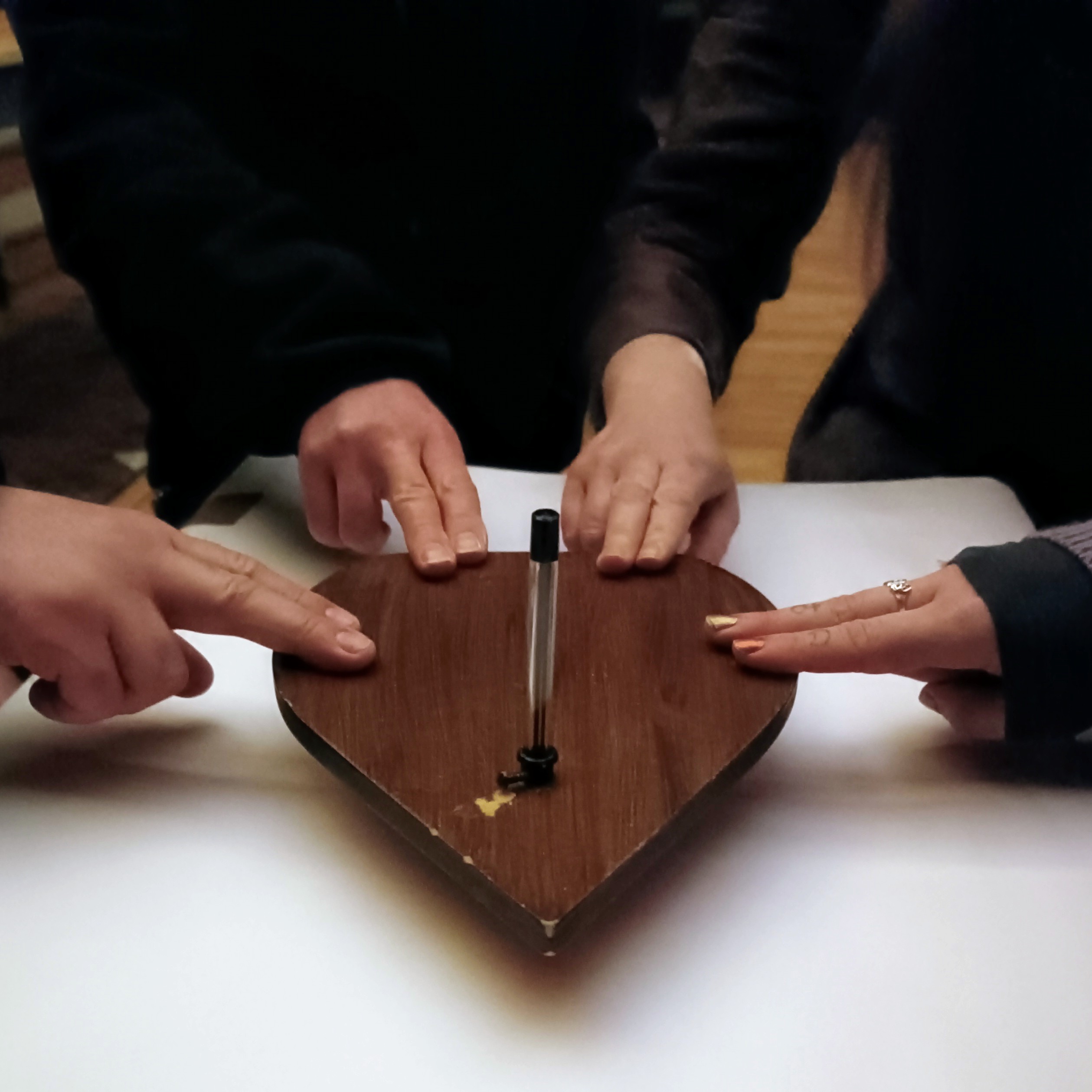
Next up, we headed upstairs in to the Nave of the church where we tried the planchette without much activity. The hope was that we would see some automatic writing. We all placed our fingers on the planchette and asked the spirits to move the planchette across the board, bringing messages from the other side. There was a small amount of movement, but not much unfortunately.

Following this we tried the “Estes Method”. The Estes method is where an investigator wears a blind fold to limit visual stimulation and also wears noise cancelling headphones connected to a sprit box; a device that is used to scan through radio frequencies and it is believed to be a communication tool between the spirit realm and the world of the living.  While the investigator is listening to the spirit box, other members of the group call out to the spirits with questions. The blindfolded investigator will call out any ‘answers’ coming through the headphones from the spirit box.  The idea is that the sensory deprivation eliminates any stimuli that could influence the blindfolded investigator.

In our experiment we sat in a circle near the alter, all wearing blind folds. One person had the spirit box and headphones. One person sat in the centre of the room dressed in an old-fashioned dress near the shadow sensors. We called out questions and for the spirts to touch someone.  After this some other ladies took it in turns to wear the old-fashioned dresses and sit in the centre of the room with the spirit box and a pal of mine in vintage style clothes also took his turn. We called out questions and even religious phrases in Latin to try to call for messages from the spirits. A few words were called out by the person with the spirit box including “like music” and other refences to music a few times.

To finish off we all sat in a circle where the chairs were positioned with one seat inside the circle and the next out.  One person sat at the altar, while other members called out to the spirits to approach and communicate.  The lady at the alter felt a cold spot next to her and a shadow sensor went off ahead of it. She said she felt like a hand was resting on her head at one point. Was this the spirits coming close to her or psychological suggestion?

I noted that the questions asked to the spirits often led to the Reverend William Knight. The Reverend Knight was a long serving rector of the parish, serving for almost sixty years before retiring in 1875. He died 3 years later and was buried in the church crypt. Could this have been him placing reassuring hand on the young lady’s head? There is also the story that a male figure has been seen looking out of the door near nave in past. Could this be the Reverend keeping a watchful eye over his beloved church even after death?

All in all, this was a fascinating and enjoyable night; from the whistle stop introductory talk based around Victorian spiritualism, to the hands-on experience of trying out paranormal investigation techniques. For me there was not enough activity to indicate that the spirits of the dead lurk in ‘The Mount’, waiting to communicate with the living. However, this location is steeped in history and atmosphere, so no doubt further investigation could prove me wrong. Perhaps on a late-night walk home past the Mount, I too one day will spot a dark figure looking out from the nave as I pass by.

With thanks to The Mount, Dr Kate Cherrell and Karin Beasant.

References:

2009-present Ghost Catcher Isles© All rights reserved. All my posts are copyright and if you do wish to refer to them or use anything from them on your site, please credit and link this site

The Care Home Entity

Photo by Pedro Figueras on Pexels.com

I’ve been interested in the paranormal since I was a child, even joining an amateur paranormal investigation team in Ireland for a year when I lived in Dublin, though remaining firmly in the ‘sceptic’ camp. The experiences I want to describe to you happened to my mother when I was around 13 years old and it is where my interest in the paranormal began.

My mum has worked as a care assistant and later in managerial roles in elderly people’s residential care homes in Norfolk for most of her adult life. She has had several unusual, creepy and unexplained experiences in several places, but the one that left its mark on her and me the most was in a care home in a busy touristic town on the Norfolk Broads. This care home was in a very old building that had once been part of a landed estate, and it comprised of gardens, a large house with multiple rooms and converted stables/sheds.

My mum worked as a relief assistant manager there for a period and part of the job required that she sleep over night. She had slept in different rooms in the main building before and had odd experiences; she had had her things moved and nightclothes folded and put on the bed on occasion and upon asking no staff had admitted to moving them. She said this room felt safe and friendly, like there was a friendly poltergeist there who wanted to be helpful. In one certain room, she had woken in the night to hear crying from the room above. Upon investigation, she was told that there was nobody in the room above. Although creepy, her experiences in these rooms did not leave her shaken and she was generally happy to sleep in them.

It was however, when my mum was required to sleep in the rooms in the converted stables/sheds that she had the experiences that left her shaken and scared. I remember seeing my mum when she returned from work the afternoon after her first night in that room and she looked awful. She looked exhausted and shaken up but would not tell me what had happened to her. It took her around 3 days for her to finally gain the strength to speak about it as she felt she would not be believed. I believe she experienced something in that room that she could not explain.

My mum told me that she had felt uncomfortable in that room from the first time she went in. She said it felt cold and unfriendly. On that first night she had finished up her tasks for the night and had gone to her room to settle in for the night. She said she had the bedside lamp on and was propped up in bed reading, which is her custom to help her relax before sleep. She said it felt cold in the room and she noticed something odd from over the top of her book. She said she saw a grey mist coalescing near the window and between the end of the bed. She felt frozen with fear and watched the mist grow until around 5ft in height, like figure. The mist seemed to shuffle towards her and this was more than enough for my mum and she told me she shot out of the bed and out of the room. She refused to return that night and slept as best she could in a chair in one of the lounges. She spoke to the night staff and they disclosed that other people had had strange experiences in that room.

Sadly, my mum had to return to that room as part of her job, so she decided she had to live with whatever was in the room. She said following that first incident she experienced knocking and banging on the door, but nobody there and staff confirming nobody had been to her room. She heard knocking and banging inside the room too, sometimes waking her up. She was so frightened she spoke to a local vicar about what to do and began sleeping with a Bible next to the bed and a glass of water to represent life.

Other relief assistant managers also had to slept in that room and at least 2 others disclosed that they had had experiences in there. One lady had felt what felt like someone get in bed beside her and somehow pass through her. Another had felt something pulling the duvet from the end of the bed.

My mum spoke to some locals who said that they believed an Italian prisoner of war had worked on the estate and had died in the stables. Could he still be there trying to get attention?

My mum said throughout the time she worked there she continued to experience things in that room, but they did calm after she spoke to it. She became so fed up with her sleep being disturbed and feeling afraid that she literally spoke to it, or at least to the room, telling it that she wasn’t there to harm it, she had to stay there for her job and if it ceased bothering her, she would not bother it. This seemed to calm things in there somewhat from then on and she was able to sleep with less disturbance.

The building there is no longer a care home for the elderly, but has a similar use, so she prefers to keep the place anonymous as she doesn’t want to cause alarm to anyone who stays there now. I wonder if the entity in that room and the spirits in the other rooms are still active?

Victim Support Sponsored Ghost Hunt, January 2014- The Ancient Ram Inn, Gloucestershire

On 11th January 2014 members of Victim Support’s South West Victim Care Unit held a sponsored ‘ghost hunt’ at the Ancient Ram Inn in Wotton-Under-Edge, Gloucestershire.

The Ancient Ram Inn is considered one of Britain’s most haunted B&Bs and is reputedly haunted by at least twenty ghosts. It is claimed that it is so haunted it can no longer be used as a functioning B&B and instead opens its doors to budding ghost hunters.

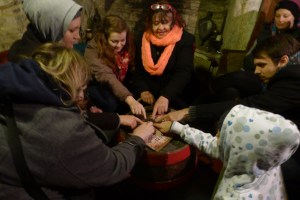
Members of the South West Victim Care Unit challenged themselves to see how long they could last out in this creepy building. A Ouija Board was used in “the bar” and several vigils were conducted in “the bishop’s room”. There were a few strange occurrences in the bishop’s room, such as a candle stick falling over, tapping noises coming from the fireplace, a brass bed warmer swinging and banging over the fireplace, a door knob rattling when nobody was at the door and long scratching noises coming from the door.

Were these down to a pranksters or spirits of the dead? You can find out for yourself if you spend a night at the Ancient Ram Inn.

Despite finding no concrete evidence of the afterlife, all members of the South West Victim Care Unit enjoyed their spooky experience, which raised £775 for Victim Support.

An more detailed write up of this investigation with additional photos will follow shortly.


Using the Ouija Board at the Ram Inn

Using the Ouija Board at the Ram Inn

2009-2014 Ghost Catcher UK & Ireland© All rights reserved. All my posts are copyright and if you do wish to refer to them or use anything from them on your site, please ask permission first