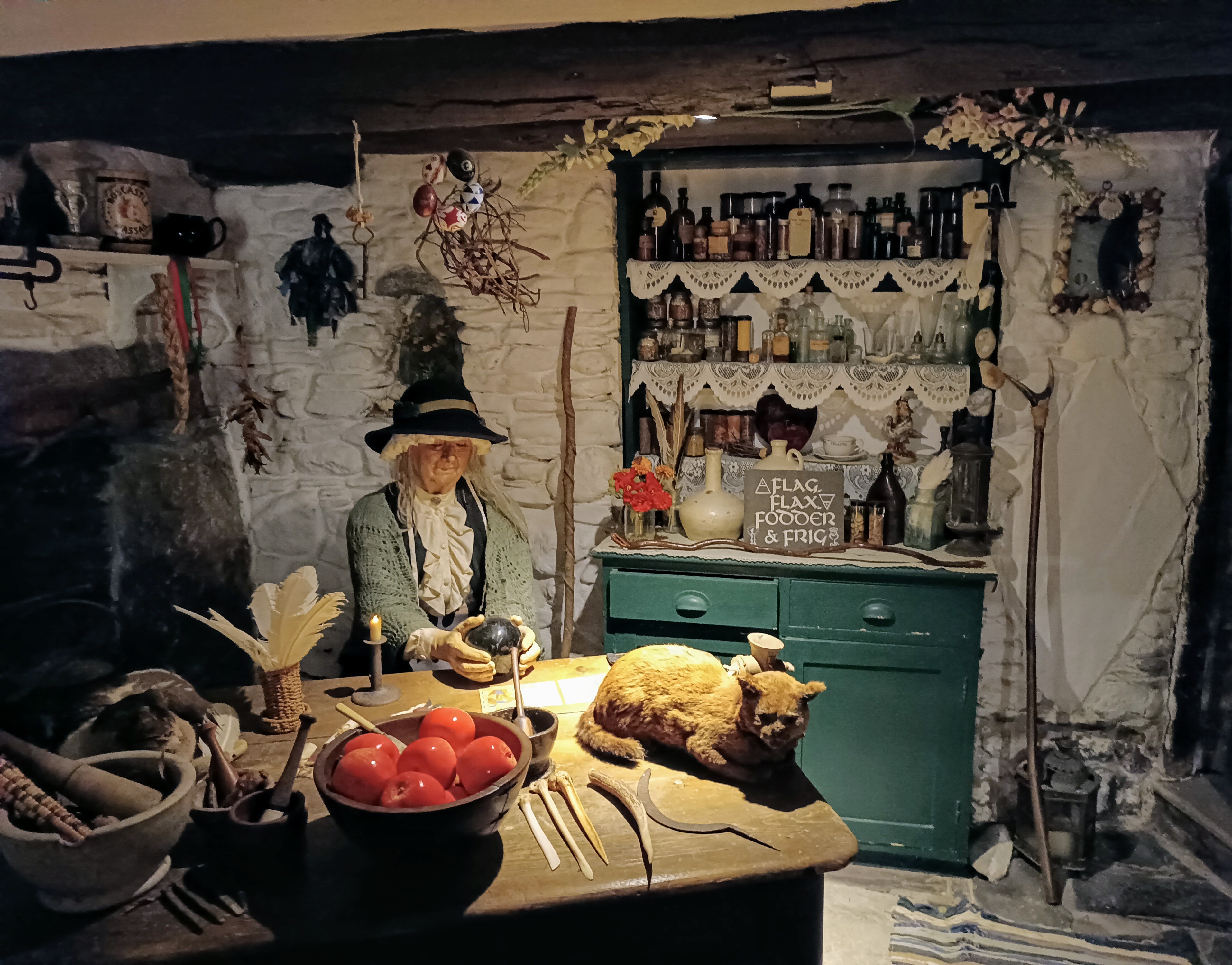
Nestled in the picturesque village of Boscastle, Cornwall, lies a treasure trove of the mystical and arcane: the Museum of Witchcraft and Magic. As a history enthusiast and seeker of the strange and unusual, I recently had the pleasure of visiting this fascinating museum, and it was an experience that transported me through centuries of magic, folklore, and the human imagination.
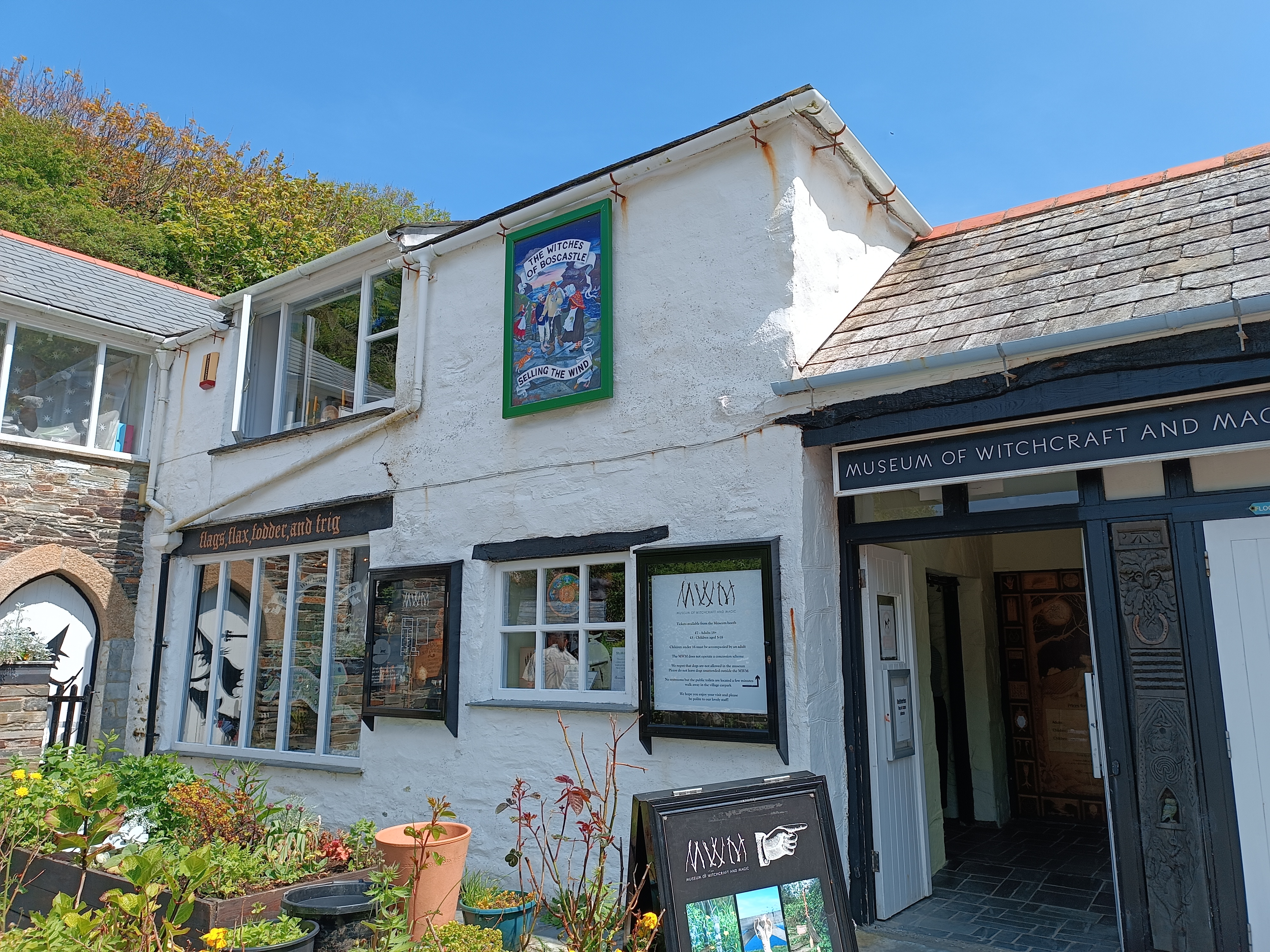
The Museum of Witchcraft and Magic
The museum was founded by Cecil Williamson, who had had an interest in witchcraft and magic since childhood, and was a friend of Gerald Gardner who propagated a new religion called Wicca (later known as Gardnerian Wicca). The museum was first set up in Stratford-Upon-Avon and then moved, for the most part due to local opposition, to the Isle of Man, where Gardner became the ‘witch in residence’. After time, Gardner and Williamson parted company. Williamson then settled in the small Cornish harbour village of Boscastle where he opened the Museum of Witchcraft in 1960, where it remains until today.
In 1996 Williamson sold the museum to Graham King, who continued to grow and develop the museum, gaining an international reputation and a worldwide audience of visitors and researchers. Disaster almost befell the museum in 2004 when a devastating flood swept through Boscastle, leaving destruction in its wake. The fast-thinking Graham King was the first to raise the alarm, helping residents and visitors to safety while also protecting the vast majority of the museum’s precious artifacts from the floods.
In 2013 Graham King gave the museum and its contents to Simon Costin, Director of the Museum of British Folklore, and in 2015 the museum was renamed “The Museum of Witchcraft and Magic” to more accurately describe the present museum’s collection.
The collections
The museum now proudly holds the world’s largest collection of witchcraft-related artifacts. It includes over 4,500 objects and over 9,500 books and manuscripts. It is both the largest collection of such items and also likely the largest occult library in Europe. Walking through its doors felt like stepping into another realm. The exhibits are artfully arranged, guiding visitors on a journey from ancient pagan traditions to contemporary Wiccan practices, illuminating the myriad ways in which witchcraft has shaped culture and belief systems through the ages.
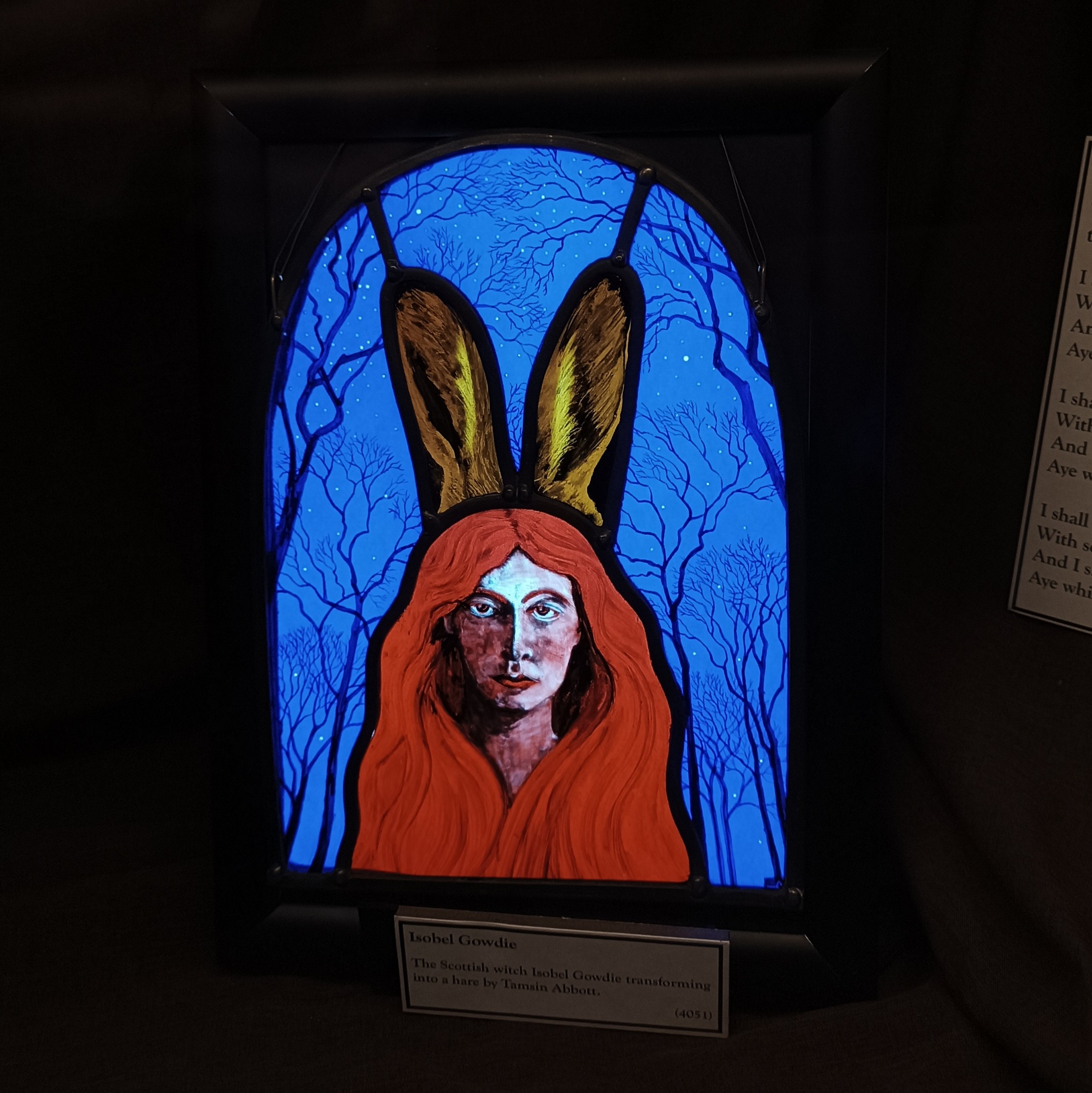
The collection’s depth is astounding. I found myself entranced by displays of ancient charms, delicate poppets, and beautifully preserved herbs used in various spells and rituals. In the “Images of Witchcraft” I saw depictions of all kinds of witches throughout history, from images of the devil worshiping ugly old hag witches that were used as propaganda to fuel the witch-hunts to the beautiful, mysterious and seductive witches of the Pre-Raphaelite artists of the Victorians, who took their inspiration from mythology and legends, such as the witches of Arthurian and Greek legends.
The Witch Hunts
A particular highlight of the museum is the display dedicated to the persecution of witches. Here, the atmosphere shifts, becoming sombre as the grim reality of persecution unfolds. The peak of witch trials was in the 17th and 18th centuries and many ‘cunning folk’ and ordinary people were accused of using witchcraft. These people were imprisoned, tested, and tortured to obtain ‘confessions’ and sentenced to death. Torture devices such as thumb screws and heated leg irons were used to extract confessions to even the most outlandish claims of witchcraft. Witches were also put through tests, such as the identifying of “Devil’s Marks”, which were just natural birthmarks, moles, blemishes, or warts. If found they were thought to be a sure sign of a witch. If these marks were pricked with a ‘witch pricker’, a long pin, and didn’t draw blood the person was seen to be proved a witch. Detailed accounts and historical documents bring to light the tragic fates of many accused witches, offering a poignant reminder of the dangers of superstition and scapegoating.
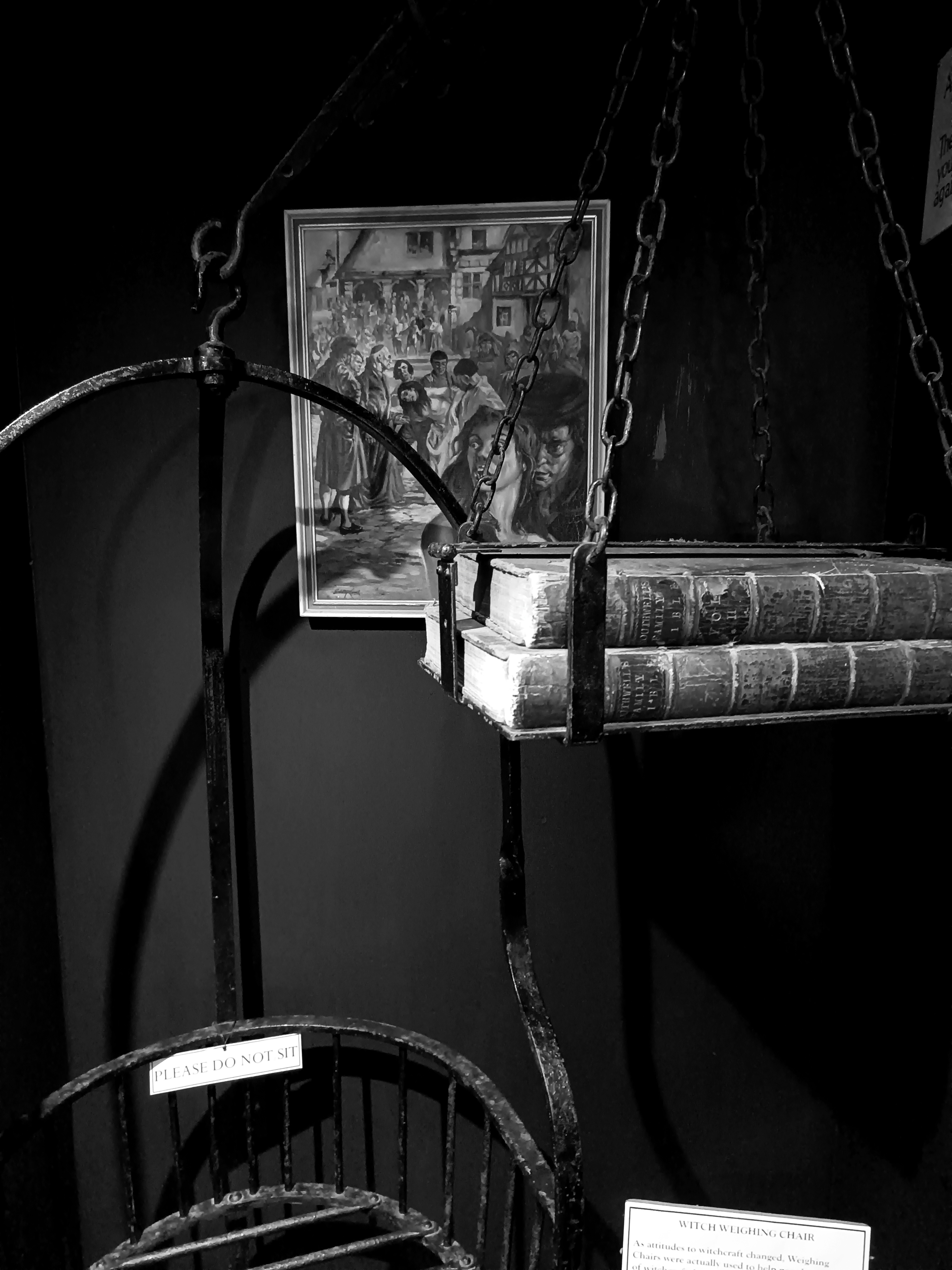
Of all the exhibits in this section on the witch trials, I found the weighing chair the most fascinating. This is an iron chair that acts as a set of scales; on one side the victim would be sat, and on the other side the bible would be balanced. If the victim proved lighter than the bible, they were thought to be proved a witch. This device was a more positive item in that it was likely created when authorities were keen to disprove the practice of witchcraft and limit further prosecutions, as of course, nobody weighs less than a bible.
Charms and Curses
The items that unsettled me the most, however, were the “poppets”. These are objects that are often formed in the likeness of an individual who is to be cursed. These were often made of wax, but also other materials such as wool and textiles, and often contained something that belonged to the person, such as nail clippings, hair cuttings or a piece of clothing. Some of the poppets even had needles piercing them. Many curses were not intended to kill or physically harm. One poppet on display had a needle piercing its tongue, intending to stop the victim from spreading malicious gossip. Although these items could be used negatively for curses bringing misfortune, they could also be used to heal sickness by washing the poppet in healing herbs and oils. This once again, disproves the misconception that witches always used their powers for evil, rather than good. Despite this, the poppets pierced with needles gave me a visceral feeling of nausea, which meant I couldn’t stay long in that section looking at them.

Fairy folk and Piskies
The museum also features some of the lighter aspects of magic. One exhibit is devoted to the whimsical side of folklore, featuring fairy lore and magical creatures such as Cornish Piskies. There has been a belief in fairy folk for centuries in the British Isles and it is said that piskies are the departed souls of druids who once inhabited the West Country or even the souls of unbaptised children. All manner of fairy and pisky can be seen in the exhibit, even some pictured playfully dealing out cards on a human skull. This blend of the serious and the playful reflects the museum’s comprehensive approach to the subject, appealing to both scholarly interests and casual curiosity.

The Hare Lady
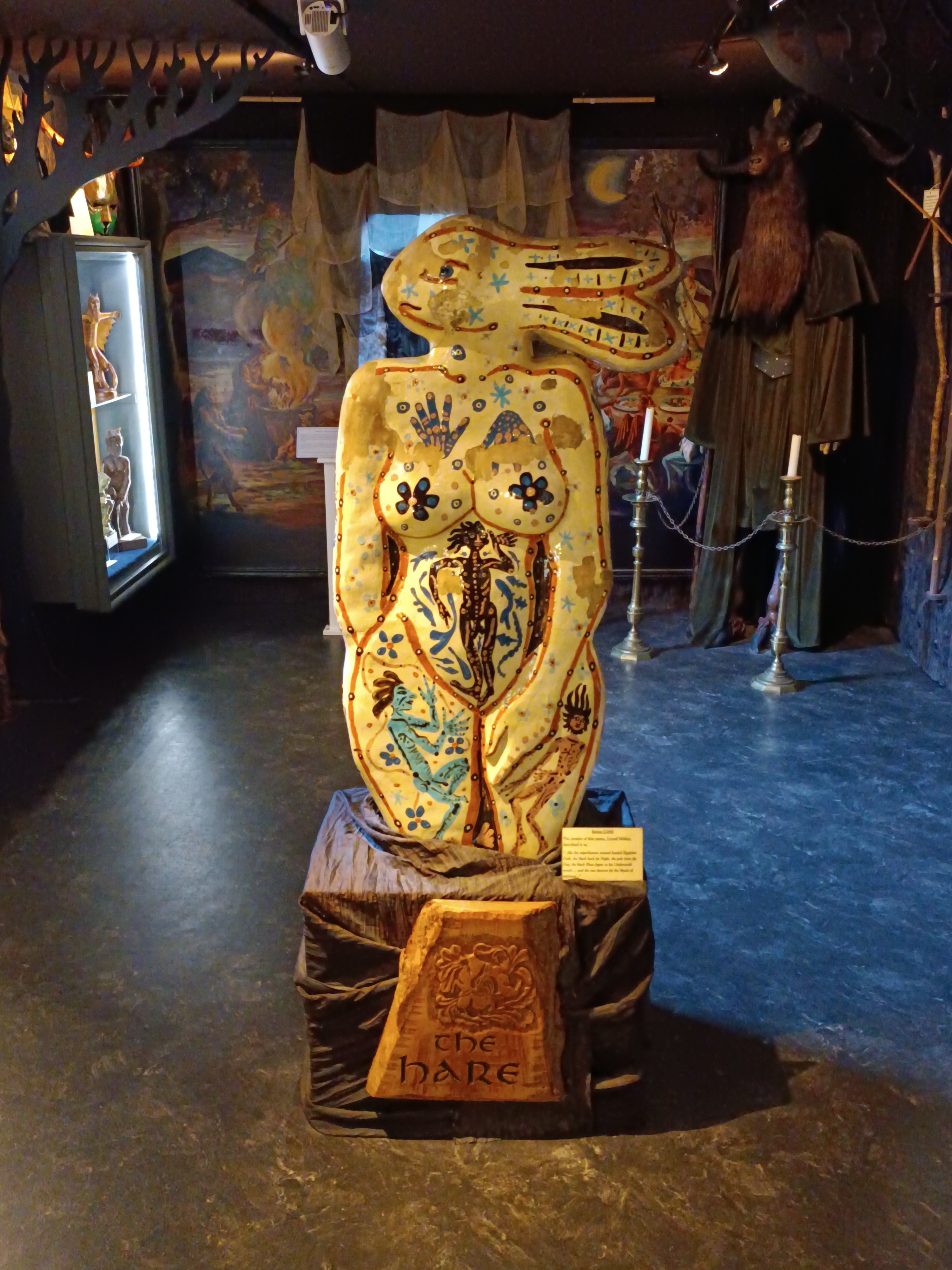
One exhibit I found particularly impressive was “The Hare Lady”. This is a sculpture made by artist Lionel Miskin in the 1960s. This sculpture was inspired by aspects of the Playboy Bunny Girls, animal totems, underworld spirits and shapeshifting witches. Hare have long been associated with witches and witchcraft, with some witches during the witch trials claiming to be able to transform into hares. Hares also have long associations and connections with the moon and goddesses such as Diana. For me, the hare reminds me of my late mother, who had hares living close to her home which seemed to greet me when we drove to her house to see her and made an almost magical close-up appearance to me in a field in the week following her death. This wonderful hare sculpture therefore caught my eye due to this personal association and moved me with its beauty.
Return to the mundane world with a little piece of magic
Before leaving, I made sure to visit the museum shop, which offers an array of books, magical tools, and curiosities. I left with a beautifully made “protection” bracelet—a little piece of magic to remind me of my visit.

In a world where the rush of modern life and digital distractions often drown out the mystical and historical, the Museum of Witchcraft and Magic in Boscastle stands as a haven for those yearning to tap into the ancient, hidden currents of human experience. Whether you’re a seasoned witch, a history buff, or simply someone with a curious mind, this museum promises an unforgettable journey into the heart of magic, witchcraft and folklore.
If you find yourself in Cornwall, don’t miss the chance to explore this enchanting museum. Who knows? You might just leave with a little magic of your own.
Reference list
Atlas Obscura. (2013). The Museum of Witchcraft & Magic. [online] Available at: https://www.atlasobscura.com/places/the-museum-of-witchcraft-boscastle-cornwall-boscastle-england [Accessed 23 Aug. 2024].
Museum of Witchcraft and Magic Guidebook. (2024).
Museum of Witchcraft and Magic. (n.d.). Museum of Witchcraft and Magic. [online] Available at: https://museumofwitchcraftandmagic.co.uk/history/ [Accessed 23 Aug. 2024].
Pearce, A.S. (2020). The Mystical Museum Of Witchcraft And Magic In Boscastle: 10 Reasons Why You MUST Visit! [online] thirdeyetraveller.com. Available at: https://thirdeyetraveller.com/museum-of-witchcraft-and-magic-boscastle/ [Accessed 23 Aug. 2024].
Smith, I. (2023). How witchcraft came to the Cornish coast | Apollo Magazine. [online] Apollo Magazine. Available at: https://www.apollo-magazine.com/museum-of-witchcraft-magic-simon-costin-halloween/ [Accessed 23 Aug. 2024].
Wingett, M. (2012). Visit To Museum Of Witchcraft In Boscastle, Cornwall | Spooky Isles. [online] Spooky Isles. Available at: http://www.spookyisles.com/museum-of-witchcraft-boscastle/ [Accessed 23 Aug. 2024].

 Ghost Catcher Isles