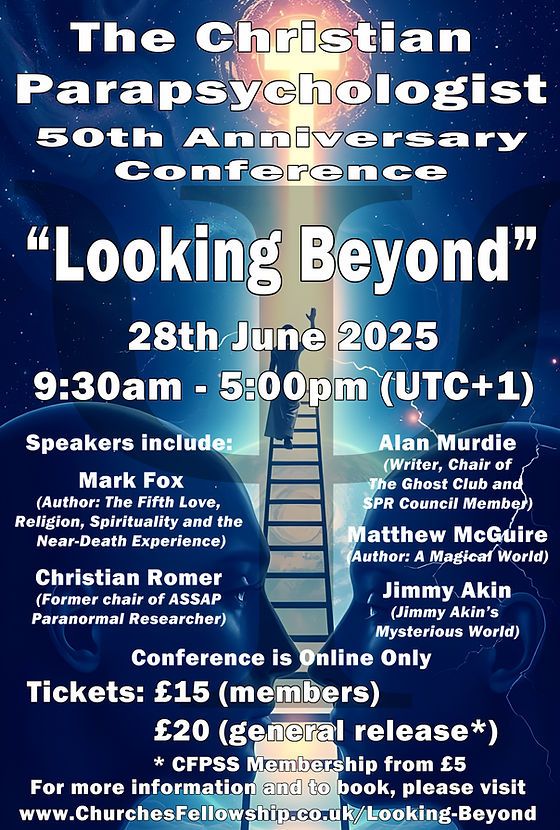
Unlocking New Perspectives: A Humanist’s Insights from the Looking Beyond Online Conference

(Image: Looking Beyond Conference 2025 Source: E.Holohan 2025)

On Saturday, 28 June 2025, I had the opportunity to attend the online conference Looking Beyond, hosted by the Churches Fellowship for Psychical and Spiritual Studies. This event was particularly special as it marked the 50th anniversary of The Christian Parapsychologist journal. This publication has played a significant role in exploring the intersection of spirituality and parapsychology. As a humanist, I am always keen to learn about different beliefs, and this conference offered a unique lens through which to examine parapsychology from a Christian perspective.

The Churches Fellowship for Psychical and Spiritual Studies

The mission of the Churches Fellowship for Psychical and Spiritual Studies is to promote interaction and understanding between the fields of parapsychology and spirituality. By organising events such as Looking Beyond, the organisation hopes to provide a forum in which individuals can investigate the countless possibilities that exist outside the physical world. They are a significant force in the continuing discussion around the paranormal in a Christian setting due to their dedication to inclusion and open-mindedness.

The Christian Parapsychologist Journal

Founded in 1975, The Christian Parapsychologist journal has been at the forefront of research and discussion surrounding spirituality and anomalous phenomena. Over the past fifty years, it has published numerous articles that challenge conventional thinking and encourage exploration of the unseen dimensions of life. The journal’s anniversary celebration at this conference highlighted its continuing impact on both academic and spiritual communities.

The Host: Matt Arnold

The conference was led by Matt Arnold, editor of The Christian Parapsychologist. In addition to his role as editor, he is the author of The Invisible Dimension: Spirit-Beings, Ghosts, and the Afterlife and a researcher, writer, and lecturer on Christianity and the paranormal. His role was crucial in guiding the discussions and ensuring that each speaker’s insights were effectively communicated. Matt’s background in parapsychology and his passion for the subject shone through, making the event both engaging and informative.

Speaker Highlights

Alan Murdie: The Gospel Miracles in Light of Psychical Research

The opening talk of the conference came from Alan Murdie, chair of the Ghost Club and a council member of the Society for Psychical Research. Murdie is a barrister who has investigated various reports of hauntings and poltergeists in the UK and overseas. He writes and broadcasts widely, including a monthly column for Fortean Times.

Murdie’s opener was a thought-provoking talk on gospel miracles in light of psychical research. He argued that nothing about them is fundamentally contradictory, incompatible, or impossible in light of the data acquired since 1882. He explored how these ancient accounts can be understood through modern parapsychological frameworks, inviting attendees to consider the implications of faith and evidence in the study of the paranormal. His talk was a rollercoaster, taking us from the history of psychical research right through to modern parapsychology, even touching on contemporary quantum physics.

Christian J. Romer: The Discernment of Spirits: The Problem with Parapsychology

Next, Christian J. Romer, a paranormal researcher, former lecturer in religion, and former Chair of the Association for the Scientific Study of Anomalous Phenomena, addressed the discernment of spirits and the challenges faced in parapsychology. CJ discussed how he believes parapsychology went wrong by solely examining the subject from a physicalist point of view, and how Christianity can help people understand it better. His insights into the scientific exploration of the unknown emphasised the importance of scepticism and critical thinking in the field, encouraging participants to approach their enquiries with both curiosity and caution.
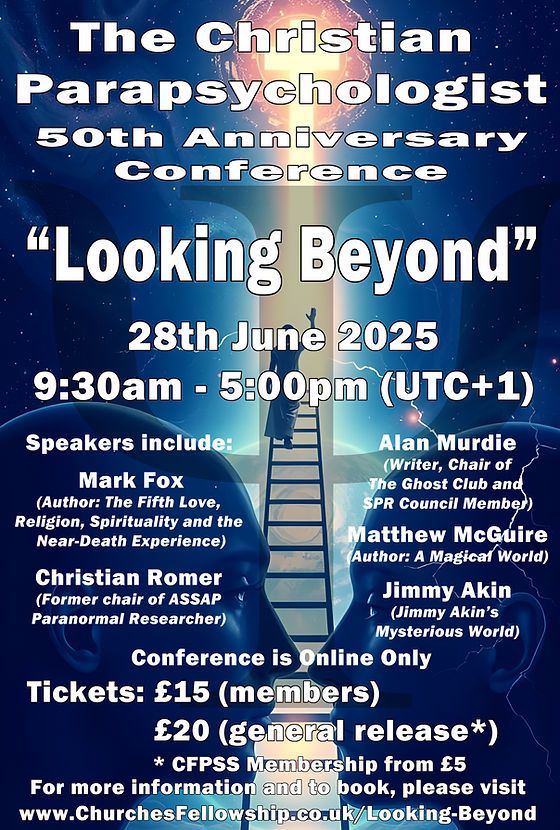
(Image: Looking Beyond Poster. Source: C.F.P.S.S 2025)

Dr Mark Fox: Fifty Years On: Half a Century of NDEs

One of the highlights of the conference for me was Dr Mark Fox, who delivered a captivating presentation titled 50 Years On: Half a Century of NDEs. Dr Fox is a researcher, author, and lecturer who studies Fortean occurrences, near-death experiences (NDEs), and spiritual encounters. His work combines theological, neurological, and parapsychological perspectives. He is the author of Lightforms and Cold Inn, as well as a regular contributor to Fortean Times and The Christian Parapsychologist.

This year marks the 50th anniversary of the term ‘Near-Death Experience’, and Dr Fox’s talk chronicled and evaluated many of the changes in the study of such experiences over that time: what we have learnt, what we have yet to learn, and where future research may lead us. He drew on a variety of NDE testimonies to reflect on his own growing understanding of them, particularly how he has come to see them through the lens of his Christian faith.

This talk resonated deeply with me, as I have experienced a few out-of-body experiences myself. Dr Fox’s exploration of NDEs revealed striking similarities to my own encounters, such as feelings of detachment from the body and altered perceptions of time and space. Listening to the stories of others who have undergone NDEs provided valuable insights into the nature of consciousness and what might lie beyond our physical existence. It also prompted me to reflect on the psychological and emotional effects of these profound experiences.

See below from the promo video for Dr Fox’s talk:

Matthew McGuire: Catharsis, Fotisis, Theosis: Christian Wisdom for Psychic Development

The first of two speakers from ‘over the pond’ in the USA was Matthew McGuire, who has a background in parapsychology and biblical studies. He discusses the relationship between parapsychology, spiritual experiences, and Christian theology in his writings and talks. In addition to writing for The Christian Parapsychologist, he is the author of A Magical World.

McGuire shared his insights on Christian wisdom for psychic development, focusing on concepts such as catharsis (the purification of the soul), fotisis (the enlightenment of the soul), and theosis (union with God). He led us through what the Christian wisdom tradition has to say regarding psychic gifts, which he maintains are latent abilities that humans are capable of. His talk encouraged attendees to consider how these spiritual principles can guide individuals in their exploration of the mystical and metaphysical realms, bridging the gap between faith and personal experience.
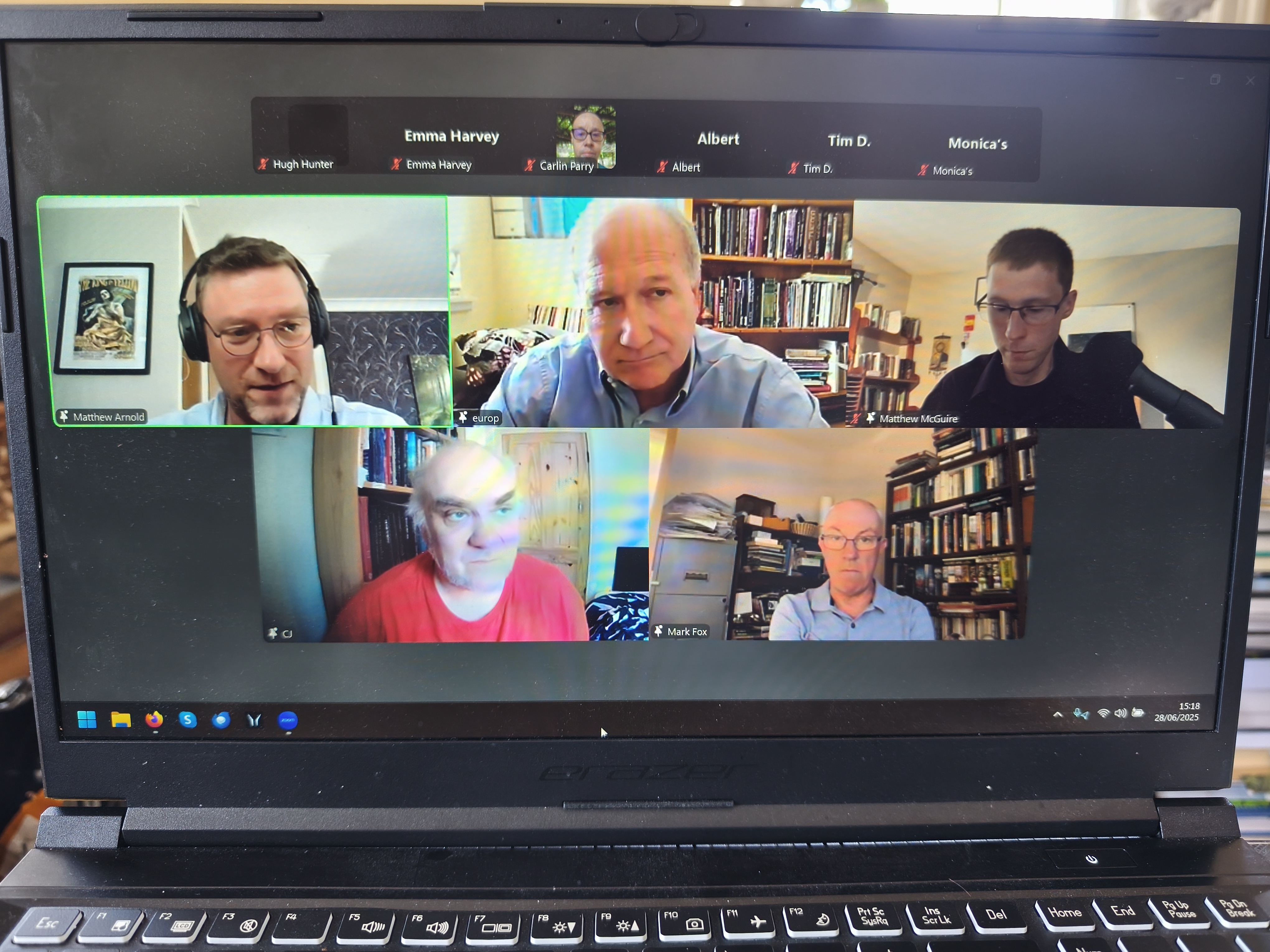
(Image: Looking Beyond Festival 2025. Source: E.Holohan 2025)

Jimmy Akin: Spirit Communication: A Fresh Appraisal

Finally, Jimmy Akin, the host of Jimmy Akin’s Mysterious World podcast, concluded the series of talks with a fresh appraisal of spirit communication. Akin’s work investigates the reasons behind the historical unease of many Christians regarding spirit communication techniques, including apparitions, automatic writing, mental mediumship, and spontaneous after-death contacts. His engaging presentation invited participants to reconsider the relevance of spirit communication in contemporary spiritual practices, emphasising the importance of understanding and interpreting these experiences within a modern context. His analysis, using biblical and theological perspectives, concluded that there is significantly more room for faithful Christians to engage in spirit communication than previously acknowledged.

Embracing Diverse Perspectives

Overall, the Looking Beyond conference was a remarkable experience for me as a humanist, packed with inspiring talks and engaging discussions. Each speaker brought their own unique perspective, which not only increased my understanding of parapsychology through a Christian lens but also led me to examine my own beliefs in this area. I found it particularly interesting to explore how spirituality and the paranormal can intersect with various worldviews. I wholeheartedly recommend this conference to individuals of all beliefs who are keen to learn more, as it encourages valuable insights and connections among people with diverse viewpoints. Exploring these themes is a journey well worth embarking on, and I feel fortunate to have had the chance to take part in such a fascinating event.


For more information please visit:
Churches’ Fellowship for Psychical and Spiritual Studies

The Christian Parapsychologist

Firelight Tales: A Festive Summer Solstice at the Hellfire Caves.

(Image: Summer Solstice Sunset over West Wycombe. Source: E.Holohan 2025)

As the sun reached its highest point on the longest day of the year, an energy filled the West Wycombe “Hellfire Caves”, beckoning to those eager to celebrate the Summer Solstice in a truly extraordinary manner. This historic site, rich in folklore and mystery, provided the perfect setting for a gathering that paid homage to the changing seasons while exploring fascinating pagan traditions. The Summer Solstice has been of significance for centuries across many cultures, symbolising light, renewal, and the changing of the seasons. On 21st June 2025, I had the opportunity to attend the Summer Solstice celebration at the Hellfire Caves and the Walled Garden Café in West Wycombe. The festivities kicked off at 4 PM and continued until 8 PM, offering a delightful mix of history and community spirit. In this post, we’ll delve into the importance of the Summer Solstice, the intriguing history of the Hellfire Caves, and the lively rituals that unite pagans. I’ll also share my personal reflections on this experience, capturing the essence of the day and the connections made with fellow attendees. So, come along as we embark on a journey through time and tradition, discovering how the Summer Solstice at the Hellfire Caves not only honours the past but also sparked a sense of wonder in everyone who took part.

The Significance of the Summer Solstice

The Summer Solstice is the time of year where the longest day meets the shortest night of the year, and here the ‘longest day’ refers to the day of the year with the most hours of daylight. In England, the summer solstice marks both the start of summer and, surprisingly, also midsummer. It is the time of the year when the sun is at its highest point in the sky, heralding the beginning of the astronomical summer. Meteorological summer, on the other hand, begins in the Northern Hemisphere almost a month earlier, so for many this time of year is also considered midsummer. Whichever way you prefer to view it, this is a special time of year signifying light, renewal and abundance, and since prehistory, it has been a significant time of year in many cultures, marked by festivals, fire and rituals.

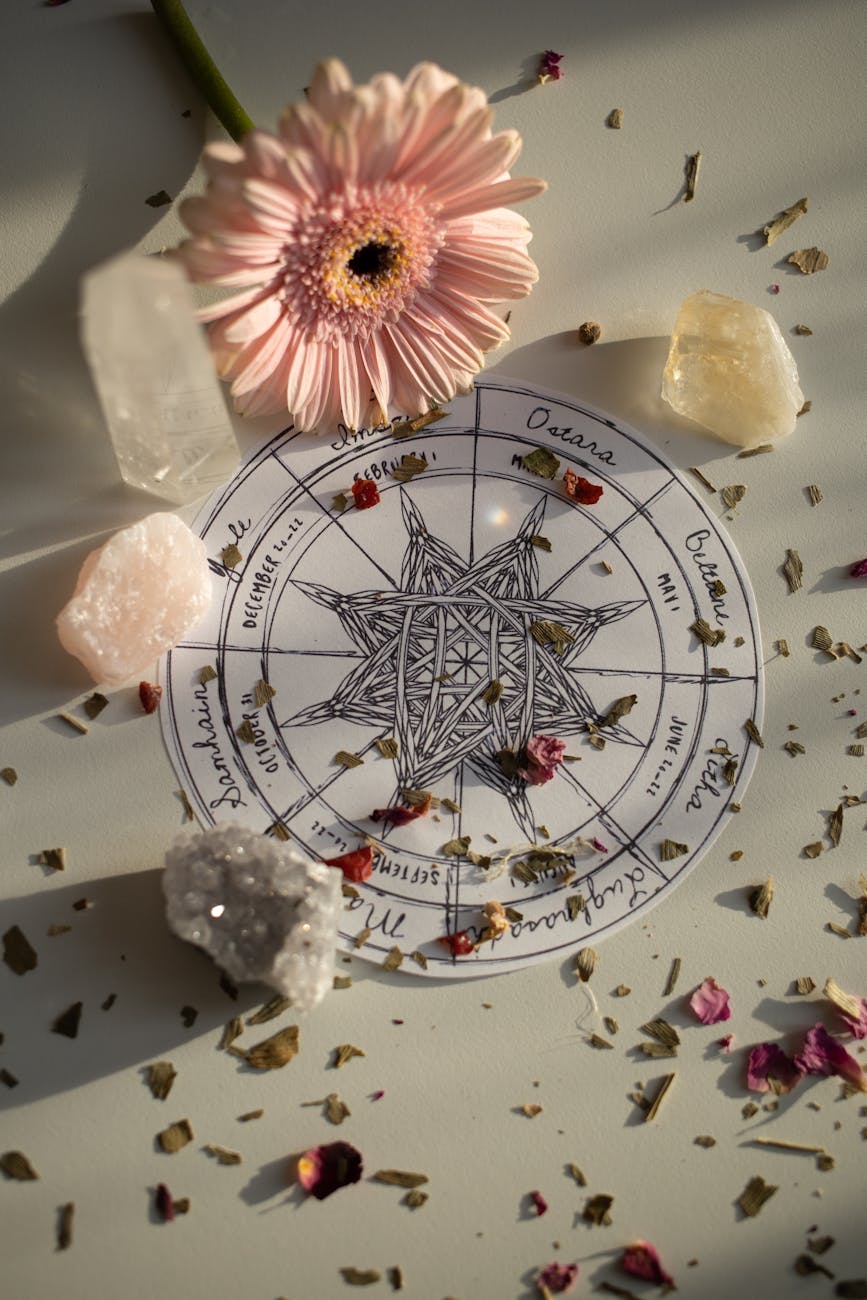
(Image: Pagan wheel of the year. Photo by Monstera Production on Pexels.com)

The Oak King and the Holly King are two mythical figures linked to the Summer Solstice and the ever-turning of the seasons, both being personifications of winter and summer.  The two kings are engaged in a perpetual battle of light over darkness, crop renewal and growth. At the time of the Summer Solstice, the Oak King, the lord of the brighter part of the year, is at the height of his power, while the Holly King begins his slow return towards the renewal of winter.  He slowly regains his power at the autumn equinox, and by the time of the midwinter, it is the Holly King’s time to be at the height of his strength. It is at this point the Oak King is reborn to build up his power at the spring equinox, where he once again succeeds as ruler.

Our Journey and Arrival at West Wycombe

With parts of the UK experiencing their first heatwave of the year, my husband Ed, our friend Claire and I drove down from Bristol through the scorching sun. I wore my new Green Man dress, which I felt fitted the event, but immediately regretted not bringing a hat due to the searing heat of about 30°C.

s we arrived at the event, the atmosphere buzzed with excitement and anticipation. The sun shone brightly overhead, casting a warm glow on the vibrant surroundings. The festive spirit of the event was palpable, setting the stage for a truly memorable celebration of the Summer Solstice.  

(Image: Aldbury Morris Men. Source: E.Holohan 2025)

First up after we arrived, we spotted the Morris Dancers, the Aldbury Morris Men, a troupe from the Cotswolds that has been going since 1969. Their dances featured a blend of Cotswold traditions and some Border styles, accompanied by music and singing.  Their rhythmic dances, accompanied by the clacking of staves and the jingling of bells, created an infectious energy that drew in the crowd. Around this time, I was almost pickpocketed by their naughty hobby horse, but my eagle eye spotted him in time before he made off with my purse! After chasing him down for a photo, he ‘mooned’ me! How rude! He claimed that as it was the summer solstice, it was a time for both the sun and the ‘moon’ to come out! 

We watched the Morris Men perform several traditional dances, clacking their staves and jingling their bells as they went. Claire even took the opportunity to join in when they invited people to learn a dance with them. Not being a natural dancer myself, I felt too shy to participate but watched in amusement and interest from the sidelines.

Exploring the Hellfire Caves

After this we headed to the Hellfire Caves to cool off and catch one of Stevyn Colgan’s Solstice lectures on the folklore and traditions surrounding the solstice.

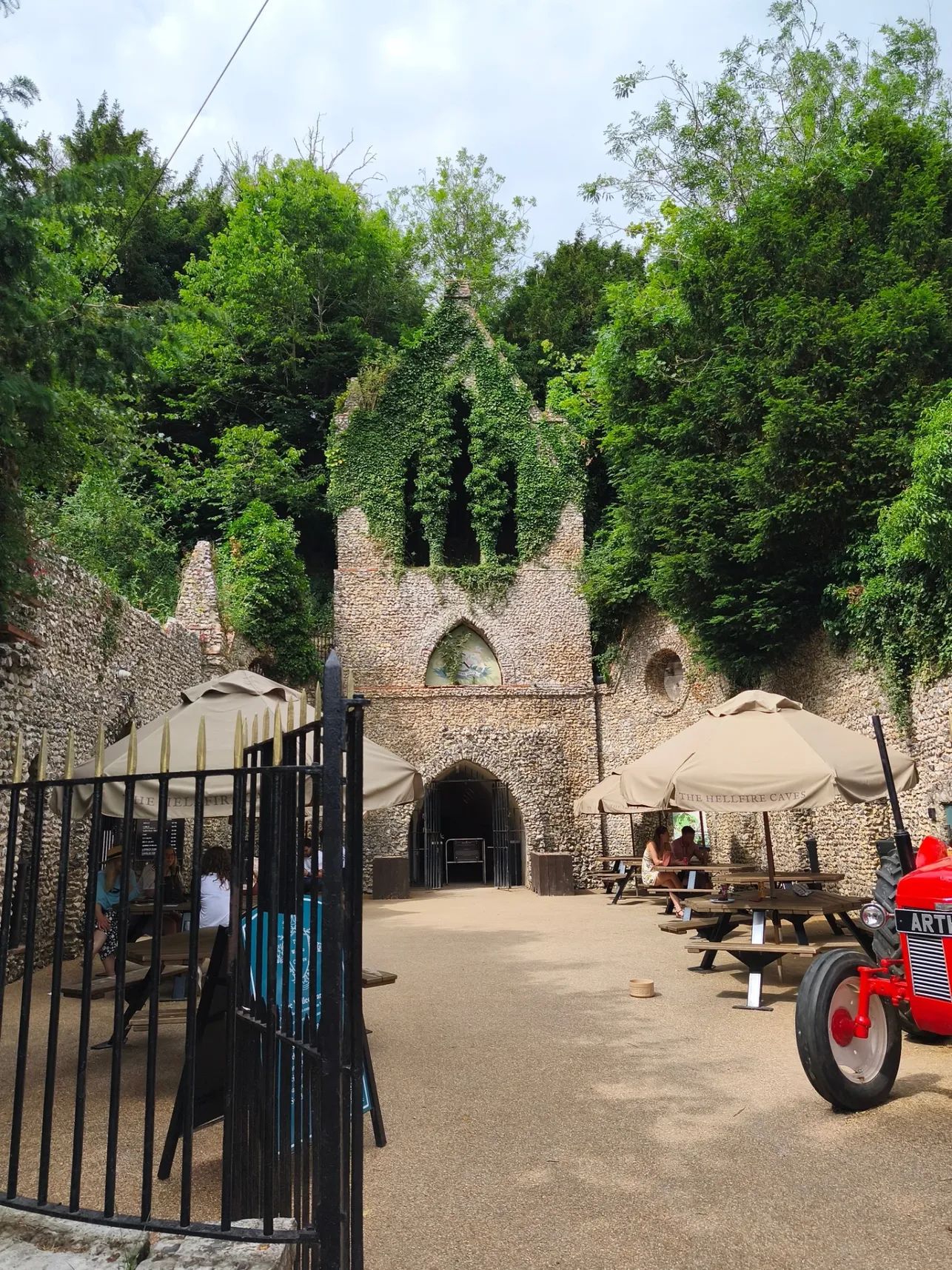
(Image: West Wycombe Caves. Source: E.Holohan 2025)

The West Wycombe “Hellfire” Caves in Buckinghamshire are a fascinating network of man-made caves carved from chalk and flint during the mid-18th century. They are famously linked to the Order of the Friars of St Francis of Wycombe, commonly known as the “Hellfire Club”, an infamous society that was established by Sir Francis Dashwood, who used the caves for their meetings and rituals.

The caves were originally dug out to provide work for local people facing tough agricultural hardship, with the materials taken from the site being used to build a new road. Over time, however, the caves transformed into a base for the Hellfire Club’s activities, which featured mock religious ceremonies and extravagant banquets, adding to the site’s notoriety for secrecy and hedonism.

I’d met Stevyn Colgan briefly at the Wycombe Paranormal Convention in 2024, where I first heard him speak, so I knew we’d be in for a treat with his talk today.

Stevyn Colgan is a British writer, artist, and speaker. He spent three decades as a police officer in London from 1980 to 2010 before moving into the creative field as a researcher and scriptwriter for the BBC series ‘QI’ and its companion show, ‘The Museum of Curiosity’, until 2018. Colgan also co-hosts the podcast ‘We’d Like a Word’, which delves into the world of books and authors. Colgan is a passionate forager and keen student of British folklore, identifying as an author, illustrator, speaker, and folklorist. On social media he describes himself as an “ex-QI elf” and “Cornish pisky” and claims to be “mostly made of hair and tea”.

(Image: Stevyn Colgan and the Hogarth Carving. Source: E.Holohan 2025)

Colgan led us into the caves and started by briefly telling us some of the history and background to the caves and the Hellfire Club. At one point he pointed out a carving by painter William Hogarth said to be of Dashwood in a pope’s hat, as the Hellfire Club enjoyed mocking the Church. Looking at the carving, it is good that Hogarth stuck with the painting instead. Of more modern interest, he described how the caves famously featured in the film “Beetlejuice, Beetlejuice” (2024), whose funeral scene was filmed on the estate.

His discussion on the Summer Solstice delved into its fascinating history, myths, folklore, and traditions. Colgan told us how Milton Keynes, known for its distinctive urban layout, contains Midsummer Boulevard, which aligns perfectly with the sunrise on the summer solstice, making it a key spot for celebrations. Modern druids and witches often gather for the Midsummer festival there, which includes the Light Pyramid sculpture in Campbell Park, also aligned with the solstice sunrise.

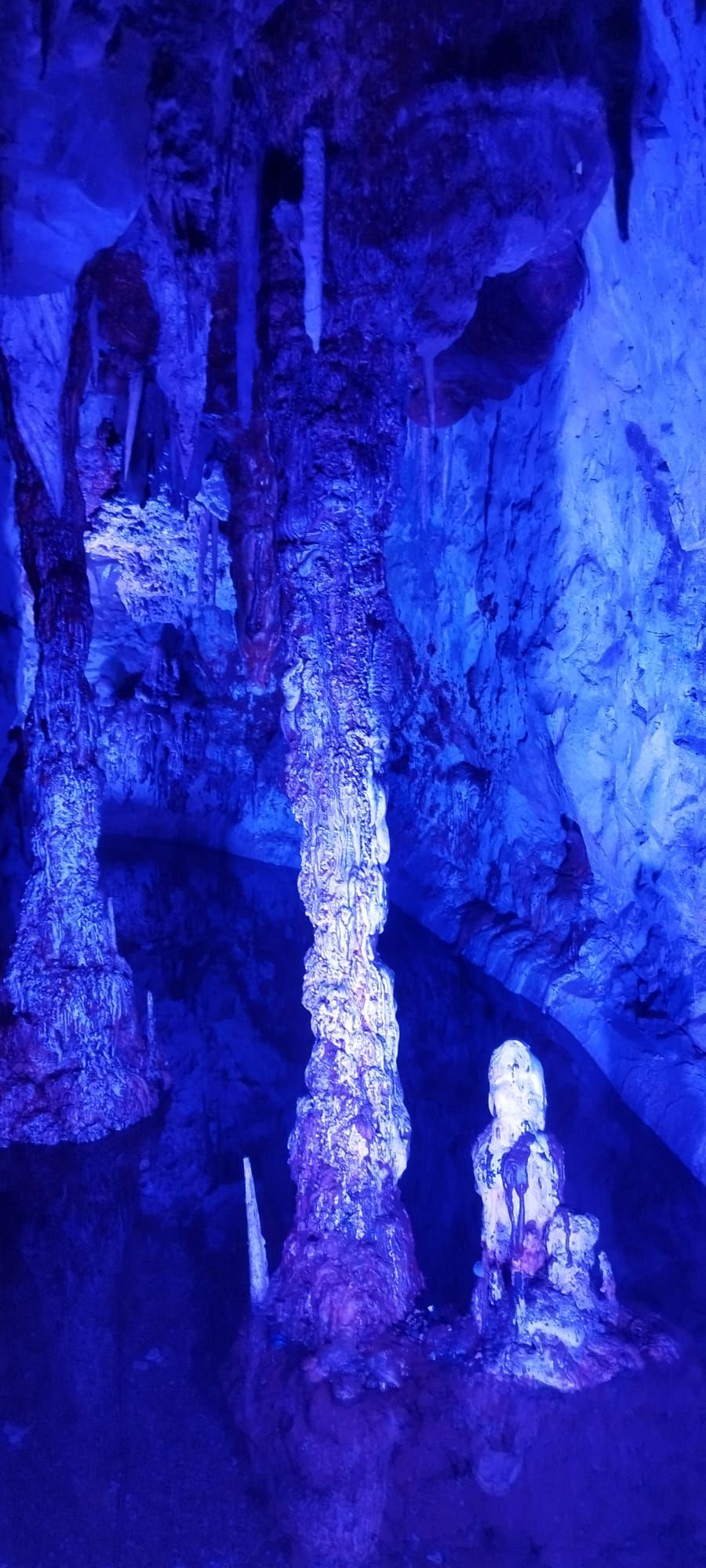
(Image: Inside the Hellfire Caves. Source: E.Blackshaw 2025)

The solstice signifies a time of change, dividing the year into four distinct seasons, with equinoxes marking important agricultural periods like lambing and harvest. Midsummer Day, celebrated on the Pagan 22nd, and St John’s Day on the 24th in the Christian calendar are both traditionally marked by bonfires. These fires have a long history of being used for purification rituals, where young people would leap over the flames, and animals would pass through to rid themselves of ticks. The term “bonfire” actually comes from the practice of burning animal bones on these fires.

Celebrations during this time often involve feasting, dancing, and various other rituals. One tradition is to pick a flower and place it in a vase; if it wilts to the left, it is considered bad luck, while wilting to the right brings good fortune. There is also the “dumb cake” ritual, where silence must be maintained while preparing the cake, with the first slice believed to reveal one’s future husband. Additionally, on the eve of the Summer Solstice, it is said that ghostly figures knock on church doors at midnight, representing those who are destined to pass away that year. The dressing of holy wells is another part of the solstice traditions, emphasising the deep connection to nature and the spiritual significance of this time of year.

Food, Music and Flames

Feeling cooler and refreshed from the lower temperatures of the caves, we made our way back to the Walled Garden Café ‘paddock’ to enjoy a bite to eat from the food vans and listen to lively folk music performed by “My Mate Dave”, a female-fronted folk band. We set down our colourful picnic blanket and ate pizza, relaxed and listened to the festive tunes while majestic red kites hovered overhead in search of small prey for their own supper.

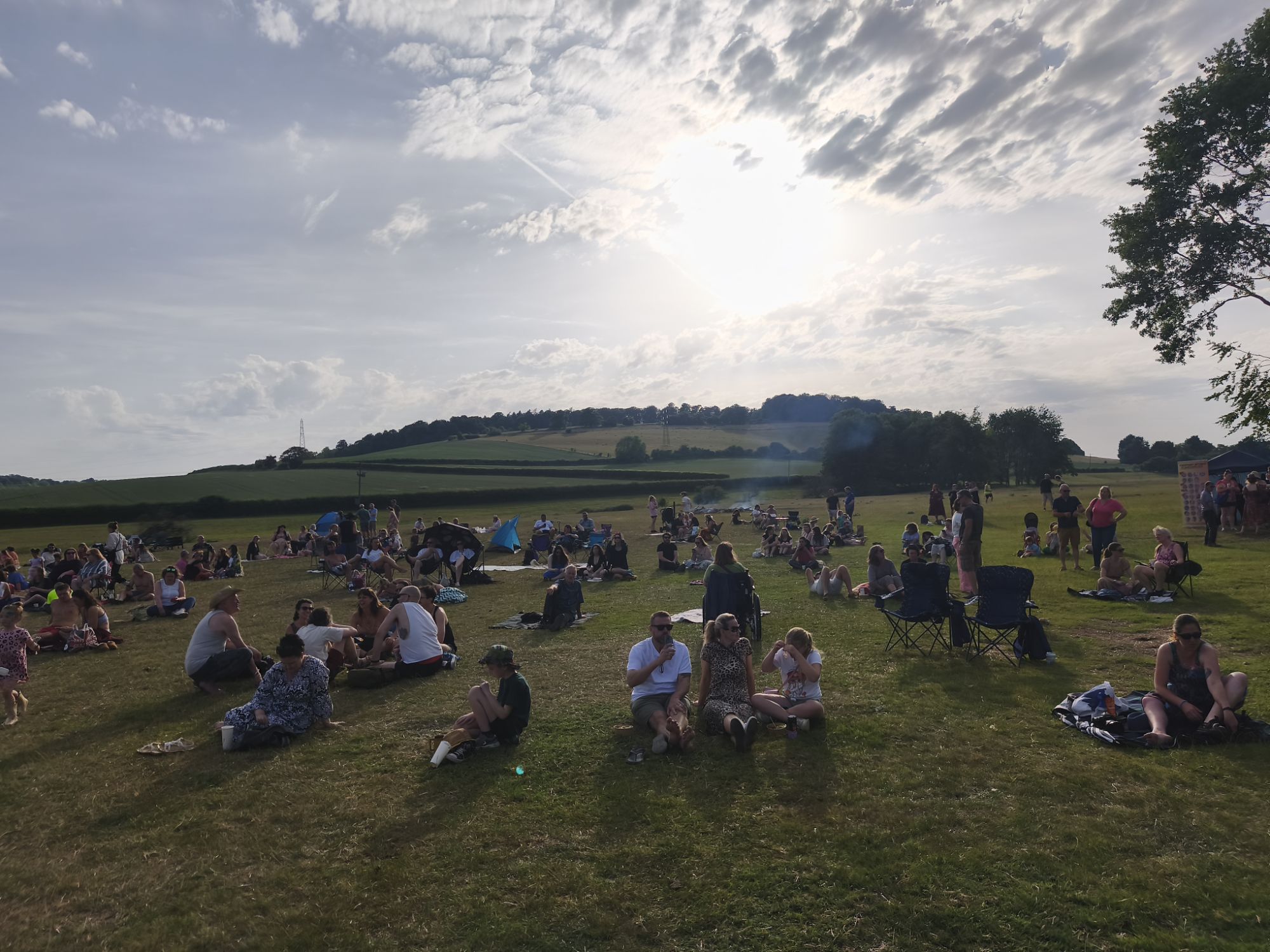
(Image: Summer Solstice Celebration. Source: E.Holohan 2025)

It was soon time for the Solstice Bonfire. The bonfire was lit a distance away from revellers for safety, but it still packed a punch; its roaring flames were impressive and primal in this already very hot weather.  Bonfires on the summer solstice have ancient roots, traditionally lit to honour the sun, promote good harvests and protect from evil spirits. These practices are found in various cultures, including Celtic, Slavic, and Germanic traditions, with bonfires symbolising the sun’s strength and its role in the agricultural cycle.

Throughout the day there were other events for families and festivalgoers such as a costume competition, face painting and summer wreath and flower crown making. These activities created a joyful, family-friendly atmosphere that made the event even more memorable.

A Visit to the Dashwood Mausoleum

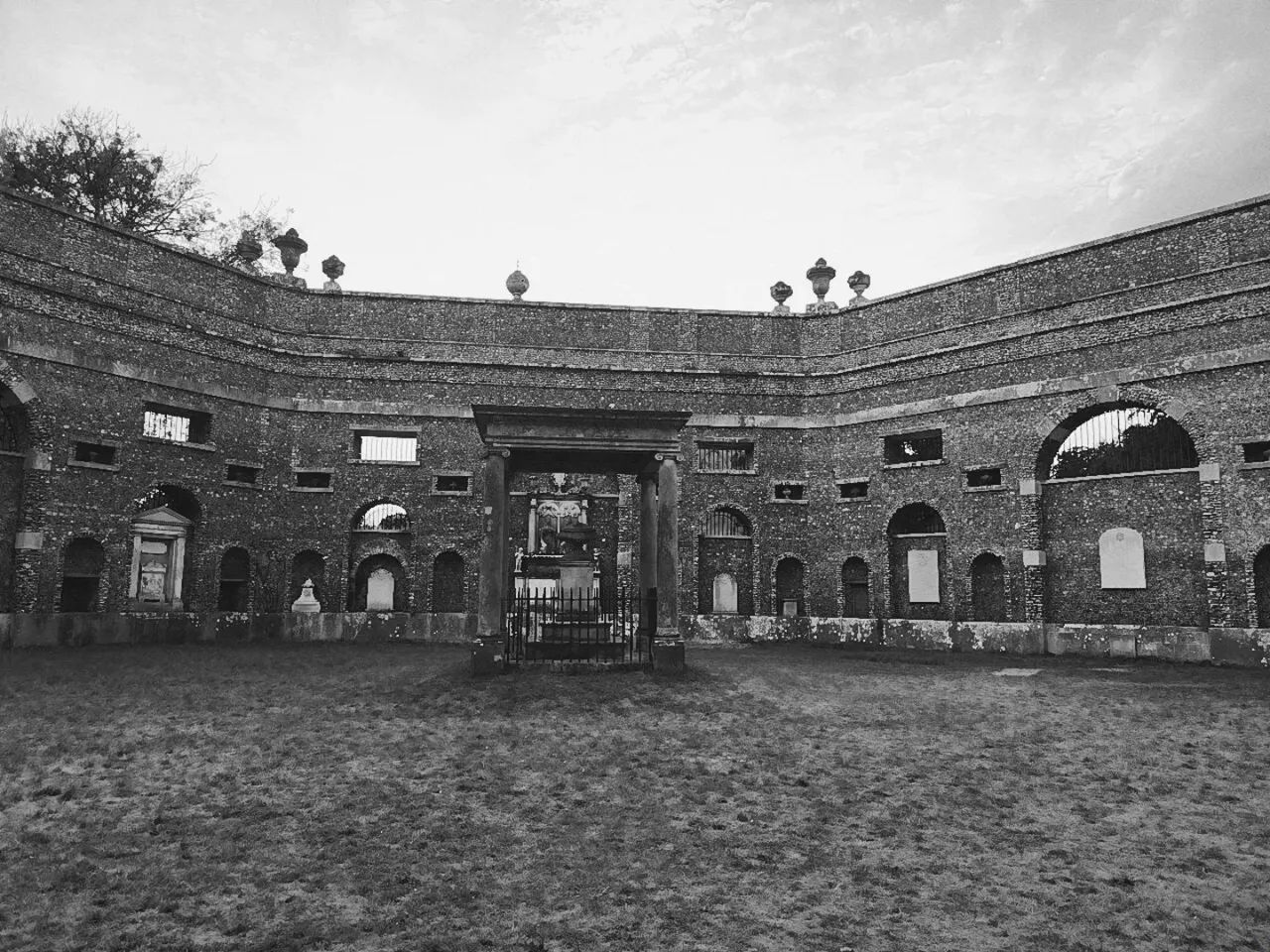
(Image: Dashwood Mausoleum. Source: E.Blackshaw 2025)

After the event concluded, we took a brief trip up to the Dashwood mausoleum, located on top of the West Wycombe Hill. The mausoleum is a hexagonal structure built of Portland stone and flint and serves as a private burial ground for the Dashwood family, including Sir Francis Dashwood and his relatives. The mausoleum is also known for housing an urn containing the heart of Paul Whitehead, a friend of Sir Francis and steward of the Hellfire Club.

We explored and lingered here a while, witnessing a vibrant rainbow appear in the sky over West Wycombe. After a moment of reflection and quiet contemplation, we finally set off back to Bristol in the soft, dwindling Summer Solstice light.

Embracing the Spirit of the Summer Solstice: Celebrating Connection and Community

(Image: With the hobby horse. Source: C.Lewis 2025)

Looking back on the day, I feel a deep sense of gratitude for the chance to celebrate the Summer Solstice in such a unique setting. From the entertaining performances of the Morris Dancers to the enlightening lecture held in the Hellfire Caves, every moment contributed to a richer appreciation of this ancient tradition. The joy of celebrating as a community was infused throughout the day as families and friends gathered to take part in the festivities, creating lasting memories together. The Summer Solstice serves as a beautiful reminder of the wonders of nature and the importance of connection, both with the earth and with one another. I invite readers to share their own summer solstice experiences or thoughts, as we continue to celebrate the light and warmth that this time of year brings.

If you enjoyed reading about my Summer Solstice experience, I would encourage you to seek out similar events in the future. Participating in community celebrations not only enriches our lives but also fosters a sense of belonging and connection. Please feel free to share this post or leave a comment with your own Summer Solstice stories or reflections. Let’s keep the spirit of the Summer Solstice alive by sharing our experiences and celebrating the light together!

(Image: Rainbow over West Wycombe. Source: E.Holohan 2025)

References

Jack in the Green: Keeping Folk Traditions Alive in Bristol

A Springtime Wander into Another World

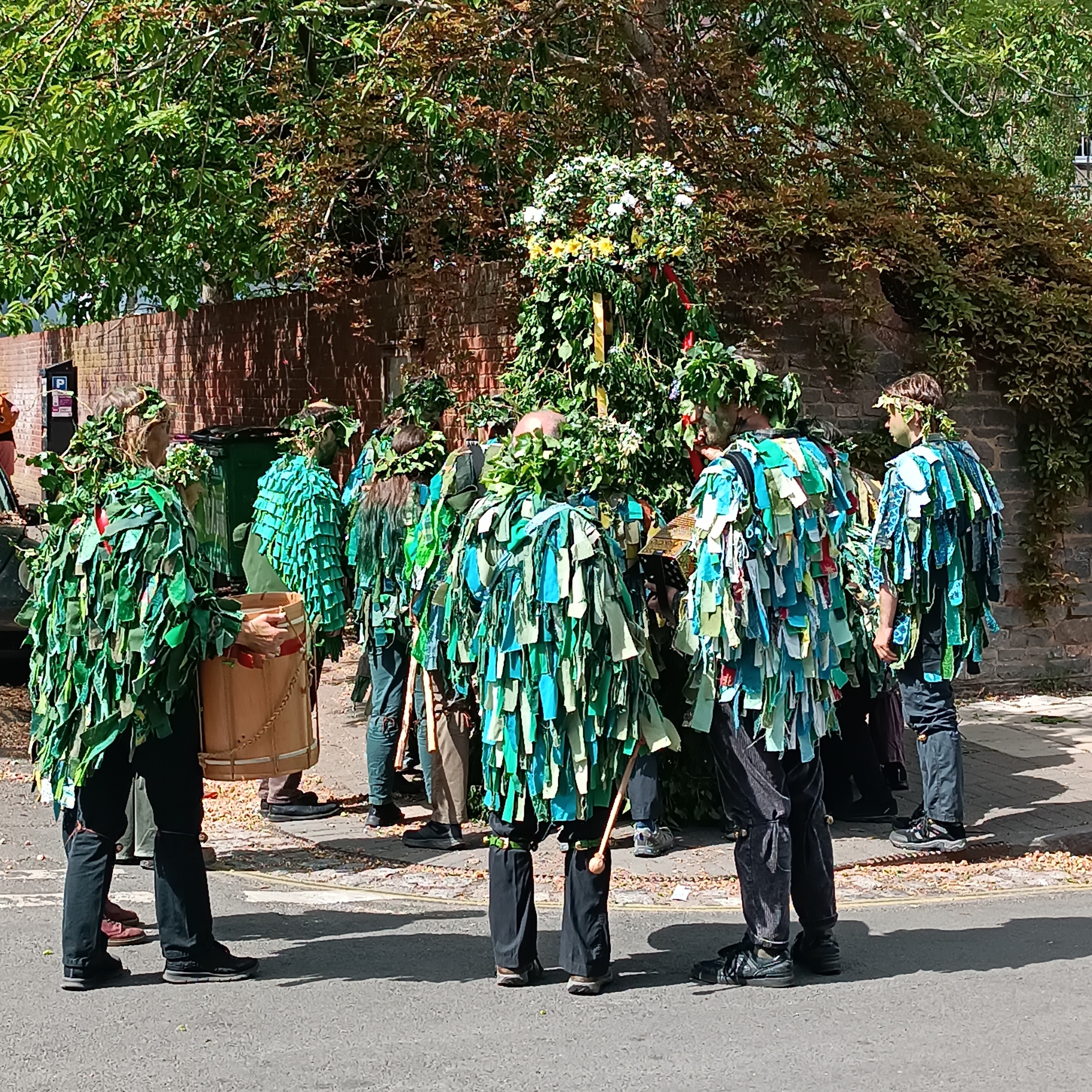
This May, I found myself caught up in something a little bit more magical than normal. I had just popped out for a walk into town when I heard the distant rattle of drums and the jingle of bells coming up the hill. Within moments, a leafy figure emerged around the corner; towering, green, and utterly hypnotic. Behind him came dancers, musicians, people in leafy crowns and cloaks, dogs wearing garlands, children skipping to the beat.

(Image: Bristol Jack in the Green. Source: ©E.Holohan 2025)

This was an encounter with the fascinating character, Jack in the Green. It passed right through my neighbourhood in Bristol, and for a while it felt like the city had been transported into a more ancient, greener version of itself.

There is something about this May festival that pulls at something deeper. In a world full of deadlines and distractions, encountering a celebration like this, which is full of colour, laughter, and ancient spirit, feels like stepping through a portal into another time.

So, what exactly is Jack in the Green? Where did it come from, and why does it still feel so relevant?

What Is Bristol’s Jack in the Green Festival?

Jack in the Green is a celebration of the coming of summer, rooted in old English folk traditions. It centres around a tall, leafy figure known as the Jack, who is completely clad in greenery. Think walking hedge, with just a hint of face peeking out, crowned in flowers and leaves.

Each year, on the first Saturday in May and around the May Day holiday, the Jack makes his way through parts of Bristol in a lively procession of dancers, drummers, musicians, and revellers all dressed in green.

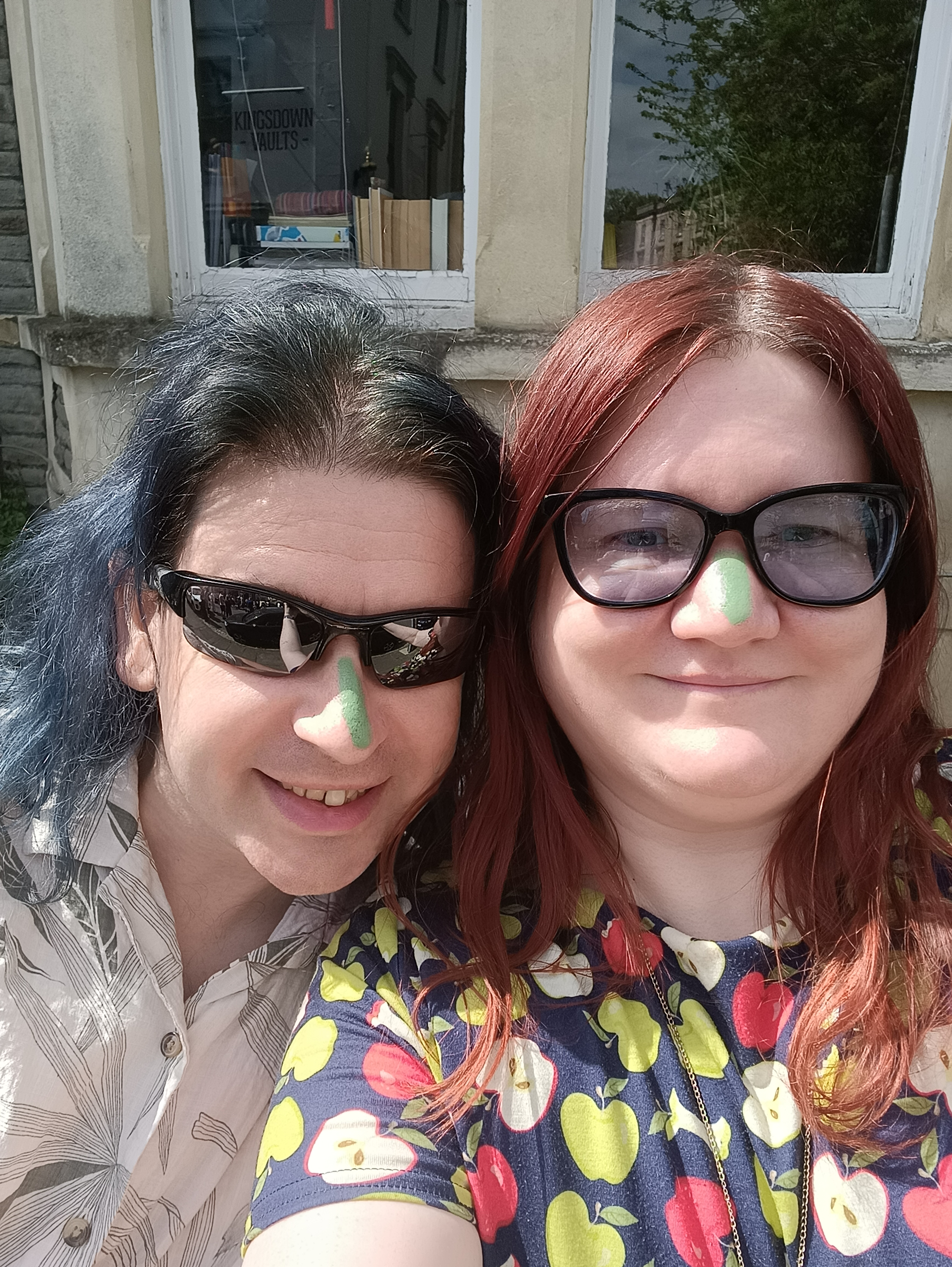
This year, the Jack began at the historic harbourside and the procession made its way through the centre and up via Kingsdown, Cotham and Redland, winding along the streets, picking up curious onlookers as it passed. Jack’s attendants even painted onlookers’ noses green as they passed by, which is said to bring them good luck this summer. I was lucky enough to get myself a green nose too!

Eventually, the parade ended in a local park in Horfield. Here, Jack’s attendants delighted onlookers with dancing and reciting Jack’s poem. Here, sadly, Jack finally died, marking the end of spring and the start of Summer. After dancing through the streets and meeting city folk, Jack brought the Summer to Bristol, but now rests in peace until next year. Finally, onlookers took foliage from Jack’s body for good luck and to celebrate the long-awaited arrival of summer.

This festival is not just something to watch; it’s very much something to join in. People dress up, paint their faces green, bring tambourines or whistles, and dance beside complete strangers. It’s joyful, chaotic, and full of heart. And it belongs to Bristol.

The History of Jack in the Green

Although it feels ancient, Jack in the Green actually has roots in the 18th century. It grew out of May Day traditions among chimney sweeps, milkmaids, and other working-class people in London and elsewhere.

In those days, May Day was one of the rare holidays working people had. Chimney sweeps would parade through the town with music and garlands, collecting money and celebrating the return of warmer days. This served an important function for the sweeps in particular, who would need this money over the summer when they’d have little income. Over time, these garlands evolved into something bigger and bolder: a full figure made of foliage, worn by someone dancing through the crowd.

(Image: The 1795 engraving of a Jack in the Green, London. Source: CC BY-SA 3.0)

By the early 20th century, however, these celebrations had mostly faded. Victorian attitudes were snobbish about anything too rowdy, and folk customs began to disappear in favour of a more sanitised versions of British traditions.

It was not until the 1970s, when there was a broader revival of interest in folk music and traditions, that Jack in the Green began to return. Hastings was one of the first to bring it back in a big way, and other towns and cities, including Bristol, followed their lead.

Here in Bristol, the tradition was revived in the 1990s, thanks to local folk groups and performers who saw value in reclaiming this little piece of seasonal magic. Local groups have helped shape the festival into what it is today; a brilliant blend of history, creativity, and local pride.

Possible Pagan Roots and Green Man Magic

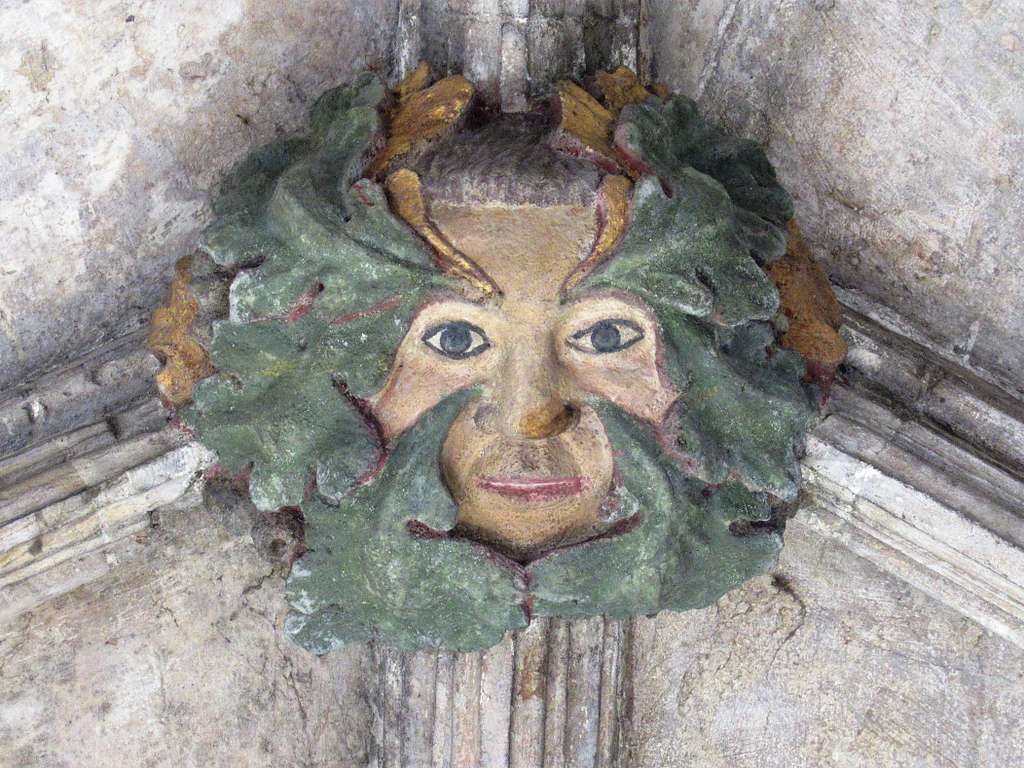
While Jack in the Green as we know it is not thousands of years old, it carries hints of much older beliefs. Many see links to the Green Man, who is a symbol you find carved in stone in churches across Britain and Europe. He is usually depicted as a face surrounded by leaves, often with greenery sprouting from his mouth. The Green Man is a symbol of nature, rebirth, and the never-ending cycle of the seasons.

There is also a strong seasonal connection to Beltane, the old Celtic festival that marks the start of summer. Celebrated around the first of May, Beltane was all about fertility, fire, and celebrating the land waking up after winter. Modern Jack in the Green processions are not direct continuations of those rites, but they certainly share the same spirit of honouring growth, community, and the turning of the year.

(Image: Norwich Cathedral cloisters, roof boss. Source: CC0.1.0 Univeral)

When you see the Jack dancing through the city streets, surrounded by bells and drums, it feels like something ancient stirs. You don’t need to believe in anything mystical to sense it; it’s there in the beat of the drums, the greenery and the joy.

Why We Still Need Jack in the Green

In a time when most of us spend our lives staring at screens, racing from one task to the next, a festival like this offers something rare: connection to place, people and nature. Jack in the Green reminds us of the things we often forget. That the seasons change. That we can share a laugh or a dance with a stranger and feel like we belong.

It brings people together with no barriers; just colour and music, and a shared moment. Children wave at the Jack like he’s a forest giant from a fairytale. Adults clap along and walk around with painted green noses. There’s space for everyone.

Let’s also not forget the symbolism. A figure made entirely of greenery parading through a modern city feels especially meaningful in an age where the natural world is under threat. The Jack becomes more than just a character; he is a reminder of what we stand to lose, and why it’s worth celebrating and protecting.

A Few Thoughts Before the Leaves Fall

As I walked home from my encounter with Jack in the Green with my painted green nose, the sounds of bells and drums fading behind me, I couldn’t help but smile. It wasn’t just about seeing something fun. It was about being part of something. Something old and new, silly and sacred, and wild and gentle all at once.

Bristol’s Jack in the Green is not trying to be trendy. It’s not polished or perfect. But it has a spirit, and in a world that often feels rushed and rootless, that’s exactly what we need more of.

Fancy Joining Next Year?

If you are in or near Bristol come next May, I would wholeheartedly recommend seeking out the Jack. Wear something green. Bring a rattle, a ribbon, or just yourself.

You can find updates from the organisers on: https://www.bristoljack.info/home

These traditions survive when people take part. So, let’s keep them alive because they bring joy, meaning, and magic to our everyday lives.

(Image: Lucky Green Noses. Source: ©E.Holohan 2025)

If you’d like to learn more about Bristol Jack in the Green, please check out the following documentary by Nicola Explores, “Bristol Folklore and Ritual: inside the Jack in the Green May Day Mayhem”


Reference list


CASE FILE: UNCANNYCON 2024

STATUS: RESOLVED

LOCATION: Southbank Centre, London, UK

DATE: December 2024 SUBJECT: The Uncanny Convergence


Summary of Findings

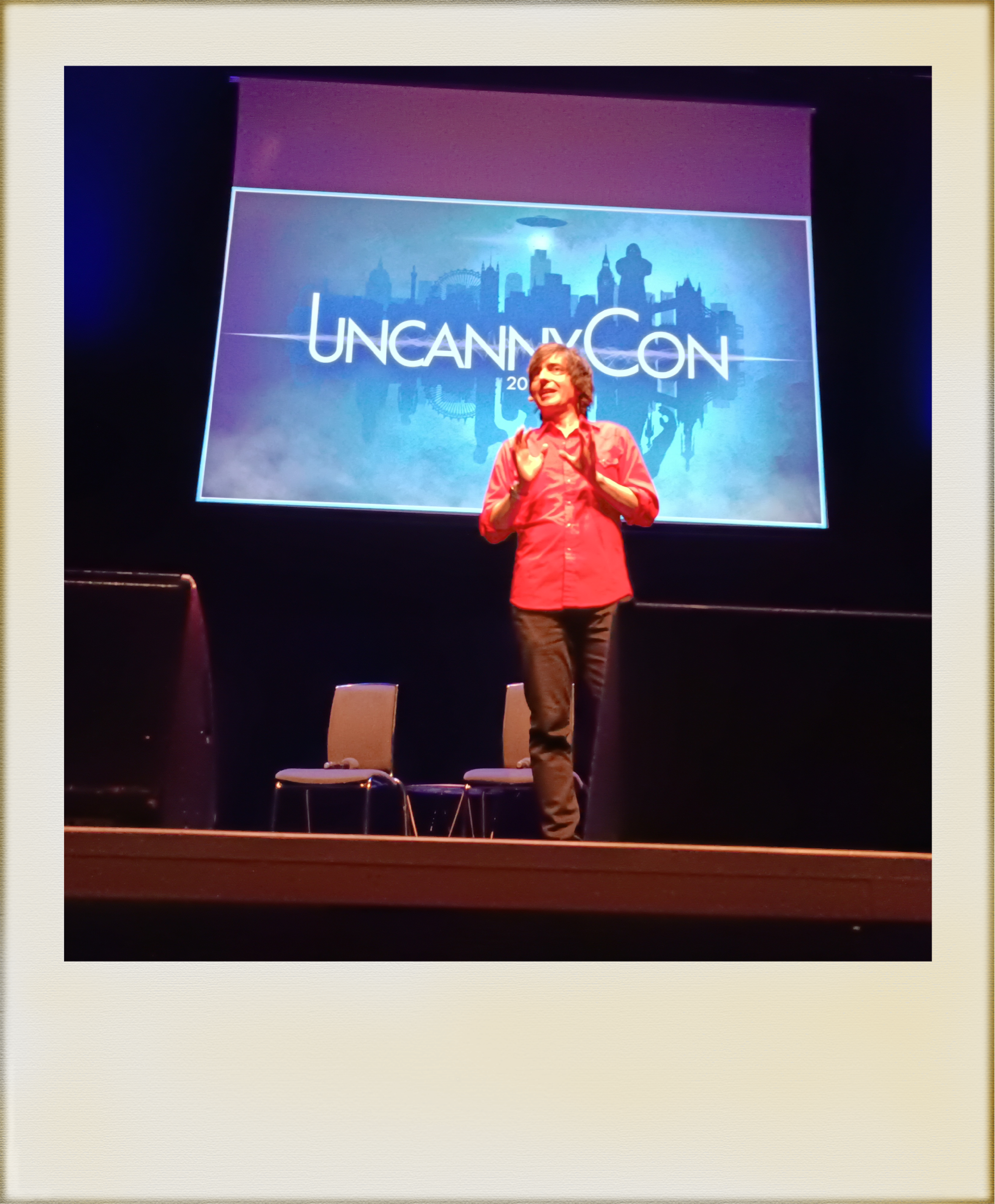
Experts, enthusiasts, and witnesses of the unexplained converged at the Southbank Centre this past weekend for UncannyCon 2024, an extraordinary gathering dedicated to uncovering the truths behind our world’s mysteries. What unfolded was a mix of chilling revelations, healthy debates, and eerie encounters that left attendees both spellbound and intrigued. Below, you will find a dossier summarising the key phenomena from this event. Proceed with caution: the uncanny lingers within.


Case Note #1: Meet the Witnesses – The Haunted Speak

Subjects: Heather (Oxford Exorcism), Vee (Ghost Horses of Averham), Amanda (Elton’s Phone), Helen (Meadow Cottage).

Details: Witnesses to some of Uncanny’s most infamous cases convened to share their harrowing encounters. The session began with an unsettling energy, as each witness recounted experiences ranging from spectral riders to haunted phones and poltergeist-ridden cottages. The air grew heavier as Heather’s recounting of The Oxford Exorcism induced chills throughout many in the audience. The session raised a terrifying question: how does one live when haunted by the inexplicable?


Case Note #2: Borley Rectory – Hoax or Haunting?

Subjects: Sean O’Connor, Jon Culshaw, Ciaran O’Keeffe, Deborah Hyde.

Analysis: Dubbed “Britain’s Most Haunted House,” Borley Rectory’s lore was dissected in forensic detail. Paranormal sceptics Ciaran O’Keeffe and Deborah Hyde faced off with Sean O’Connor, author of The Haunting of Borley Rectory. Comedian Jon Culshaw deftly moderated the session, keeping the debate both lively and gripping. Was the rectory a hotspot for spirits, or merely the stage for an eerie hoax? Verdict: inconclusive.


Case Note #3: Ask the Experts – A Spirited Discussion

Subjects: Evelyn Hollow, Chris French, Richard Freeman, Deborah Hyde, Ciaran O’Keeffe.

Highlights: This fiery panel saw believers and sceptics clash in a battle of logic and belief. From poltergeists to cryptids, no stone was left unturned. Folklorist Deborah Hyde’s sceptical takes clashed delightfully with cryptozoologist Richard Freeman’s zoological expertise and field knowledge of the Hairy Man. Chris French’s sharp insights added gravitas to the debate, particularly when UFOs entered the conversation. The crowd erupted when tensions boiled on the topic of Bigfoot—a rare moment when both believers and sceptics seemed to partially agree: something is out there.


Case Note #4: The Uncannyversity Challenge Quiz – A Battle of Wits

Teams: Team Believer (Captained by Evelyn Hollow) vs. Team Sceptic (Captained by Ciaran O’Keeffe).

Outcome: In this fiercely competitive showdown, paranormal prowess was tested as teams answered questions on the podcast’s most enigmatic cases. The questions were expertly written by a member of the Uncanny Community, and kept participates on their toes. Team Believer triumphed; their victory cemented by an unshakable knowledge of the paranormal. The atmosphere was electric, with cheers, groans, and a sense of camaraderie pervading the room. Evidence suggests this was one of the most enjoyable highlights of the weekend.


Case Note #5: The Return to Luibeilt

Subjects: Danny Robins, Phil (Don’t Sleep in This House, The Curse of Luibeilt).

Evidence Presented: A gripping video chronicled Danny and Phil’s perilous return to the desolate ruins of Luibeilt, site of The Curse of Luibeilt. The footage revealed chilling new discoveries at this forboding spot. Danny and Phil’s firsthand account of the expedition left the audience glued to their seats. Questions linger: has Luibeilt’s curse remained?


Case Note #6: Signing Sessions – Close Encounters

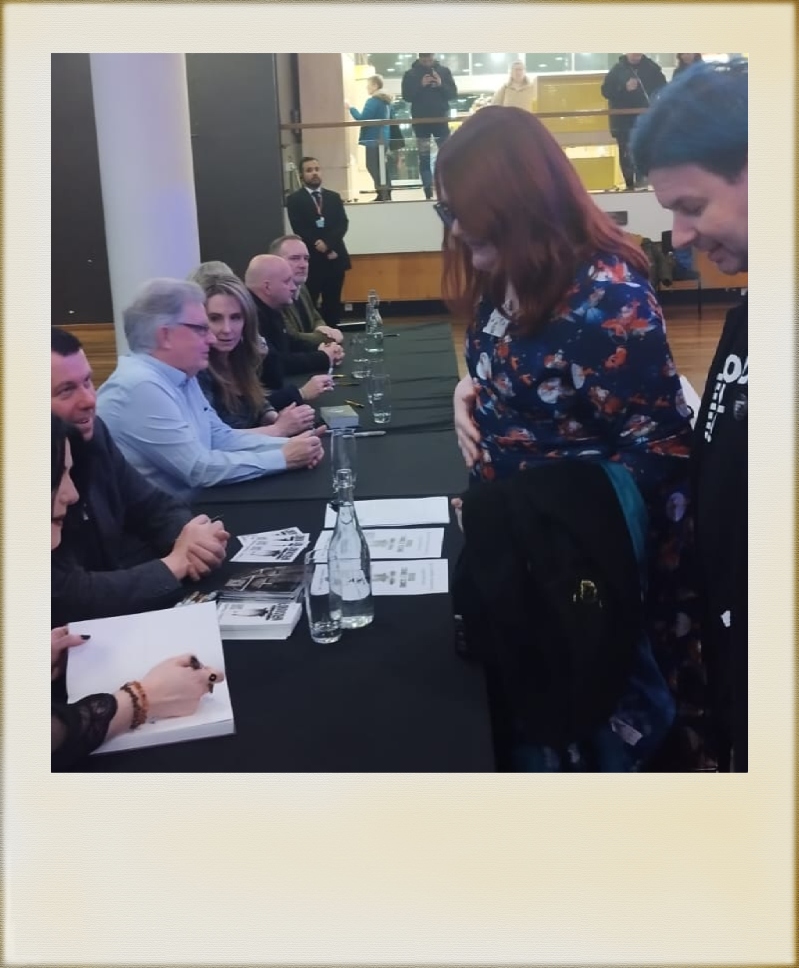
Observations: Fans flocked to meet their favourite witnesses and experts during signing sessions. Unexpected phenomena: numerous attendees reported unprompted chills and goosebumps when recounting their own paranormal experiences to the panel. Was this coincidence, or something more?


Case Note #7: The Christmas Special Live Recording

Subjects: Reece Shearsmith, Evelyn Hollow.

Notable Occurrence: Anticipation reached fever pitch during this live recording of the upcoming Uncanny Christmas Special. Attendees became part of the story as they witnessed eerie events unfold in real time. Notably, questions remain regarding an audience member’s experience of the mysterious activation of an Alexa by a terrifying voice. This sent shivers through the room. Coincidence? The audience left with more questions than answers.


Case Note #8: A Community United

Observation: Beyond the scheduled programming, the true phenomenon of UncannyCon 2024 was the palpable sense of connection among attendees. Enthusiasts swapped stories, debated theories, and forged new alliances in their shared pursuit of the unexplained. This collective energy resonated throughout the venue, creating a unique atmosphere that attendees described as both invigorating and enriching.


Special Eyewitness Report

Filed by: The Goblin.

Observations: The Uncanny phenomenon extends well beyond the day’s events and into the vibrant community that has coalesced around this core. This was an opportunity to form new friendships, and to cement existing ones. The carousing extends late into the night, after the events of the day are now mere memories, lubricated perhaps with a drop too much of potent gooseberry wine. Whilst we are all maybe a touch worse for wear in the morning, we wouldn’t swap a treasured moment of this time spent in excellent company for the world. *hic*


Conclusion: Why UncannyCon 2024 Will Haunt Us

UncannyCon 2024 wasn’t merely an event; it was an initiation into a deeper realm of curiosity and wonder. By blending chilling tales, rigorous debate, and communal spirit, it captured the essence of what makes the Uncanny phenomenon so captivating. For believers, sceptics, and the simply curious, this convention offered an experience that will linger in their minds like a half-remembered dream—or perhaps, a whisper from beyond.

Until we gather again: stay curious, stay sceptical, and, above all, stay Uncanny.

Step Into the Paranormal: Highlights from the Live Vlog on the GhostÉire Channel

(GhostÉire interview with Ghost Catcher Isles. Image Credit: GhostÉire Channel)

If you’re someone who feels the tantalising pull toward the strange and supernatural, then this one’s for you. Picture this: a quiet Saturday night, lights dimmed, a flickering candle perhaps—and there I was, live on the GhostÉire Channel, diving headfirst into the world of the paranormal. Together with my incredible host Anthony Kerrigan, we opened the door to stories, historic sites, and legendary mysteries. Members of the “Uncanny Community” and paranormal enthusiasts tuned in, sharing in the experience as we wandered through tales of ancient landscapes and whispered legends. But if you missed it, don’t worry: the full recording is waiting for you, ready to be explored at your own pace.

A Bond Forged Through an Uncanny Curiosity

We kicked off the night by discussing my passion for the podcast Uncanny and the amazing ‘Uncanny Community’ it has fostered. There’s something powerful about this community: a place where like-minded individuals gather to share their strange encounters, eerie experiences, and shared fascination with the unknown. The support, curiosity, and friendship are inspiring, making it the perfect place for those drawn to the mysterious to connect.

Mysteries Carved into the Earth: The Uffington White Horse and Wayland’s Smithy

Our next stop on this haunted journey took us to one of Britain’s most iconic sites: the Uffington White Horse, a massive chalk figure etched into an Oxfordshire hillside that has withstood nearly 3,000 years of history. There’s a sacred stillness to it, a feeling that resonates with something far older than we’ll ever know. Is it a mark of ancient ritual, a tribute to old gods, or simply a beacon carved to guide travellers of the past? Each theory adds a layer of wonder to this timeless mystery.

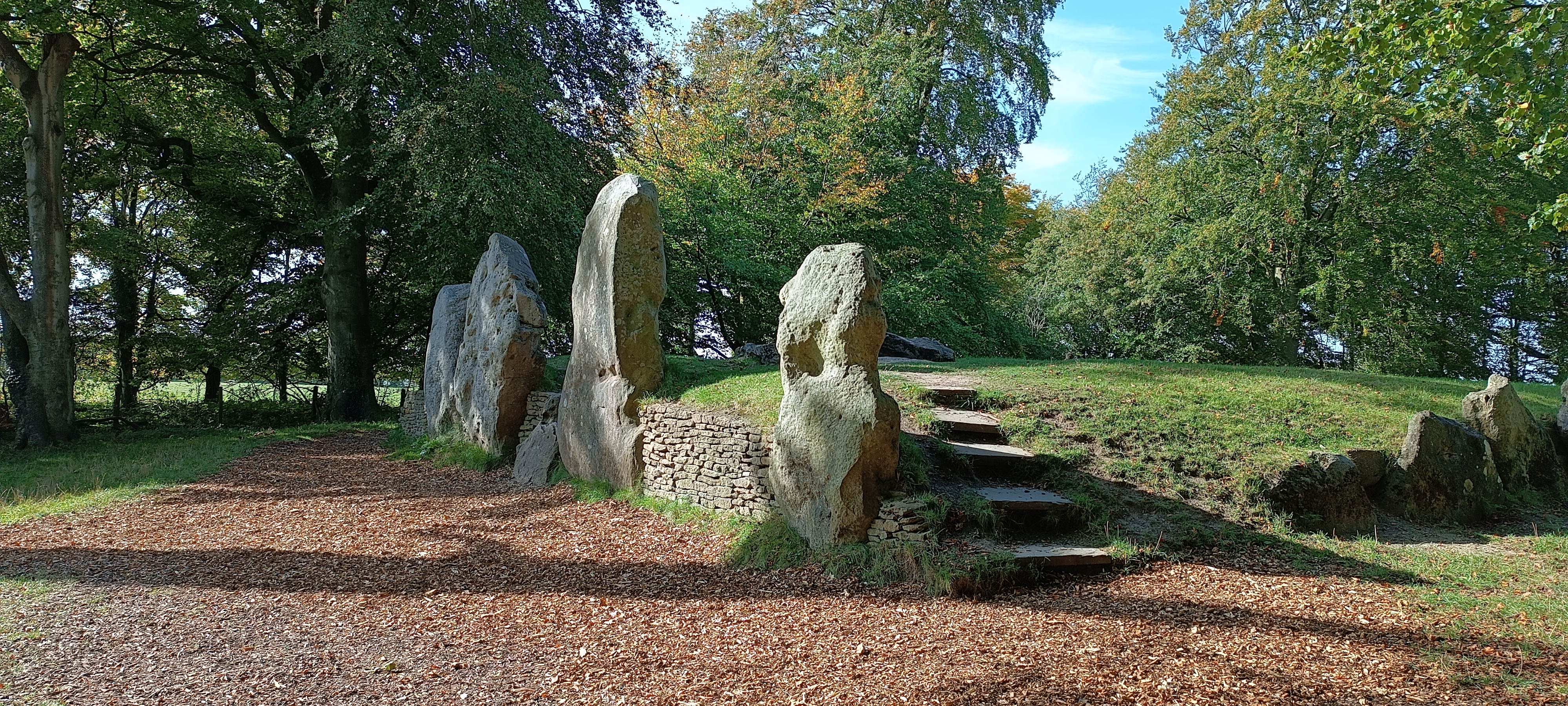
(Wayland’s Smithy. Image Credit: E.Holohan)

And just a stone’s throw away lies Wayland’s Smithy, an ancient burial site nestled within this mysterious landscape. It’s a place that buzzes with mystery. Standing there, surrounded by earth that’s seen so much, you can’t help but wonder what these ancient builders believed and what secrets they took with them.

The Haunting Sounds of the Whispering Mummies

(The Crypt under St Michan’s. Image Credit: E.Holohan)

Our final topic was one that feels both spine-tingling and sombre: the Whispering Mummies of St. Michan’s Church in Dublin. Interred in crypts beneath this centuries-old church, the mummified remains have become legend, and some say that if you listen closely, the mummies themselves seem to whisper secrets of a bygone time. There’s a strange, haunting beauty here, where history and the supernatural meet in the stillness. The whispers, or maybe just the echoes of centuries, remind us that death is a mystery we all ponder, and yet, here we are, side-by-side with those who came long before us.

Join Us on a Journey Into the Unknown

If you have a passion for the paranormal or a love for history that holds shadows and secrets, this conversation is an invitation to journey with me and my host Anthony. Each story shared brought its own sense of wonder, its own question that lingered in the air. So, wrap up in a blanket, dim the lights, and join us in exploring these mysteries. Watch the full recording on the GhostÉire Channel and step with us into a world where every answer brings another question; and where the unknown is always just a little closer than we think.

Watch via links below:

GhostÉire Channel:  https://www.ghosteire.net/ghosteire-channel-seasoniv

On Youtube: https://youtu.be/73ksjMGSInc

(Interview poster. Image Credit: GhostÉire Channel)

Join Ghost Catcher Isles Live for a Paranormal Deep Dive on GhostÉire!

(Live Vlog. Image Credit: GhostÉire)

Are you fascinated by the paranormal? Intrigued by folklore and eerie legends? Then you won’t want to miss my exclusive live vlog interview on the GhostÉire Channel, where we explore the unknown and the mysterious. It’s time to sit back, relax, and join me and my host Anthony Kerrigan as we delve into the world of the paranormal.

On this episode, Anthony will be speaking to me about my passion for all things paranormal. This includes ghostly tales, mystical sites, and everything in between. We’ll discuss my blog, Ghost Catcher Isles, where I explore strange and eerie stories from across the UK and also the Republic of Ireland.

Here’s a sneak peek of what we’ll cover:

Uncanny Podcast and the ‘Uncanny’ Community

We’ll kick things off by talking about the hit paranormal podcast and documentary series, Uncanny. It first aired on BBC Radio 4 in 2021, it’s now a cult favourite. The podcast was created by Danny Robins and it dives deep into real-life supernatural encounters. It features key witness interviews and expert analysis from experts in the field such as Dr. Ciaran O’Keeffe, Professor Chris French, and Dr. Evelyn Hollow. Uncanny recently had a TV adaptation and also experienced a successful live tour across the UK and Ireland. Consequently, the Uncanny phenomenon continues to grow. But where do I stand—Team Believer or Team Sceptic? Or somewhere in between? Tune in to find out!

The Mystery of the Uffington White Horse

Next, we’ll journey to Oxfordshire, England, to explore the ancient chalk hill figure known as the Uffington White Horse. Dating back to the late Bronze Age, this enigmatic figure has sparked centuries of fascination. Is it a tribute to Epona, the Celtic goddess of horses, or linked to Rhiannon of Welsh myth? I’ll share my experience of visiting this iconic site and reveal whether the surrounding landscape holds any paranormal secrets.

The Whispering Mummies of St Michan’s

Our final topic takes us to the eerie vaults beneath St Michan’s Church in Dublin, home to mummified remains preserved for centuries. From the mysterious ‘nun’ to the six-foot-five ‘crusader,’ these mummies have their own strange stories to tell. We’ll dive into the chilling reports of ghostly whispers and invisible hands that haunt this crypt. And yes, we’ll also discuss the tragic fire of June 2024 that destroyed several of these ancient remains.

Want to ask a question? Feel free to send in your questions live about any of the topics we’ll cover—or anything related to the paranormal!

How to Watch Live: Catch the interview LIVE through the GhostÉire website at www.ghosteire.net—just press the RED button on the homepage. You can also watch via the GhostÉire Channel Facebook page: https://www.facebook.com/events/503154179156001

The live interview will last approximately 90 mins. Feel free to join for the full interview. You can join and leave as you wish. You have the flexibility to dip in and out at any time during the live broadcast.

Don’t miss out on this spine-tingling discussion! This show is open to over 18’s only

My First Podcast Experience: Ghosts & Stories

(Time Between Times. Image Credit: O.Staton and Spotify)

I’m thrilled to share that I recently had the incredible opportunity to join the captivating storyteller Owen Staton on his podcast, The Time Between Times. It was my first podcast interview, and we had a wonderful conversation about my writing, my obsession with the paranormal, and, of course, my all-time favourite Norfolk ghost story; the eerie tale of the Phantom Drummer Boy of Hickling Broad. Owen asked me why I chose this particular tale to be retold by the firepit. It’s more than just a ghost story to me; listen to the episode to find out why this eerie legend resonates so deeply.

Owen Staton is a master storyteller, so I couldn’t have asked for a better host to guide me through this fascinating chat. We covered everything from the origins of my interest in all things spooky and Fortean to my adventures around the UK and the Republic of Ireland in search of haunted places. I even had the chance to discuss my blog, Ghost Catcher Isles, which has been steadily growing in 2024, and my exciting plans for its future. I even shared a personal story about an unforgettable encounter that still gives me chills. You won’t want to miss this!

It was such a fun and thought-provoking conversation, and if you’re into ghost stories, the paranormal, or just love a good tale, this episode is one you won’t want to miss.

You can catch the full interview on Spotify or wherever you prefer to get your podcasts. Come listen, and let me know what you think—maybe we’ll share our own ghostly experiences together next time!


Links