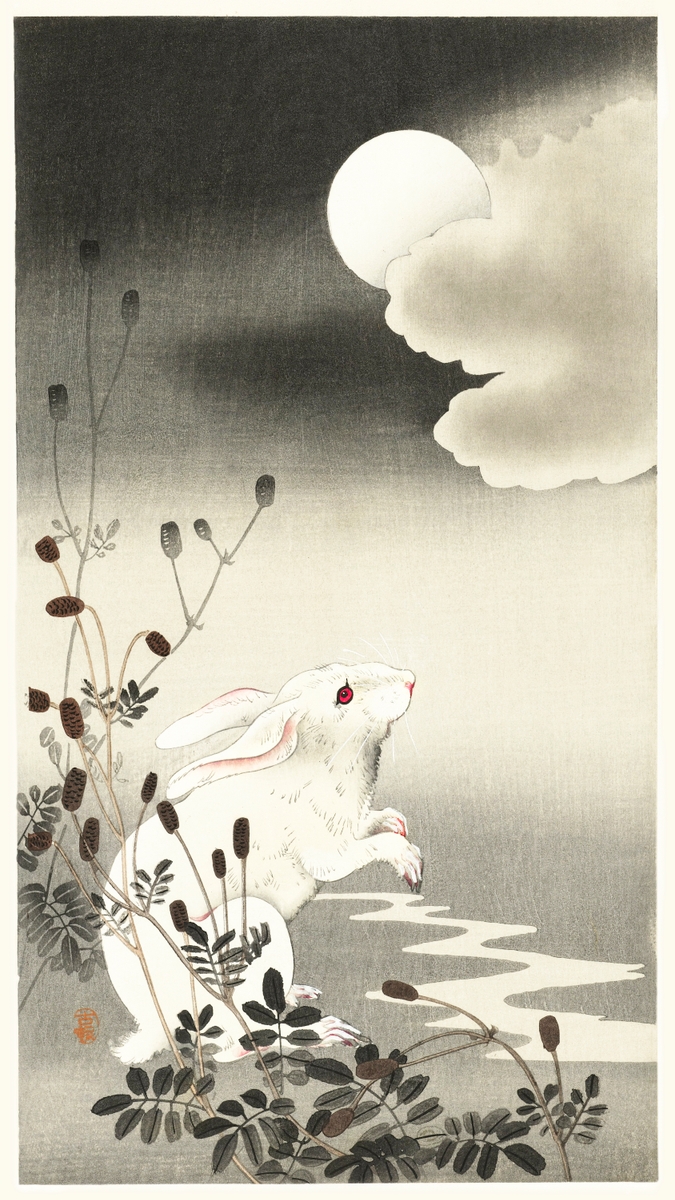
Source: The Rijksmuseum. Digitally enhanced by rawpixel.)
On quiet spring evenings, when the light begins to fade into dusk, hares emerge at the edges of fields and lope out from the hedgerows. For centuries, people across Britain and Ireland have watched these mysterious creatures and wondered if what they were seeing was just an animal, or something more.
At Easter, the cheerful Easter bunny visits, bringing us gifts of colourfully wrapped chocolate eggs. Children run in excitement around gardens, peering under hedges and amongst the golden daffodils, looking for these jolly treats left by the benevolent bunny. The Easter Bunny is the soft and fluffy, Victorian popularised version of something much older that has haunted the human imagination since ancient times. The hare bounds out to us from the shadows of Easter folklore as a symbol of renewal, fertility, and spring abundance. Beneath these positive symbols, however, there lies something far darker and much more superstitious. Across Britain and Ireland, we find that stories persist of spectral hares glimpsed from the dark treelines at dusk, tales of long-eared restless spirits still bound to the land, and beliefs that these creatures are portents of ill fortune. From the rugged cliffs of Cornwall to the windswept coastal tracks of Cumbria, these uncanny creatures blend both folklore and haunting.
The White Dobbie of Bardsea, Cumbria
Our first legend takes place on stormy nights on the coastal road between Bardsea and Ramside in Cumbria. Here, local lore tells of a sinister phantom known as “White Dobbie”. This is no kindly household spirit. This is something far more disturbing. The White Dobbie appears as a gaunt, sorrowful-looking pilgrim with feverish eyes. Running ahead of him is a ghostly-looking scraggy white hare with bloodshot eyes. The mere sight of this ghoulish hare is said to be enough to terrify dogs and cause them to run away howling.
One local tale involving the White Dobbie happened within the sanctity of the church in Bardsea. A female bellringer here witnessed the spectral white hare leaping around the belfry as she tolled the passing bell for a death. The ominous White Dobbie stood next to her, sinisterly whispering, “Who for this time?” The phantom hare then leapt into the Dobbie’s pocket and stared out at her menacingly. The spectres only disappeared when two other people arrived at the belfry, surprising them. However, stories still tell of the Dobbie and the hare making appearances when the passing bell is rung or haunting the coastal roads. Local theories suggest that the Dobbie is the ghost of a murderer doomed to forever wander as punishment for their sin, while the hare contains the restless soul of their unfortunate victim. Cumbria, however, is not the only place where hares take on a more sinister form.
The Bolingbroke Hare, Lincolnshire
We turn our gaze across the country to Bolingbroke Castle in Lincolnshire, which is famously associated with a phantom white hare. In the 17th century, antiquarian Gervase Holles described a hare spirit that frequented the castle and grounds as “a certain truth” known to the local people. Local legend tells us that the hare is a transformed witch who had once been imprisoned at the castle. Historical accounts suggest the ghostly hare would leap over people or run between their legs, while any dogs sent after it would return to their owner crying. The spectral hare was frequently hunted by hounds, but could never be caught. Even to this day, some claim that the hare can be seen in the area during March, a month often linked with hares in folklore.
Spectral Hares of Cornwall
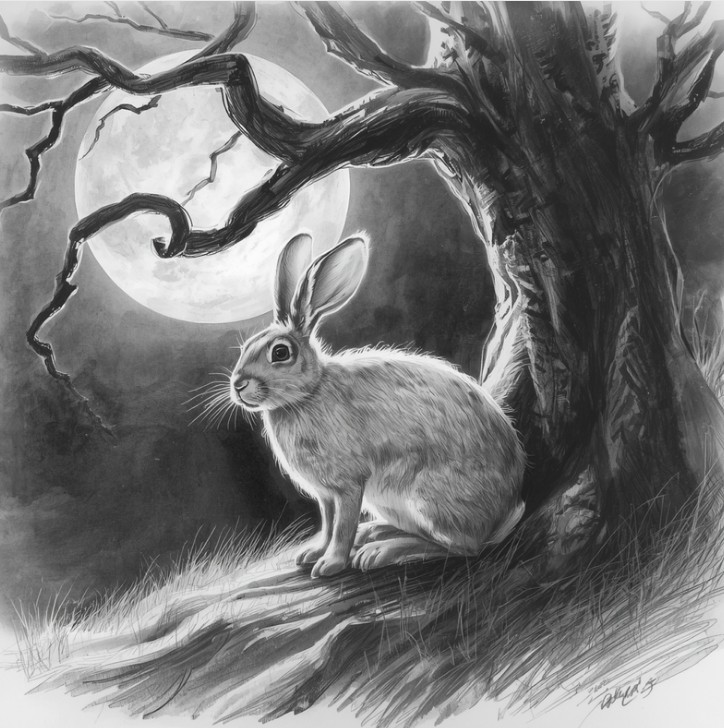
Cornwall is rich in ghostly hare legends, but one such old traditional Cornish story tells the sad tale of “The Maiden’s Ghost”. A young woman who loved unwisely, died broken hearted after being deceived by her lover. Still forlorn, she is said to haunt her former suitor in the guise of a hare. The phantom hare was said to follow him everywhere, but could not be seen by anyone but him. As with all folklore, there are different versions of the tale. While the spectral hare sometimes saves her betrayer’s life, the haunting ultimately leads to his doom.
The “White Hare of Looe” is one fine example of the Maiden’s Ghost. The white hare here is a ghostly apparition that is said to be the spirit of a girl who took her own life after being jilted by a local man. The hare is said to roam the road between Talland Bay and one of the oldest pubs in Looe, The Jolly Sailor.
According to tradition, the white hare is the ghost of a girl called Sarah who fell head over heels in love with a local lad. Sadly, that local lad was handsome, easily bored, and had a roving eye. Despite promising to marry Sarah, he called off the wedding as he had fallen for the barmaid of the Jolly Sailor. This was too much for Sarah to bear, and stricken with heartbreak, she took her own life.
Sarah’s grief was too strong and extended beyond death, as her spirit returned in the form of a ghostly white hare. The apparition haunted the old road, and she would follow her former lover to and from the pub.
The hare would sometimes appear in front of her ex-lover and his new lady, and he began to suspect that the hare was much more than a curious living animal. The hare would gaze at him with sorrowful eyes, and guilt and shame weighed on him. After a time, the lad became sick and died from an unknown illness. Since then, it is said that meeting a white hare in this region may bring bad luck, misfortune, and sometimes death. Just imagine walking along that coastal road at night and catching a glimpse of something white moving ahead of you…
Shapeshifting, Otherworldly Beings
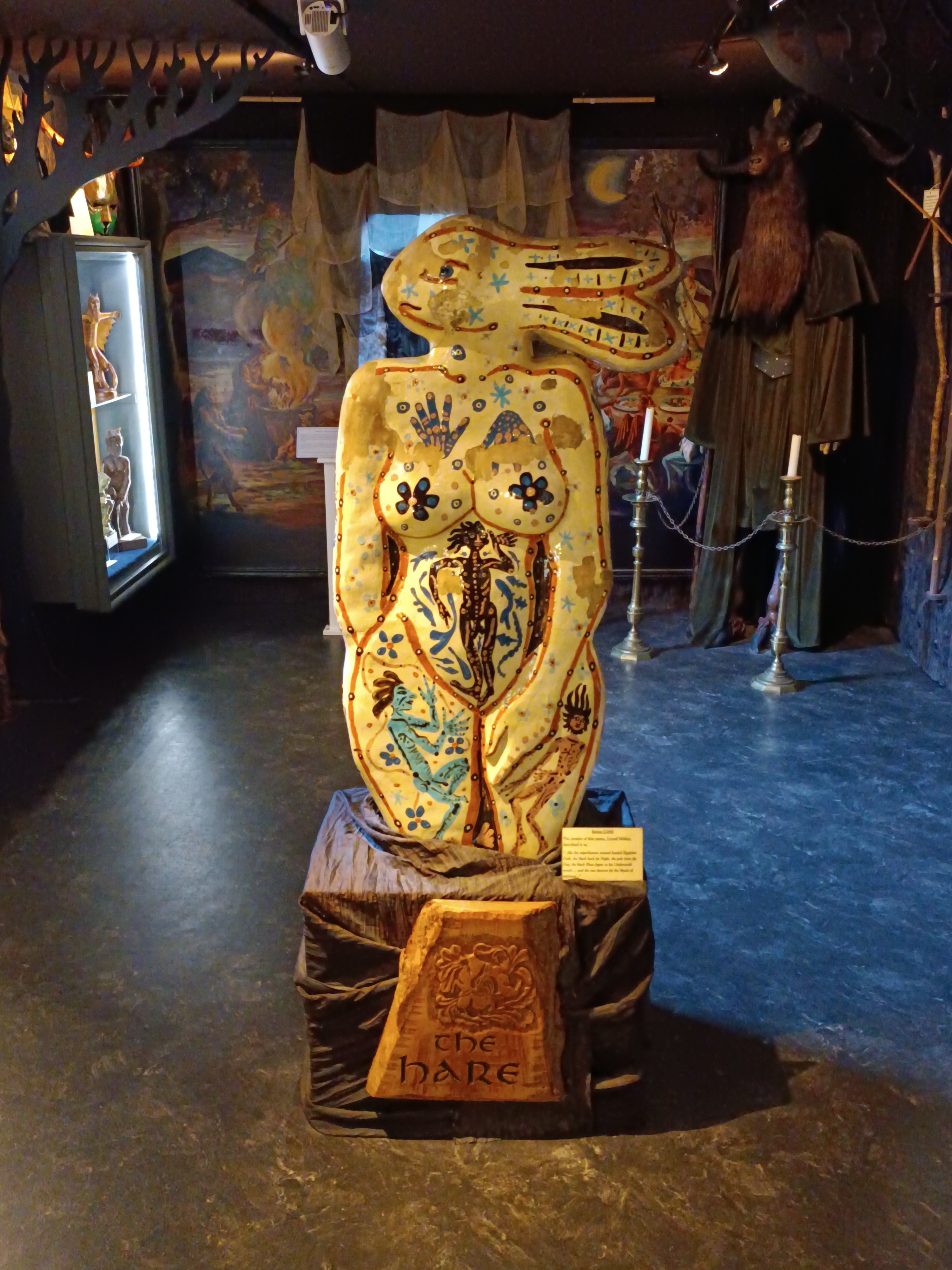
Hares lead a shadowy existence, preferring to feed in the fading light of dusk or at night, which lends a natural air of mystery to them as animals. The ancient Celts, for example, revered them as sacred creatures that were connected to divination and the otherworld. Hares roam on the periphery of our vision and between the boundaries of day and night. Perhaps that’s why they are sometimes viewed as liminal beings, creatures that exist in the boundary between this world and the otherworld. This makes them ideal animals for ghost stories as they travel easily through the night, passing through the veil.
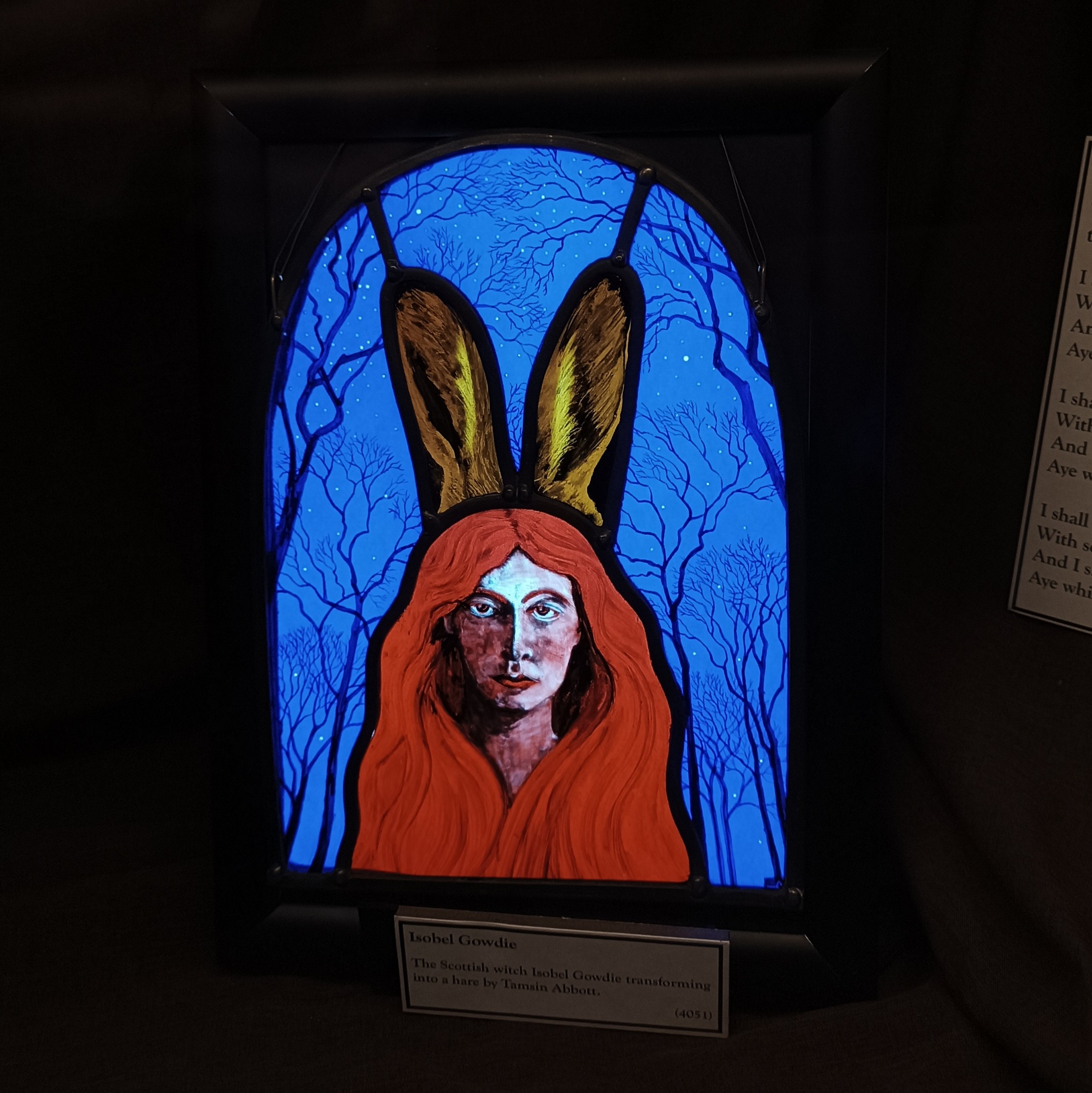
These curious creatures are also famous in northern European folklore as being one of the most common disguises of witches. In the past, it was widely believed that witches could shapeshift by transforming into animals, especially hares, so they could roam the countryside unseen. Some historical court records even highlight this belief, for example, at the trial of Julian Cox in 1663, where witnesses claimed to have seen a hare disappear only to be replaced by a woman. Another recurring theme in shapeshifting stories involves hunters wounding a fleeing hare, only to later find a local woman with an identical wound. The connection to shapeshifting blurs the line between human and animal, and human and spectral. Does this link to witches, therefore, reinforce hares as a symbol of the supernatural?
Unlike many other animals, hares may more often appear as ghosts and apparitions because of the transition in their status from revered, almost deity creatures, to devilish monsters. Some folklorists note that the gods of one era often become the devils of another. It’s not hard to imagine that hares may have once been seen as divine animals by early peoples, but later became objects of fear, suspicion, and ill omens under new belief systems as new religions took over.
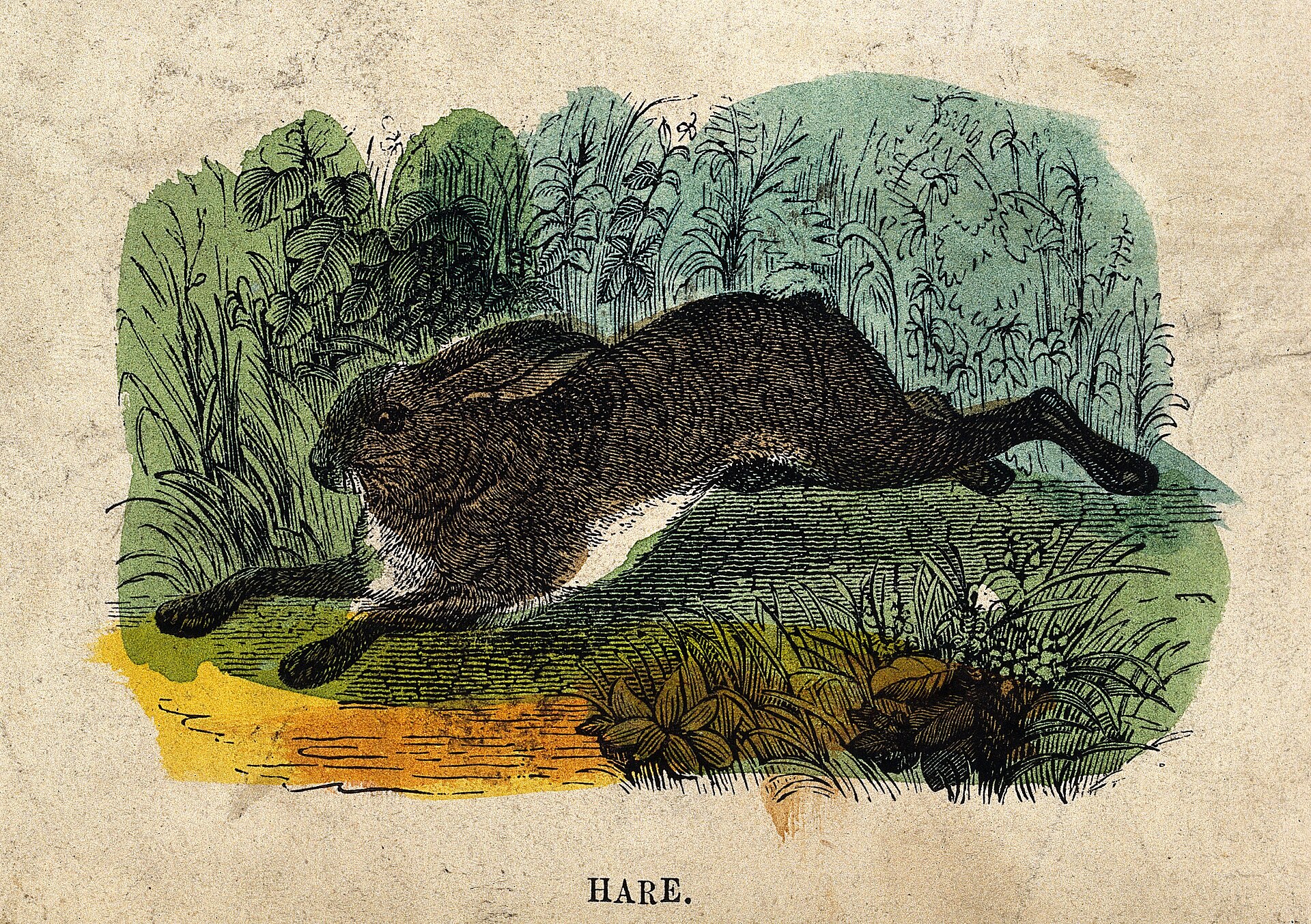
Phantom hares are sometimes believed to contain the souls of the dead. In the Bardsea legend, for example, the white hare was thought to hold the unquiet spirit of the murdered victim. They are also seen as omens of tragedy, as their appearance in folklore is often a warning of a fatal accident or approaching storm. Rather than just a common animal ghost, this makes them a source of omens and portents. It was considered especially unlucky to see white hares at the turn of the 19th century, as they were believed to foretell misfortune or doom to the onlooker.
No Ordinary Animal
Hares have always existed on the edge of things. They move between the boundaries between field and woodland, day and night, and the familiar and the unknown. It is therefore no surprise that folklore places them between two worlds as well: part animal, part spirit, and sometimes even containing a human’s soul.
From melancholy ghost stories in Cornwall to ominous sightings on quiet Cumbrian roads, these creatures carry more than just the symbolism of spring with them. They encapsulate something older and something less simple to explain. They bring unease and a feeling that not everything we see in the gloaming belongs entirely to this world. If you happen to catch sight of one at dusk, and see it watching back, you might hesitate and wonder whether you’ve seen just an ordinary animal, or something more.
Reference list
- JD illustration (2020). The White Hare of Looe. [online] JD Art Blog – Fantasy & Character Illustration. Available at: https://jd-art-blog.jimmsdesign.co.uk/the-white-hare-of-looe/ [Accessed 3 May 2026].
- Billson, C.J. (1892). The Easter Hare. Folk-lore, 3(4), pp.441–466. doi:https://doi.org/10.1080/0015587x.1892.9720125.
- Ellis, S. (2024). Folk Horror and Folk Customs. Tell the Bees, (4), 30 Apr.
- Ferre, L. (2021). Bardsea. [online] Occult World. Available at: https://occult-world.com/bardsea/ [Accessed 4 May 2026].
- George Ewart Evans and Thomson, D. (1974). The Leaping Hare. Faber and Faber Limited.
- Lincolnshire Folk Tales Project. (2024). The Bolingbroke Hare. [online] Available at: https://lincolnshirefolktalesproject.com/2024/02/20/the-bolingbroke-hare/ [Accessed 3 May 2026].
- Perry, M. (2022). The Old Cornish Story of the White Hare. [online] Blogspot.com. Available at: https://mikescornwall.blogspot.com/2022/09/the-old-cornish-story-of-white-hare.html?m=1 [Accessed 3 May 2026].
- Rossendalehare.co.uk. (2024). Folklore. [online] Available at: https://rossendalehare.co.uk/FOLKLORE/ [Accessed 3 May 2026].



 Ghost Catcher Isles
