
Great Yarmouth isn’t just a seaside town of sugar donuts and amusement arcades; it’s a place rich in weird tales, ghostly sightings, and strange histories. From pirates to witches, from mystics to mummies, the town bubbles with secrets that float through its streets and graveyards. Join me as we walk through Great Yarmouth’s darker side, exploring haunted corners, overlooked tragedies, and uncanny stories.
Our journey begins in the heart of Great Yarmouth, where the imposing St Nicholas’ Church stares out over the town like a sentinel. Its stones have witnessed hundreds of years of worship, but it has also seen scenes of witchcraft, piracy, and ghostly happenings.
Stop 1: St Nicholas Church, Great Yarmouth

This church is said to be the biggest parish church in the United Kingdom. Once belonging to a Benedictine priory, its construction of was completed in 1119. Although very little of the original Benedictine church now stands, the base of the current tower is Norman. Expansions and changes were made during the Middle Ages. In the 13th century, the aisles were widened. In the 14th century, the south porch was constructed. In the 15th century, the north wall was equipped with additional windows.
In the 16th century, the church was split into three sections, each of which was used by a different denomination. When the church was renovated in the 19th century, these sections were once again connected. However, a large portion of this work is no longer visible because the majority was completely destroyed by bombing and fire in 1942. Reconstruction of the inside took place from 1957 to 1960.
In the graveyard: English Pirate Attack

In the graveyard here, we find a gravestone that has a rare inscription that refers to an English pirate attack:
“To the memory of David Bartleman, Master of the Brig Alexander and Margaret of North Shields, who on the 31st of Jan 1781 on the Norfolk Coast with only three 3 pounders and ten men and boys nobly defended himself against a cutter carrying eighteen 4 pounders and upwards of a hundred men commanded by the notorious English pirate Fall and fairly beat him off. Two hours after the enemy came down upon him again, when totally disabled, his mate Daniel MacAuley, expiring with the loss of blood and himself dangerously wounded, he was obliged to strike and ransome. He brought his shattered vessel into Yarmouth with more than the honour of a conqueror and died here in consequence of his wounds. On the 14th of February following in the 25th year of his age”.
This stone, dedicated to the remembrance of David Bartleman, Master of the brig Alexander & Margaret of North Shields, is tucked away in the old church graveyard. On 31st January, 1781, Bartleman bravely defended himself against a cutter with eighteen four-pounder cannons and a crew of up to 100 men while sailing the Norfolk coast with a crew of ten men and boys and only light armament of three-pounders. Fall, an infamous English pirate, commanded the Cutter attacking.
This triumph was fleeting, though, as two hours later Fall’s Cutter struck the unfortunate Brig once more. The battle raged on until the Alexander & Margaret was fully incapacitated. Captain Bartleman found himself in a desperate situation; he had no choice but to surrender and pay a ransom to ensure the safety of his ship and crew. His first mate, Daniel MacAulay, was seriously injured and rapidly losing blood, leaving the captain with little choice to make the difficult decision to pay to secure their release. Then, on 14th February 1781, at the age of 25, he brought his proud but broken vessel into Yarmouth, where he passed away from his wounds.
A stone was placed above the tomb by his father, Alexander Bartleman, to honour the bravery of his son’s death, the courage of his loyal mate, and the notoriety of Fall the Pirate.
Daniel Fall, also known as Fall the Pirate or John Fall, first gained fame in November 1780 when he captured two colliers from Lowestoft South Roads. At that time, he was known as “the noted Daniel Fall, a smuggler and captain of a large privateer.” The frigate Pegasus set sail from Yarmouth in pursuit but failed to locate him. An article in the Ipswich Journal reported that a 20-gun American cutter privateer had seized two large merchant ships off Pakefield, but the man-of-war ‘Fly’ from Hollesley Bay intercepted and took back the stolen goods.

Fall was known to sail under American colours, suggesting that the privateer mentioned might have been his ship. By February 1781, around the time of the attack on the brig Alexander & Margaret and death of David Bartleman, he was spotted on one of the Harwich packet ships, where he raised the American flag and displayed letters of marque from America, France, and Holland. Shortly after, it was reported that Fall, now known as the ‘rebel commodore’, was operating off Orford Ness with a squadron of Dunkirk-based privateers.
In early June 1781, Fall captured the Prince of Wales using two cutters: the Liberty, which he had recently stolen from a Scottish port, and the Fearnought, which he commanded.
By April 1782, Fall was reported to be heading into the Irish Sea, but after that, he seemed to disappear from the pages of history. No further sightings or reports of his activities surfaced along the East Coast. What happened to the notorious pirate Fall after his last raid: did he perish in battle like his poor opponent David Bartleman, or vanish into obscurity?
Witches Memorialised
Also in the churchyard we find the memorial plaque commemorating the five women hanged at North Denes during the Matthew Hopkins Witch Trials who were buried here; Bridget Howard, Margaret Blackbourne, Alice Clisswell, Elizabeth Bradwell, and Elizabeth Dudgeon. They are located in the churchyard’s north side. Why were the supposed witches buried here, in consecrated ground, when most others accused of such crimes were cast out to the crossroads?
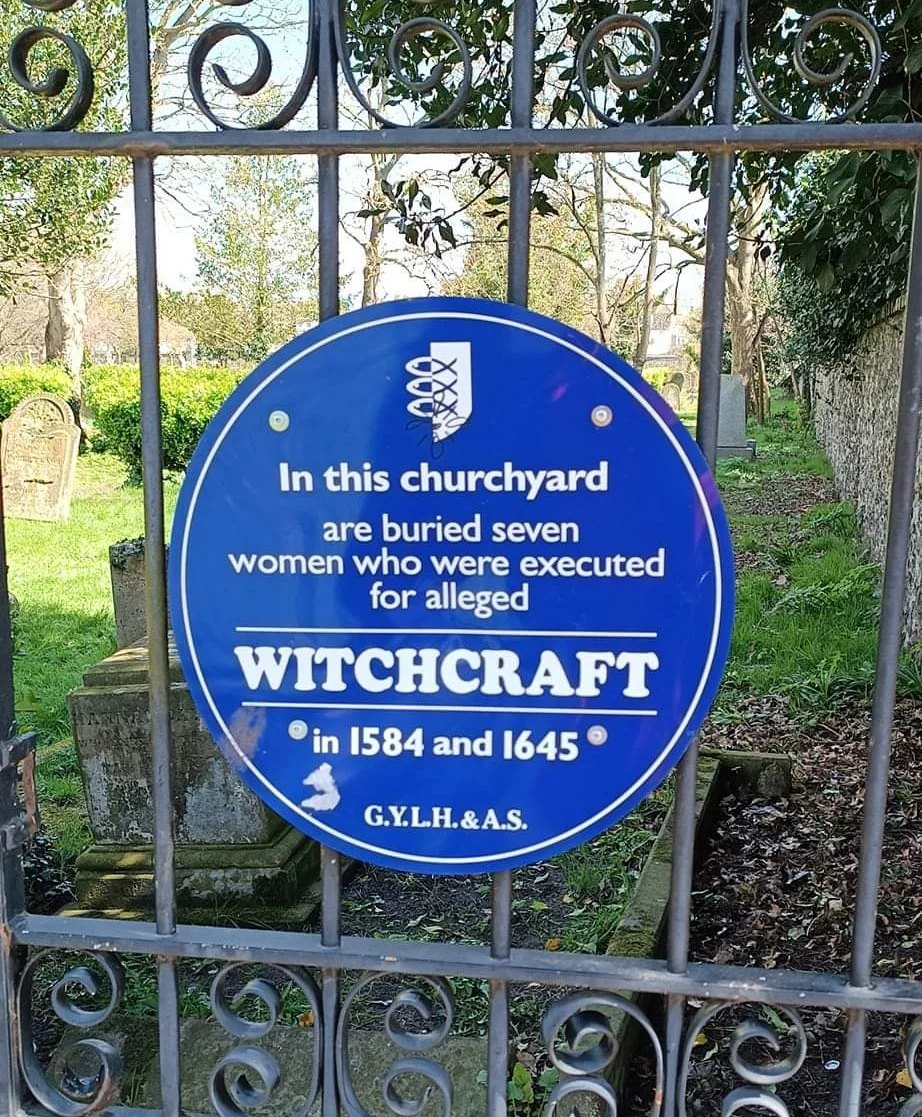
The history of Great Yarmouth is associated with the 17th-century witch hunts, especially in 1645 when Matthew Hopkins, the so-called Witchfinder General, paid the town a visit. Many people, both men and women, were tried for witchcraft at this time, and some of them were found guilty and put to death. The five women were hanged at nearby North Denes during these Witch Trials. Many of the accused in Great Yarmouth, according to historians, were simply social misfits or victims of unrelated disputes, not actual practitioners of witchcraft.
It has never been explained why the supposed witches were buried in the churchyard. According to a long-standing custom, people who are found guilty of crimes, including witchcraft, are typically buried in unconsecrated ground or at a crossroads, where their spirits would be flummoxed and unable to return and cause trouble in a society that values godliness.
In reality, according to Christian tradition, outcasts and suicides were the only people buried on the north side of a churchyard. The unbaptised, excommunicated, strangers, vagrants, executed criminals, and people suspected of practicing witchcraft were all included in this proclamation. This was frequently called “lying out of the sanctuary” or “burial without the sanctuary.” The saying “the devil walks in dark places” stems from ancient times, and was initially used to describe the darker parts of a churchyard, particularly the north side of a building.
Thomas Vaughn: Body Snatcher
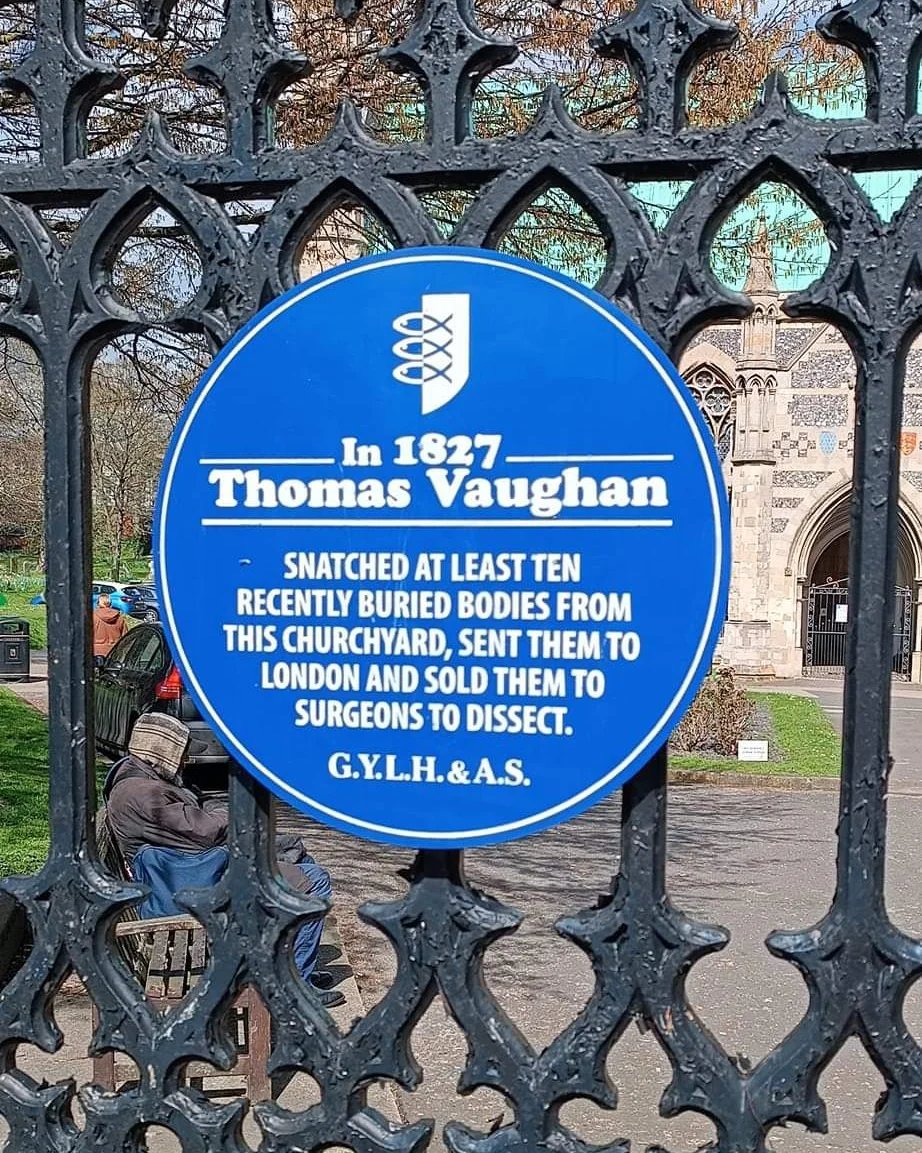
Also at the graveyard we can see the plaque remembering local body snatcher, Thomas Vaughn. Ten remains were taken from Great Yarmouth’s St. Nicholas Churchyard in 1827 by Thomas Vaughn and his two accomplices. In the end, he was imprisoned, but only for half a year! For more on this, read on for Body Snatchers Row 6.
Oliver Tomkins: Cannibal Victim
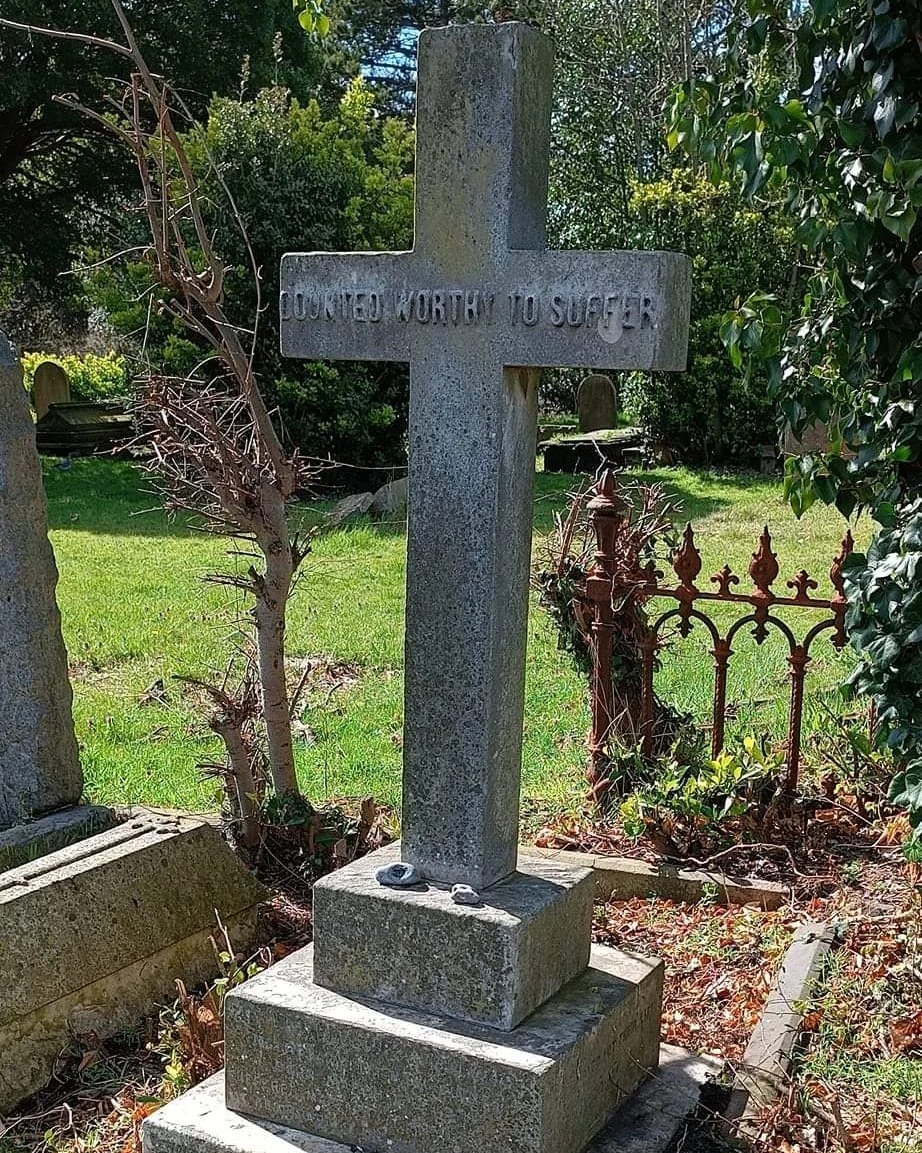
Situated in the graveyard you can see the grave marker of Oliver Tomkins. There is likely no body buried under the marker, as this Great Yarmouth citizen, about 120 years ago, was rewarded by cannibals for his attempts to spread the word of God by being killed, dismembered, cooked, and eaten. This was all within hours of Oliver Tomkins’ final diary entry following his arrival on a Papua New Guinean island inhabited by cannibals: “they tried hard to persuade us to come ashore…we promised we would visit their village in the morning.” The reward for his visit to the village was to be his host’s dinner!
Mystic: Margery Kempe
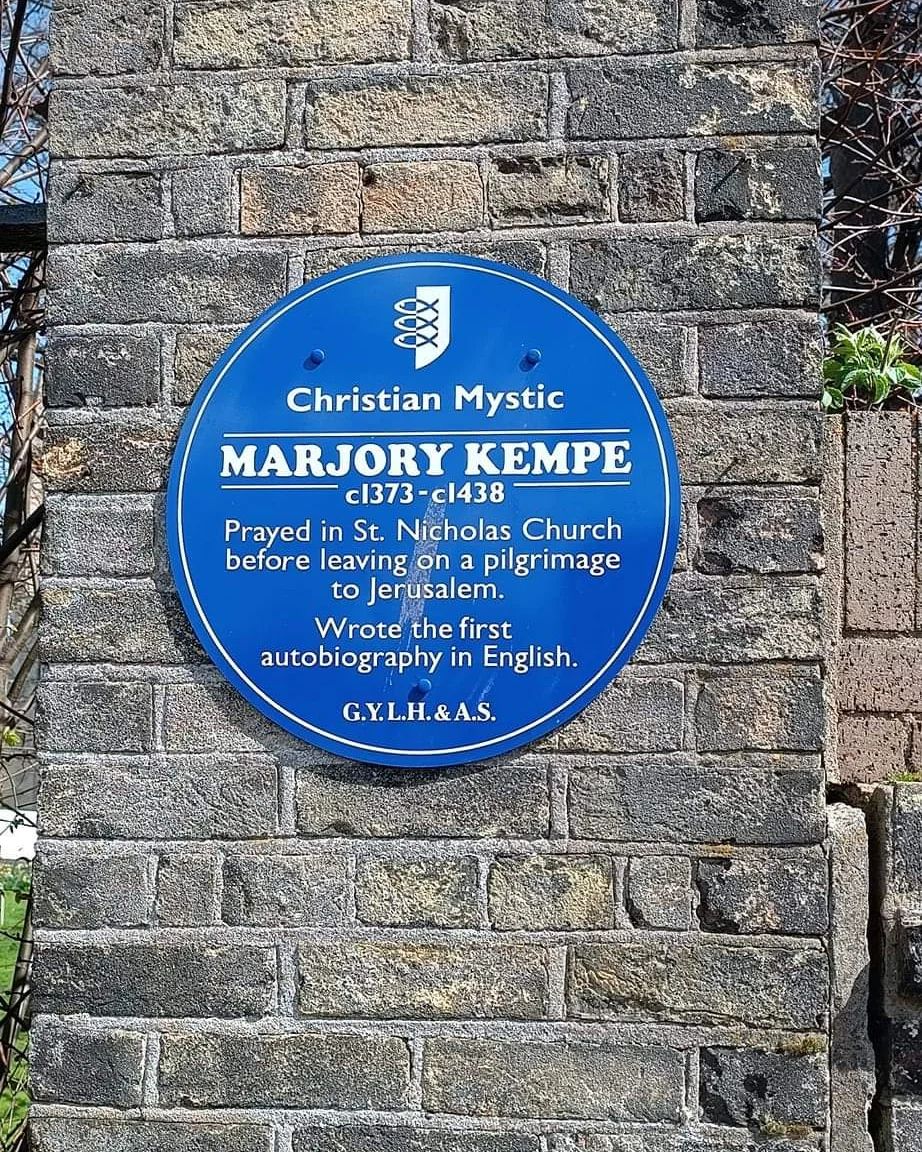
Next up at St Nicholas’ Churche we find Margery Kempe’s blue plaque.
Many believe that “The Book of Margery Kempe,” written by the English Christian mystic Margery Kempe (c. 1373–after 1438), is the first autobiography in the English language. Kempe’s domestic struggles, her extensive pilgrimages to holy sites in Europe and the Holy Land, and her mystical interactions with God are all chronicled in her book.
Margery Kempe was considered a mystic due to her profound and personal relationship with God. This was marked by visions, conversations with Jesus, Mary, and other religious figures, and via active participation in biblical events through these visions. She also embraced a highly devotional and pious lifestyle, which included prolonged weeping, fasting, and pilgrimages, which were all seen as evidence of her spiritual connection
Kempe prayed in St Nicholas church before leaving on a pilgrimage to Jerusalem and a blue plaque now commemorates this.
Churchyard Hauntings
As well as being a place of rest, the church graveyard is also known for its unquiet residents. According to legend, at the height of “Egyptomania,” in the 1900s, a well-wisher donated the coffin of an ancient Egyptian princess to the Priory school next door to Great Yarmouth Minster. People were fascinated by mummies in this period because they believed that the ancient bodies had supernatural abilities. Some mummies were even ground into a dust for use as medicine or shown at gruesome “unwrapping parties.” Mummies were the height of fashion at this time!
Unfortunately, many mummies suffered in Europe’s humid environment after being removed from their natural hot, dry resting places. The princess mummy was kept in its case on display in a classroom, but it was eventually agreed that the only sensible thing to do when the mummy inside started to smell was to bury it in the church graveyard.
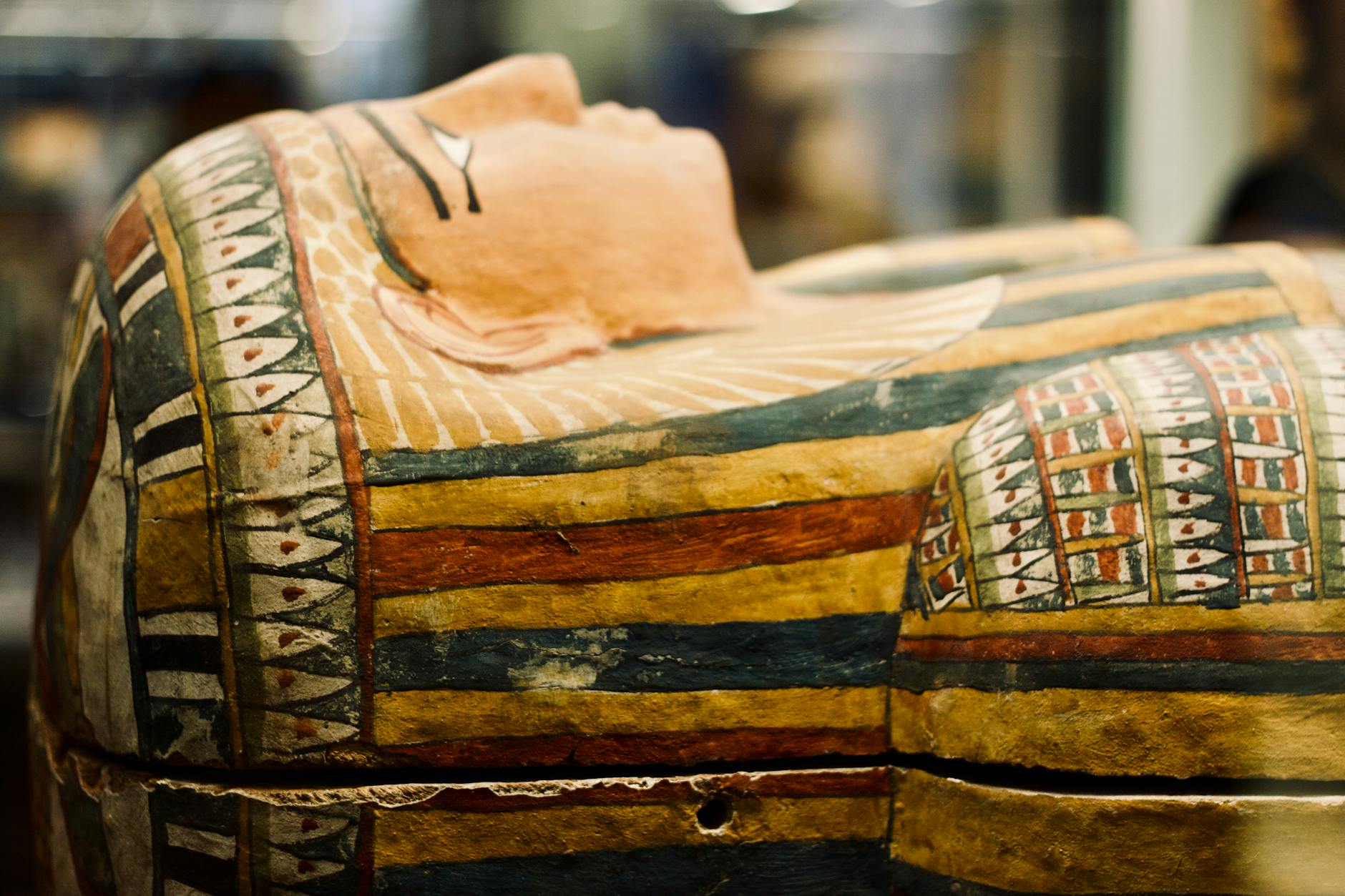
The Vicarage and St. Nicholas’ Church started to experience after dark knocking noises on their doors shortly after the burial; an investigation into the tapping noises revealed no reason.
The vicar was frequently confused and anxious when he answered the vicarage door to no one after hearing loud bangs. A decision was made to return the mummy to its casket since the noises were becoming unbearable and seemed to be coming from nowhere.
A mummified arm that had been mistakenly left behind when the body was hurriedly buried in the middle of the night was discovered when the box was opened. It seems, it had been begging to be freed and reunited with its body! The noises stopped and there was finally peace once the arm was interred with the rest of the body. The arm left behind; was it an accident, or something more sinister keeping the dead from their rest?

Along with tales of unquiet mummies, the churchyard also has takes of spectral horsemen. Ghostly apparitions were allegedly wreaking havoc in the graveyard in October 1922. A woman reported to the local police that she had witnessed three ghosts in shining armour riding horses across the churchyard.
As word spread, hundreds of people returned night after night to catch a glimpse through the railings, wanting to see these spirits for themselves. However, no further apparitions were seen. A bet was made to anyone who would camp out in the churchyard and to keep watch for the knights, but it was never taken up and the town’s citizens ultimately lost interest.
From the graveyard’s shadowy corners, we make our way down to Row Six. At first glance, it’s just another of Great Yarmouth’s narrow passageways, but this one earned a gruesome reputation as ‘Body Snatcher’s Row’.
Stop 2: Row Six- Body Snatcher’s Row

Row six, Body Snatchers’ Row, leads from St Nicholas’ churchyard to Northgate Street and is a reminder of when human bodies were stolen to order for anatomical dissection in London. In 1827, Thomas Vaughn, a resident of Row six, and his two henchmen, stole ten bodies from the churchyard. Vaughan was employed by Sir Astley Cooper, a surgeon to Queen Victoria. Vaughan used sawdust to conceal the bodies and transported them to London, where they were used for medical training purposes. Vaughan was tried at the Norwich assizes and received only 6 months imprisonment for this offence. He was later transported to Australia having been caught in possession of clothing he had taken from a corpse. In those days, sadly, theft of property was seen as a far more serious offence than stealing dead bodies.
Leaving behind the grisly world of stolen corpses, we come to a calmer, more literary stop. At 37–39 King Street, we arrive the birthplace of Anna Sewell, the author of Black Beauty. This is a house where tales of compassion for animals meet stories of ghostly presences
Stop 3: Anna Sewell House and The Man in the Window
The author of Black Beauty was born at Anna Sewell House on Church Plain, in Great Yarmouth. In 2021, Redwings Horse Sanctuary purchased the house, which dates to the 16th or 17th century. The property is now used by Redwings to highlight Anna Sewell’s renowned novel and her influence in animal protection.
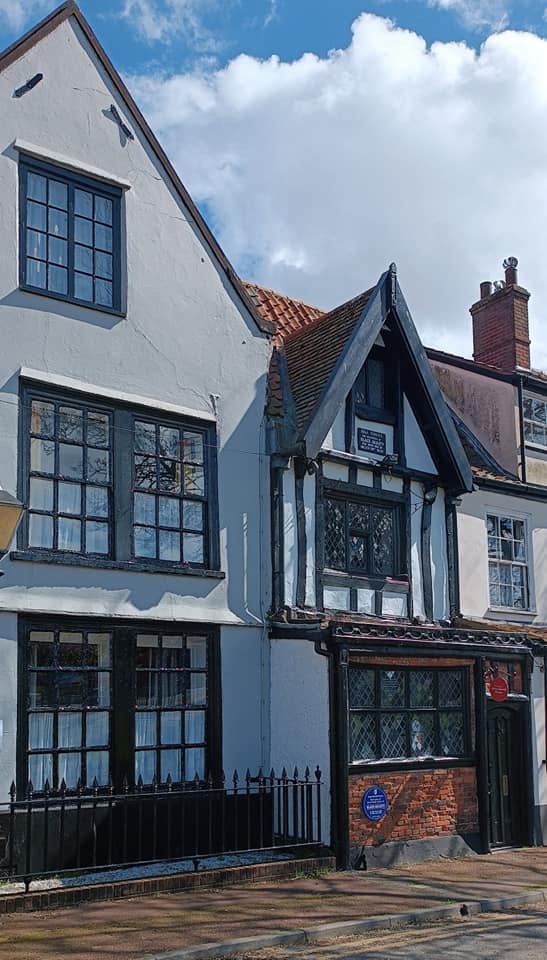
On 24 November 1877, for just £40 and without a royalty condition, Anna Sewell sold Jarrold & Sons the entire rights to her book “Black Beauty”. “Black Beauty: his grooms and Companions, the autobiography of a horse” was the title under which the book was published. Since then, the book has sold about 30 million copies worldwide, making it the sixth best-selling book in the English language.
The adventures and misfortunes of a horse named Beauty are the subject of Anna’s tale, which was penned at the White House on Spixworth Road in Old Catton. The story was written in the first person from Beauty’s point of view. Anna survived long enough to learn of its success, but she was never able to witness the book’s eventual bestseller status. In April 1878, she passed away in Old Catton, Norwich, and was buried at the Quaker Chapel in nearby Buxton Lamas, where Anna had family.
In Great Yarmouth, a woman once reported that she saw a strange apparition in the window of the birthplace of the Black Beauty author. According to the eyewitness, Professional psychic medium Freda Joy, a man with “period features” who may have been the sibling of author Anna Sewell can be seen in photos shot seconds apart. Joy stated: “I couldn’t believe what I saw. I took the pictures within seconds apart and saw what looked like an image of man in the window.”
From this modest town house to a building spectacle, our path now takes us to the Hippodrome, Britain’s only surviving purpose-built circus, where sounds of joyful laughter mingle with shadows of the ghost of its flamboyant creator
Stop 4: The Hippodrome Circus, Where the Showman Goes On
The Great Yarmouth area has a long history of circuses, with travelling circuses appearing as early as 1815 and resident circuses from 1845.

The Great Yarmouth Hippodrome, built in 1903, is a landmark and Britain’s only surviving purpose-built circus building that still regularly hosts circus performances. Designed by Ralph Scott Cockrill, it features a unique, sinking ring that can be transformed into a pool for water spectacles. The Hippodrome was the inspiration of George Gilbert, a former circus performer who became a successful showman. The building’s facade features Art Nouveau details, including terracotta and brickwork.
The Hippodrome has hosted a variety of entertainment, including water shows, stage plays, cinema, and cine variety. During wartime, the Hippodrome was even used as a military practice shooting range. The ghost of showman George Gilbert is also said to walk the upper balcony of the Hippodrome.
Peter Jay bought the building in 1979, restoring the circus floor that sinks into a water feature in 1981 when he presented his first show. The Jay family continue to produce Circus Spectaculars four times a year, with Jack Jay as ringmaster and producer and Ben Jay as manager. The Hippodrome houses a collection of historical artifacts, props, and other circus memorabilia, curated by Peter Jay.
From the Hippodrome Circus, we make our way walking south on St George’s Road, turn left onto South Quay. Here we enjoy the scenic views along the quay.
Stop 5: A Stroll Along the South Quay
Take a stroll down the historic South Quay. It has been said that there were so many boats leaving Yarmouth in 1913 that you could cross the river from by leaping from one boat to another. The magnificent buildings along the river are a reminder of this port’s history. The Old Merchant’s House and the Great Yarmouth Row Houses are located just off South Quay.
The Rows were a network of winding alleyways where port workers lived.
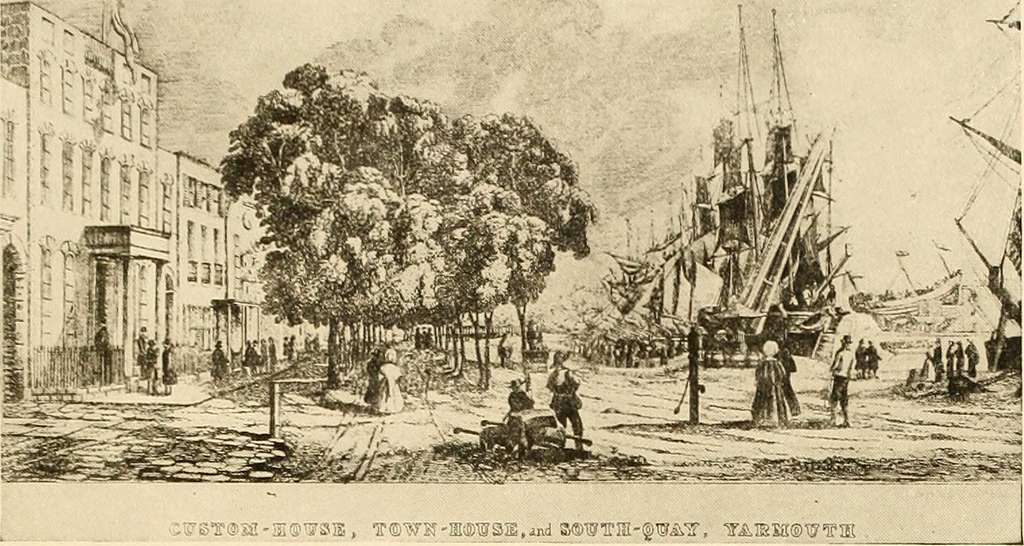
The South Quay Elizabethan House has a reputation for being haunted. Some have called it a “hotbed of paranormal activity”. The Elizabethan House Museum is a historic 16th-century house, which showcases Elizabethan domestic life. It was constructed by affluent trader Benjamin Cowper in 1596, and when Cowper’s fortune grew, it was expanded in the early 1600s. In 1635, the mansion was bought by the town bailiff and local businessman, John Carter. Shortly before the Civil War, it developed as a meeting spot for Parliamentarians, most famously hosting a meeting in 1648 to discuss the future of King Charles I. John Carter’s sons, John and Nathaniel, inherited the house after his death in 1667 and remained there until their deaths in the early 1700s.
The house is said to have a history of paranormal events, including sightings of a ghostly woman, and reports of disembodied voices and unexplained noises The Elizabethan House is a popular location for ghost hunts and paranormal investigations due to its reputation as a haunted location.
As we continue west along the South Quay and head a little deeper through the side streets, we now encounter the Time and Tide Museum, located at 5 South Quay.
Stop 6: Time and Tide Museum

The Time and Tide Museum is housed in one of the best-preserved Victorian herring curing facilities in the United Kingdom.
The Tower Fish Curing Works, which was first constructed in the mid 1800s and expanded in 1880, is now home to the Time and Tide Museum. The works finally closed their doors in 1988 and The Tower Fish Curing Works was acquired in 1998 with the goal of turning it into a museum. This museum now showcases the history of Great Yarmouth, its herring business and social history.
At this museum you can discover Great Yarmouth’s varied history, its rich maritime and fishing heritage and some of the fascinating characters who made their living from the sea. You can even wander through a reconstructed Victorian ‘Row’ and see inside a fisherman’s home. You can soak in the atmosphere of the 1950s quayside, and hear exciting tales of shipwrecks and gripping rescues. The museum also contains some items of Fortean interest, such as the walking cane of Robert Hales, the East Somerton Giant.
Finally, we retrace our steps by walking north along South Quay, turning right onto St Nicholas Road and then heading back to the church.
And so, our walk comes full circle, to St Nicholas’ Church. In just a short wander through Great Yarmouth’s streets, we’ve uncovered tales of pirates and body snatchers, witches and mystics, circus ghosts and cannibal victims. This is a town where history and folklore blur, where the past is never quite at rest. Next time you stroll along these cobbles or pause by the quay, perhaps you’ll sense it too: the unseen layers of Great Yarmouth’s darker side.

Reference List
- Blue Plaques. (2020). Blue Plaques | Witchcraft. [online] Available at: https://blue-plaques.co.uk/blue_plaques/view/113 [Accessed 12 Oct. 2025].
- Blue Plaques. (2025). Blue Plaques | Kempe, Margery. [online] Available at: https://blue-plaques.co.uk/blue_plaques/view/115 [Accessed 12 Oct. 2025].
- Briggs, S. (2018). Weird Norfolk: The Great Yarmouth bodysnatchers. [online] Eastern Daily Press. Available at: https://www.edp24.co.uk/news/20810557.weird-norfolk-great-yarmouth-bodysnatchers/ [Accessed 12 Oct. 2025].
- Briggs, S. (2021). Weird Norfolk: The many hauntings of St Nicholas’ graveyard in Great Yarmouth. [online] Eastern Daily Press. Available at: https://www.edp24.co.uk/news/20644535.weird-norfolk-many-hauntings-st-nicholas-graveyard-great-yarmouth/ [Accessed 12 Oct. 2025].
- Briggs, S. (2022). The haunted Egyptian Mummy at a Great Yarmouth school. [online] Eastern Daily Press. Available at: https://www.edp24.co.uk/news/23112878.haunted-egyptian-mummy-great-yarmouth-school/ [Accessed 12 Oct. 2025].
- Briggs, S. and Connor, S. (2019). Weird Norfolk: The Great Yarmouth man eaten by cannibals. [online] Eastern Daily Press. Available at: https://www.edp24.co.uk/lifestyle/20785456.weird-norfolk-great-yarmouth-man-eaten-cannibals/.
- Brown, H. (2016). Norfolk Tales! | WHAT A BEAUTY! [online] Facebook.com. Available at: https://www.facebook.com/groups/norfolk.history.tales.myths/posts/9565594693456151/ [Accessed 12 Oct. 2025].
- Enjoying Norfolk. (2022). Here be Pirates… – Enjoying Norfolk. [online] Available at: https://enjoyingnorfolk.co.uk/here-be-pirates/ [Accessed 12 Oct. 2025].
- Great Yarmouth ‘body snatcher’ marked by blue plaque. (2011). BBC News. [online] 25 Oct. Available at: https://www.bbc.co.uk/news/uk-england-norfolk-15444450.
- Hippodrome Circus (2024). Hippodrome Circus. [online] Hippodrome Circus. Available at: https://hippodromecircus.co.uk/ [Accessed 12 Oct. 2025].
- Literarynorfolk.co.uk. (2025). Anna Sewell. [online] Available at: https://www.literarynorfolk.co.uk/Norwich/anna_sewell.htm [Accessed 12 Oct. 2025].
- Mallion , T. (2025). BBC – Norfolk On Stage – Christmas at the Hippodrome circus in Great Yarmouth. [online] Bbc.co.uk. Available at: https://www.bbc.co.uk/norfolk/stage/reviews/christmas_circus_2003.shtml [Accessed 12 Oct. 2025].
- Mercury, Y. (2015). Review: Pirates Live at Great Yarmouth Hippodrome. [online] Great Yarmouth Mercury. Available at: https://www.greatyarmouthmercury.co.uk/things-to-do/21025957.review-pirates-live-great-yarmouth-hippodrome/ [Accessed 12 Oct. 2025].
- Paranormal Eye Uk. (2025). Elizabethan House Great Yarmouth Ghost Hunt. [online] Available at: https://www.paranormaleyeuk.co.uk/peuk1/elizabethan-house-great-yarmouth-ghost-hunt [Accessed 12 Oct. 2025].
- Paxton-Brooks, S. (2020). Great Yarmouth: 5 Haunted Places To Visit | Spooky Isles. [online] Spooky Isles. Available at: https://www.spookyisles.com/great-yarmouth-haunted/ [Accessed 12 Oct. 2025].
- Redwings Horse Sanctuary. (2023). Anna Sewell House | Redwings Horse Sanctuary. [online] Available at: https://www.redwings.org.uk/visit/anna-sewell-house.
- Sennitt, O. (2022). Great Yarmouth: Woman says she saw a spirit at historic home. [online] Great Yarmouth Mercury. Available at: https://www.greatyarmouthmercury.co.uk/news/23152587.great-yarmouth-woman-says-saw-spirit-historic-home/ [Accessed 12 Oct. 2025].
- Time and Tide – Norfolk Museums Service. (2024). Time and Tide – Time and Tide – Norfolk Museums Service. [online] Available at: https://www.timeandtide.norfolk.gov.uk/.
- Woodruff, H. (2025). Body Snatchers Row. [online] Uncoveringyarmouth.org. Available at: https://www.uncoveringyarmouth.org/map/records/body-snatchers-row-ca8cbcad-913c-4a1b-8732-cb21ab36cf83 [Accessed 12 Oct. 2025].



 Ghost Catcher Isles
Leave a comment