Welcome to Ghost Catcher Isles, chronicling the weird, wonderful and eerie of the isles of Great Britain and the Republic of Ireland. Come with me on my adventures into the strange and paranormal
Although I write this blog on the unexplained and eerie, I am very much ‘team on the fence’ when it comes to ghosts and the paranormal. I am open to the idea and very accepting of other peoples’ experiences. I believe those who have had these experiences have, on the whole, experienced something they could not explain. Whether their experience was of a ghost or something that can be explained by more natural and scientific causes is another matter and open for debate. I believe that most can be explained by science, even if science cannot yet explain some instances. I hold on to the possibility, however, that a small percentage could be something more eerie. Through this, though, I have never really had an experience myself that I could not adequately explain. That is, until now.
The Cosy Cottage Retreat in Wales
The night in question was one of those nights that leaves you with a shiver down your spine and a story you’ll be telling for years. Picture this: a quaint, charming terraced cottage nestled in the quiet countryside of Wales, the kind of place that feels like a cosy retreat from the hustle and bustle of daily life. My husband Ed and I decided to spend a couple of days here, looking forward to some peace, relaxation and to explore the Welsh hills and valleys of Bannau Brycheiniog (Brecon Beacons). But what we got was something entirely unexpected.
An Unsettling First Night
We arrived at the cottage in the early evening and enjoyed a blissful evening snuggled up in front of a roaring log fire, listening to podcast stories and planning our next day’s adventure up Pen y Fan Mountain. We soon retired to bed so we could rest well before our energetic plans for the next day.
It was in the early hours of the night when Ed got up to use the bathroom. I was having one of those nights where you just can’t seem to get comfortable, tossing and turning, wrestling with the pillows. Frustrated, I switched the bedside lamp on to rearrange the pillows, taking the chance to do this while Ed was out of the room and wouldn’t be disturbed by the light. As the narrow spiral staircase was right next to the bathroom, I decided to leave the light on to help Ed find his way back without risking a tumble in the dark.
After a time, I was getting sleepy again. I decided to switch the lamp off and settle down, hoping to finally drift off. That’s when it happened.
Through my earplugs, I heard the loud sound of a male crying out. For me to hear it through earplugs, it had to be really quite loud. My heart raced as I immediately thought something had happened to Ed—maybe he’d fallen down those steep, shadowy stairs. I jumped out of bed and rushed to check on him, my mind racing with worry.
To my surprise, Ed was still in the bathroom, perfectly fine and completely unaware of the noise. When he came back to bed, I asked him if he’d made any noises—maybe a yawn or something else that might explain the eerie sound. He hadn’t. He hadn’t heard a thing. I glanced at the clock next to my bed; it was 2:20am.
I felt very spooked by this, so much so that I sent Ed downstairs to investigate the ground floor of the cottage in case an intruder had got in. He inspected it and it was all clear. We listened for any sounds from neighbours or outside, but not a peep. It took me some time, but I finally settled down again and had a fitful night’s sleep.
The next day we tried to figure out what could have caused the sound. Was it a neighbour? An animal outside? Some old building creaks or the boiler acting up? None of these seemed to fit. The more we thought about it, the less sense it made.
The next night, we kept our ears open, listening for any clues that might solve the mystery of that unsettling cry. We listened out for the sound of the building setting, the noise of the toilet flush, and the boiler heating. The neighbours were very quiet once again and apart from a very quiet sound of a local cat, there were few noises outside in this tranquil village. One thought we had was that it might be the sound of the chimney cooling following the fire being put out downstairs. I stayed up a while to listen out for this, but there were no further unusual sounds.
The second night in the cottage I fell to sleep more easily as I was exhausted from our hike up Pen Y Fan. I hoped for a blissful night of solid rest. This was once again not to be the case.
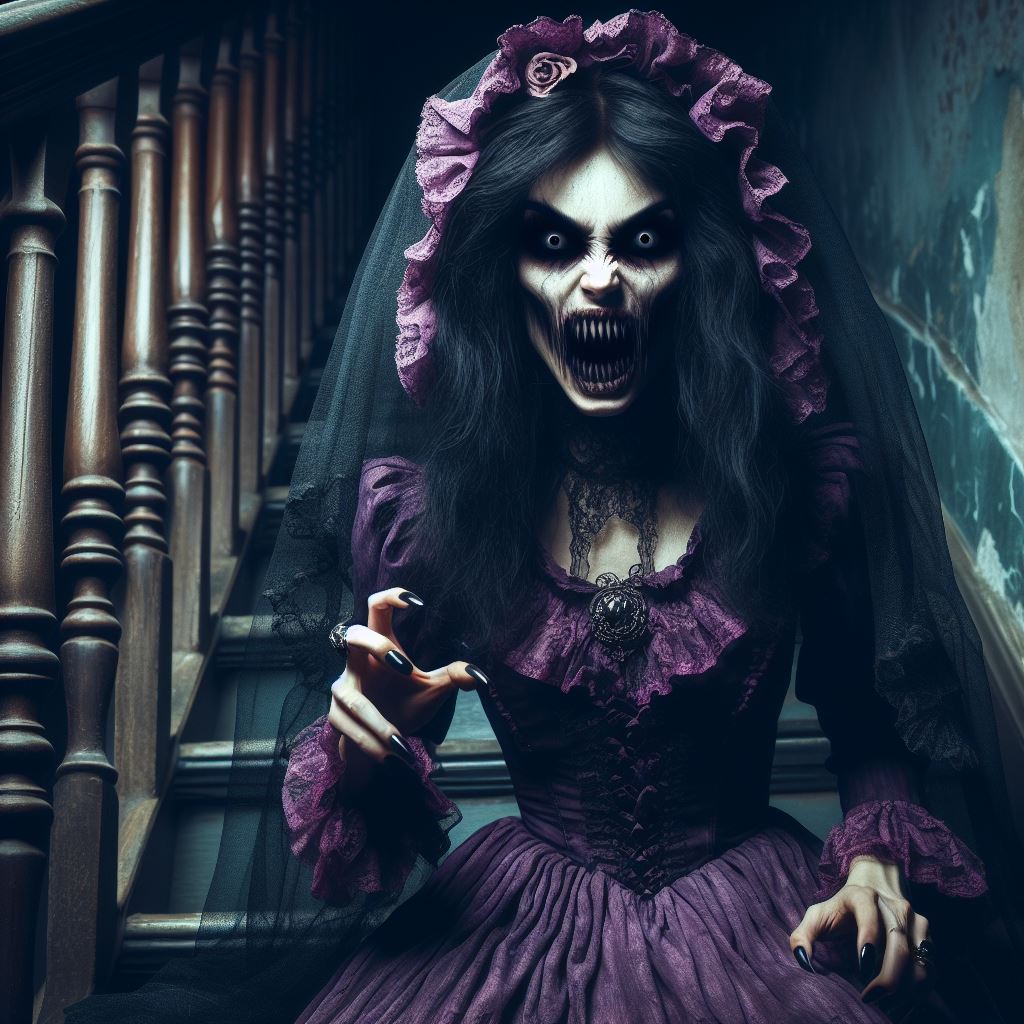
In the night I have a very vivid dream that old, withered crone-like hands with long fingernails were pawing at my chest in the bed. I fought against these hands and cried out for them to go away and for Ed to help me. I managed to wake myself up and I was in a cold sweat. Ed also stirred and I asked if I could put the lamp on for a time so I could calm myself and sleep again. I glanced at the bedside alarm and it was around 2:20am. That sent a shiver down my spine, as it was at a similar time to the eerie cry I had heard the night before.
(Image: Night Hag. Bing AI generated)
It took some time, but I eventually fell asleep and caught some rest. But the next morning I was very pleased to be leaving that cottage once and for all. It’s funny how a place that feels so warm and welcoming during the day can take on an entirely different character in the dead of night. I looked forward to a night in my own peaceful bed again.
Leaving the Cottage with Unanswered Questions
Ed and I every so often would try to come up with different explanations for what I experienced. Was it a hypnagogic hallucination, where I hallucinated the sound of a man crying out as I was falling asleep? I feel that I was still pretty wide awake when it happened, however, having only just switched the light out and settled back into bed. None of the sounds of the building or local area seemed to fit with this sound either.
The withered hand dream, although also frightening, is a bit more explainable. I do suffer on and off with sleep paralysis. Sleep paralysis is a state, during waking up or falling asleep, in which a person is conscious but in a complete state of full-body paralysis. It is common during sleep paralysis for people to have very frightening vivid hallucinations and feelings of an ominous presence. My sleep paralysis usually presents as a vivid hallucination of a dark, ominous figure in my room, approaching the bed. Sometimes it has red eyes, sometimes not. One common hallucination that has seeped into folklore is the belief in the “Old Hag” who sits on the sleeper’s chest and suffocates them. This is believed to be where the term ‘hag-ridden’, to be afflicted by nightmares or anxieties, stems from. I’ve never had a dream of crone-like hands before, so it did unnerve me due to its difference. Was I visited by the “Old Hag” of sleep paralysis that night, or was it something more supernatural within those walls grasping for me in the night?
For now, the cottage holds onto its secrets, and I’m left with a chill that has nothing to do with the cool night air. I can’t help but wonder about the stories those old walls could tell. Maybe that night, I got a small glimpse into one of them.
Last weekend myself and my husband embarked on an exciting adventure into the realms of the paranormal at ParaMeet South 2024. Held at the historic Leigh Park Hotel in Wiltshire, this weekend event delivered a fascinating lineup of talks, encounters, and esoteric discoveries.
Myself on the left (Ghost Catcher Isles), my husband (centre), and Emma Heard on the right (Weird Wiltshire) with the Haunted Magazine guys
The event was organised by the folks behind HAPRC (Haunted Antiques and Paranormal Research Centre) from Hinckley, Leicestershire, and was part of a series of GPN (Ghost Planet Network) ParaMeet events taking place in different venues in the North, Midlands, and South of England.
This was a two-day event offering both weekend passes and day tickets and I opted on this occasion to attend on the Saturday only so I could sample the event.
The Venue: Leigh Park Hotel in Bradford-on-Avon, Wiltshire
Nestled in the picturesque town of Bradford on Avon, just a stone’s throw away from Bath, the Leigh Park Country House Hotel & Vineyard beckons with a warm embrace to all who seek refuge within its historic walls. Surrounded by five acres of landscaped gardens that overlook the beautiful Wiltshire Downs, this classical Georgian country house hotel exudes charm and character. The original house here was gifted to Elizabeth I by the Earl of Leicester in 1571. Since then, it has been used as a private home, a hospital, and now a luxury hotel. From the moment you step through its doors, you’re enveloped in an atmosphere where hospitality and history intertwine, promising an unforgettable experience: the perfect venue for exploring a day of action-packed paranormal events.
The Day’s Highlights
Emma Heard (Weird Wiltshire Blog)
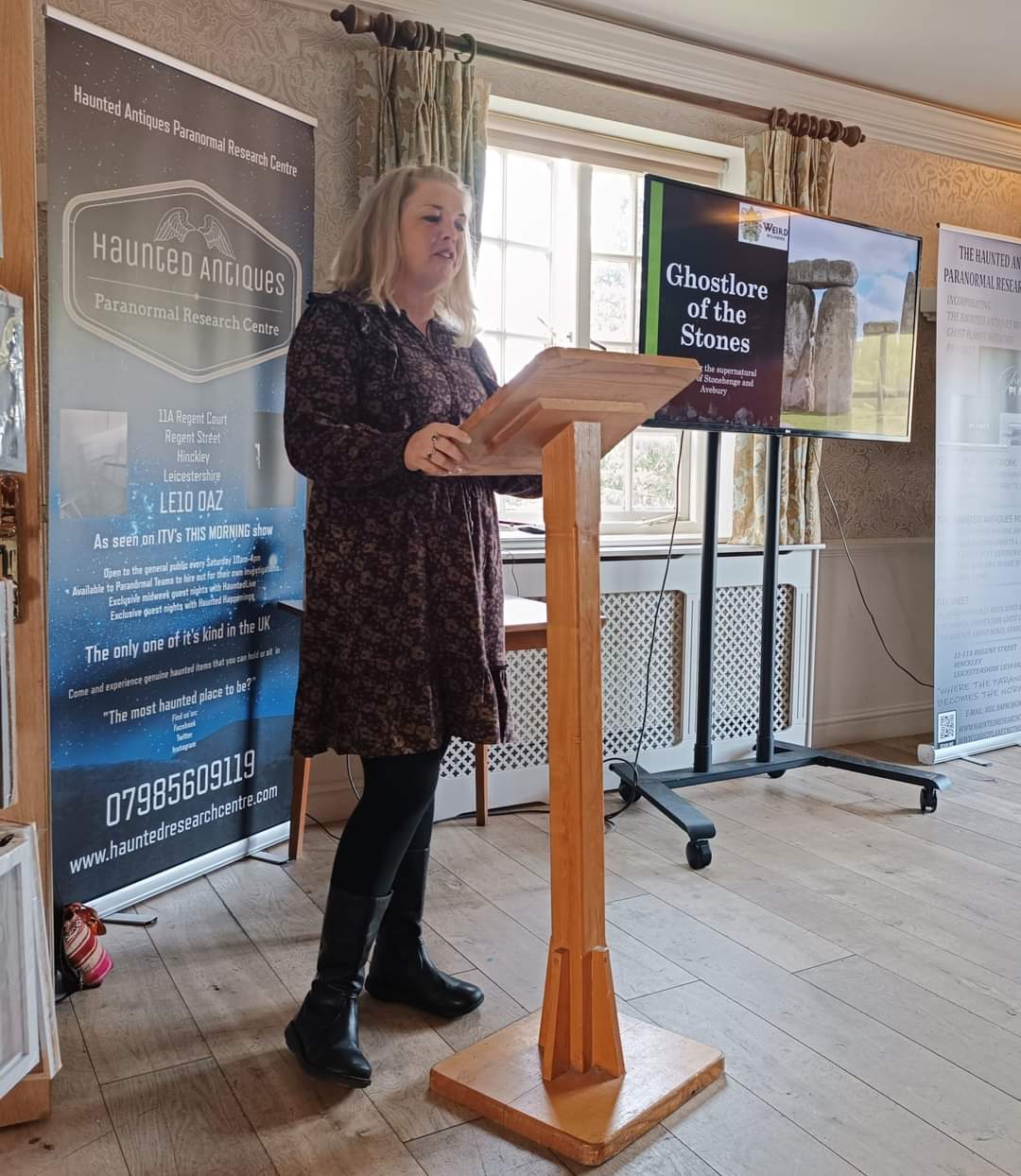
Following a welcome from the organisers, our day commenced with a captivating presentation by my chum Emma Heard, known for her insightful musings on the supernatural through her Weird Wiltshire blog. Emma delved into the mysteries surrounding Stonehenge and Avebury stone circles, weaving tales of ancient folklore and eerie encounters that left us spellbound.
Throughout the day, we were treated to a variety of talks, each offering a unique perspective on the paranormal. Barrie John, renowned for his appearances on ‘Most Haunted’, illuminated the audience with insights into mediumship, while Rachel Hayward, a seasoned paranormal investigator, and consultant, shared her intriguing research on a lesser-known Forest of Dean witch, Ellen Hayward.
Historian and writer Neil R. Storey
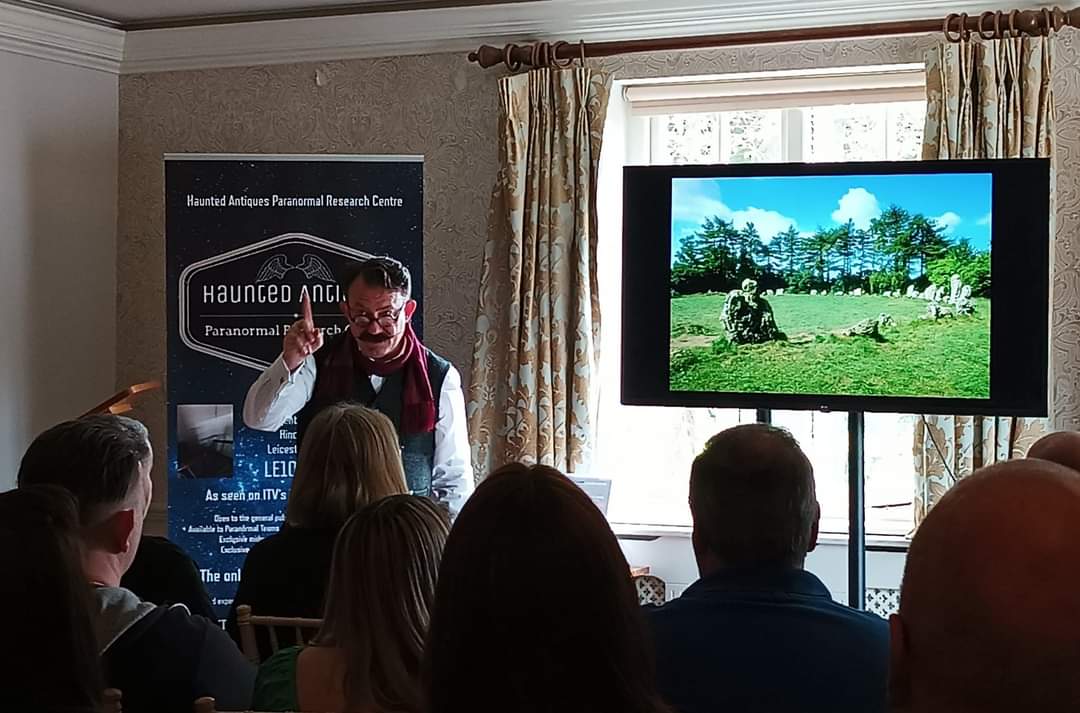
One highlight of the event for me was a presentation by Neil R. Storey, a distinguished historian and writer, whose discussion on an unsolved 1940s Warwickshire witch persecution-related murder from his book “The Blackout Murders” provided a chilling glimpse into a dark chapter of history.
Amidst the enlightening talks, we took the opportunity to peruse the stalls adorned with esoteric treasures. From cool ghost gear to arcane artifacts, every vendor had something that made you think, “Hmm, maybe there’s more to this world than meets the eye.” It was here that we had the pleasure of geeking out with the Haunted Magazine crew, chatting about all things spooky and supernatural.
Haunted Items from HAPRC
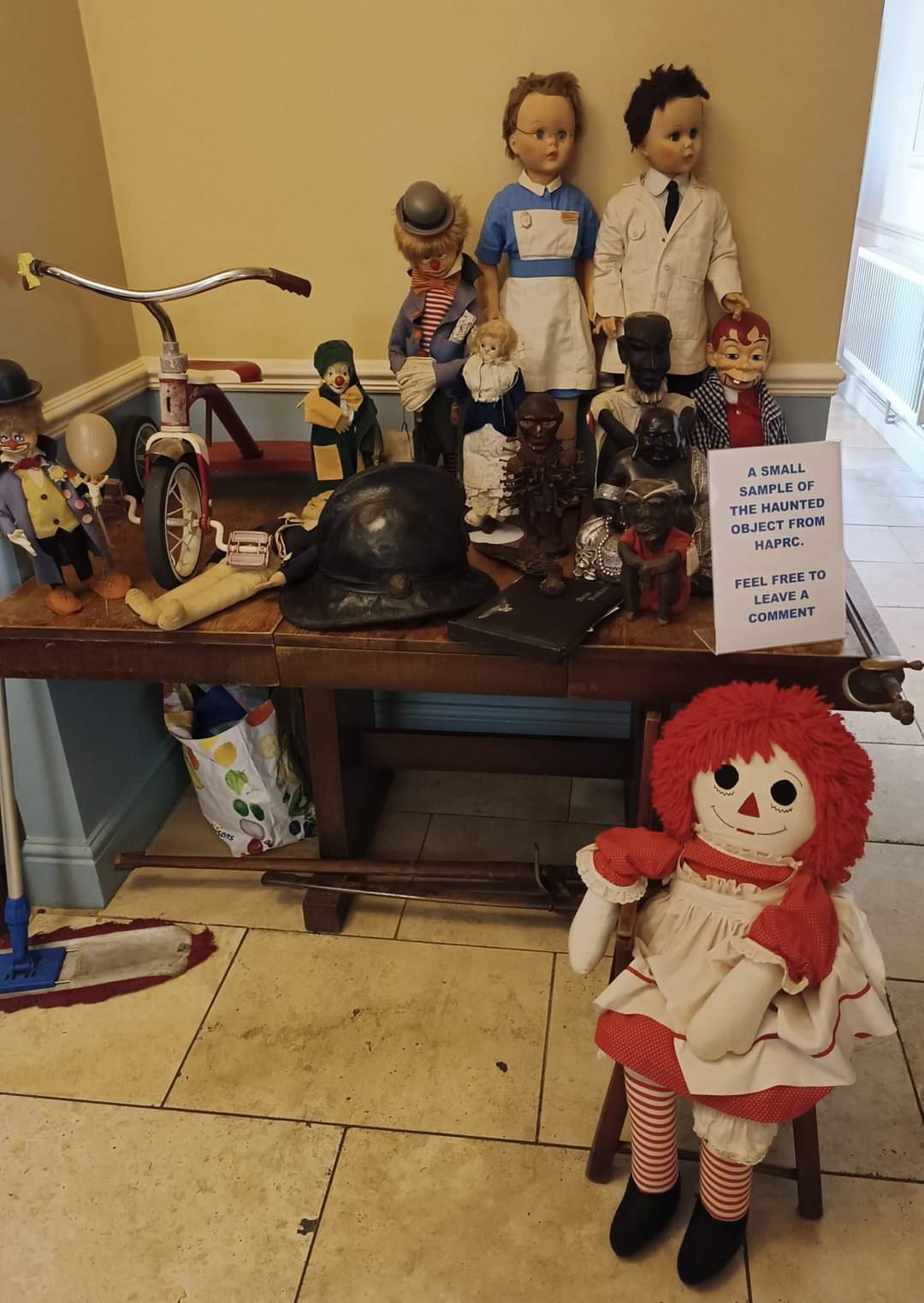
Also on offer throughout the day were ghost hunt experiences in a haunted room, past life regression sessions, Tarot readings, and mediumship readings. We could also check out a selection of haunted objects from HAPRC, including some extremely creepy dolls.
Although we regrettably couldn’t stay for the evening events, our day at ParaMeet South was nothing short of exhilarating. The friendly atmosphere among fellow attendees, the wealth of knowledge shared by the excellent team of speakers, and the allure of the paranormal made for an unforgettable experience.
In Shooter’s Hill, London, a once-grand residence named Veremont House held a dark and haunting secret. The house was believed to be the dwelling place of a vengeful female ghost, and even the renowned paranormal investigator Elliot O’Donnell had an unsettling encounter with the apparition. The tale dates back to the late 1800s and revolves around the tragic love story of Bertha Rungate and her ill-fated suitor, Philip.
(Creepy Victorian city house. Image Source: Bing AI)
The Unrequited Love
Bertha lived with her widowed mother in Veremont House. Her late father had been a City merchant and she was their only child. Bertha was doted on by her mother but was known as a selfish and wilful child to others. Mrs Rungate wanted Bertha to become educated and at the age of sixteen, she began engaging governesses to teach her. However, Bertha one by one drove each successive governess away with her behaviour. She much preferred promenading in the latest fashions and making eyes at handsome young men to studying with her governesses.
Few governesses lasted longer than 6 weeks. However, this changed when Jane Ducrot was finally appointed. Bertha and she quickly formed a close bond and the two were often seen walking in the park together when they were not in their lessons together.
After around six months of Jane Ducrot as governess, news came that there would be a family visitor. Bertha’s cousin Philip Rungate was planning a visit. Bertha’s mother was delighted as she saw this as an opportunity to bring Philip and Bertha together romantically with a view to marriage. Bertha was also very excited and showed her governess affectionate letters she had received from Philip.
Once Philip arrived at Veremont House it was clear that it was now Jane Ducrot who had caught his eye, no longer Bertha. Bertha and her mother were dismayed and set about covertly watching Philip and Jane. Bertha soon managed to surprise Philip and her governess in the summer house meeting clandestinely and some days later she finally caught them kissing, This sent Bertha into a rage and Jane Ducrot was summoned to see Mrs Rungate and given her two weeks’ notice.
(Victorian lovers. Image Source: Bing AI)
The day before Jane Ducrot was due to leave Veremont House, Bertha once again caught the two lovers together canoodling in the summer house. Bertha was advised by her mother not to confront them further, as Ducrot would be leaving for good the next day. However, later that day Philip announced he too would be returning him the following day, ending his stay with them.
Bertha Rungate was a woman consumed by unrequited love for Philip, who, much to her dismay, was enamoured with none other than Bertha’s own governess. Overwhelmed by jealousy and driven to a fevered fit, Bertha committed a heinous act that would shroud Veremont House in a sinister aura for years to come.
A Murderous Act
Bertha suspected that Philip had decided to leave to join his lover, Jane. That evening, Philip was seen by a servant going into the back garden, with Bertha following him shortly after. Around an hour and a half later, she was seen to return alone, looking pale and agitated. Philip did not return that night, did not come for his breakfast the next morning, and was never seen again. It is thought that in a moment of jealousy that bordered on madness, Bertha murdered Philip and concealed his lifeless body, some say in the basement and others in an abandoned well. Those who asked about the whereabouts of Philip were told of his love affair with Jane Ducrot and it was explained away that he had run away to be with her.
However, the walls of Veremont House would soon bear witness to the anguished echoes of Bertha’s desperate attempt to win the affection of her beloved.
A Ghostly Apparition
Following her own death, Bertha’s spirit was unable to find rest. Witnesses claimed to have encountered her ghost, and paranormal investigator Elliot O’Donnell himself shared a chilling account of his encounter in ‘The Midnight Hearse and More Ghosts’: “Down, down, down it came, until at last I could see it – a white, evil face surmounted by a mass of black hair. The eyes were the most alarming feature – large, dark, very lurid, very sinister – and they were fixed on mine with a mocking leer.”
(Bertha’s Ghost. Image Source: Bing AI)
O’Donnell’s Fateful Encounter
O’Donnell stayed one night in Veremont House where he had his eerie encounter with the apparition on the upper floor landing. He further detailed how Bertha’s spirit led him past the summer house to the very spot where she had disposed of Philip’s body in an abandoned and hidden well. The paranormal investigator described the malevolent presence, and the ghostly figure seemed to mock him with a disdainful gaze. The apparition’s dark eyes held the secrets of the tragic love story that had unfolded within the walls of Veremont House.
Rest in Peace
The tale took a turn when Philip’s remains were discovered, removed from the property, and granted a Christian burial. Strangely, once the departed lover was given a peaceful resting place, all sightings of Bertha’s ghost ceased. The once-haunted Veremont House regained a sense of calm as if the restless spirit had finally found solace in the resolution of the tragic love affair.
Veremont House, with its vanished suitor and the ghostly presence of Bertha Rungate, stands as a testament to the enduring power of love, jealousy, and the unresolved mysteries that may linger in old buildings. The tale of the angry female ghost of Shooter’s Hill is a haunting reminder of the tumultuous emotions that can transcend the boundaries between life and death, leaving an indelible mark on the places we call home.
Glastonbury, a town steeped in mysticism and ancient folklore, served as the backdrop for a recent winter expedition that united bloggers, podcasters, and fans of the paranormal. Our journey began at the venerable George and Pilgrim pub, an atmospheric establishment echoing with centuries of history.
George and Pilgrim Pub: An Eerie Prelude
Nestled in the heart of Glastonbury, the George and Pilgrim pub proved to be the ideal starting point for our supernatural escapade.
The George and Pilgrim pub is one of the best surviving pre-reformation inns in England, one that has provided food, drink, and accommodation to pilgrims and visitors to Glastonbury for centuries. Its exact age is unknown, but it is known to have been rebuilt by Abbot Selwood in around 1455 when he oversaw an expansion of the abbey. The building itself comprises three stone storeys with a façade that resembles a small castle with battlements. There are three panels over the front entrance. Two of these contain the coat of arms of the abbey and King Edward IV while the third is blank. This possibly contained the white rose of York and was tactfully removed when King Henry VII came to the throne. The inn was built to accommodate wealthy pilgrims visiting the nearby abbey. The pub is also linked to the abbey by an underground tunnel that begins in the cellar and leads to a point within the abbey walls. It is thought that pilgrims could have used the tunnel to gain secret access to the abbey. Parts of the interior still have the original oak beam ceiling and stone slab flooring. Early carvings, figurines, and statues are still in place in the bar area. The interior is full of historical character, from its beamed ceilings, dark oak furniture, and huge fireplace.
As we convened, exchanging greetings, the air buzzed with anticipation. The pub, with its creaking floorboards and shadowy corners, set the stage for a day filled with eerie adventures.
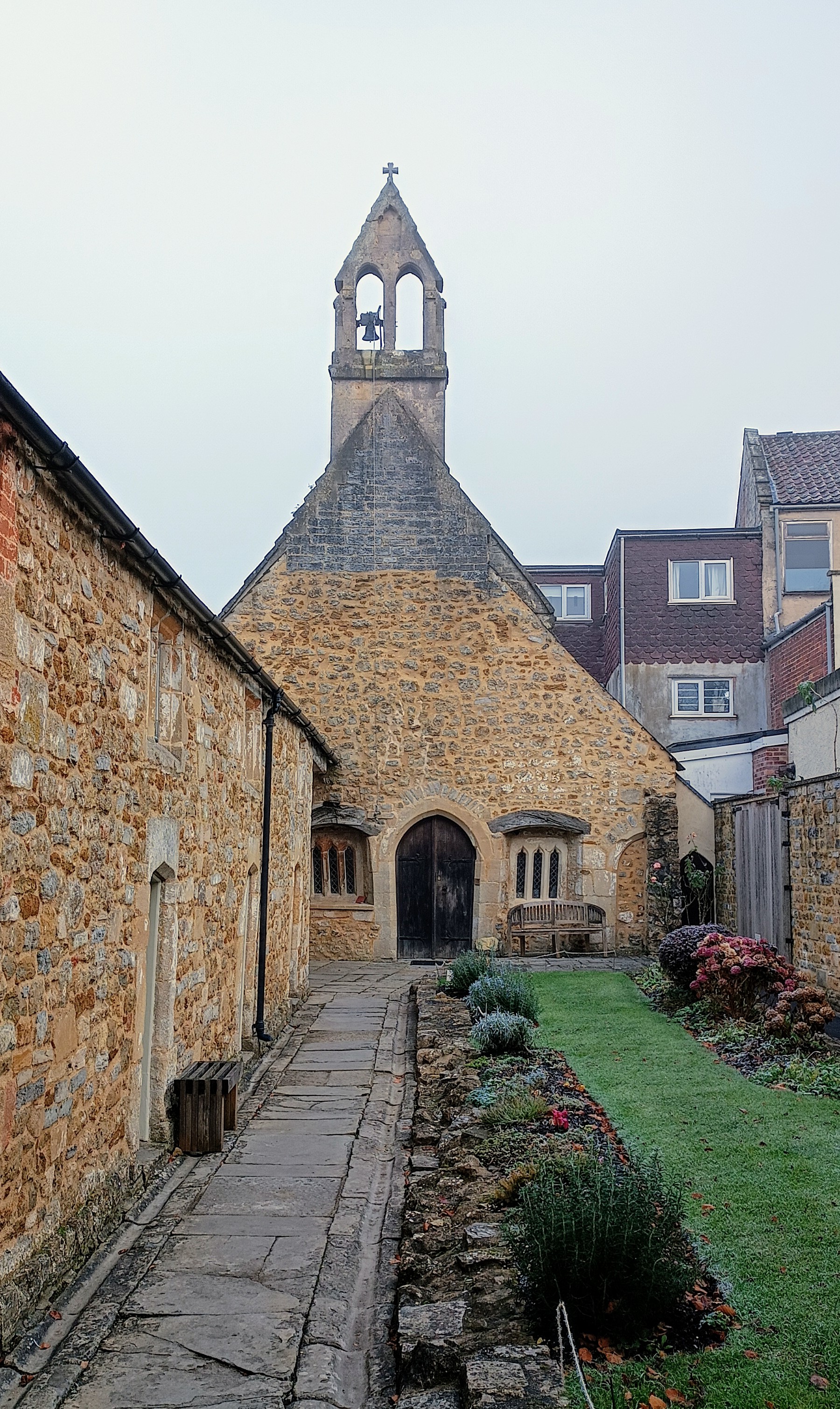
Our first destination to beckon us was St Margaret’s Chapel, a hidden gem of Glastonbury, a retreat away from the bustle of Magdalene Street. This sacred space exuded an otherworldly energy of peace and tranquillity. Built around 1250-70 and founded by Abbot Michael, it was first established as a pilgrim hospital with a chapel at the east end. At this time, it was known as the Hospital of St Mary Magdalene. Tired and hungry pilgrims were fed, washed, and accommodated here while visiting the abbey to view its shrines and relics. It was originally a long infirmary hall with cubicles on either side. The chapel was dedicated to St Margaret who was a Scottish Queen and Saxon princess. The chapel itself has a barrel roof and a now fully restored bell-cote.
By the early 15th Century, the large hall was replaced with two rows of alms-houses used for accommodating aging, poor parishioners. These were in use until the 1950s when one row was finally demolished. The site was rescued by the Quest Community and the Mary and Margaret Charity, who restored it and now care for it.
Here we explored the chapel with its glittering icons and spent some time in quiet contemplation in the gardens before moving on to the next destination on our journey.
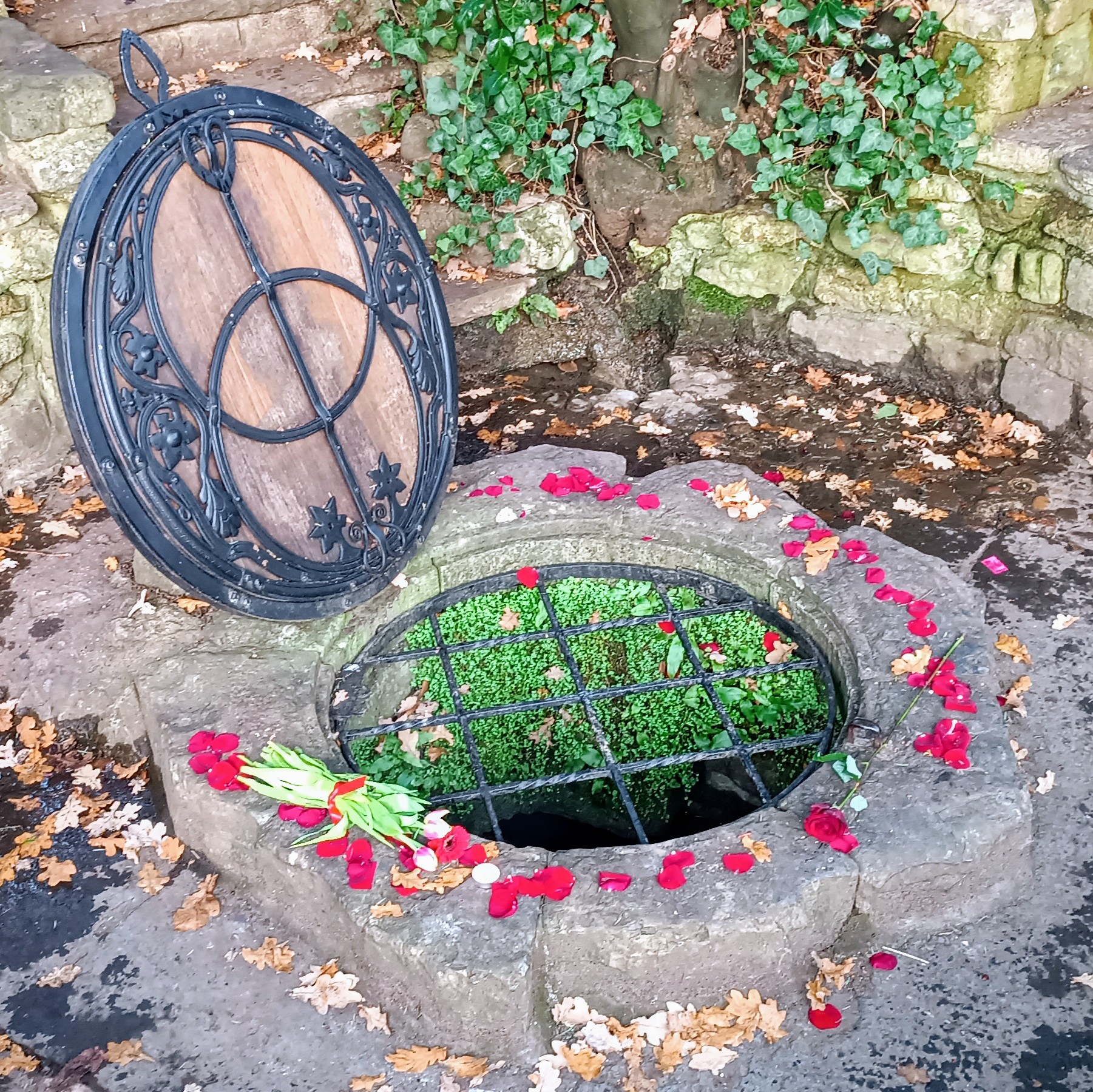
A pilgrimage to Glastonbury wouldn’t be complete without a visit to the Chalice Well, a site brimming with symbolism and ancient charm.
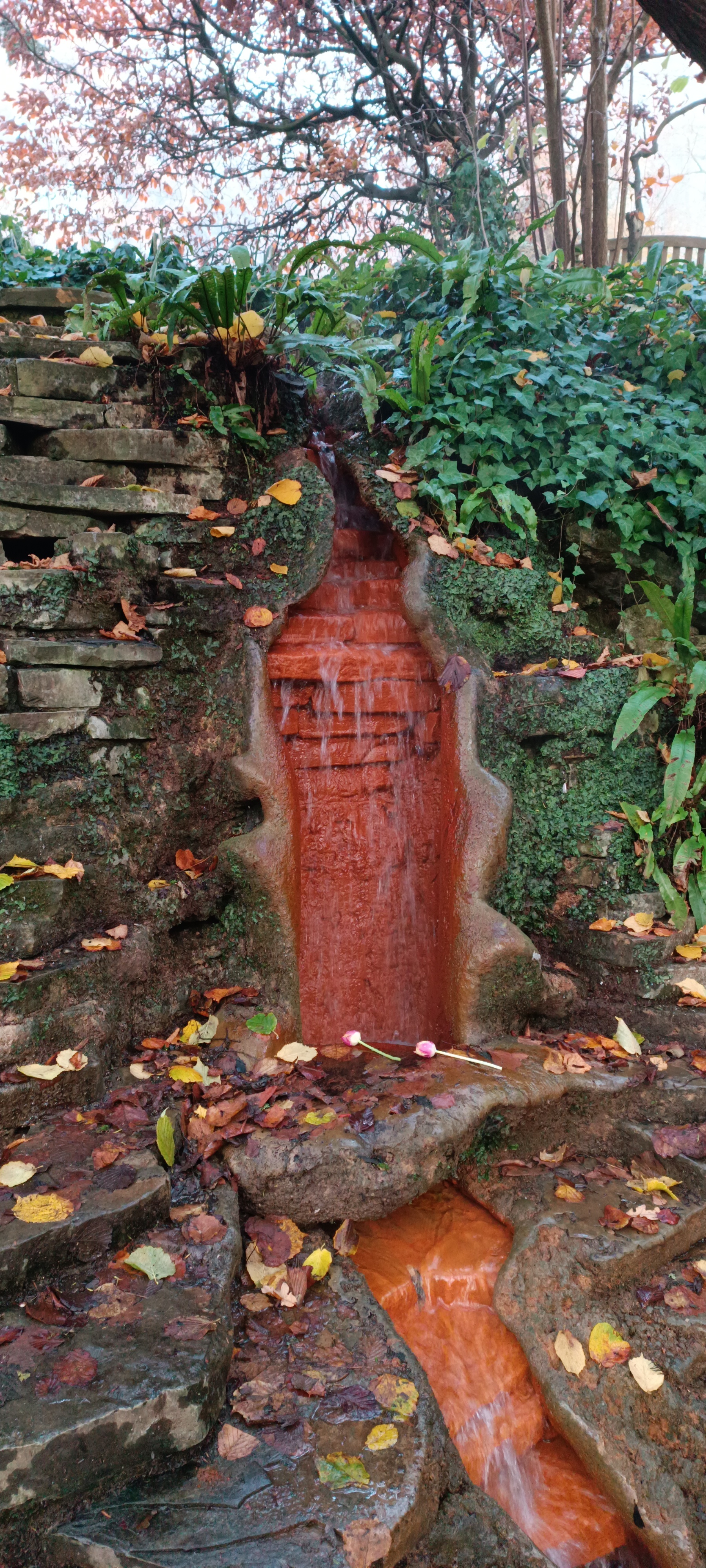
The Chalice Well, lying sheltered between Chalice Hill and the Tor, is an area of gardens arranged around a series of fountains and water features. It was the main supply of fresh water in Glastonbury until the 19th Century and 25,000 gallons of water flow there every day. This holy well is also known as the “Red Spring” or “Blood Spring” due to the red iron deposits the water leaves on everything it touches.
The site is ancient, with a 1961 excavation bringing up Roman pottery and flint. The stump of a yew tree dated to the Roman period was even found in the deep excavation. Yews still grow at the Chalice Well today and have a strong association with the ancient Druids and also Christian churchyard.
Legend has it that Joseph of Arimathea and his followers settled nearby and built the first Christian shrine in Britain and that the earliest baptisms were conducted in the spring. It is said that Joseph brought the chalice or cup used by Jesus in the Last Supper and either buried or washed the cup at the site, causing the water representing the blood of Christ to spring forth from the ground. Due to this, the Chalice Well is linked to the quest for the Holy Grail.
The Chalice Well has also been associated with healing waters for several centuries. In 1582 Dr John Dee declared he had discovered the ‘Elixir Vitae’ at the well and declared the water had healing properties. By the 18th Century, it became fashionable for people to visit the take the waters, with visitors flocking to the well to be healed. In 1750 a man from North Wootton claimed he had had a dream which told him to drink the water on seven consecutive Sundays to cure his asthma. He did this and proclaimed that he had “recovered of his disorder”. By 1751 tens of thousands of visitors came to take the waters, many of whom made sworn testimonies stating they had been cured of all manner of things, including blindness, ulcers, deafness, and scrofula.
Today the Lion’s Head drinking fountain is the only place in the gardens where the iron-rich water is safe to drink. The Chalice Well is now a place of quiet contemplation, peace, and calm, where visitors can revive their spirits and be soothed by nature. My husband and I filled our water bottle here, so we could drink the healing, iron-rich water later.
On Wellhouse Lane outside Chalice Well, leading up to the Tor, there is also a tap where travellers can fill their bottles when the gardens are closed. Directly opposite this lies the White Spring, from which calcium-rich waters flow, which we didn’t visit on this occasion.
The healing waters and vibrant gardens provided a tranquil respite, allowing our group to reflect on the mystical threads connecting Glastonbury’s past and present.
Glastonbury Tor: A Beacon of Mystery
Due to the inclement icy weather, myself and a number of our group decided to forgo climbing up the iconic Glastonbury Tor, preferring to view from a distance from the Chalice Well below. However, two brave members of our group continued their exploration, climbing through the mist and ice to the summit.
The Tor is a towering hill with panoramic views, it is shrouded in legend, rumoured to be the mythical Avalon. The mists rolling off the Levels left only the tower visible, pointing like a beacon towards the heavens; imposing and darkly powerful. The climb to the summit is approximately 158m above sea level, the sides are precipitous, and on a clear day, climbers can see for miles.
In early times the whole area here used to be a wetland and archaeology shows that the early inhabitants of the area built communities on hills or manmade structures, such as at the Lake Villages of Godney and Mere. Therefore, before the Levels were drained, Glastonbury Tor would have been a wetland island, perhaps leading to the myth of the Isle of Avalon. In prehistoric times it certainly would have been a landmark for local inhabitants and travellers.
Archaeological excavation indicates that the site has been inhabited since at least the 6th Century. Pottery and metalwork have been found there indicating the presence of a people of possible importance such as a monastic community. This may have been a sacred place long before Christianity, used by Bronze Age people and perhaps the Celts. The positioning of the Chalice Well and the Tor fits with a Celtic format, perhaps a place of pagan religious importance, later taken over by Christians.
A Norman chapel was built to St Michael on the summit, but destroyed by an earthquake in 1275. It was rebuilt 50 years later and in the 15th Century a tower was added, which remains today as a romantic, lonely ruin.
The Tor is associated with several myths and legends. There is thought to be a cave deep within the Tor, which is said to be a portal into the Otherworld which the Welsh mythological Lord of the Otherworld (Annwn) uses to transport spirits. It is said that on All Hallows Eve, the Lord of the Otherworld rides out from the cave on dark steeds for the Wild Hunt; collecting souls. He is followed by the hounds of hell, Cwn Annwn. The myth remains strong as in 2005 in the early hours of the morning, locals said that a charge of demonic horses could be heard galloping through the town. Four locals stated that they saw riderless black horses thundering up Bere Lane, along Chilkwell Street, and then disappearing in the direction of the Tor. They were lucky to keep their souls, in that case!
There is also a story relating to St Collen and his experience of the Tor. The saint visited Glastonbury but shortly after had a falling out with the local monks. He left for the Tor and made a cell in a quiet spot near the spring at the bottom. Here he is said to have had a vision of the Lord of the Otherworld, also believed to be King of the Fair Folk (fairies), Gwyn ap Nudd. His vision included scenes of revelry at the fairy castle, a fine feast, and music. St Collen sprinkled holy water and the vision vanished, leaving him alone on the Tor summit. Locals say that if the summit of the Tor is covered in mist, Gwyn ap Nudd is holding high revelry there. The members of our group climbed the misty Tor, but as far as I know, were not transported to the Fairy Realm on this occasion.
Return to the Haunted Haven: the George and Pilgrim Pub
After our day of exploring some of the sights of Glastonbury, we reconvened back at the George and Pilgrim pub for dinner and drinks in its atmospheric setting. We spent the evening sharing stories and bonding over our shared interests.
As night fell, many of us chose to brave the haunted rooms of the George and Pilgrim, welcoming the prospect of nighttime encounters with the unknown.
The George and Pilgrim pub has a reputation as one of the most haunted hotels in England. A man in 17th-century clothing is said to walk through the bar, to then disappear. In the Small Bar guests have heard a violent argument in process, only to discover on investigation that there is nobody there.
The bedrooms on the upper floors are said to be haunted by a variety of spirits. Footsteps have been heard moving along the empty corridors and cigar smoke has been smelled by occupants in certain rooms in the early hours. Chambermaids have reported that taps have been turned on, bed covers disordered, and furniture moved by unseen hands.
In one room the spirit of a monk was seen by a lady who awoke in the night. She felt the bed sink as the monk sat on the bed, where he stayed for several minutes talking about the time of Queen Elizabeth I, before fading away. Local legend has it that a monk once completed suicide in that very room.
A married couple once stayed in another room and reported that the wife was woken in the night by footsteps approaching the bedroom door. She looked to see a glimmering light with a tall, thin man in a sports jacket standing at the door. As she went to leap out of bed in fright, he smiled and disappeared.
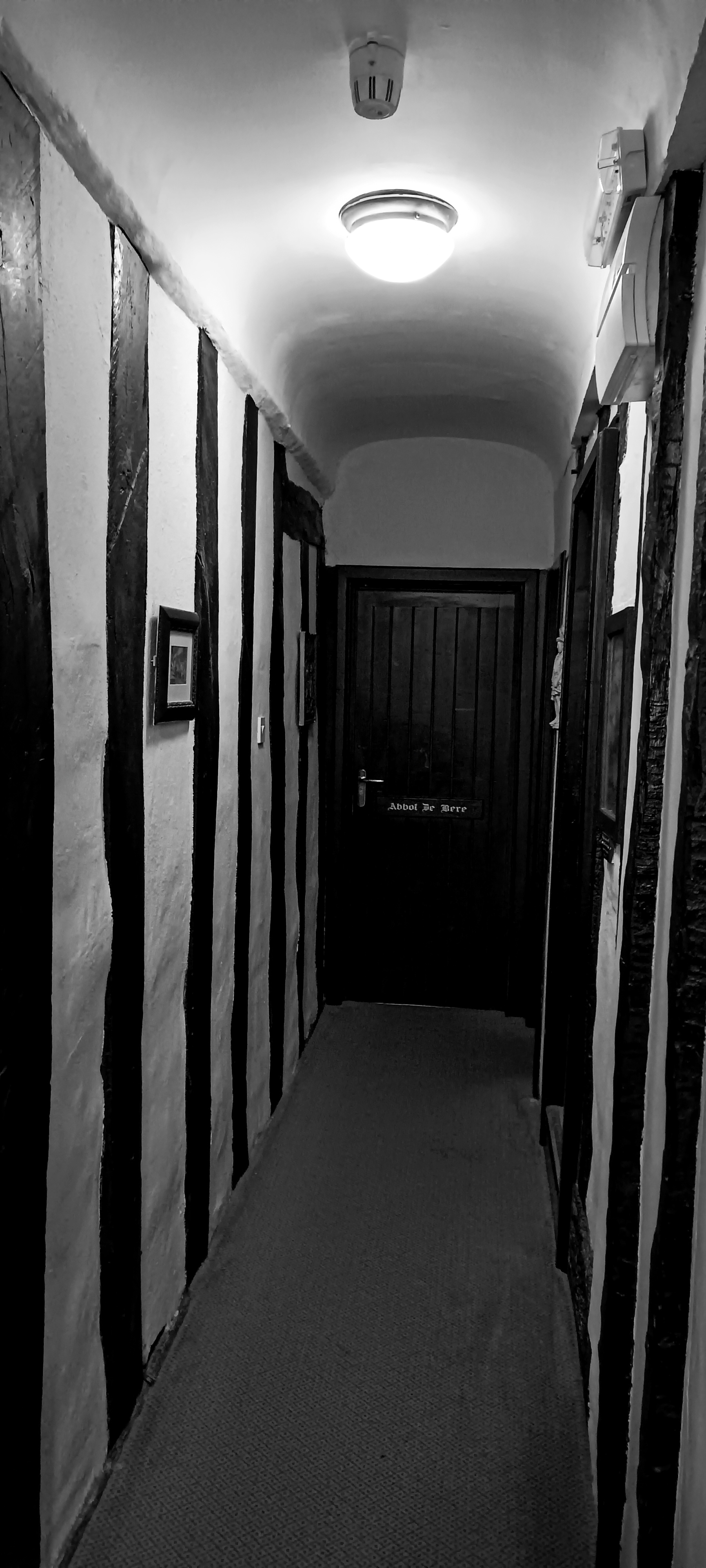
The group decided to meet up in one of the rooms, ‘Abbot Richard Bere’ room, to see if anything spooky could be felt. Abbot Bere was Abbot of Glastonbury between 1493-1524. He began much building on Glastonbury Abbey, from the chapels to the crypts, and also rebuilt the tribunal in around 1500. Although the room was very atmospheric, with its old-fashioned four-poster bed, we did not feel anything unusual in this room.
Several of us retired to bed, but a small group of us including myself peeled off and spent some time in another of the bedrooms. Here we turned out the lights and called out for any spirits to show themselves. We heard some small tapping sounds, but on investigation, these sounds were found to be the radiators heating up.
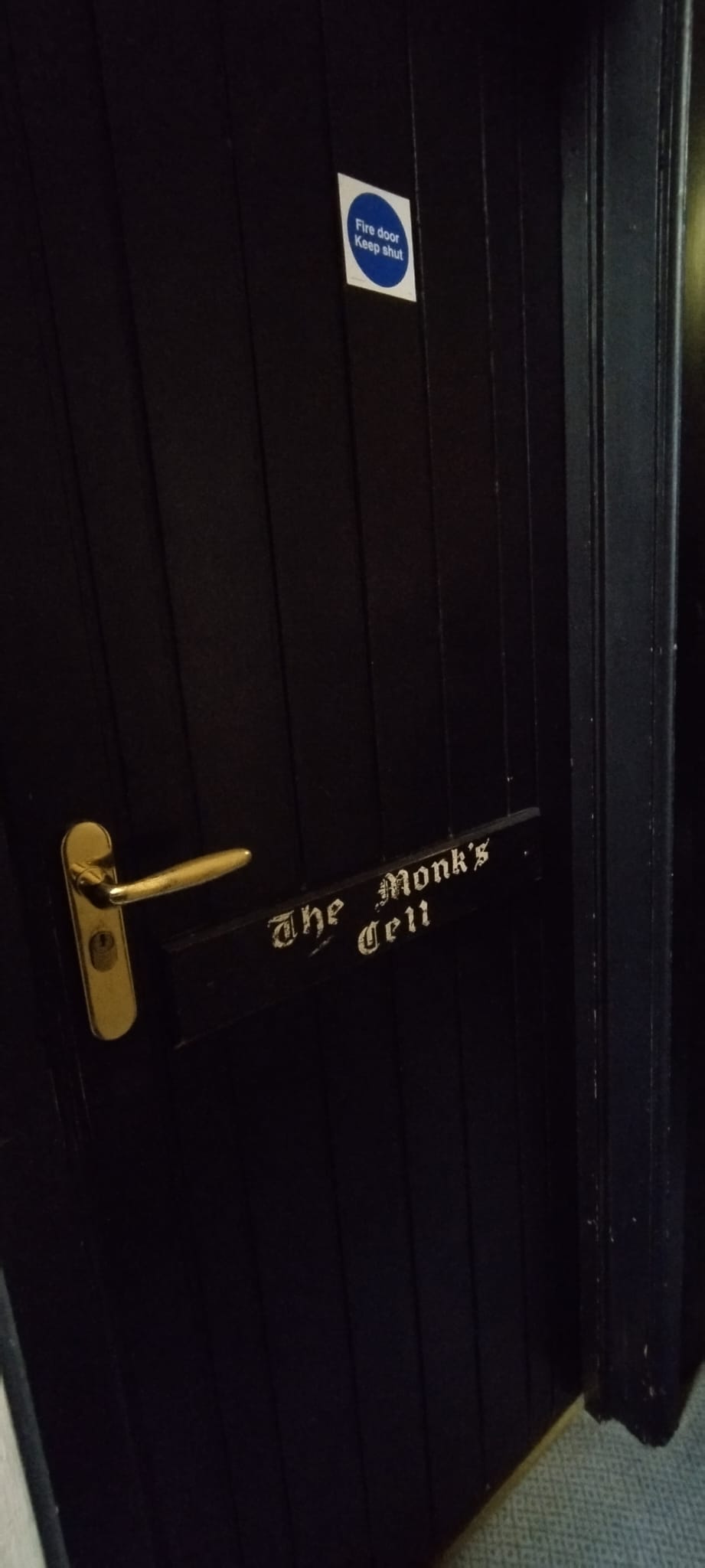
Finally, we called it a night and my husband and I retired to our room, ‘The Monk’s Cell’. This room is believed to be where the Abbot Whiting and his two monks were held on the morning of their execution. Abbot Whiting had been charged by King Henry VIII with robbery at the Bishop’s Palace in Wells after the dissolution of the monasteries. He was found guilty and attached to a hurdle, dragged through town, and eventually was hanged up on Glastonbury Tor alongside two of his monks John Thorne and Roger Wilfred. Whiting was then drawn and quartered and his head hung over the Abbey gateway.
The room had an eerie feel to it, this may just have been due to suggestion because of its old-fashioned style and slightly off-kilter proportions. I slept quite poorly that night, having weird dreams, but this once again may be due to the priming of being in a ‘possibly haunted’ room. My husband slept quite well though.
The next morning, however, provided some spooky hijinks. In the breakfast room, we were entertained by the light-hearted staff as we ate our breakfasts. Several times we noted that breakfast menus fell off the tables, perhaps pushed by spectral hands. Or, just as likely, gravity, of course. The staff claimed that this was the hotel poltergeist, ‘Arkwright’, who caused all kinds of mischief in the kitchen and breakfast room.
A Parting of Ways
Our sojourn through Glastonbury transcended the ordinary, weaving together a collective tale of mystery, and folklore, and shared fascination with the paranormal. As we departed, the ancient energy of Glastonbury lingered, leaving an indelible mark on each of us and a treasury of memories and stories to share with kindred spirits.
Please check out some of my fellow Glastonbury explorers’ podcasts and writing:
Rahtz, P.A. and Watts, L. (2003). Glastonbury: Myth & Archaeology. Tempus Publishing, Limited.
Sedgwick, I. (2023). Glastonbury Tor: The Ancient Entrance to the Fairy Otherworld. [online] Icy Sedgwick. Available at: https://www.icysedgwick.com/glastonbury-tor/ [Accessed 31 Jan. 2024].
Shakeshaft, J. and Beckett-King , A. (2020). S3E51 – Xmas Special: Joseph of Arimathea in Glastonbury. [online] Loremen Podcast. Available at: http://www.loremenpodcast.com/episode-51-s3 [Accessed 31 Jan. 2024].
The Chalice Well Trust (2023). The Chalice Well (visitor’s leaflet).
The Mary & Margaret Charity (2023). St Margaret’s Chapel and Royal Magdalene Almshouses: A Hidden Gem in Glastonbury (visitor’s leaflet).
My step-uncle Gerald lived in the village of Hickling, nestled in the heart of the Norfolk Broadlands. He was one of the few remaining reed cutters, a job with a long, proud tradition in the area but sadly dying out as fewer people needed thatch for their homes.
It was back in the mid-1990s that my step-uncle spent his day on Hickling Broad, the local body of water, slicing through reeds as the sun dipped below the horizon. One evening, the air grew cold and he witnessed a spectral figure gliding across the Broad.
(Hicking Broad, Norfolk. Image Source: John Fielding)
Now, being Hickling born and bred and from a family whose ancestry here stretched back as far as the Norse settlers, Gerald realised in horror that he was witnessing a local legend recreating its ethereal journey across the Broad.
Local folklore has it that during the winter of 1815, shortly before the battle of Waterloo, a local drummer boy from Potter Heigham returned home on leave. While back he fell passionately in love with a local girl from a wealthy and influential family. The girl’s father, knowing the drummer boy was poor, refused to allow the relationship and any thought of marriage.
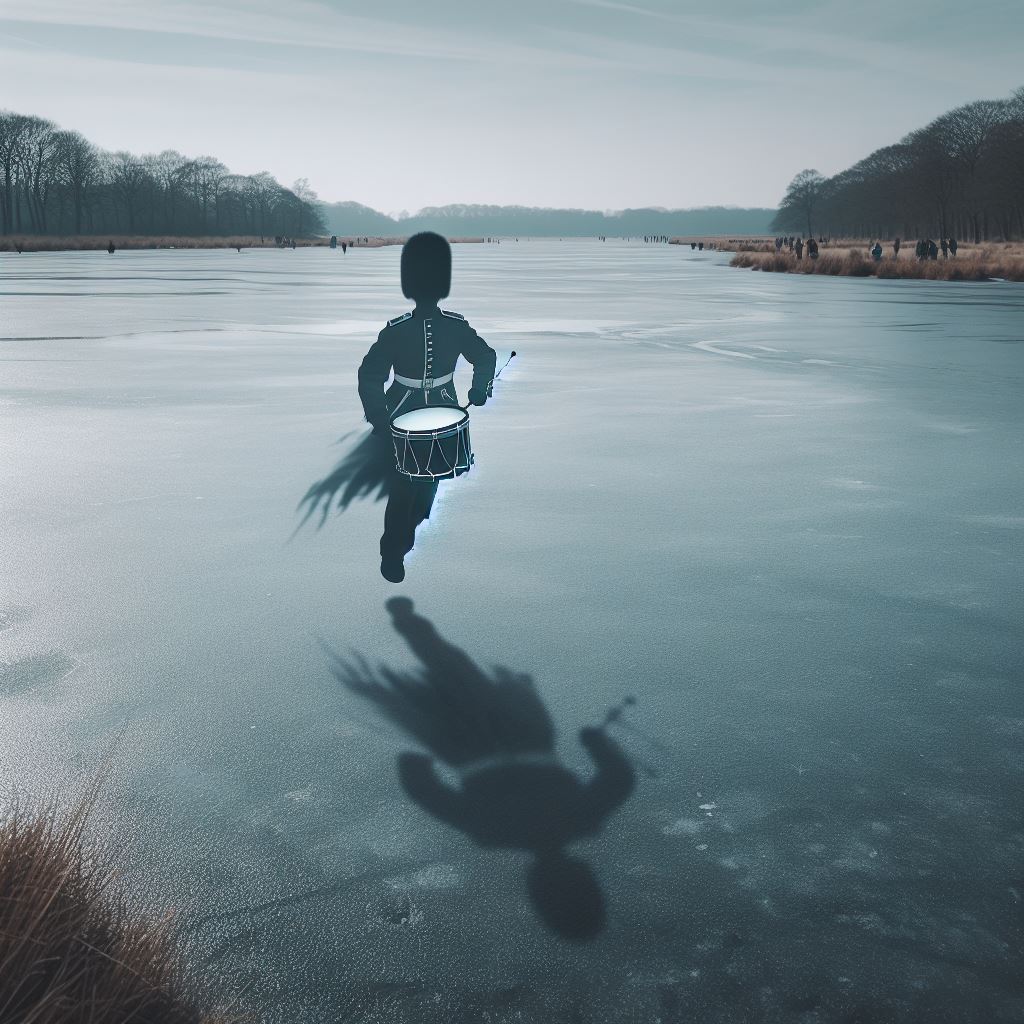
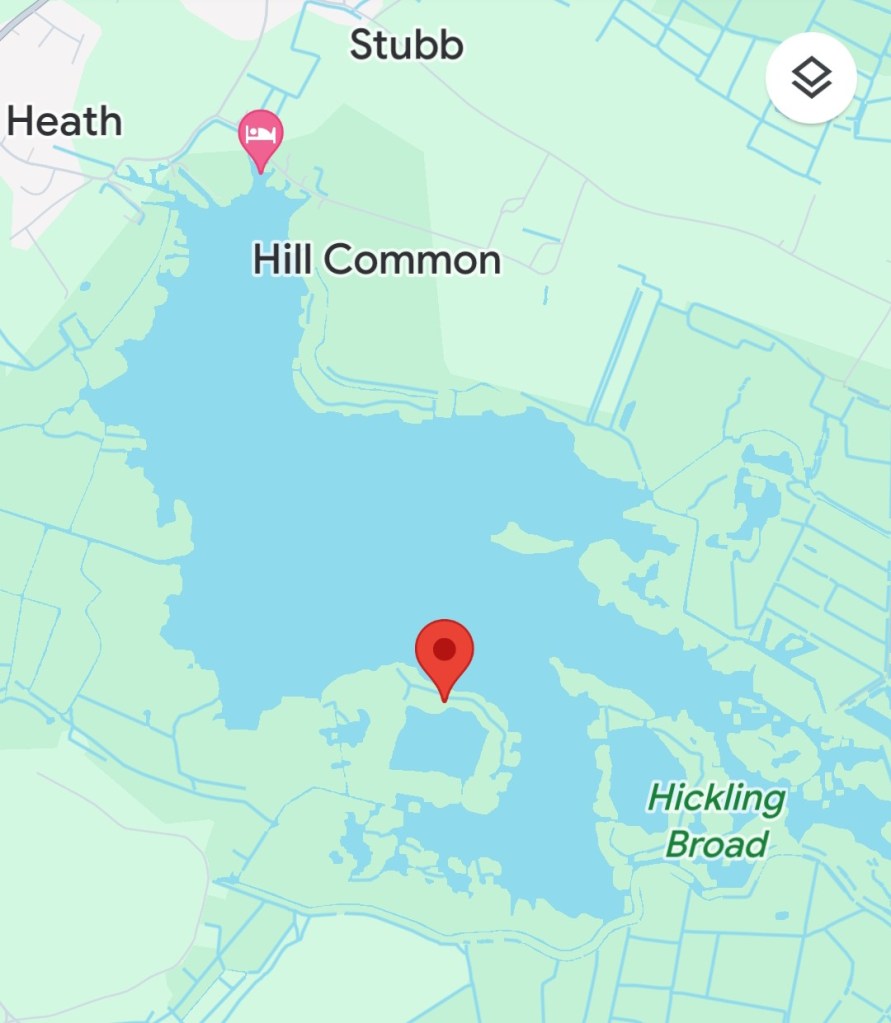
Undeterred by this, the star-crossed lovers continued to meet in secret every night in a little hut at Swim Coots on the edge of Hickling Broad. When the winter turned icy and the Broad froze over, the drummer boy skated over the ice, wearing his bright yellow scarlet trimmed coat, and would beat his kettle drum to signal his approach.
One frozen February evening the girl waited at Swim Coots as usual and listened out for the drum beat of her paramour. But this time the drum beat suddenly stopped and there was an eerie silence. The ice had cracked and the drummer boy had plunged through and drowned in the freezing waters of the Broad.
It is said that the girl rushed to the edge of the frozen Broad to find her lover and was relieved to see the shivering boy skating towards her. As she held out her hands to help him ashore, she felt his icy touch and the drummer boy disappeared.
The unfortunate drummer boy was not found for several days when a lifeless body was pulled from the Broad clad in a yellow coat with scarlet trim.
(Hickling Broad with Swim Coots marked. Image Source: Google Maps 2023)
Since then, it is said that on some cold winter nights in February, the eerie sound of a rhythmic drum tattoo and the swishing of skates can be heard, as the ghostly drummer boy tries to keep his date with his sweetheart.
After observing in shock the gliding figure, Gerald quickly downed his tools and fled back to the village where he decided to visit the Greyhound Inn for a stiff, nerve-settling drink. As Gerald recounted the haunting sight of the ghostly drummer boy to the sceptical pub patrons, the line between reality and spirits blurred. Was it the ethereal presence of the supernatural he witnessed, or a distorted vision fuelled by the spirits from his glass?
The locals in the pub dismissed his tale, attributing it to his well-known predilection for whisky. However, Gerald couldn’t shake the chilling memory, leaving him wondering if the haunting beats of the drummer boy would forever echo in his consciousness or fade away like the dissipating spirits in his empty whisky glass.
I’ve been interested in the paranormal since I was a child, even joining an amateur paranormal investigation team in Ireland for a year when I lived in Dublin, though remaining firmly in the ‘sceptic’ camp. The experiences I want to describe to you happened to my mother when I was around 13 years old and it is where my interest in the paranormal began.
My mum has worked as a care assistant and later in managerial roles in elderly people’s residential care homes in Norfolk for most of her adult life. She has had several unusual, creepy and unexplained experiences in several places, but the one that left its mark on her and me the most was in a care home in a busy touristic town on the Norfolk Broads. This care home was in a very old building that had once been part of a landed estate, and it comprised of gardens, a large house with multiple rooms and converted stables/sheds.
My mum worked as a relief assistant manager there for a period and part of the job required that she sleep over night. She had slept in different rooms in the main building before and had odd experiences; she had had her things moved and nightclothes folded and put on the bed on occasion and upon asking no staff had admitted to moving them. She said this room felt safe and friendly, like there was a friendly poltergeist there who wanted to be helpful. In one certain room, she had woken in the night to hear crying from the room above. Upon investigation, she was told that there was nobody in the room above. Although creepy, her experiences in these rooms did not leave her shaken and she was generally happy to sleep in them.
It was however, when my mum was required to sleep in the rooms in the converted stables/sheds that she had the experiences that left her shaken and scared. I remember seeing my mum when she returned from work the afternoon after her first night in that room and she looked awful. She looked exhausted and shaken up but would not tell me what had happened to her. It took her around 3 days for her to finally gain the strength to speak about it as she felt she would not be believed. I believe she experienced something in that room that she could not explain.
My mum told me that she had felt uncomfortable in that room from the first time she went in. She said it felt cold and unfriendly. On that first night she had finished up her tasks for the night and had gone to her room to settle in for the night. She said she had the bedside lamp on and was propped up in bed reading, which is her custom to help her relax before sleep. She said it felt cold in the room and she noticed something odd from over the top of her book. She said she saw a grey mist coalescing near the window and between the end of the bed. She felt frozen with fear and watched the mist grow until around 5ft in height, like figure. The mist seemed to shuffle towards her and this was more than enough for my mum and she told me she shot out of the bed and out of the room. She refused to return that night and slept as best she could in a chair in one of the lounges. She spoke to the night staff and they disclosed that other people had had strange experiences in that room.
Sadly, my mum had to return to that room as part of her job, so she decided she had to live with whatever was in the room. She said following that first incident she experienced knocking and banging on the door, but nobody there and staff confirming nobody had been to her room. She heard knocking and banging inside the room too, sometimes waking her up. She was so frightened she spoke to a local vicar about what to do and began sleeping with a Bible next to the bed and a glass of water to represent life.
Other relief assistant managers also had to slept in that room and at least 2 others disclosed that they had had experiences in there. One lady had felt what felt like someone get in bed beside her and somehow pass through her. Another had felt something pulling the duvet from the end of the bed.
My mum spoke to some locals who said that they believed an Italian prisoner of war had worked on the estate and had died in the stables. Could he still be there trying to get attention?
My mum said throughout the time she worked there she continued to experience things in that room, but they did calm after she spoke to it. She became so fed up with her sleep being disturbed and feeling afraid that she literally spoke to it, or at least to the room, telling it that she wasn’t there to harm it, she had to stay there for her job and if it ceased bothering her, she would not bother it. This seemed to calm things in there somewhat from then on and she was able to sleep with less disturbance.
The building there is no longer a care home for the elderly, but has a similar use, so she prefers to keep the place anonymous as she doesn’t want to cause alarm to anyone who stays there now. I wonder if the entity in that room and the spirits in the other rooms are still active?
On 11th January 2014 members of Victim Support’s South West Victim Care Unit held a sponsored ‘ghost hunt’ at the Ancient Ram Inn in Wotton-Under-Edge, Gloucestershire.
The Ancient Ram Inn is considered one of Britain’s most haunted B&Bs and is reputedly haunted by at least twenty ghosts. It is claimed that it is so haunted it can no longer be used as a functioning B&B and instead opens its doors to budding ghost hunters.
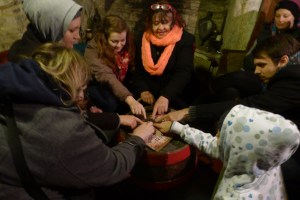
Members of the South West Victim Care Unit challenged themselves to see how long they could last out in this creepy building. A Ouija Board was used in “the bar” and several vigils were conducted in “the bishop’s room”. There were a few strange occurrences in the bishop’s room, such as a candle stick falling over, tapping noises coming from the fireplace, a brass bed warmer swinging and banging over the fireplace, a door knob rattling when nobody was at the door and long scratching noises coming from the door.
Were these down to a pranksters or spirits of the dead? You can find out for yourself if you spend a night at the Ancient Ram Inn.
Despite finding no concrete evidence of the afterlife, all members of the South West Victim Care Unit enjoyed their spooky experience, which raised £775 for Victim Support.
An more detailed write up of this investigation with additional photos will follow shortly.











 Ghost Catcher Isles