Punkie Night: Somerset’s Lantern Festival and Its Connection to Halloween, Samhain & Púca Night

Light flickering in the Autumn Dark

When the October sky over Somerset turns a bruised purple and the moon hangs low, the village streets spring to life with a glow that feels both ancient and mischievous. Children clutch glowing carved lanterns, their faces lit by flickering candles, while the air fills with a chant that has echoed through the countryside for generations:

“It’s Punkie Night tonight… Give us a candle, give us a light…”

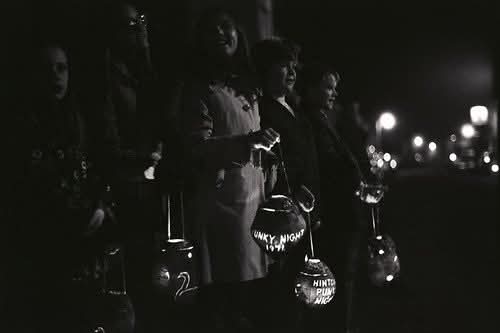
(Image: Punkie Lanterns. Source: Punkie Night/Facebook)

This eerie procession, known as Punkie Night, is more than a quirky local festival; it is a living link to centuries-old customs that once guided lost souls, kept wandering malevolent spirits at bay, and turned the darkness of early winter into a community celebration. Here we’ll uncover the origins of the “punkie” lantern, trace the folklore from 19th‑century Somerset to the Celtic “Púca Night,” and explore how this regional tradition mirrors the modern Halloween rituals we know today.

What Exactly is Punkie Night?

Punkie Night is a lantern festival peculiar to Somerset, celebrated in villages such as Hinton St George. It takes place on the last Thursday of October every year.

The word “punkie” in Punkie Night originates from a local name for a lantern, with possible connections to “pumpkin,” “punky” (a term for a young child’s ghost), or the Old English word “punk” (timber or tinder).

On Punkie Night, local people carve glowing lanterns from ‘mangelwurzels’, a type of large beetroot grown for cattle feed. Once carved and lit from within by candles, these ‘punkies’ are carried through the street by children and adults alike, often wearing costumes. Traditionally, the punkies are borne through the streets or door to door in a noisy parade, where those carrying them call for treats or candles to light their lanterns, singing:

(Image: Magelwurzels. Source: Punkie Night/Facebook)

“It’s Punkie Night tonight,
It’s Punkie Night tonight,
Give us a candle, give us a light,
If you don’t, you’ll get a fright.

It’s Punkie Night tonight,
Adam and Eve wouldn’t believe,
It’s Punkie Night tonight.”

Iona Opie and Peter Opie described this Somerset custom beautifully in The Lore and Language of Schoolchildren (Oxford University Press, 1987):

“To children in south Somerset a punkie is a home-made mangel-wurzel lantern of more artistic manufacture than those commonly made elsewhere for Hallowe’en. Laboriously executed designs, or floral patterns, or even scenes with houses, horses, dogs, or ships, are cut on the surface of the mangels, so that when the flesh has been carefully scooped out—leaving just a quarter of an inch to support the skin—and the stump of a candle has been lighted within, the designs become transparencies, and the lanterns ‘glow in the dark with a warm golden light’. These lanterns (reported from Long Sutton and Hinton St. George) are carried by a loop of string secured through two holes near the top just beneath the lid of the lantern. At Hinton St. George, where Punkie Night is the fourth Thursday in October, some sixty children come out into the street with their lanterns, and parade through the village in rival bands, calling at houses and singing.”

A Tale of Lost Men and Heroic Wives

According to local lore, Punkie Night can be traced back to when a group of Hinton St George men ventured to the nearby Chiselborough Fair in the early 1800s. The men spent their time at the fair drinking and carousing, and when they tried to return home after night fell, they soon lost their way. Although their village was only a few miles away, they became lost in the darkness without lanterns to light their path and were unable to find their way home.
(Image: Punkie Parade. Source: Punkie Night/Facebook)

Their wives back in Hinton St George were distraught with worry and carved makeshift lanterns from mangelwurzels and took to the streets in search of their wayward husbands. Some say that when the men first spotted the light from the women’s lanterns glowing in the darkness, they mistook them for will o’ the wisps, or even restless spirits, and ran away in terror. Once they realised the flickering punkies were held by their heroic wives, they were soon guided home to safety.

Older Roots of Punkie Night and Shared Traditions

Punkie Night was first recorded in the 19th Century but may have much older roots. In Ireland, there is a Celtic celebration called “Púca Night” which has Otherworldly connections. Here, Púca refers to fairies and sprites, which were not necessarily clearly delineated ideas from ghosts and spirits in Irish folklore. Similar to Samhain, Halloween, and Punkie Night, the veil between the world of the living and the dead is believed to thin at this time. Lanterns were said to guide lost souls back to their homes and also ward off the spirits of the dead who would roam the land of the living during this liminal period.

In these traditions, there is also the shared custom of children and adults going door to door ‘souling’ to ask for something. In Púca Night and Halloween, children ask for sweets and candy, and on Punkie Night, a candle for their punkie was requested.

Both Punkie Night and Halloween also feature chanting or singing to request these gifts. In Punkie Night, children sing their traditional Punkie Night song, while modern trick or treaters might chant the popular naughty rhyme:

“Trick or treat,
Smell my feet,
Give me something good to eat!
If you don’t, I don’t care –
I’ll pull down your underwear!”
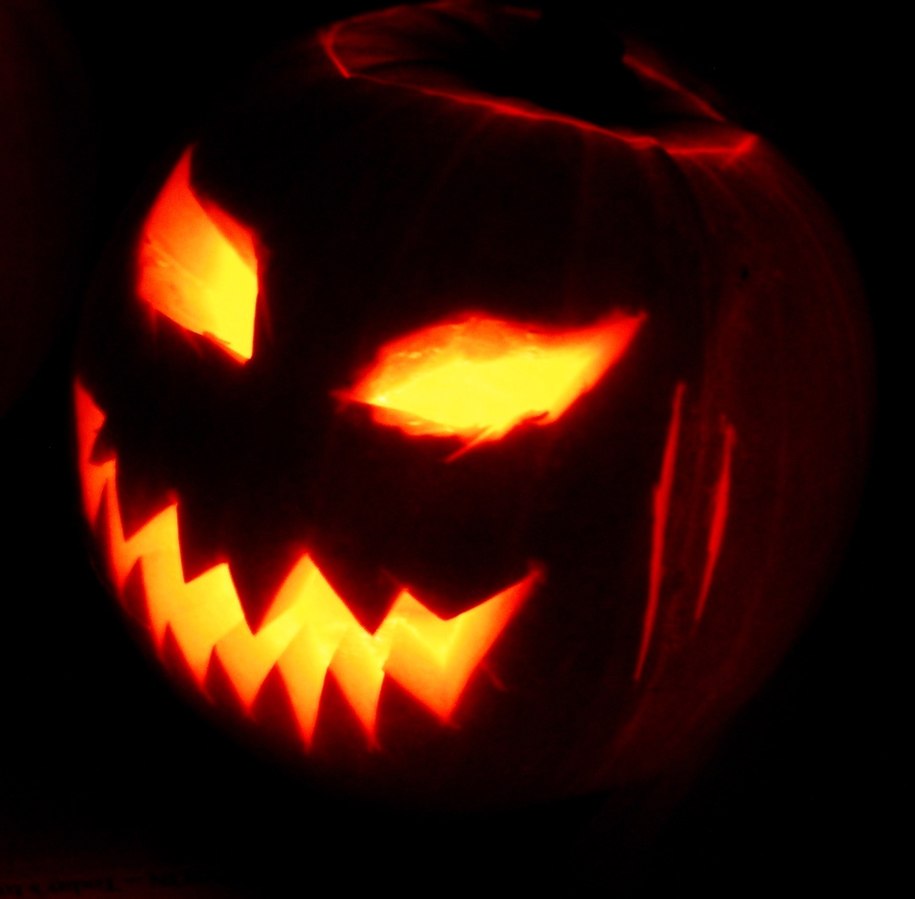
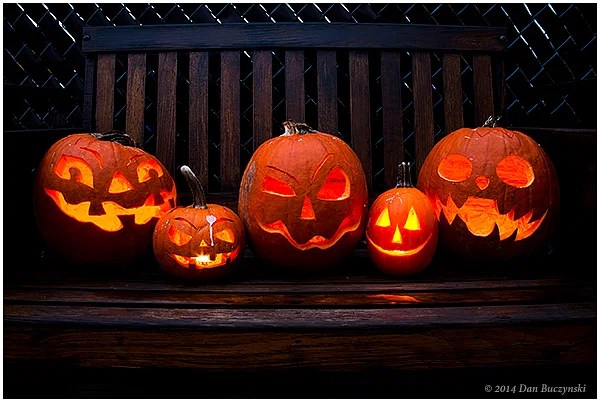
(Image: Jack-O-Latern. Source: Toby Ord, CC BY-SA 2.5, via Wikimedia Commons)

The carving of faces in punkies also has similarities to the customs of Samhain and modern Halloween. Scary faces were carved into turnip lanterns on Samhain and were placed in windows or carried outside to deter evil spirits. This has been adopted into modern Halloween traditions with carved pumpkin jack-o-lanterns being placed on window sills and on doorsteps.

These celebrations all incorporated themes of darkness, spirits of the dead, and the turning of the year. They belong to the season when the nights draw in, the harvest has ended, and people once believed that the dead and otherworldly spirits walked the earth. In this respect, Punkie Night can be seen as a regional English counterpart to Púca Night, Samhain, and Halloween. It is a survival of the same autumnal fears, folklore, and festivities that people experience at this time of year, but shaped by Somerset’s rhythms and spirit.

Why Punkie Night Endures

Punkie Night endures, weaving together folklore, community, and the timeless human fascination with light in the dark. From the crude lanterns carved by anxious wives in the 1800s to the elaborate mangelwurzel “punkies” paraded by today’s children, the festival captures a uniquely Somerset spirit while reflecting broader autumnal rites such as Samhain, Púca Night, and contemporary trick‑or‑treating. By preserving this tradition, the village of Hinton St George keep alive a story that celebrates resilience, imagination, and the comforting glow of shared history, proving that even as the nights grow longer, the light of community burns ever brighter.


Reference list

Oweynagat Cave and the Irish Origins of Samhain and Halloween

(Neopagans in Ireland celebrating Samhain. Image Credit: Unknown author, CC BY-SA 4.0, via Wikimedia Commons)

Tucked away in the beautiful scenic landscape of County Roscommon, Ireland, lies a mysterious and legendary cave known as “Oweynagat” (pronounced “Oen-na-gat”), also known as ‘Cave of the Cats’. This ancient cave is believed to be the mythical entrance to the Otherworld, Ireland’s Gate to Hell, a supernatural realm in Irish mythology. Oweynagat is one of the most important places linked to the ancient Celtic festival of “Samhain”, the forerunner to the modern Halloween. Steeped in lore and shrouded in mystery, Oweynagat is a powerful symbol of Ireland’s ancient spiritual heritage and the very origins of Halloween.

The Mythology of Oweynagat

Oweynagat is part of Rathcroghan, a major archaeological complex that served as a royal site for the ancient Irish kingdom of Connacht. This area comprises over 250 archaeological features; it is an area surrounded by many ancient sites, monuments, holy wells and standing stones. Rathcroghan is deeply linked to Queen Medb, a famous warrior queen in Irish mythology, and features heavily in stories of the “Ulster Cycle”, one of the four great story cycles of Irish mythology.

(An ogham stone which forms the lintel of Oweynagat Cave. Image Credit: Cathalpeelo, CC BY-SA 4.0, via Wikimed)

Oweynagat is often described in these tales as the “gateway to the Otherworld.” Irish mythology describes the cave as a place where powerful forces of the supernatural were said to reside. During Samhain, it was believed that the veil between the human world and the Otherworld was at its thinnest, allowing spirits, fairies, and other entities to pass through more easily. The cave itself was seen as a physical gateway through which supernatural beings could enter the mortal realm, making it a focal point for rituals and lore featuring Samhain.

One of the most famous legends associated with Oweynagat in relation to Samhain is known as ‘The Adventures of Nera”. One Samhain night, Ailill and Medb, ancient rulers of Rathcroghan, dared anyone to tie a rope around the foot of a captive hanging on a nearby gallows. They promised a reward to anyone who succeeded. Nera, a brave warrior, accepted this challenge. Decked out in his armour, he approached the captive and managed to tie the rope, only for the captive to come to life, asking Nera for a drink as a last request.

Nera agreed and carried the captive on his back to find water. As they passed three houses, each were marked by strange omens such as a lake of fire surrounding one, the captive finally drank from a slop bucket in one of the homes. In a final act of revenge, he spat his last sip on the faces of the house’s occupants, who died instantly. Returning the captive to his execution site, Nera then witnessed a horrifying vision of his home in flames and his people slain by an otherworldly army. When he followed this mysterious army into the underworld of Oweynagat, he found himself before a faery king.

(Underworld Army. Image Credit: Bing AI)

The faery king ordered Nera to bring wood daily to a house within the faery mound, where Nera met and married a faery woman. She shared many of the secrets of the faery world, warning him that his vision of his people’s demise could come true if he didn’t alert them. When Nera finally returned, only moments had passed in the human world despite his long stay in the faery mound.

Ailill and Medb, taking Nera’s warning seriously, prepared to attack the faery mound the next Samhain. Nera returned to his faery wife, who revealed she was pregnant with his child and encouraged him to escape with his family from the faery realm before the attack. He agreed and watched as the men of Connacht destroyed the faery mound, retrieving the powerful Crown of Briun, one of Ireland’s three great treasures.

Nera, however, remained forever tied to the faery world, never to be seen again in the mortal realm. The tale ends with his fate sealed, waiting in the faery mound until the end of time. The cave has since been claimed to be the birthplace of Halloween due to this story being set at Samhain.

(The Morrigan. Image Credit: Nabilsai, 2024)

Another legend relating to the cave at Oweynagat is that it is the home of the Morrígan, a Celtic war goddess who, according to tradition, emerges from the cave each Samhain to bring chaos to the land.  Ailill and Medb’s cats, who were supposed to roam out of Oweynagat on Samhain, are among the other mythological animals connected to the cave. They represent the chaos and the forces of nature that were thought to be let loose on this night.

Samhain: The Roots of Halloween

Samhain celebrations have a long history that predates written records. Samhain heralded the start of the dark of winter and the conclusion of the harvest season for the Celts. It was thought to be observed between October 31st and November 1st, sunset to sunset. Due to it being a transitional period, there was thought to be little separation between this world and the Otherworld. The veil thinned, enabling communication between living people and supernatural entities.

According to legend, Oweynagat cave is thought to become a portal to the otherworld at this time of year, where faeries and mortals may enter each other’s respective worlds. According to folklorist and professor, Dorothy Bray, “Samhain was a time charged with great supernatural energy and ordinary natural laws were suspended. The idea of the otherworld developed into the idea of the afterlife, so Samhain became a time when the worlds of life and death meet, when the souls of the dead return and can be seen.”  


(Offerings to the spirits of the ancestors. Image Credit: ©E.Holohan 2024)

According to local archaeologist and historian, Daniel
Curley, “Monsters and manifestations would emerge, led by the goddess Morríghan,
to create a world ready for winter, including birds with foul breath that would
strip leaves from trees. Locals would stay indoors in fear of being dragged
into the other world when the ghouls had finished ravaging the land. If you had
to go outside you wore a costume and mask to look hideous. That way you would
be left alone and not dragged into the otherworld.”

Feasting, bonfires, and rituals honouring the ancestors were all part of Samhain. People made food and drink offerings outside their homes to calm any wandering spirits who were thought to be free to roam on this night. People sometimes wore frightening masks or costumes to either ward off or blend in with any supernatural creatures that had passed over into our world, and bonfires were lit to guide the way to lost spirits.

From Samhain to Halloween

Many ancient traditions were adapted and reinterpreted to conform to Christianity as it expanded over Ireland. On November 1st, the Church created All Saints’ Day, which is a day to commemorate saints and martyrs. The night before was called All Hallows’ Eve, which later transformed to “Halloween.”

Samhain rituals gave rise to modern Halloween traditions including trick-or-treating, pumpkin carving, and the wearing of spooky costumes. Wearing costumes to ward off any lost spirits gave rise to the Halloween custom of dressing up as monsters, ghosts, or other terrifying creatures. The modern custom of “trick-or-treating,” in which youngsters knock on doors looking for sweet treats, evolved from the habit of leaving out food offerings.

(Jack-O-Latern. Image Credit: Toby Ord, CC BY-SA 2.5, via Wikimedia Commons)

The jack-o’-lantern, another popular Halloween custom, has Irish origins too. In order to ward off evil spirits, people in Ireland used to carve swedes and place candles inside to make glowing lanterns. This custom was carried to America by Irish immigrants in the 19th century, and it eventually developed into the pumpkin lanterns we are accustomed to today

Oweynagat Cave Today

A trip to Oweynagat Cave provides a window into the past for those who are interested in learning more about the Irish origins of Halloween. Although the cave appears to be damp, murky and unassuming, it is simple to see why ancient humans sensed a power in its presence. Visitors may feel the weight of centuries’ worth of history, rituals and legend hanging in the air when they first enter Oweynagat cave.

Today, Halloween is mainly about entertaining costumes, sweets and light-hearted frights. However, Halloween’s origins lie much deeper; it has to do with ancestors, the cycles of nature, and myths surrounding the invisible realm. Oweynagat Cave is a mysterious reminder of the mythical beginnings of this well-known festival, as well as Ireland’s contributions to a festival now observed world over.

It is easy to imagine the ghosts of Rathcroghan’s ancient lands and possibly the cave’s mythical cats emerging from the depths of Oweynagat cave as Samhain draws near, serving as a powerful reminder that the real spirit of Halloween continues to reverberate throughout Ireland’s ancient landscapes.


Reference list

The Legend of Stingy Jack: The Haunting Legend Behind the Halloween Jack-o’-Lantern

(Image Source: A traditional Irish turnip Jack-o’-lantern from the early 20th century. Photographed at the Museum of Country Life, Ireland. © Rannṗáirtí Anaiṫnid 2009)

Halloween, a time of ghosts, ghouls, and goblins, is a time when the veil between this world and the next is at its weakest and spirits roam the earth.  One legend looms large in the heart of Halloween itself – the macabre tale of Stingy Jack. This eerie figure from Irish folklore was the origin of the popular Halloween tradition of carving jack-o’-lanterns. Join me as I explore the dark legend of Stingy Jack and his connection to Halloween.

Who was Stingy Jack?

The legend of Stingy Jack originated from the depths of Irish folklore. Stingy Jack was a notorious trickster known for his deceit and cunning. Jack’s reputation for manipulation and shrewdness was so notorious that he even caught the eye of the devil himself.

The Legend and Faustian Bargain

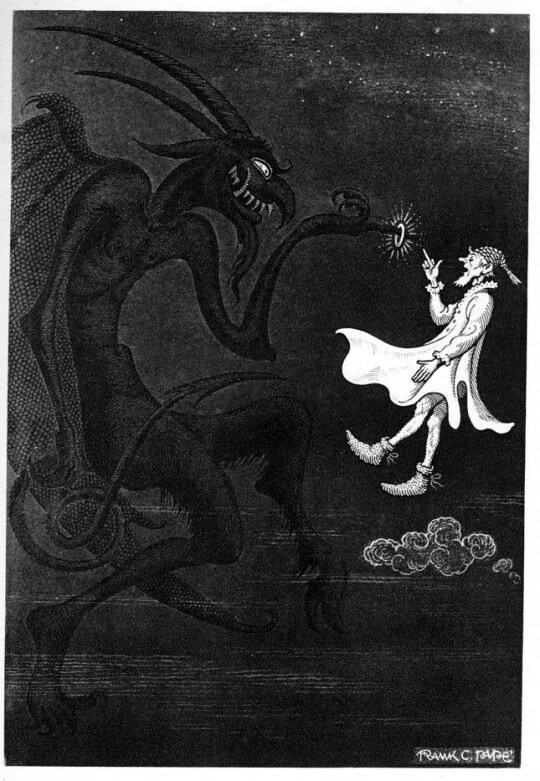
The legend has it that Jack was out one night after having a tipple in his local tavern when he stumbled upon Satan on a country road. The devil demanded his soul, but Jack pleaded to have a last drink of ale with him in the local pub.  After their drinking session, Jack used his cunning to trick the devil into transforming himself into a coin to pay for their drinks. Jack placed the devilish coin in his pocket where he kept a crucifix, thereby stopping the devil from returning to his true form.

(Image Source: PAPÉ, Frank C. “The Devil…Did for His Comfort Give Him a Ring”, illustration from Rabelais’ Gargantua and Pantagruel, 1927. © Halloween HJB 2020)

Jack was very pleased with himself and his wheeze, but eventually freed Satan. However, not one for missing a trick, Jack only agreed to free the devil after he had struck a Faustian bargain. Jack made a deal that the devil should spare his soul for ten years.

Ten years passed and Jack encountered Satan once again while he was stumbling home from the pub. Using his cunning once again, he asked to have a last snack of an apple from a nearby tree. The devil foolishly climbed the apple tree to fetch him an apple. Once up the tree, Jack surrounded its trunk with crucifixes, trapping the devil in its branches. Realising he’d been had, the devil pleaded to be let down, but not before agreeing never to take Jack’s soul. However, this bargain came with a haunting clause, one that would forever alter Jack’s fate.

Jack’s Just Desserts

Eventually, Jack’s drink-fuelled life came to an end and he died. His soul prepared to ascend to Heaven, however as he tried to enter the pearly gates he was stopped by St Peter. Jack, demanding to know why he could not enter Heaven, was taken to see God, who told him that due to his sinful lifestyle, trickery, and deceitful ways, he was not eligible for Heaven.

Jack then descended to the Gates of Hell and begged Satan for admission into the underworld. However, the devil, fulfilling his obligation to Jack, could not take his soul.  Jack was instead condemned to roam the earth in perpetual darkness. The devil, however, felt sorry for Jack and gave him an ember to light his way, which he placed inside a carved turnip to create a makeshift lantern. This eerie lantern forever guides his eternal search for a final resting place as he wanders the world between the planes of good and evil.

(Image Source: Carved Turnips, © opacity 2019)

The Birth of the Jack-o’-Lantern and Stingy Jack’s Influence on Halloween

Over time Stingy Jack’s turnip lantern became synonymous with Celtic Samhain and Halloween. Irish immigrants brought their traditions to America and soon discovered that the local pumpkins, larger and easier to carve, made ideal lanterns. This transformation from turnips to pumpkins gave birth to the iconic ‘Jack-O’-Lantern’ we know today.

As you prepare for Halloween and carve your pumpkin jack-o’-lanterns, remember the eerie folkloric origin of this beloved tradition.  Stingy Jack, with his cunning trickery and Faustian bargain, has left an enduring spark of folklore as his cursed spirit lights our way through the mysterious and magical night of Halloween. So, when you see those flickering jack-o’-lanterns, spare a thought for Stingy Jack forever condemned to wander the earth with only a lantern to light his way.

(Image Source: Jack-O’-Lanterns, ©macwagen – CC BY-NC-ND -2019)

References