
As the days grow cooler and the nights draw in, and early winter rolls out over the land, please come with me on a journey back in time and an autumn ramble through the ancient landscape of Uffington in Oxfordshire. On this journey over chalk hills and across ancient trackways, I am joined by my husband and also by Emma, from Weird Wiltshire blog fame, who is accompanied by her furry sidekicks Bingo Jones the Jack Russell and Buddy Love the lurcher.
Our adventure begins at the National Trust car park below White Horse Hill, on an unusually warm autumn afternoon. We set off to make our way up towards the impressive equine chalk geoglyph, passing local wildlife including grazing sheep, and a tiny common lizard basking in the autumn sunlight.

History of the White Horse
The Uffington White Horse is a 109 metre (360 foot) figure sprawling over the slope of the chalk Downs of Oxfordshire. The chalk outlines of this geoglyph were created by cutting into the turf and removing it to expose the gleaming white chalk below. This icon was designed to be seen from far away and can be seen from at least 15 miles away as it gallops and leaps across the Berkshire Downs.
This chalk figure is around 3,000 years old, and is one of the oldest hill figures in the country. It has been maintained over this long period by the local population through the process of ‘scouring’. This is where plants and grasses growing over the chalk outlines are cut away regularly to maintain their shape. This was often done around midsummer and would include a country fair, feasts, and festivals to mark the occasion. It sounds like it was a really lively local event.

The figure is a strange, stylized, and elongated horse which is reminiscent of ancient cave paintings of animals. This truly ancient white horse is also striking in its resemblance to the stylized figures of horses on Iron Age coins and metalwork. Soil samples taken from the lowest levels of the chalk date the Horse to the end of the Bronze Age or the start of the Iron Age, between 1200-800 BC.
Author GK Chesterton (1874-1936), who wrote ‘Ballad of the White Horse’ (1911), summed up the age of the ancient geoglyph perfectly:
Before the god that made the gods,
had seen their sunrise pass,
the White Horse of the White Horse Vale,
was cut out of the grass.
The White Horse sits in a landscape full of archaeology and ancient monuments, from Neolithic burials, through Bronze Age settlements, to later Iron Age defences. It is clear that this area and this chalk symbol have been a significant place for millennia.
Some say this ancient figure resembles a dragon more than a horse and this has resulted in myths and legends relating to dragons at nearby features which we will hear about further along on our journey.
Myths and Legends of the White Horse
There is still much debate as to the purpose of the Uffington White Horse. The location could have had a ritual or religious purpose as a possible Celtic shrine, connected to the worship of Epona the horse goddess, or may represent something else sacred.
In Europe and Asia, there is an ancient history of horses being associated with the sky and sun. The Sun Horse pulls the sun through the sky, either drawing it on the back of a chariot or pulling it directly. The horse pulls the sun through the underworld, leaving the world in darkness, before rising once more at dawn. Perhaps the White Horse is an ancient symbol of this sacred sun horse, leaping across the landscape, or a totem of an ancient horse cult.
It could also have had political significance as a meeting point between 3 great tribal kingdoms in the area. This may have served as a warning against trespass or to mark a meeting point for trade and diplomacy. Others have posited that the White Horse represents the battle standard of the Saxon ruler Alfred Hengist. Hengist is Old English for “stallion”.

Legend has it that the Uffington White Horse is a mare and that her foal was also etched into a nearby hill, which has now been lost to nature. It is said that at night the horse and foal come down to feed at the slope below known as the Manger. The mare and foal also drink at nearby Woolstone Wells, which are said to be formed from a hoofprint from the mythical horse.
Another local superstition describes how if you stand on the eye of the Uffington White Horse and turn around three times clockwise, eyes closed and while making a wish, you will have that wish come true. However, this is no longer advised due to damage that can be caused to the beautiful, ancient chalk figure.
Dragon Hill
From the brow of White Horse Hill, we can see a small flat-topped mound known as ‘Dragon Hill’. Local people maintained for centuries that the chalk hill figure was in fact a portrait of a dragon killed by St George on this hill. The blood of the slain dragon is reputed to have fallen onto the hill, poisoning the soil forever. A bare patch of ground on the top of the mound testifies to this corrupted, poisoned earth.

There are also stories that King Arthur is not dead, but instead lies sleeping, and will one day awake when England is in grave danger. It is said that when King Arthur awakes, the Uffington horse will rise up and dance in delight on Dragon Hill.
Uffington Castle
As we climb to the brow of White Horse Hill, on our way towards the ancient trackway, we pass the earth ramparts and ditch of the former Iron Age hill fort known as Uffington Castle, which still looms protectively over the Vale of the White Horse. Past excavations have indicated that it was probably built in the 7th or 8th century BC and continued to be occupied throughout the Iron Age. Pottery found on the site suggests that the fort was used throughout the Iron Age and into the Roman era. This hillfort was a strategic location that commanded the Ridgeway, the prehistoric track that runs from Overton Hill to Ivinghoe Beacon. It is clear that whoever held the Ridgeway track would control the West of England, so much so that some people believe that Uffington was Mount Badon, where King Arthur is said to have defeated the Saxons. However, little is yet known about the use of Uffington Castle, and archaeologists are now looking at the possibility that it is less a defensive structure, but rather a spiritual centre.
The Ridgeway
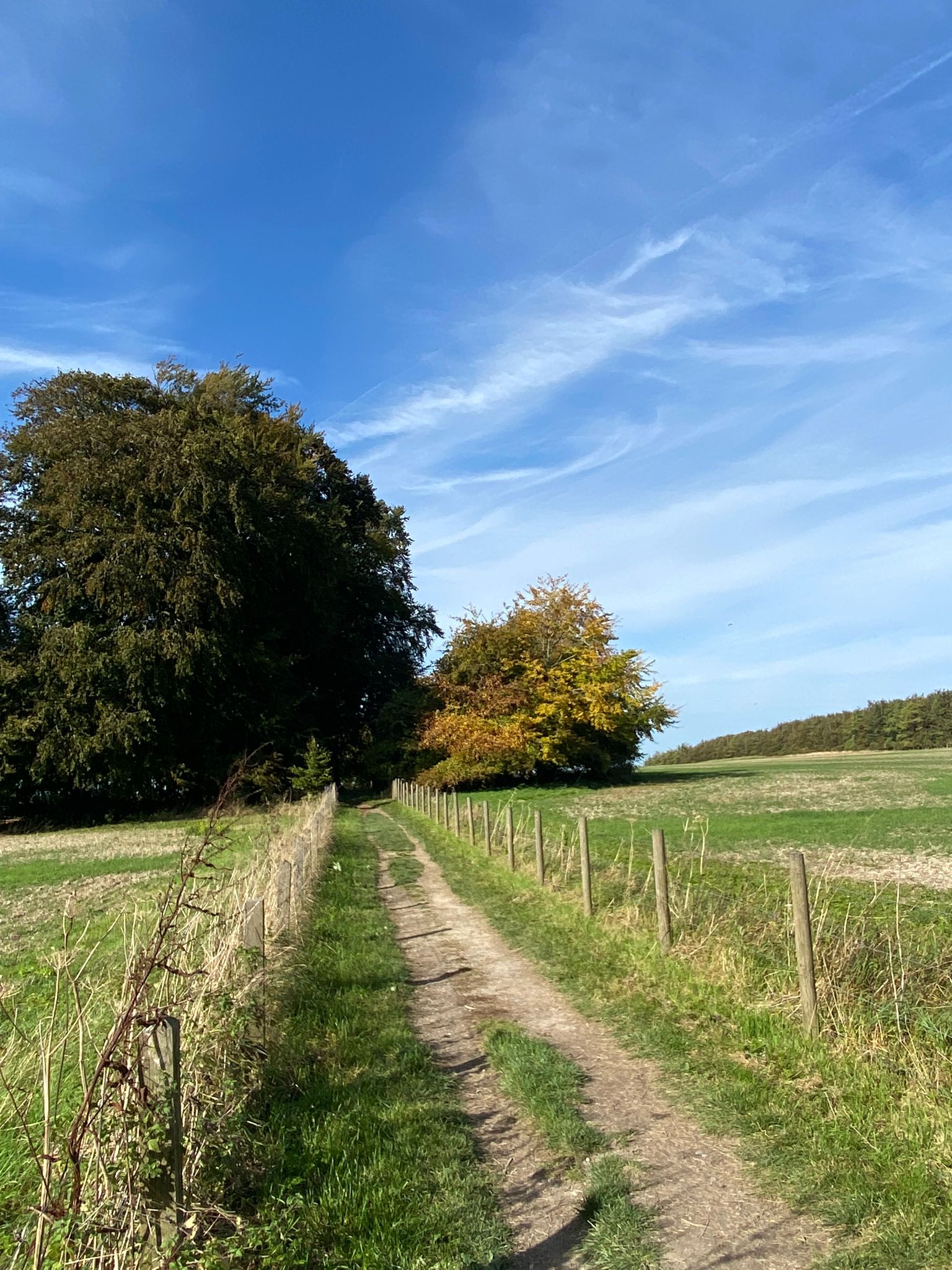
We pass over the top of the hill and through a gate to join the ancient pathway known as ‘The Ridgeway’. The Ridgeway, an ancient trackway, holds profound historical importance and deep cultural significance that spans millennia. As Britain’s oldest road, it traces its roots back to prehistoric times, serving as a vital route for trade, pilgrimage, and communication. This ancient route, which stretches for 87 miles across chalk hills, meanders through picturesque landscapes, connecting the River Thames to the Avebury stone circle and beyond. The Ridgeway has witnessed the footsteps of countless generations, from Neolithic settlers to Roman soldiers, medieval pilgrims, and modern-day ramblers. Its historical significance lies not only in its utilitarian function but also in its cultural role, reflecting the evolving human narratives of the region. Today the Ridgeway continues to beckon walkers and history enthusiasts alike, inviting them to traverse its timeless path and connect with the living tapestry of the past, to experience the ancient history embedded in the landscape of Oxfordshire and beyond.

Walking Westwards along the route, we pass leafy hedgerows brimming with ripe berries and encounter a devil’s coach horse beetle scuttling along the track, perhaps going about its namesake’s business.
Wayland’s Smithy
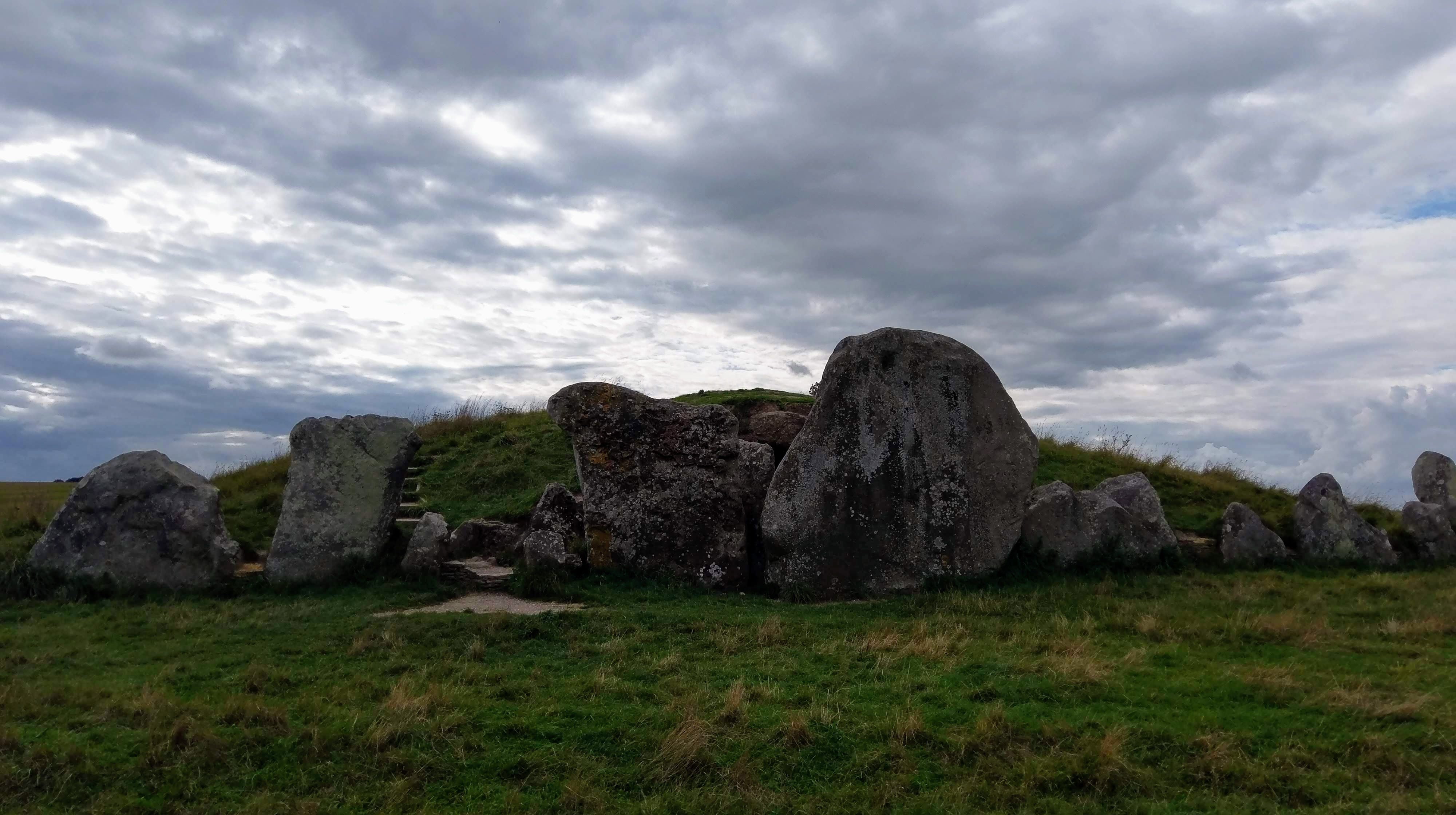
After following the Ridgeway for a mile and a half, we reach our ultimate destination, the remarkable long barrow of Wayland’s Smithy. Wayland’s Smithy is a mysterious Neolithic earth and stone structure once believed to be the home of a Saxon and Norse god of metalwork. Wayland the smith features in Germanic and Norse mythology and his legend may have been brought to England by Norsemen centuries after the long barrow was originally constructed.
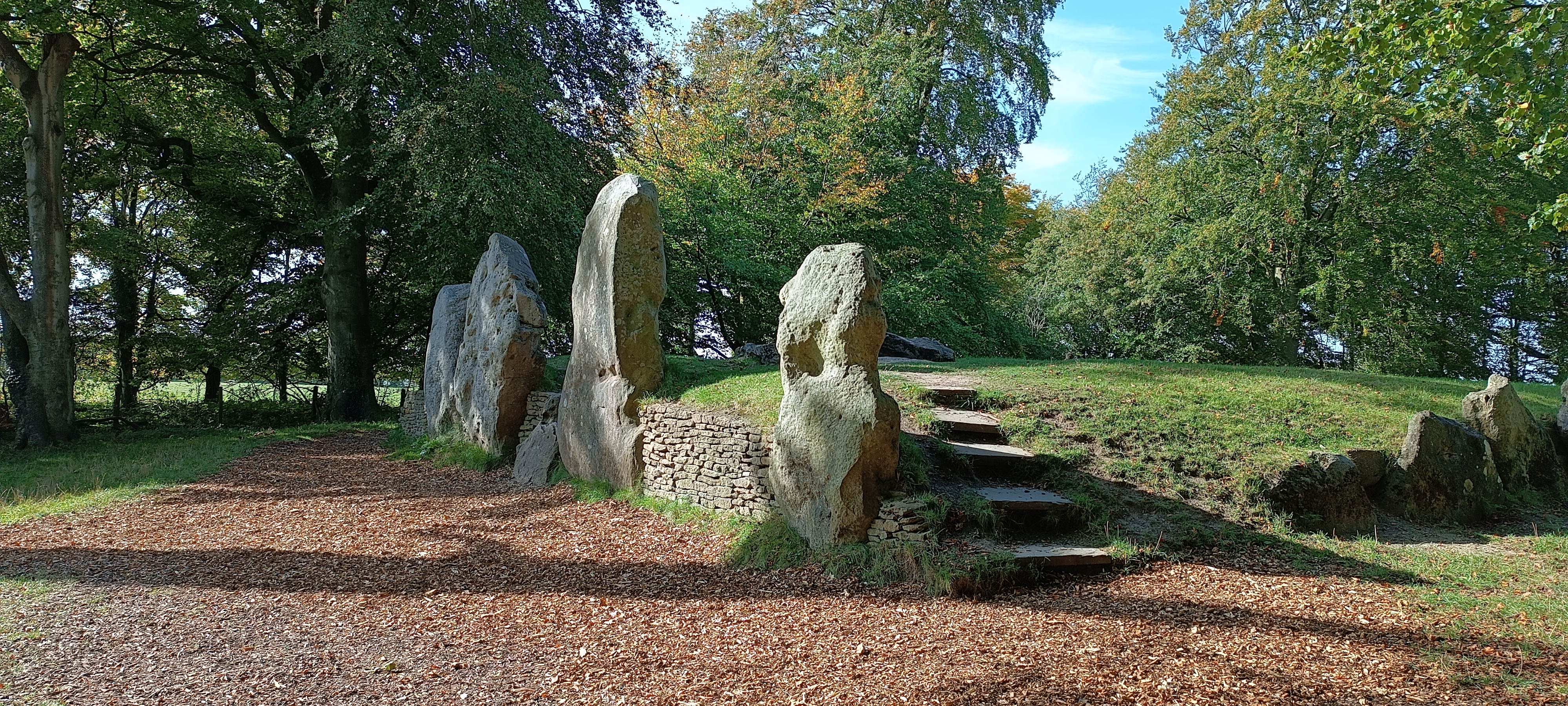
As legend has it, Wayland was captured by Swedish King Ndud, and was disfigured and tortured before being forced to work for him in the royal smithy. Wayland eventually escaped his enslavement by killing the king’s sons, and using their skulls as drinking bowls, before raping the king’s daughter and escaping using a flying cloak or metal wings that he created using his metalwork skills.
Wayland escaped to England and built himself a smithy at the isolated location where the long barrow stands. Feeling embarrassed of his disfigured appearance he was able to hide himself away from public view while carrying on his smithy trade. However, Wayland was eventually found by King Ndud’s men and was killed. He managed to take out eight of the Norsemen with his smithing hammer before he was overpowered and legend has it that the eight skeletons that were found in the excavations of the long barrow in 1919 were these men.

Despite this end, is said that the spirit of Wayland still resides at Wayland’s Smithy and he will shoe any traveller’s horse if the horse and a coin are left at the Smithy overnight. Even today, coins can be found left in the holes of the stones, more for luck now, than for shoeing horses.
Wayland Smithy is also associated with the nearby Uffington White Horse. It is said that once every hundred years the White Horse leaves its hill and gallops across the sky to be reshod by Wayland in his smithy. The Neolithic tomb could perhaps also be associated with the Sun Horse legend; the already 1000-year-old long barrow may have been reimagined by the people who carved the chalk geoglyph as a portal for the horse and sun to enter the Underworld.

We stop for a while at Wayland’s Smithy to soak in the calm, peaceful, almost otherworldly atmosphere of the location. This is one of my favourite places for peaceful reflection, and the fallen trees make an excellent spot to take tea and snacks, which we do. Importantly, before we leave, we place coins for luck and offering to Wayland on the stones. We then begin the long walk back up the gentle incline to the car park, stopping to forage some of the wild fruits and berries we find on the Ridgeway, in the hope of cooking up some delicious jams and jellies to remind us of our ramble.
On one of the last warm days of the year, before Autumn begins to bite, our ramble through the ancient landscape of the Vale of the White Horse, the Ridgeway, and Wayland’s Smithy leaves an indelible imprint on my memory. Surrounded by the mystical whispers of history, the air carries the essence of bygone eras, weaving tales of our ancient ancestors and their untold mysteries. The undulating hills and the enigmatic White Horse carved into the earth create a canvas of timeless beauty. As I stand amidst the ancient stones of Wayland’s Smithy, I feel a profound connection to the past. This autumnal adventure, with its awe-inspiring scenery and palpable sense of history, is a poignant reminder of the enduring allure of the past, forever etched in the landscape of Britain.
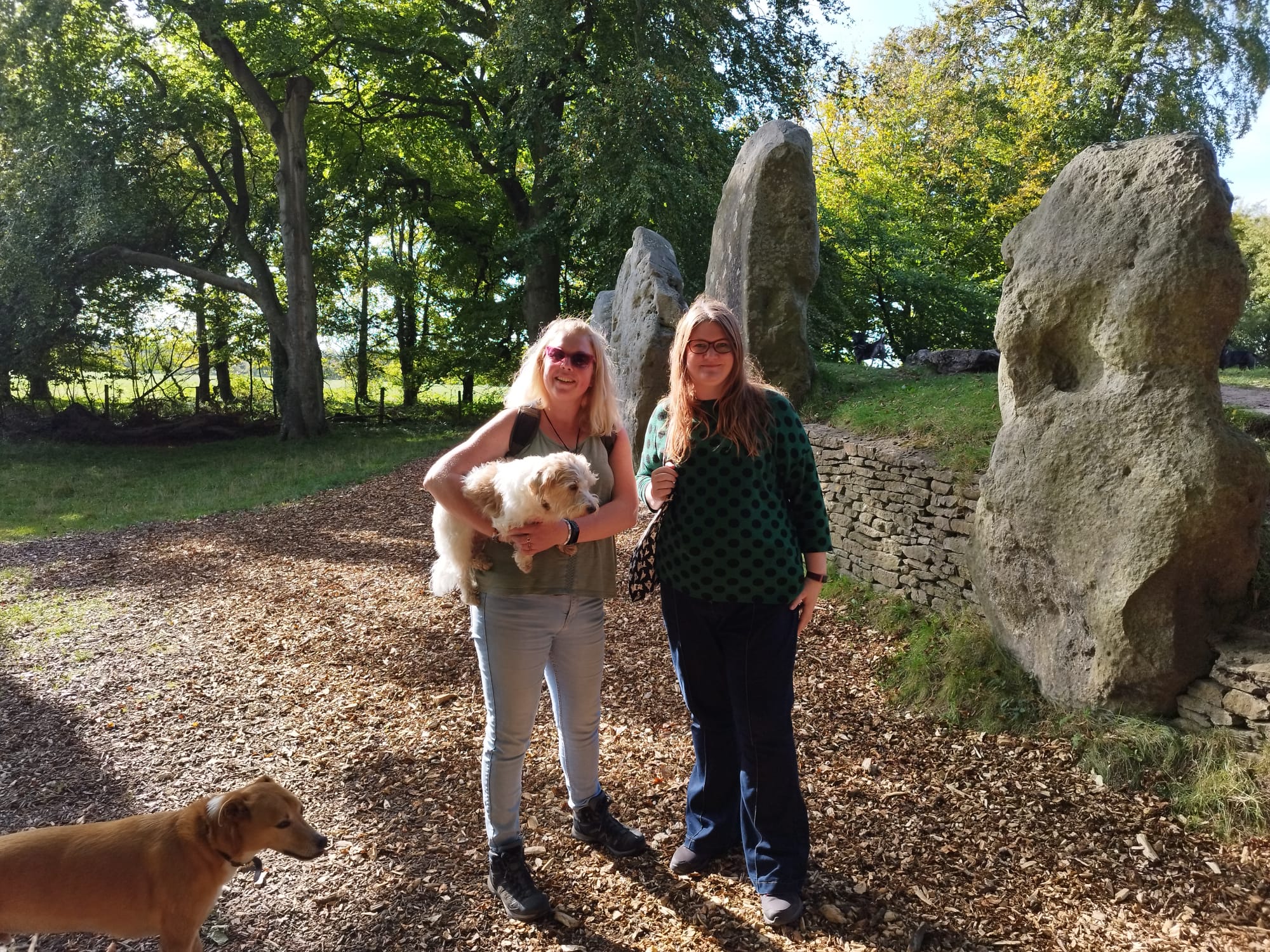
Check out my travel companion Weird Wiltshire’s wonderful blog where she explores stories of ghosts and the paranormal, folklore, history and anything weird, found in Wiltshire and beyond:
https://weird-wiltshire.co.uk/
Reference list
- AA Treasures of Britain. (1972). Drive Publications Ltd.
- Arthur Charles Clarke, Welfare, S. and Fairley, J. (1980). Mysterious world. New York: A & W Publishers.
- Davison, S. (2021). The Ridgeway National Trail. Cicerone Press Limited.
- Folklore, myths and legends of Britain. (1977). London: Reader’s Digest Association.
- Hickman, D. and Hickman, M. (2006). Uffington Castle. [online] http://www.pegasusarchive.org. Available at: https://www.pegasusarchive.org/ancientbritain/uffington_castle.htm [Accessed 30 Nov. 2023].
- Mary-Ann Ochota (2020). Secret Britain: unearthing our mysterious past. London: Frances Lincoln Limited Publishers.
- National Trust. (n.d.). White Horse Hill | Oxfordshire. [online] Available at: https://www.nationaltrust.org.uk/visit/oxfordshire-buckinghamshire-berkshire/white-horse-hill.
- Pepper, E. and Wilcock, J. (1977). Magical and Mystical Sites. Abacus.
- Saunderson, D. (2022). Wayland’s Smithy, A Guide To The Mysterious Tomb | Spooky Isles. [online] Spooky Isles. Available at: https://www.spookyisles.com/waylands-smithy/ [Accessed 30 Nov. 2023].
- Taylor, D. (2009). The Most Amazing Haunted & Mysterious Places in Britain. Reader’s Digest.
- Wikipedia. (2022). Uffington Castle. [online] Available at: https://en.wikipedia.org/wiki/Uffington_Castle [Accessed 30 Nov. 2023].
- Wikipedia. (2023). Uffington White Horse. [online] Available at: https://en.wikipedia.org/wiki/Uffington_White_Horse.
- wiltshirewhitehorses.org.uk. (n.d.). Wiltshire White Horses: Folklore and legends. [online] Available at: https://wiltshirewhitehorses.org.uk/folklore.html [Accessed 30 Nov. 2023].
- http://www.darkoxfordshire.co.uk. (2021). Wayland’s Smithy | Dark Oxfordshire. [online] Available at: https://www.darkoxfordshire.co.uk/explore/waylands-smithy/.






 Ghost Catcher Isles