
Tucked away in the beautiful scenic landscape of County Roscommon, Ireland, lies a mysterious and legendary cave known as “Oweynagat” (pronounced “Oen-na-gat”), also known as ‘Cave of the Cats’. This ancient cave is believed to be the mythical entrance to the Otherworld, Ireland’s Gate to Hell, a supernatural realm in Irish mythology. Oweynagat is one of the most important places linked to the ancient Celtic festival of “Samhain”, the forerunner to the modern Halloween. Steeped in lore and shrouded in mystery, Oweynagat is a powerful symbol of Ireland’s ancient spiritual heritage and the very origins of Halloween.
The Mythology of Oweynagat
Oweynagat is part of Rathcroghan, a major archaeological complex that served as a royal site for the ancient Irish kingdom of Connacht. This area comprises over 250 archaeological features; it is an area surrounded by many ancient sites, monuments, holy wells and standing stones. Rathcroghan is deeply linked to Queen Medb, a famous warrior queen in Irish mythology, and features heavily in stories of the “Ulster Cycle”, one of the four great story cycles of Irish mythology.

Oweynagat is often described in these tales as the “gateway to the Otherworld.” Irish mythology describes the cave as a place where powerful forces of the supernatural were said to reside. During Samhain, it was believed that the veil between the human world and the Otherworld was at its thinnest, allowing spirits, fairies, and other entities to pass through more easily. The cave itself was seen as a physical gateway through which supernatural beings could enter the mortal realm, making it a focal point for rituals and lore featuring Samhain.
One of the most famous legends associated with Oweynagat in relation to Samhain is known as ‘The Adventures of Nera”. One Samhain night, Ailill and Medb, ancient rulers of Rathcroghan, dared anyone to tie a rope around the foot of a captive hanging on a nearby gallows. They promised a reward to anyone who succeeded. Nera, a brave warrior, accepted this challenge. Decked out in his armour, he approached the captive and managed to tie the rope, only for the captive to come to life, asking Nera for a drink as a last request.
Nera agreed and carried the captive on his back to find water. As they passed three houses, each were marked by strange omens such as a lake of fire surrounding one, the captive finally drank from a slop bucket in one of the homes. In a final act of revenge, he spat his last sip on the faces of the house’s occupants, who died instantly. Returning the captive to his execution site, Nera then witnessed a horrifying vision of his home in flames and his people slain by an otherworldly army. When he followed this mysterious army into the underworld of Oweynagat, he found himself before a faery king.

The faery king ordered Nera to bring wood daily to a house within the faery mound, where Nera met and married a faery woman. She shared many of the secrets of the faery world, warning him that his vision of his people’s demise could come true if he didn’t alert them. When Nera finally returned, only moments had passed in the human world despite his long stay in the faery mound.
Ailill and Medb, taking Nera’s warning seriously, prepared to attack the faery mound the next Samhain. Nera returned to his faery wife, who revealed she was pregnant with his child and encouraged him to escape with his family from the faery realm before the attack. He agreed and watched as the men of Connacht destroyed the faery mound, retrieving the powerful Crown of Briun, one of Ireland’s three great treasures.
Nera, however, remained forever tied to the faery world, never to be seen again in the mortal realm. The tale ends with his fate sealed, waiting in the faery mound until the end of time. The cave has since been claimed to be the birthplace of Halloween due to this story being set at Samhain.
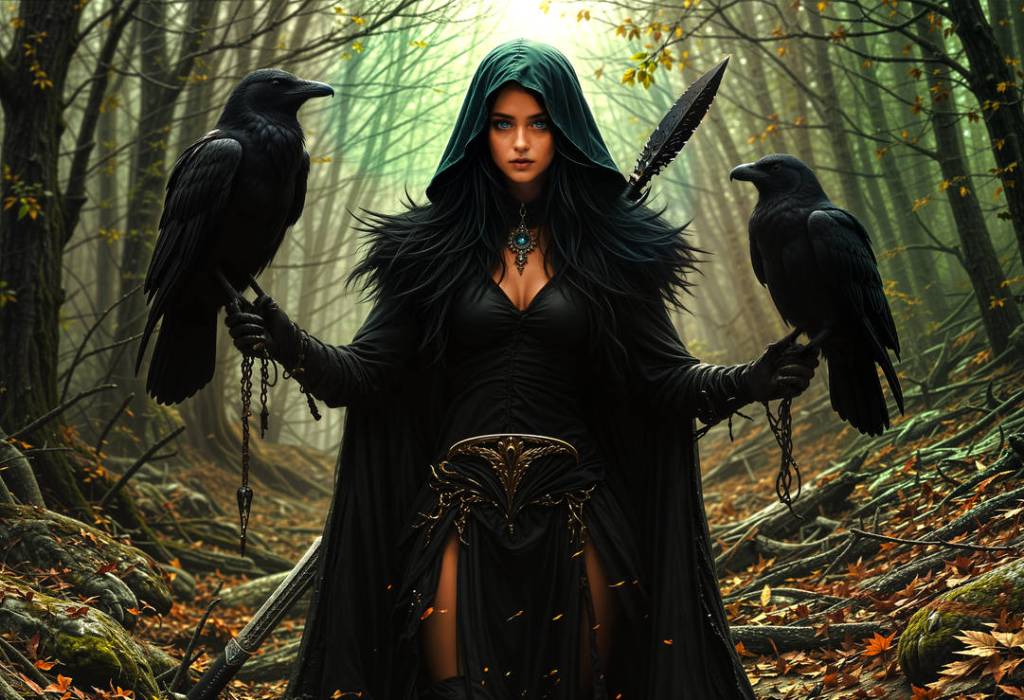
Another legend relating to the cave at Oweynagat is that it is the home of the Morrígan, a Celtic war goddess who, according to tradition, emerges from the cave each Samhain to bring chaos to the land. Ailill and Medb’s cats, who were supposed to roam out of Oweynagat on Samhain, are among the other mythological animals connected to the cave. They represent the chaos and the forces of nature that were thought to be let loose on this night.
Samhain: The Roots of Halloween
Samhain celebrations have a long history that predates written records. Samhain heralded the start of the dark of winter and the conclusion of the harvest season for the Celts. It was thought to be observed between October 31st and November 1st, sunset to sunset. Due to it being a transitional period, there was thought to be little separation between this world and the Otherworld. The veil thinned, enabling communication between living people and supernatural entities.
According to legend, Oweynagat cave is thought to become a portal to the otherworld at this time of year, where faeries and mortals may enter each other’s respective worlds. According to folklorist and professor, Dorothy Bray, “Samhain was a time charged with great supernatural energy and ordinary natural laws were suspended. The idea of the otherworld developed into the idea of the afterlife, so Samhain became a time when the worlds of life and death meet, when the souls of the dead return and can be seen.”

(Offerings to the spirits of the ancestors. Image Credit: ©E.Holohan 2024)
According to local archaeologist and historian, Daniel
Curley, “Monsters and manifestations would emerge, led by the goddess Morríghan,
to create a world ready for winter, including birds with foul breath that would
strip leaves from trees. Locals would stay indoors in fear of being dragged
into the other world when the ghouls had finished ravaging the land. If you had
to go outside you wore a costume and mask to look hideous. That way you would
be left alone and not dragged into the otherworld.”
Feasting, bonfires, and rituals honouring the ancestors were all part of Samhain. People made food and drink offerings outside their homes to calm any wandering spirits who were thought to be free to roam on this night. People sometimes wore frightening masks or costumes to either ward off or blend in with any supernatural creatures that had passed over into our world, and bonfires were lit to guide the way to lost spirits.
From Samhain to Halloween
Many ancient traditions were adapted and reinterpreted to conform to Christianity as it expanded over Ireland. On November 1st, the Church created All Saints’ Day, which is a day to commemorate saints and martyrs. The night before was called All Hallows’ Eve, which later transformed to “Halloween.”
Samhain rituals gave rise to modern Halloween traditions including trick-or-treating, pumpkin carving, and the wearing of spooky costumes. Wearing costumes to ward off any lost spirits gave rise to the Halloween custom of dressing up as monsters, ghosts, or other terrifying creatures. The modern custom of “trick-or-treating,” in which youngsters knock on doors looking for sweet treats, evolved from the habit of leaving out food offerings.

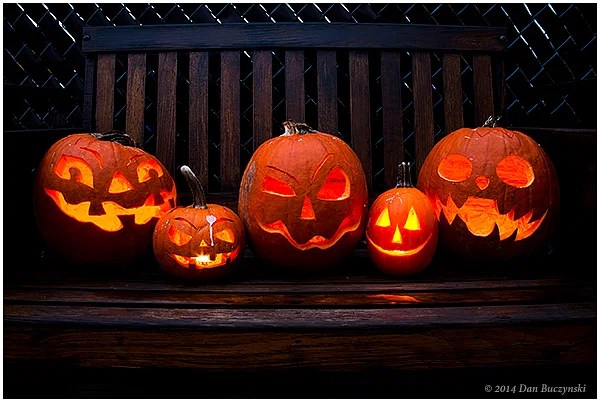
The jack-o’-lantern, another popular Halloween custom, has Irish origins too. In order to ward off evil spirits, people in Ireland used to carve swedes and place candles inside to make glowing lanterns. This custom was carried to America by Irish immigrants in the 19th century, and it eventually developed into the pumpkin lanterns we are accustomed to today
Oweynagat Cave Today
A trip to Oweynagat Cave provides a window into the past for those who are interested in learning more about the Irish origins of Halloween. Although the cave appears to be damp, murky and unassuming, it is simple to see why ancient humans sensed a power in its presence. Visitors may feel the weight of centuries’ worth of history, rituals and legend hanging in the air when they first enter Oweynagat cave.
Today, Halloween is mainly about entertaining costumes, sweets and light-hearted frights. However, Halloween’s origins lie much deeper; it has to do with ancestors, the cycles of nature, and myths surrounding the invisible realm. Oweynagat Cave is a mysterious reminder of the mythical beginnings of this well-known festival, as well as Ireland’s contributions to a festival now observed world over.
It is easy to imagine the ghosts of Rathcroghan’s ancient lands and possibly the cave’s mythical cats emerging from the depths of Oweynagat cave as Samhain draws near, serving as a powerful reminder that the real spirit of Halloween continues to reverberate throughout Ireland’s ancient landscapes.
Reference list
- Best, B. (2022). Halloween: Did it descend from a Roscommon cave? BBC News. [online] 31 Oct. Available at: https://www.bbc.co.uk/news/world-europe-63402457 [Accessed 3 Nov. 2024].
- Boatclub, B. (2024). How Hyper Capitalism has made Halloween more terrifying than its Pagan beginnings | The Blindboy Podcast. [online] Acast.com. Available at: https://shows.acast.com/blindboy/episodes/how-hyper-capitalism-has-made-halloween-more-terrifying-than [Accessed 3 Nov. 2024].
- emeraldisle.ie. (n.d.). Oweynagat | Emerald Isle Irish and Celtic myths, fairy tales and legends. [online] Available at: https://emeraldisle.ie/oweynagat [Accessed 3 Nov. 2024].
- Meyer, K. (1925). Echtra Nerai: the Adventures of Nera. Egerton MS. 1782, Folio 71b in The British Museum.
- Meyer, K. (n.d.). The Adventures of Nera. [online] http://www.ancienttexts.org. Available at: https://www.ancienttexts.org/library/celtic/ctexts/nera.html [Accessed 3 Nov. 2024].
- Ronan O’Connell (2020). How Ireland gave birth to Halloween. [online] The Independent. Available at: https://www.independent.co.uk/travel/europe/ireland/ireland-halloween-oweynagat-cave-samhain-b1451113.html [Accessed 3 Nov. 2024].
- RTÉ Brainstorm and Dempsey, G. (2024). ‘Ireland’s gate to hell’: a Co Roscommon cave and the Otherworld. RTE.ie. [online] doi:urn:epic:1172649.
- Tuatha. (2022). Oweynagat Cave • Archaeology & Folklore • Visitor Experience. [online] Available at: https://www.tuatha.ie/oweynagat-cave/ [Accessed 3 Nov. 2024].


 Ghost Catcher Isles