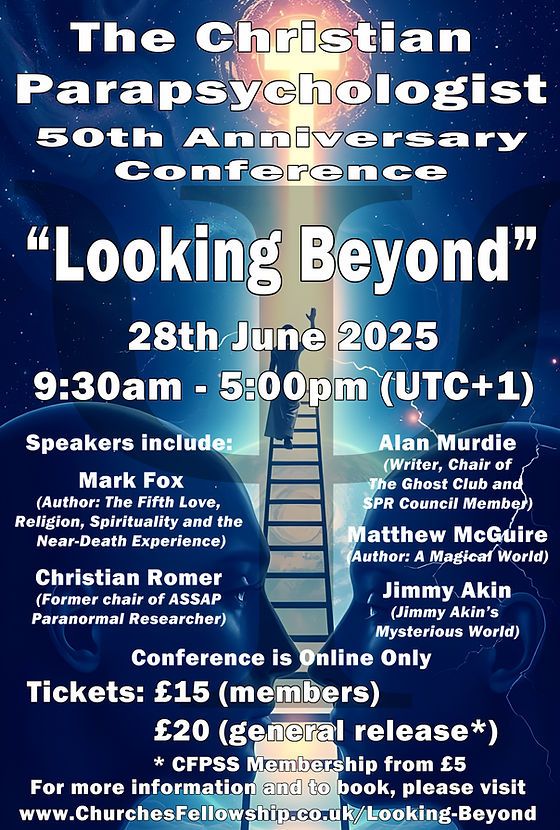
On Saturday, 28 June 2025, I had the opportunity to attend the online conference Looking Beyond, hosted by the Churches Fellowship for Psychical and Spiritual Studies. This event was particularly special as it marked the 50th anniversary of The Christian Parapsychologist journal. This publication has played a significant role in exploring the intersection of spirituality and parapsychology. As a humanist, I am always keen to learn about different beliefs, and this conference offered a unique lens through which to examine parapsychology from a Christian perspective.
The Churches Fellowship for Psychical and Spiritual Studies
The mission of the Churches Fellowship for Psychical and Spiritual Studies is to promote interaction and understanding between the fields of parapsychology and spirituality. By organising events such as Looking Beyond, the organisation hopes to provide a forum in which individuals can investigate the countless possibilities that exist outside the physical world. They are a significant force in the continuing discussion around the paranormal in a Christian setting due to their dedication to inclusion and open-mindedness.
The Christian Parapsychologist Journal
Founded in 1975, The Christian Parapsychologist journal has been at the forefront of research and discussion surrounding spirituality and anomalous phenomena. Over the past fifty years, it has published numerous articles that challenge conventional thinking and encourage exploration of the unseen dimensions of life. The journal’s anniversary celebration at this conference highlighted its continuing impact on both academic and spiritual communities.
The Host: Matt Arnold
The conference was led by Matt Arnold, editor of The Christian Parapsychologist. In addition to his role as editor, he is the author of The Invisible Dimension: Spirit-Beings, Ghosts, and the Afterlife and a researcher, writer, and lecturer on Christianity and the paranormal. His role was crucial in guiding the discussions and ensuring that each speaker’s insights were effectively communicated. Matt’s background in parapsychology and his passion for the subject shone through, making the event both engaging and informative.
Speaker Highlights
Alan Murdie: The Gospel Miracles in Light of Psychical Research
The opening talk of the conference came from Alan Murdie, chair of the Ghost Club and a council member of the Society for Psychical Research. Murdie is a barrister who has investigated various reports of hauntings and poltergeists in the UK and overseas. He writes and broadcasts widely, including a monthly column for Fortean Times.
Murdie’s opener was a thought-provoking talk on gospel miracles in light of psychical research. He argued that nothing about them is fundamentally contradictory, incompatible, or impossible in light of the data acquired since 1882. He explored how these ancient accounts can be understood through modern parapsychological frameworks, inviting attendees to consider the implications of faith and evidence in the study of the paranormal. His talk was a rollercoaster, taking us from the history of psychical research right through to modern parapsychology, even touching on contemporary quantum physics.
Christian J. Romer: The Discernment of Spirits: The Problem with Parapsychology
Next, Christian J. Romer, a paranormal researcher, former lecturer in religion, and former Chair of the Association for the Scientific Study of Anomalous Phenomena, addressed the discernment of spirits and the challenges faced in parapsychology. CJ discussed how he believes parapsychology went wrong by solely examining the subject from a physicalist point of view, and how Christianity can help people understand it better. His insights into the scientific exploration of the unknown emphasised the importance of scepticism and critical thinking in the field, encouraging participants to approach their enquiries with both curiosity and caution.
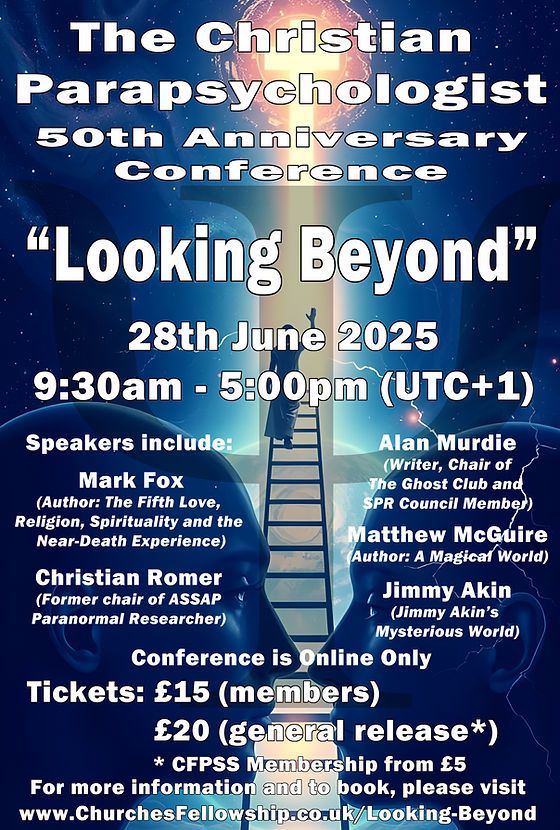
Dr Mark Fox: Fifty Years On: Half a Century of NDEs
One of the highlights of the conference for me was Dr Mark Fox, who delivered a captivating presentation titled 50 Years On: Half a Century of NDEs. Dr Fox is a researcher, author, and lecturer who studies Fortean occurrences, near-death experiences (NDEs), and spiritual encounters. His work combines theological, neurological, and parapsychological perspectives. He is the author of Lightforms and Cold Inn, as well as a regular contributor to Fortean Times and The Christian Parapsychologist.
This year marks the 50th anniversary of the term ‘Near-Death Experience’, and Dr Fox’s talk chronicled and evaluated many of the changes in the study of such experiences over that time: what we have learnt, what we have yet to learn, and where future research may lead us. He drew on a variety of NDE testimonies to reflect on his own growing understanding of them, particularly how he has come to see them through the lens of his Christian faith.
This talk resonated deeply with me, as I have experienced a few out-of-body experiences myself. Dr Fox’s exploration of NDEs revealed striking similarities to my own encounters, such as feelings of detachment from the body and altered perceptions of time and space. Listening to the stories of others who have undergone NDEs provided valuable insights into the nature of consciousness and what might lie beyond our physical existence. It also prompted me to reflect on the psychological and emotional effects of these profound experiences.
See below from the promo video for Dr Fox’s talk:
Matthew McGuire: Catharsis, Fotisis, Theosis: Christian Wisdom for Psychic Development
The first of two speakers from ‘over the pond’ in the USA was Matthew McGuire, who has a background in parapsychology and biblical studies. He discusses the relationship between parapsychology, spiritual experiences, and Christian theology in his writings and talks. In addition to writing for The Christian Parapsychologist, he is the author of A Magical World.
McGuire shared his insights on Christian wisdom for psychic development, focusing on concepts such as catharsis (the purification of the soul), fotisis (the enlightenment of the soul), and theosis (union with God). He led us through what the Christian wisdom tradition has to say regarding psychic gifts, which he maintains are latent abilities that humans are capable of. His talk encouraged attendees to consider how these spiritual principles can guide individuals in their exploration of the mystical and metaphysical realms, bridging the gap between faith and personal experience.
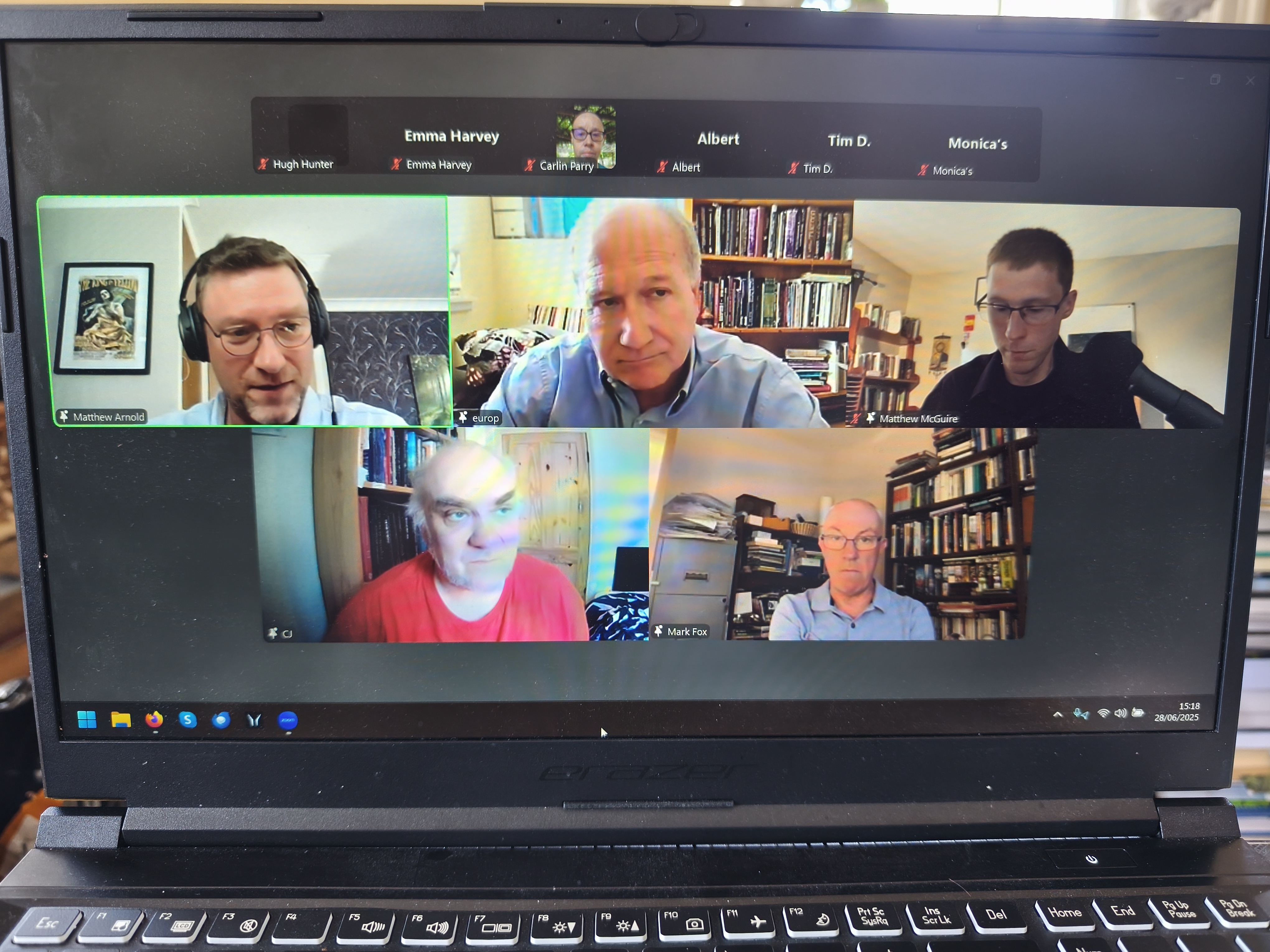
Jimmy Akin: Spirit Communication: A Fresh Appraisal
Finally, Jimmy Akin, the host of Jimmy Akin’s Mysterious World podcast, concluded the series of talks with a fresh appraisal of spirit communication. Akin’s work investigates the reasons behind the historical unease of many Christians regarding spirit communication techniques, including apparitions, automatic writing, mental mediumship, and spontaneous after-death contacts. His engaging presentation invited participants to reconsider the relevance of spirit communication in contemporary spiritual practices, emphasising the importance of understanding and interpreting these experiences within a modern context. His analysis, using biblical and theological perspectives, concluded that there is significantly more room for faithful Christians to engage in spirit communication than previously acknowledged.
Embracing Diverse Perspectives
Overall, the Looking Beyond conference was a remarkable experience for me as a humanist, packed with inspiring talks and engaging discussions. Each speaker brought their own unique perspective, which not only increased my understanding of parapsychology through a Christian lens but also led me to examine my own beliefs in this area. I found it particularly interesting to explore how spirituality and the paranormal can intersect with various worldviews. I wholeheartedly recommend this conference to individuals of all beliefs who are keen to learn more, as it encourages valuable insights and connections among people with diverse viewpoints. Exploring these themes is a journey well worth embarking on, and I feel fortunate to have had the chance to take part in such a fascinating event.
For more information please visit:

 Ghost Catcher Isles