Jack in the Green: Keeping Folk Traditions Alive in Bristol

A Springtime Wander into Another World

This May, I found myself caught up in something a little bit more magical than normal. I had just popped out for a walk into town when I heard the distant rattle of drums and the jingle of bells coming up the hill. Within moments, a leafy figure emerged around the corner; towering, green, and utterly hypnotic. Behind him came dancers, musicians, people in leafy crowns and cloaks, dogs wearing garlands, children skipping to the beat.
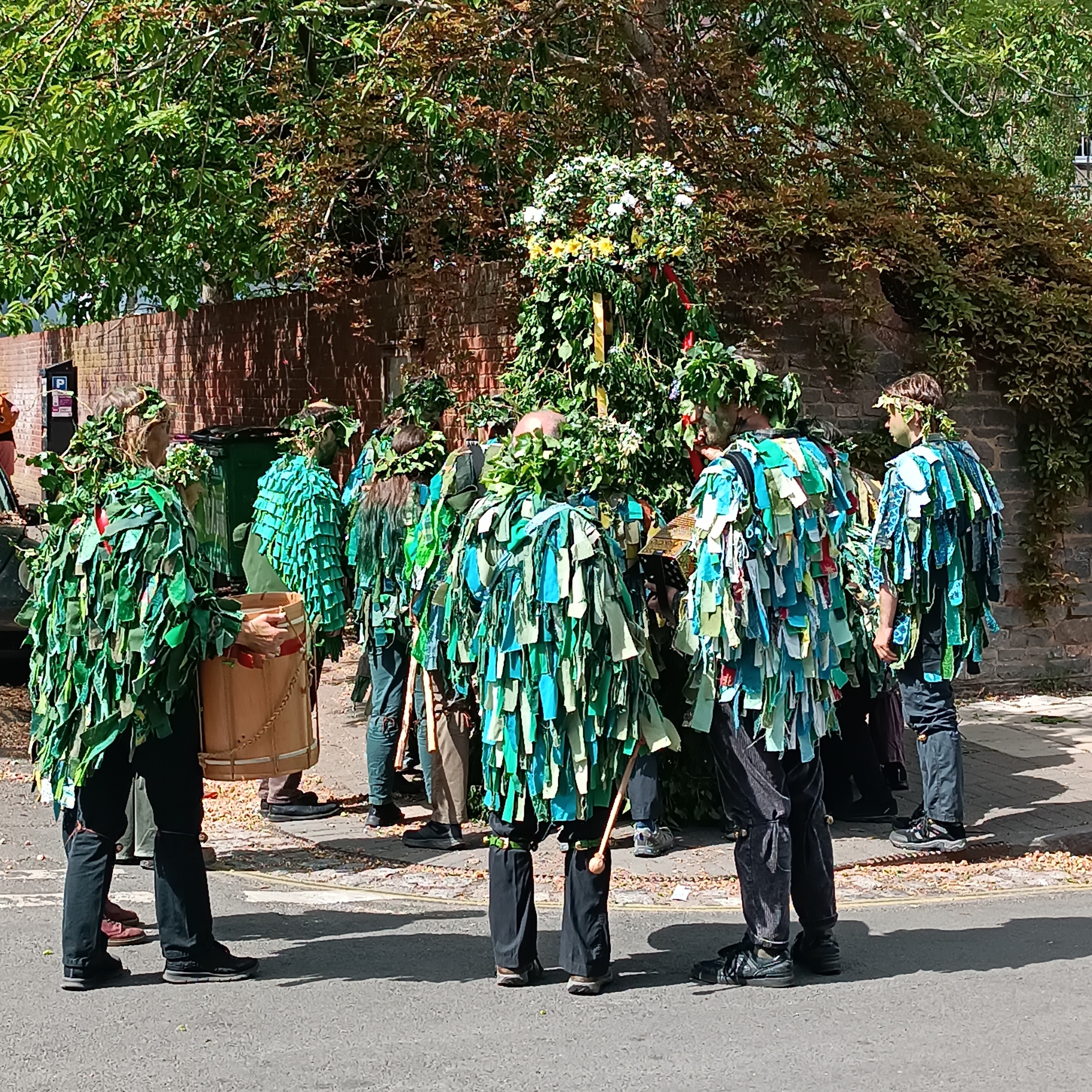
(Image: Bristol Jack in the Green. Source: ©E.Holohan 2025)

This was an encounter with the fascinating character, Jack in the Green. It passed right through my neighbourhood in Bristol, and for a while it felt like the city had been transported into a more ancient, greener version of itself.

There is something about this May festival that pulls at something deeper. In a world full of deadlines and distractions, encountering a celebration like this, which is full of colour, laughter, and ancient spirit, feels like stepping through a portal into another time.

So, what exactly is Jack in the Green? Where did it come from, and why does it still feel so relevant?

What Is Bristol’s Jack in the Green Festival?

Jack in the Green is a celebration of the coming of summer, rooted in old English folk traditions. It centres around a tall, leafy figure known as the Jack, who is completely clad in greenery. Think walking hedge, with just a hint of face peeking out, crowned in flowers and leaves.

Each year, on the first Saturday in May and around the May Day holiday, the Jack makes his way through parts of Bristol in a lively procession of dancers, drummers, musicians, and revellers all dressed in green.

This year, the Jack began at the historic harbourside and the procession made its way through the centre and up via Kingsdown, Cotham and Redland, winding along the streets, picking up curious onlookers as it passed. Jack’s attendants even painted onlookers’ noses green as they passed by, which is said to bring them good luck this summer. I was lucky enough to get myself a green nose too!

Eventually, the parade ended in a local park in Horfield. Here, Jack’s attendants delighted onlookers with dancing and reciting Jack’s poem. Here, sadly, Jack finally died, marking the end of spring and the start of Summer. After dancing through the streets and meeting city folk, Jack brought the Summer to Bristol, but now rests in peace until next year. Finally, onlookers took foliage from Jack’s body for good luck and to celebrate the long-awaited arrival of summer.

This festival is not just something to watch; it’s very much something to join in. People dress up, paint their faces green, bring tambourines or whistles, and dance beside complete strangers. It’s joyful, chaotic, and full of heart. And it belongs to Bristol.

The History of Jack in the Green

Although it feels ancient, Jack in the Green actually has roots in the 18th century. It grew out of May Day traditions among chimney sweeps, milkmaids, and other working-class people in London and elsewhere.

In those days, May Day was one of the rare holidays working people had. Chimney sweeps would parade through the town with music and garlands, collecting money and celebrating the return of warmer days. This served an important function for the sweeps in particular, who would need this money over the summer when they’d have little income. Over time, these garlands evolved into something bigger and bolder: a full figure made of foliage, worn by someone dancing through the crowd.

(Image: The 1795 engraving of a Jack in the Green, London. Source: CC BY-SA 3.0)

By the early 20th century, however, these celebrations had mostly faded. Victorian attitudes were snobbish about anything too rowdy, and folk customs began to disappear in favour of a more sanitised versions of British traditions.

It was not until the 1970s, when there was a broader revival of interest in folk music and traditions, that Jack in the Green began to return. Hastings was one of the first to bring it back in a big way, and other towns and cities, including Bristol, followed their lead.

Here in Bristol, the tradition was revived in the 1990s, thanks to local folk groups and performers who saw value in reclaiming this little piece of seasonal magic. Local groups have helped shape the festival into what it is today; a brilliant blend of history, creativity, and local pride.

Possible Pagan Roots and Green Man Magic

While Jack in the Green as we know it is not thousands of years old, it carries hints of much older beliefs. Many see links to the Green Man, who is a symbol you find carved in stone in churches across Britain and Europe. He is usually depicted as a face surrounded by leaves, often with greenery sprouting from his mouth. The Green Man is a symbol of nature, rebirth, and the never-ending cycle of the seasons.

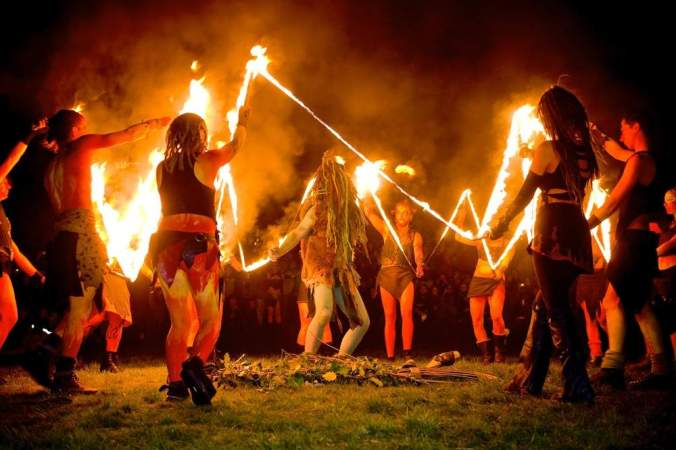
There is also a strong seasonal connection to Beltane, the old Celtic festival that marks the start of summer. Celebrated around the first of May, Beltane was all about fertility, fire, and celebrating the land waking up after winter. Modern Jack in the Green processions are not direct continuations of those rites, but they certainly share the same spirit of honouring growth, community, and the turning of the year.
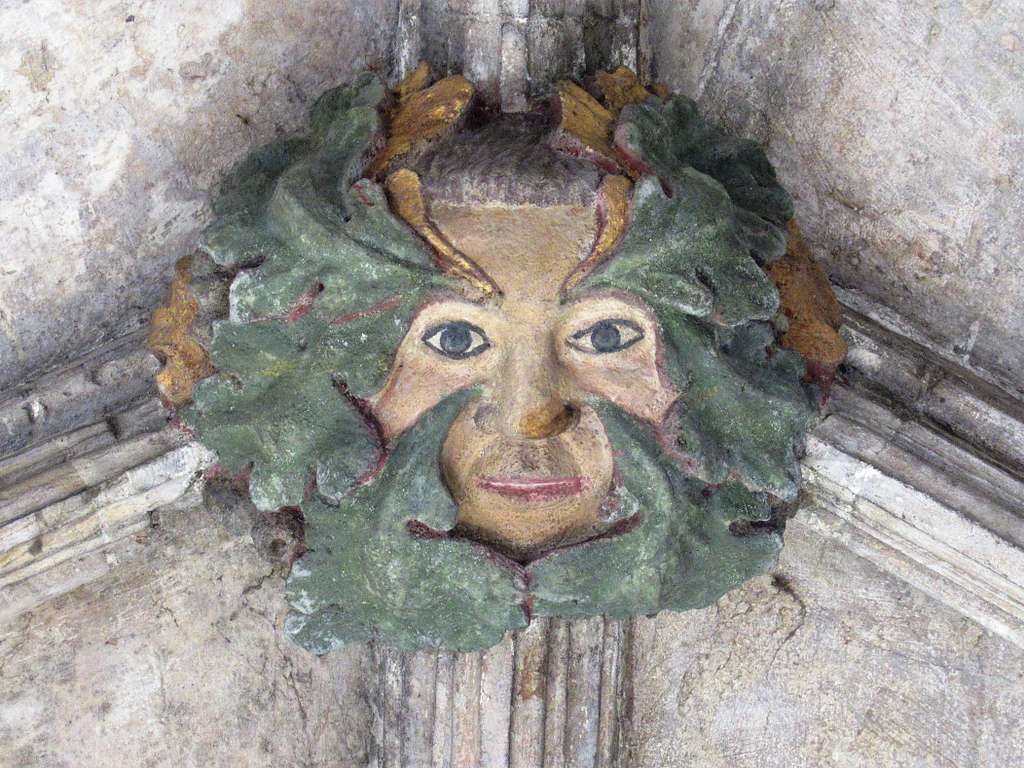
(Image: Norwich Cathedral cloisters, roof boss. Source: CC0.1.0 Univeral)

When you see the Jack dancing through the city streets, surrounded by bells and drums, it feels like something ancient stirs. You don’t need to believe in anything mystical to sense it; it’s there in the beat of the drums, the greenery and the joy.

Why We Still Need Jack in the Green

In a time when most of us spend our lives staring at screens, racing from one task to the next, a festival like this offers something rare: connection to place, people and nature. Jack in the Green reminds us of the things we often forget. That the seasons change. That we can share a laugh or a dance with a stranger and feel like we belong.

It brings people together with no barriers; just colour and music, and a shared moment. Children wave at the Jack like he’s a forest giant from a fairytale. Adults clap along and walk around with painted green noses. There’s space for everyone.

Let’s also not forget the symbolism. A figure made entirely of greenery parading through a modern city feels especially meaningful in an age where the natural world is under threat. The Jack becomes more than just a character; he is a reminder of what we stand to lose, and why it’s worth celebrating and protecting.

A Few Thoughts Before the Leaves Fall

As I walked home from my encounter with Jack in the Green with my painted green nose, the sounds of bells and drums fading behind me, I couldn’t help but smile. It wasn’t just about seeing something fun. It was about being part of something. Something old and new, silly and sacred, and wild and gentle all at once.

Bristol’s Jack in the Green is not trying to be trendy. It’s not polished or perfect. But it has a spirit, and in a world that often feels rushed and rootless, that’s exactly what we need more of.

Fancy Joining Next Year?

If you are in or near Bristol come next May, I would wholeheartedly recommend seeking out the Jack. Wear something green. Bring a rattle, a ribbon, or just yourself.

You can find updates from the organisers on: https://www.bristoljack.info/home

These traditions survive when people take part. So, let’s keep them alive because they bring joy, meaning, and magic to our everyday lives.
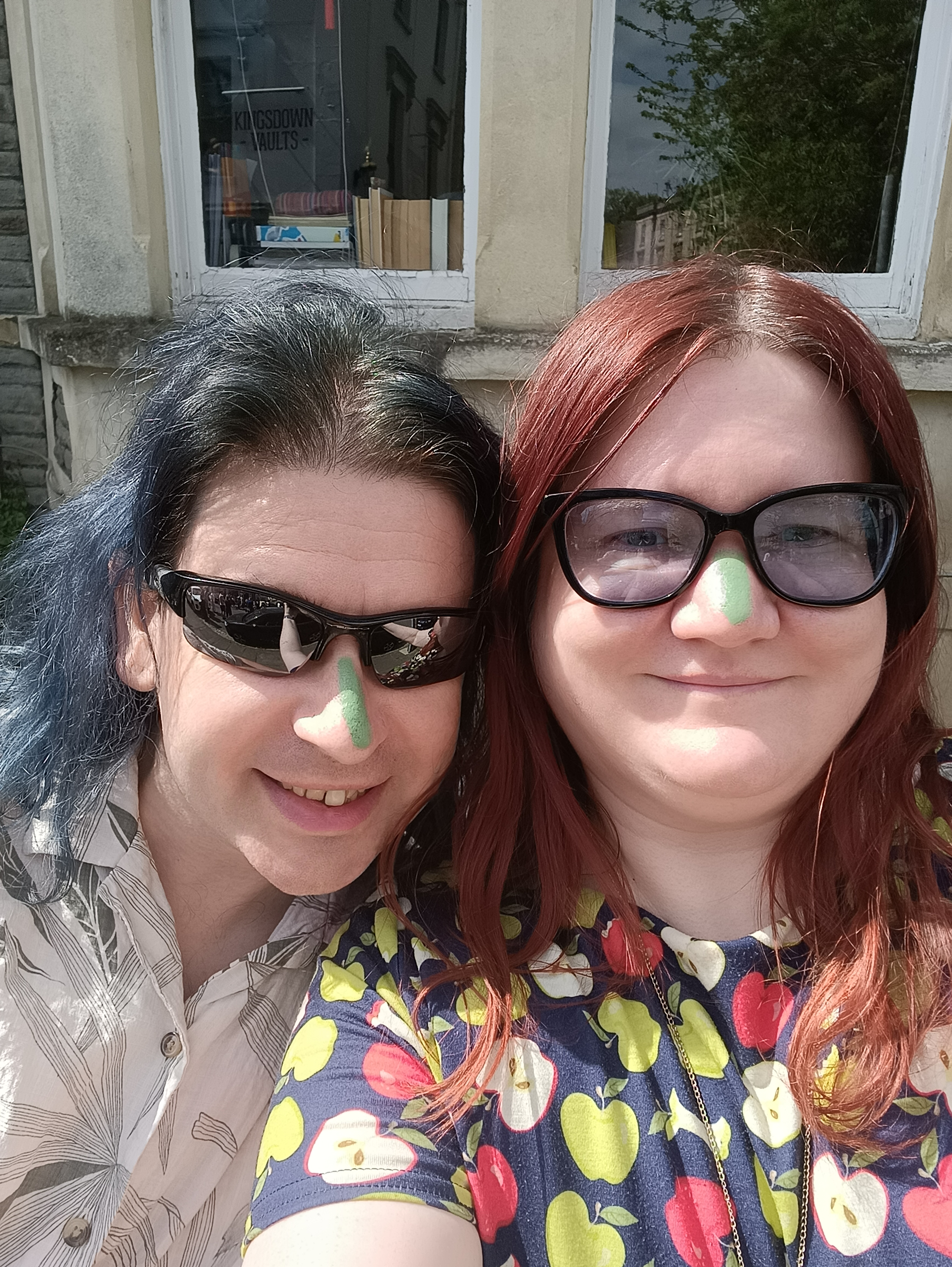
(Image: Lucky Green Noses. Source: ©E.Holohan 2025)

If you’d like to learn more about Bristol Jack in the Green, please check out the following documentary by Nicola Explores, “Bristol Folklore and Ritual: inside the Jack in the Green May Day Mayhem”


Reference list


Magic and Mystery at the Grand Opening of Bristol’s Haunted Bookshop

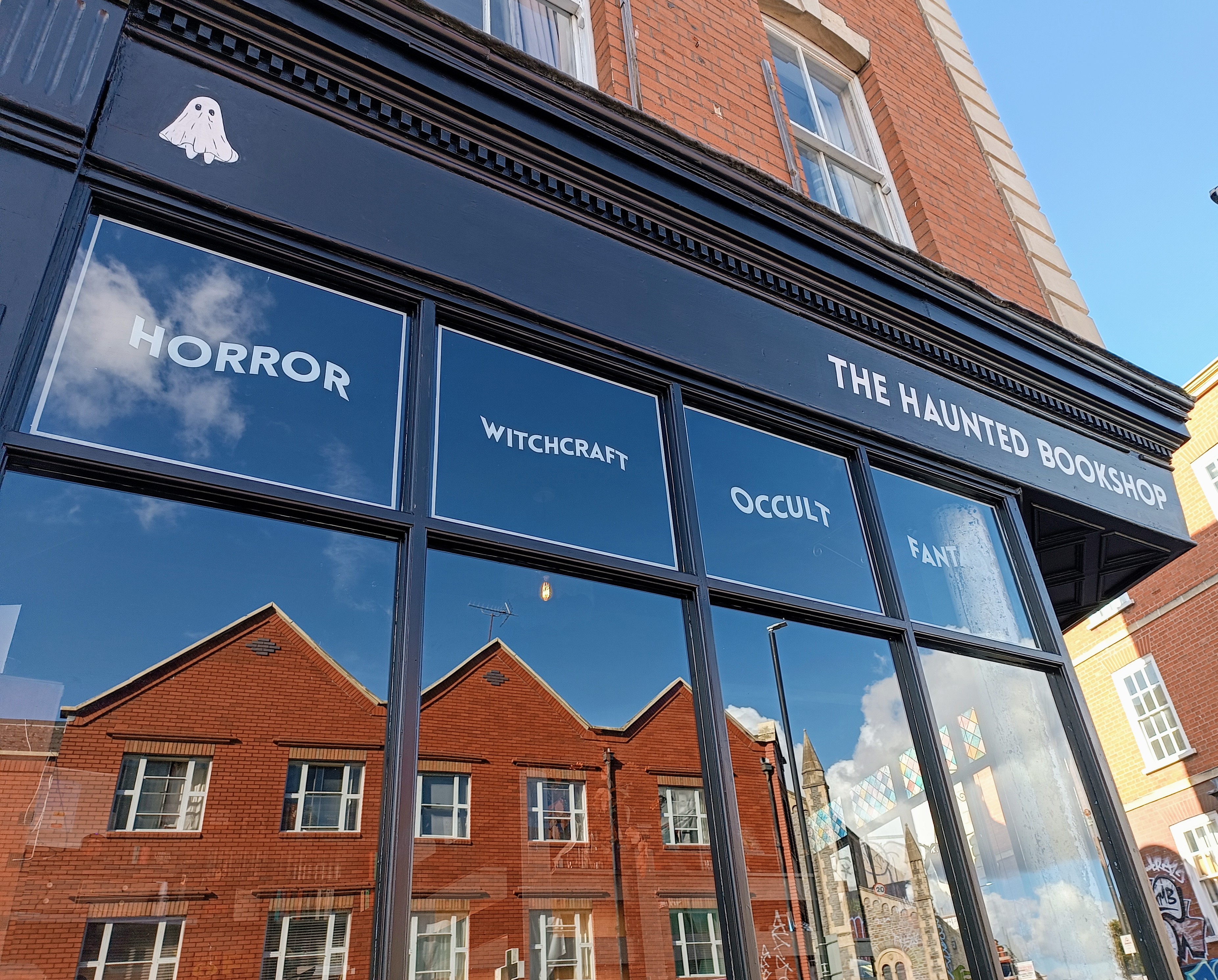
(The Haunted Bookshop, Bristol. Image Credit: ©E.Holohan)

On a mild autumn afternoon, I found myself standing in front of a brand-new gem in Bristol’s literary scene: the Haunted Bookshop. From the moment I saw its name gleaming on the sign above the shop, I knew I was in for something special.

“Step into a world of spine-chilling tales, mystical splendours, and ancient folklore as you explore our carefully curated collection of horror, fantasy, and witchcraft books,” the shop website says; “Whether you’re seeking spine-tingling thrills, fantastical adventures, or a deeper understanding of the occult, our shelves are brimming with stories sure to enchant you.”

(The Haunted Bookshop, Bristol. Image Credit: ©E.Holohan)

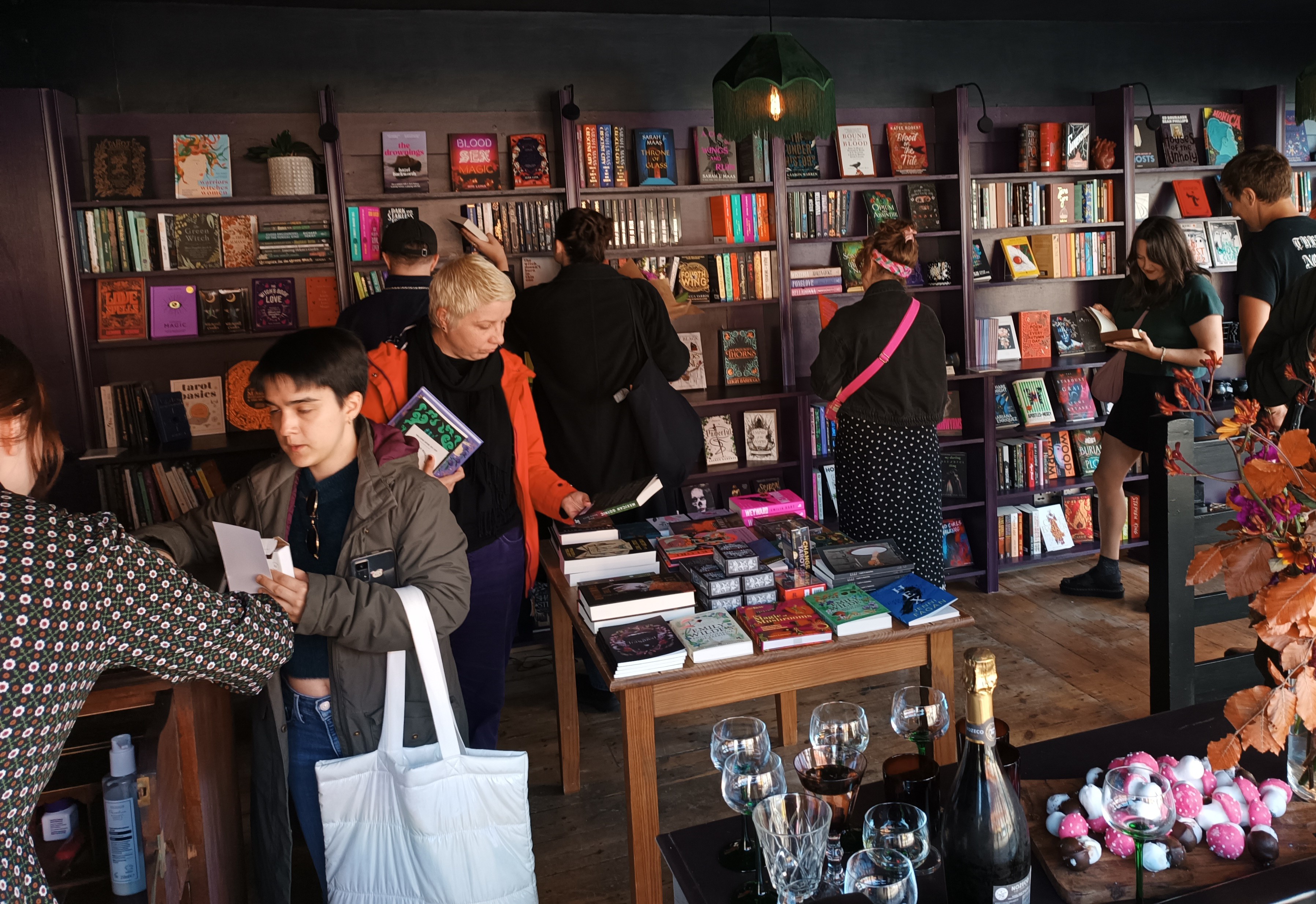
As soon as I stepped inside, it was as if I’d been transported to another realm. Dim lighting and wooden bookshelves lined with volumes of witchcraft, folklore, fantasy, and horror greeted me warmly.

I started with the books, of course. Being an unashamed lover of the weird and the wonderful, I couldn’t resist diving into their collection of witchcraft tomes, folklore books, and horror novels. Each shelf seemed to whisper promises of untold stories and ancient wisdom. After some delightful browsing, I settled on two books: one on folklore and another on modern witchcraft. Both felt like treasures in my hands, and I couldn’t wait to dig in and lose myself in their pages.

(Inside the bookshop. Image Credit: ©E.Holohan)

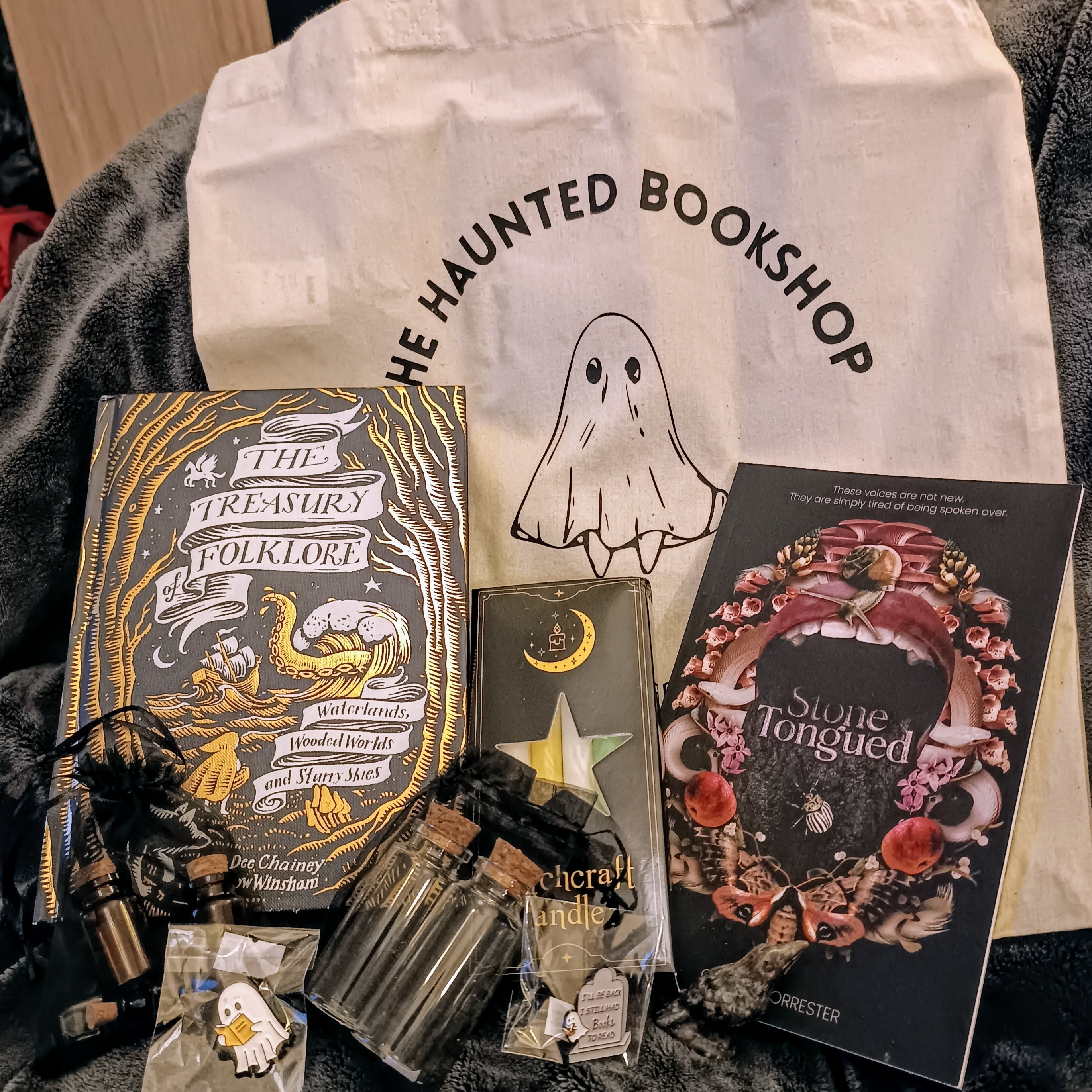
But the Haunted Bookshop wasn’t just about books. It was a haven for all things witchy and mystical. Scattered throughout the shop were displays of witchcraft supplies: delicate candles in deep purples and blacks, bundles of sage tied with twine, and shelves gleaming with crystals of every color. I was immediately drawn to a striking crow-shaped crystal, charcoal grey and glossy, which seemed to call out to me from across the room. It felt right in my hand, and before I knew it, it was mine. Along with a tote bag (because who can resist a good bookish tote?), and some adorable ghost-themed metal pin badges—perfect little nods to the spooky vibes.

One of the highlights of the visit was chatting with the shop’s owner. Monika had a warm, earthy energy, the kind you’d expect from someone who truly believes in the magic of what they’re doing. We talked about the inspiration behind the shop, her love for esoteric books, and how important it is to create a space where people can explore these topics freely.

In her recent interview with Bristol24/7 Monika said: “I’ve always read horror and fantasy books and liked spooky things, Halloween is my favourite time of the year, so I just wanted to stand out.”

Monika credits her grandmother as being the one to have instilled a passion for books in her, having grown up spending a lot of time in her grandmother’s bookshop. Downstairs, Monika said she plans on opening a comfy seating area ready to start hosting events such as horror book clubs, tarot card readings and more.

(Drinks and mushroom shaped biscuits. Image Credit: ©E.Holohan)

As we chatted, she handed me a glass of prosecco to toast the opening. I sipped and soaked it all in; this cozy, mystical bookshop, where like-minded souls could gather and find a little magic of their own.

And just when I thought the experience couldn’t get any better, I was towards a plate of mushroom-shaped biscuits, which felt like a whimsical finishing touch to the whole evening. Slightly sweet, slightly earthy, and deliciously unique; just like the shop itself.

Leaving the Haunted Bookshop felt like stepping back into the real world after a brief, enchanted escape. But as I walked out into the bustle of Stokes Croft, my bag filled with books, a crow crystal, and other witchy goodies, I couldn’t help but feel that I had taken a piece of that magic with me. There’s something comforting about knowing that spaces like this exist, where the curious and the mystical meet in such a beautiful, welcoming way.

(My haul of goodies. Image Credit: ©E.Holohan)

The Haunted Bookshop is sure to become one of my favorite haunts (pun intended), and I can’t wait to go back, especially as the colder months draw in. There’s just something about autumn, witchcraft, and folklore that feels so perfectly intertwined. If you’re ever in Bristol and want to indulge in a little magic, mystery, and literary wonder, this is the place to be. And who knows—maybe you’ll even leave with your own bit of enchanted treasure.

Open Tuesday to Saturday, from 12-6pm, you’ll find The Haunted Bookshop at 43 Stokes Croft, Bristol BS1 3PY.

Reference List

From the blog

Stay up to date with the latest from our blog.

Exploring Enchantment: A Day at the Museum of Witchcraft and Magic in Boscastle, Cornwall

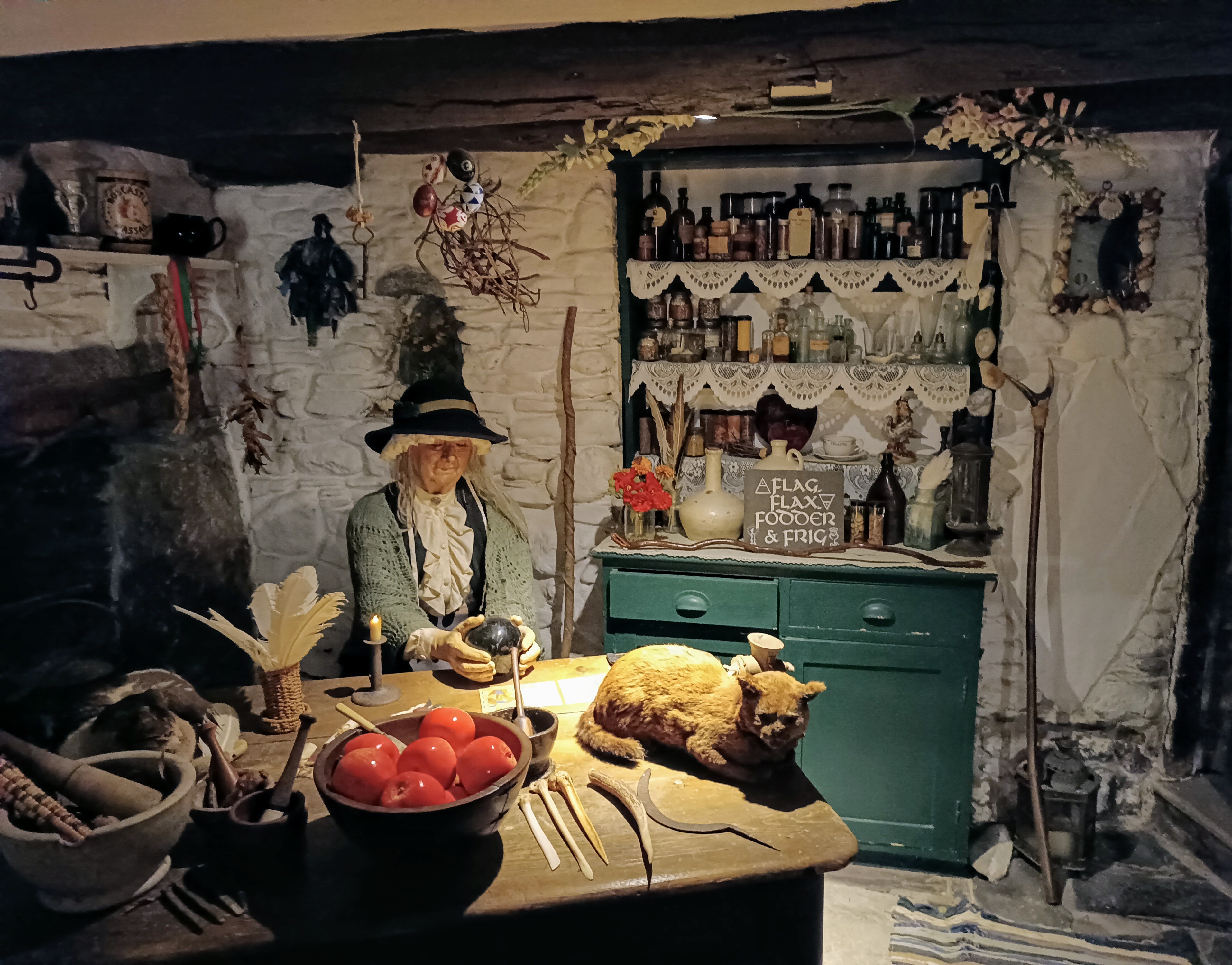
(Inside the witch’s cottage. Image Source: E.Holohan 2024)

Nestled in the picturesque village of Boscastle, Cornwall, lies a treasure trove of the mystical and arcane: the Museum of Witchcraft and Magic. As a history enthusiast and seeker of the strange and unusual, I recently had the pleasure of visiting this fascinating museum, and it was an experience that transported me through centuries of magic, folklore, and the human imagination.

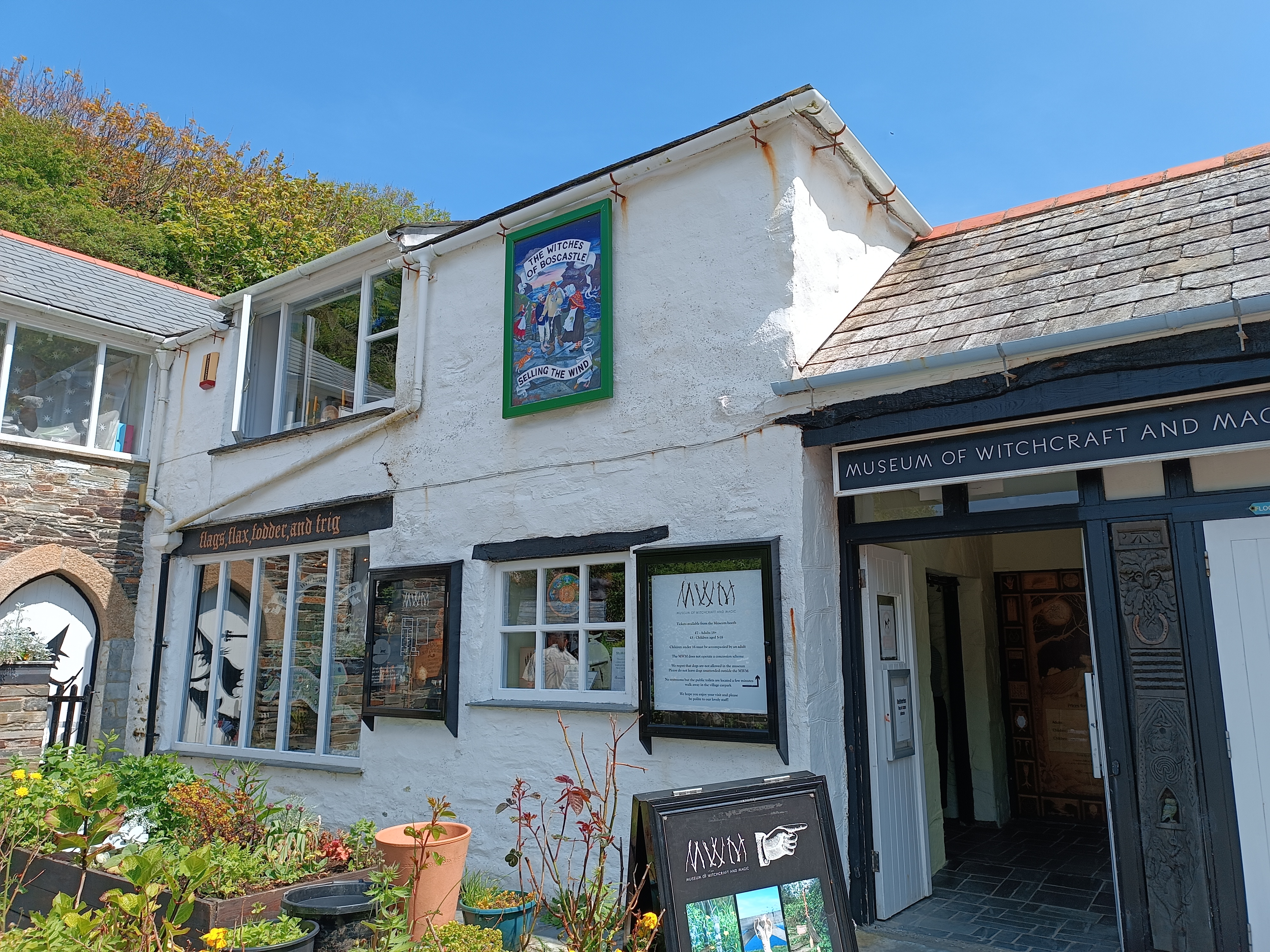
(Museum of Witchcraft and Magic. Image Source: E.Holohan 2024)

The Museum of Witchcraft and Magic

The museum was founded by Cecil Williamson, who had had an interest in witchcraft and magic since childhood, and was a friend of Gerald Gardner who propagated a new religion called Wicca (later known as Gardnerian Wicca). The museum was first set up in Stratford-Upon-Avon and then moved, for the most part due to local opposition, to the Isle of Man, where Gardner became the ‘witch in residence’. After time, Gardner and Williamson parted company. Williamson then settled in the small Cornish harbour village of Boscastle where he opened the Museum of Witchcraft in 1960, where it remains until today.

In 1996 Williamson sold the museum to Graham King, who continued to grow and develop the museum, gaining an international reputation and a worldwide audience of visitors and researchers. Disaster almost befell the museum in 2004 when a devastating flood swept through Boscastle, leaving destruction in its wake. The fast-thinking Graham King was the first to raise the alarm, helping residents and visitors to safety while also protecting the vast majority of the museum’s precious artifacts from the floods.

In 2013 Graham King gave the museum and its contents to Simon Costin, Director of the Museum of British Folklore, and in 2015 the museum was renamed “The Museum of Witchcraft and Magic” to more accurately describe the present museum’s collection.

The collections

The museum now proudly holds the world’s largest collection of witchcraft-related artifacts. It includes over 4,500 objects and over 9,500 books and manuscripts. It is both the largest collection of such items and also likely the largest occult library in Europe. Walking through its doors felt like stepping into another realm. The exhibits are artfully arranged, guiding visitors on a journey from ancient pagan traditions to contemporary Wiccan practices, illuminating the myriad ways in which witchcraft has shaped culture and belief systems through the ages.

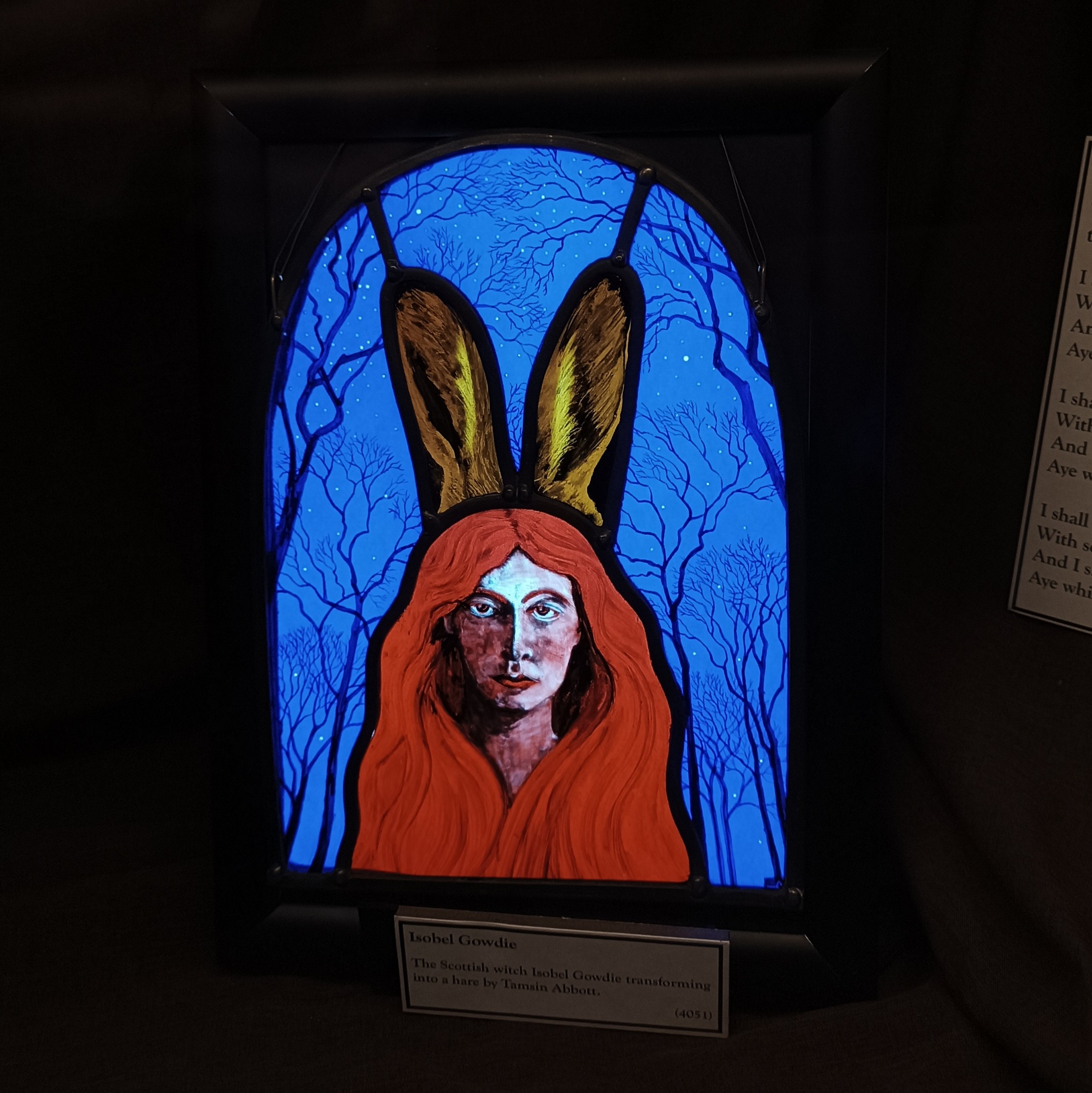
(Isobel Gowdie. Image Source: E.Holohan 2024)

The collection’s depth is astounding. I found myself entranced by displays of ancient charms, delicate poppets, and beautifully preserved herbs used in various spells and rituals. In the “Images of Witchcraft” I saw depictions of all kinds of witches throughout history, from images of the devil worshiping ugly old hag witches that were used as propaganda to fuel the witch-hunts to the beautiful, mysterious and seductive witches of the Pre-Raphaelite artists of the Victorians, who took their inspiration from mythology and legends, such as the witches of Arthurian and Greek legends.

The Witch Hunts

A particular highlight of the museum is the display dedicated to the persecution of witches. Here, the atmosphere shifts, becoming sombre as the grim reality of persecution unfolds. The peak of witch trials was in the 17th and 18th centuries and many ‘cunning folk’ and ordinary people were accused of using witchcraft. These people were imprisoned, tested, and tortured to obtain ‘confessions’ and sentenced to death. Torture devices such as thumb screws and heated leg irons were used to extract confessions to even the most outlandish claims of witchcraft.  Witches were also put through tests, such as the identifying of “Devil’s Marks”, which were just natural birthmarks, moles, blemishes, or warts. If found they were thought to be a sure sign of a witch. If these marks were pricked with a ‘witch pricker’, a long pin, and didn’t draw blood the person was seen to be proved a witch. Detailed accounts and historical documents bring to light the tragic fates of many accused witches, offering a poignant reminder of the dangers of superstition and scapegoating.

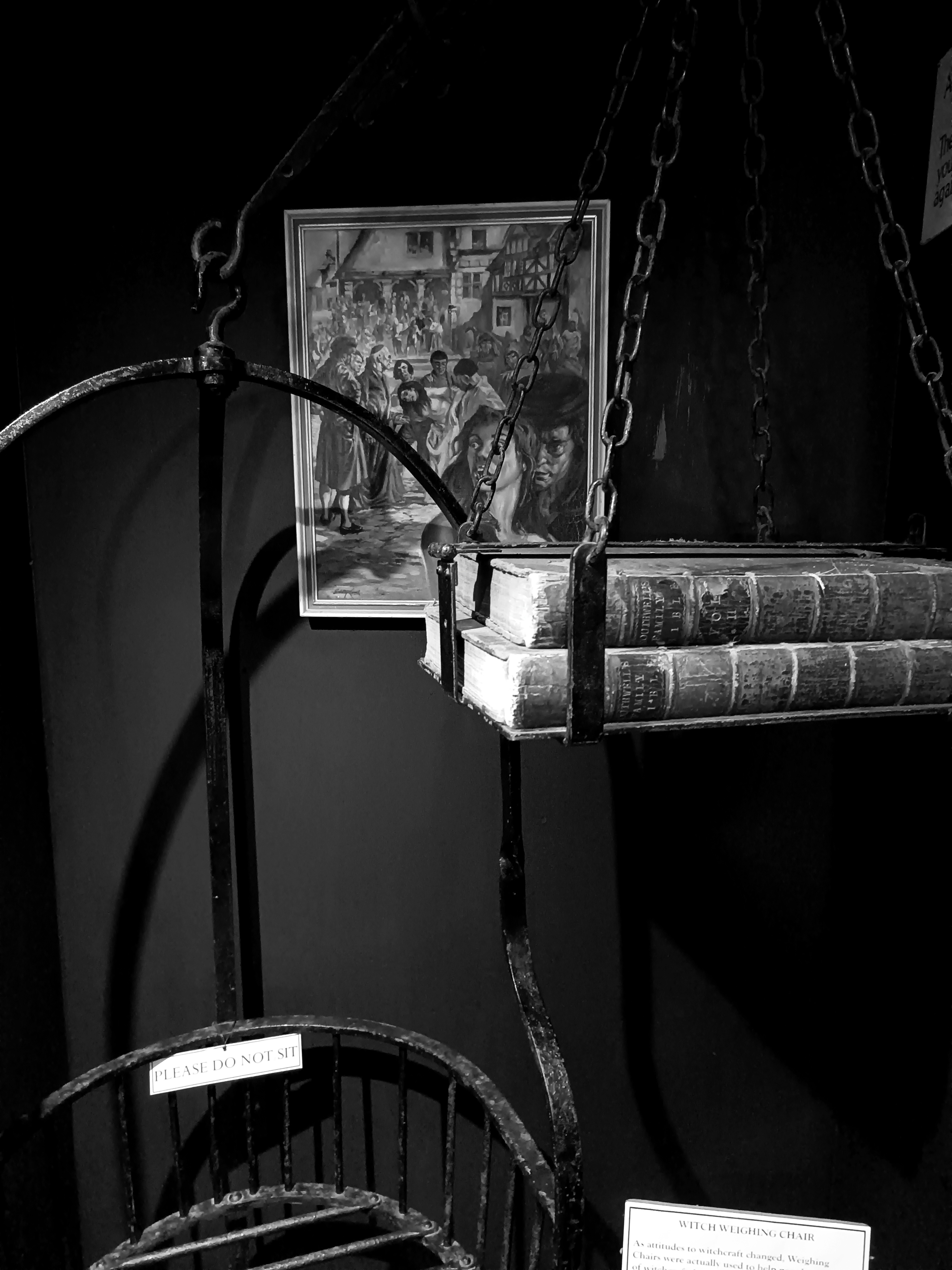
(The Weighing Chair. Image Source: E.Holohan 2024)

Of all the exhibits in this section on the witch trials, I found the weighing chair the most fascinating. This is an iron chair that acts as a set of scales; on one side the victim would be sat, and on the other side the bible would be balanced. If the victim proved lighter than the bible, they were thought to be proved a witch. This device was a more positive item in that it was likely created when authorities were keen to disprove the practice of witchcraft and limit further prosecutions, as of course, nobody weighs less than a bible.

Charms and Curses

The items that unsettled me the most, however, were the “poppets”. These are objects that are often formed in the likeness of an individual who is to be cursed. These were often made of wax, but also other materials such as wool and textiles, and often contained something that belonged to the person, such as nail clippings, hair cuttings or a piece of clothing. Some of the poppets even had needles piercing them. Many curses were not intended to kill or physically harm. One poppet on display had a needle piercing its tongue, intending to stop the victim from spreading malicious gossip. Although these items could be used negatively for curses bringing misfortune, they could also be used to heal sickness by washing the poppet in healing herbs and oils. This once again, disproves the misconception that witches always used their powers for evil, rather than good. Despite this, the poppets pierced with needles gave me a visceral feeling of nausea, which meant I couldn’t stay long in that section looking at them.

(Poppet. Image Source: E.Holohan 2024)

Fairy folk and Piskies

The museum also features some of the lighter aspects of magic. One exhibit is devoted to the whimsical side of folklore, featuring fairy lore and magical creatures such as Cornish Piskies. There has been a belief in fairy folk for centuries in the British Isles and it is said that piskies are the departed souls of druids who once inhabited the West Country or even the souls of unbaptised children. All manner of fairy and pisky can be seen in the exhibit, even some pictured playfully dealing out cards on a human skull. This blend of the serious and the playful reflects the museum’s comprehensive approach to the subject, appealing to both scholarly interests and casual curiosity.

(Piskies. Image Source: E.Holohan 2024)

The Hare Lady

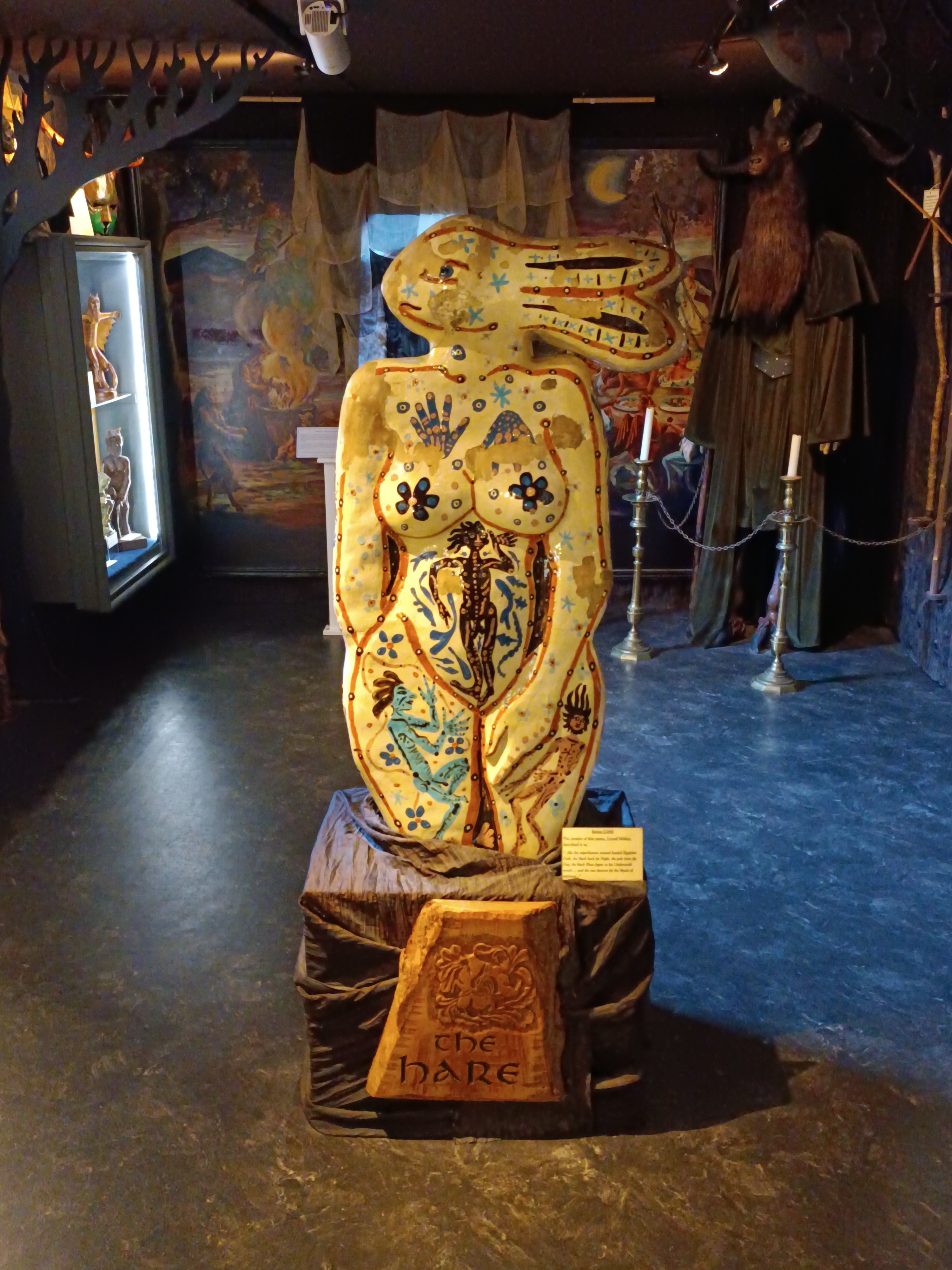
One exhibit I found particularly impressive was “The Hare Lady”. This is a sculpture made by artist Lionel Miskin in the 1960s. This sculpture was inspired by aspects of the Playboy Bunny Girls, animal totems, underworld spirits and shapeshifting witches. Hare have long been associated with witches and witchcraft, with some witches during the witch trials claiming to be able to transform into hares. Hares also have long associations and connections with the moon and goddesses such as Diana. For me, the hare reminds me of my late mother, who had hares living close to her home which seemed to greet me when we drove to her house to see her and made an almost magical close-up appearance to me in a field in the week following her death. This wonderful hare sculpture therefore caught my eye due to this personal association and moved me with its beauty.

(The Hare Lady. Image Source: E.Holohan 2024)

Return to the mundane world with a little piece of magic

Before leaving, I made sure to visit the museum shop, which offers an array of books, magical tools, and curiosities. I left with a beautifully made “protection” bracelet—a little piece of magic to remind me of my visit.

(Guide book and charm bracelet. Image Source: E.Holohan 2024)

In a world where the rush of modern life and digital distractions often drown out the mystical and historical, the Museum of Witchcraft and Magic in Boscastle stands as a haven for those yearning to tap into the ancient, hidden currents of human experience. Whether you’re a seasoned witch, a history buff, or simply someone with a curious mind, this museum promises an unforgettable journey into the heart of magic, witchcraft and folklore.

If you find yourself in Cornwall, don’t miss the chance to explore this enchanting museum. Who knows? You might just leave with a little magic of your own.

Reference list

Atlas Obscura. (2013). The Museum of Witchcraft & Magic. [online] Available at: https://www.atlasobscura.com/places/the-museum-of-witchcraft-boscastle-cornwall-boscastle-england [Accessed 23 Aug. 2024].

Museum of Witchcraft and Magic Guidebook. (2024).

Museum of Witchcraft and Magic. (n.d.). Museum of Witchcraft and Magic. [online] Available at: https://museumofwitchcraftandmagic.co.uk/history/ [Accessed 23 Aug. 2024].

Pearce, A.S. (2020). The Mystical Museum Of Witchcraft And Magic In Boscastle: 10 Reasons Why You MUST Visit! [online] thirdeyetraveller.com. Available at: https://thirdeyetraveller.com/museum-of-witchcraft-and-magic-boscastle/ [Accessed 23 Aug. 2024].

Smith, I. (2023). How witchcraft came to the Cornish coast | Apollo Magazine. [online] Apollo Magazine. Available at: https://www.apollo-magazine.com/museum-of-witchcraft-magic-simon-costin-halloween/ [Accessed 23 Aug. 2024].

Wingett, M. (2012). Visit To Museum Of Witchcraft In Boscastle, Cornwall | Spooky Isles. [online] Spooky Isles. Available at: http://www.spookyisles.com/museum-of-witchcraft-boscastle/ [Accessed 23 Aug. 2024].

Paranormal Adventures at ParaMeet South 2024

Last weekend myself and my husband embarked on an exciting adventure into the realms of the paranormal at ParaMeet South 2024. Held at the historic Leigh Park Hotel in Wiltshire, this weekend event delivered a fascinating lineup of talks, encounters, and esoteric discoveries.

Myself on the left (Ghost Catcher Isles), my husband (centre), and Emma Heard on the right (Weird Wiltshire) with the Haunted Magazine guys

The event was organised by the folks behind HAPRC (Haunted Antiques and Paranormal Research Centre) from Hinckley, Leicestershire, and was part of a series of GPN (Ghost Planet Network) ParaMeet events taking place in different venues in the North, Midlands, and South of England.

This was a two-day event offering both weekend passes and day tickets and I opted on this occasion to attend on the Saturday only so I could sample the event.

The Venue: Leigh Park Hotel in Bradford-on-Avon, Wiltshire

Nestled in the picturesque town of Bradford on Avon, just a stone’s throw away from Bath, the Leigh Park Country House Hotel & Vineyard beckons with a warm embrace to all who seek refuge within its historic walls. Surrounded by five acres of landscaped gardens that overlook the beautiful Wiltshire Downs, this classical Georgian country house hotel exudes charm and character. The original house here was gifted to Elizabeth I by the Earl of Leicester in 1571. Since then, it has been used as a private home, a hospital, and now a luxury hotel. From the moment you step through its doors, you’re enveloped in an atmosphere where hospitality and history intertwine, promising an unforgettable experience: the perfect venue for exploring a day of action-packed paranormal events.

The Day’s Highlights

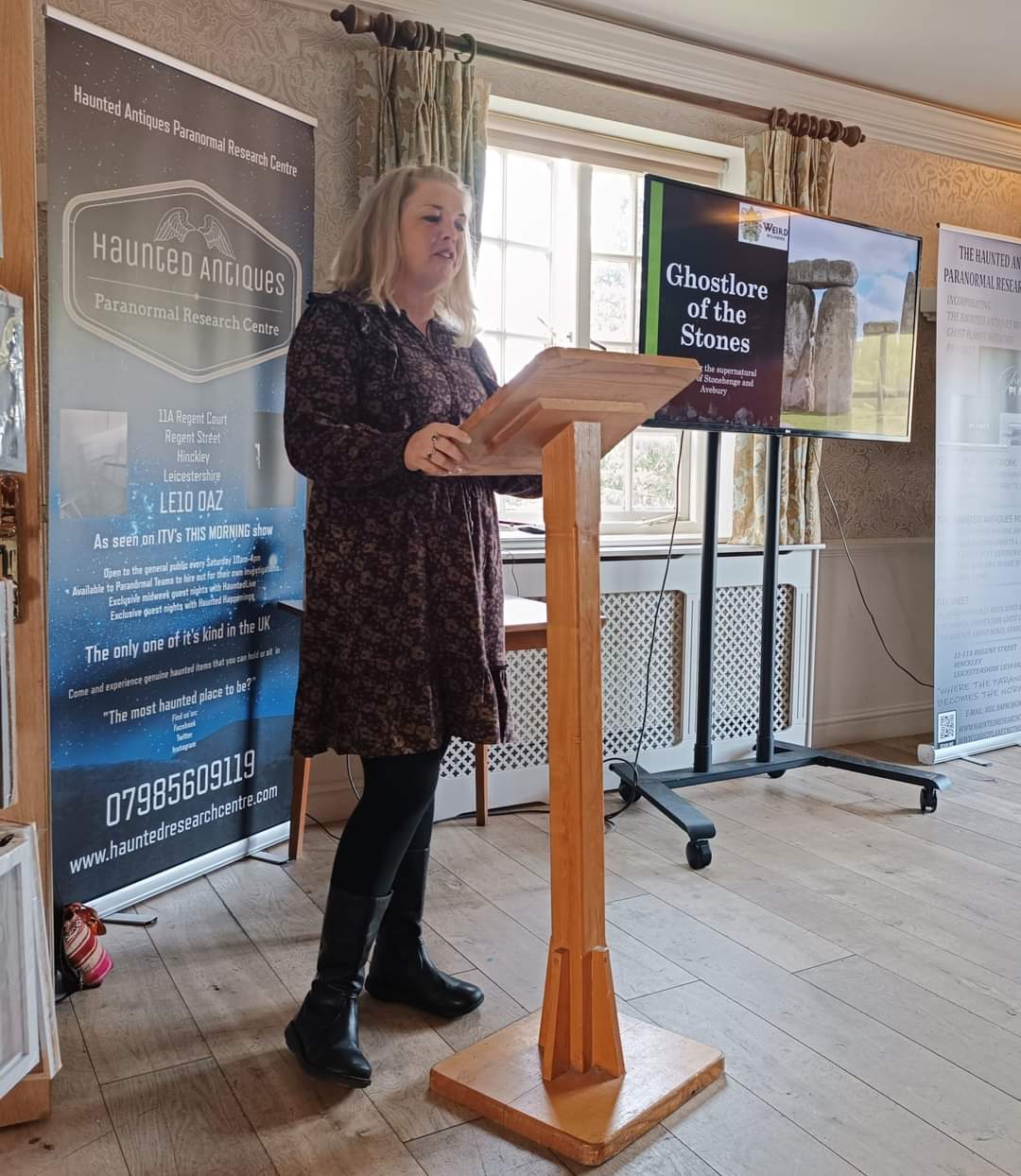
Emma Heard (Weird Wiltshire Blog)

Following a welcome from the organisers, our day commenced with a captivating presentation by my chum Emma Heard, known for her insightful musings on the supernatural through her Weird Wiltshire blog. Emma delved into the mysteries surrounding Stonehenge and Avebury stone circles, weaving tales of ancient folklore and eerie encounters that left us spellbound.

Throughout the day, we were treated to a variety of talks, each offering a unique perspective on the paranormal. Barrie John, renowned for his appearances on ‘Most Haunted’, illuminated the audience with insights into mediumship, while Rachel Hayward, a seasoned paranormal investigator, and consultant, shared her intriguing research on a lesser-known Forest of Dean witch, Ellen Hayward.

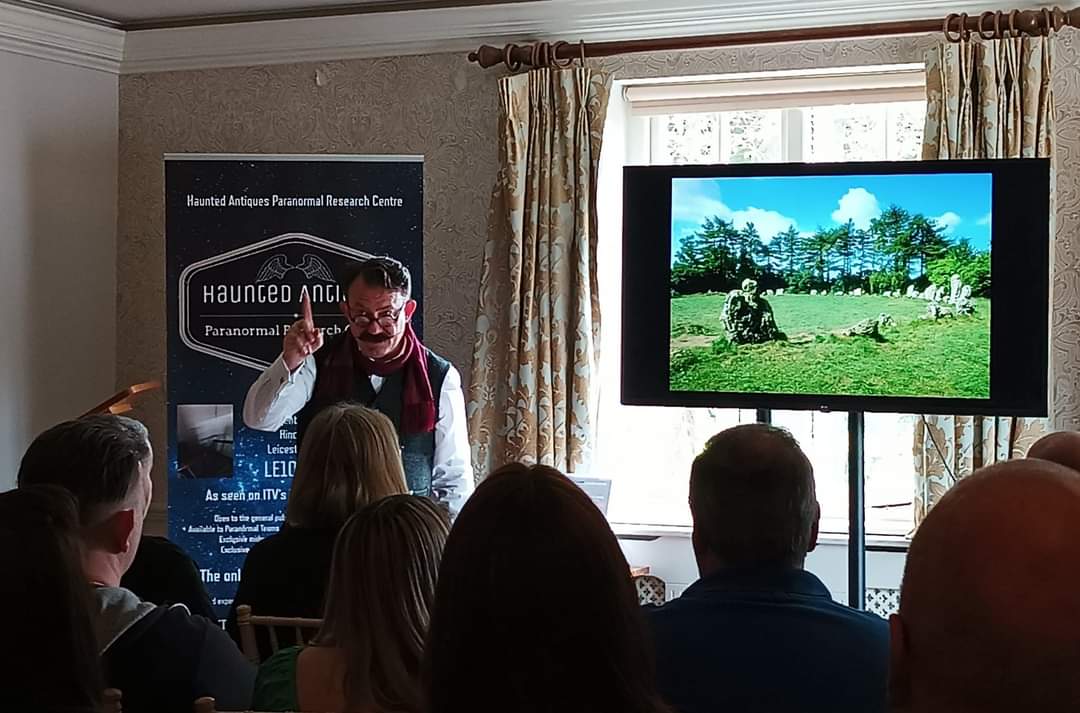
Historian and writer Neil R. Storey

One highlight of the event for me was a presentation by Neil R. Storey, a distinguished historian and writer, whose discussion on an unsolved 1940s Warwickshire witch persecution-related murder from his book “The Blackout Murders” provided a chilling glimpse into a dark chapter of history.

Amidst the enlightening talks, we took the opportunity to peruse the stalls adorned with esoteric treasures. From cool ghost gear to arcane artifacts, every vendor had something that made you think, “Hmm, maybe there’s more to this world than meets the eye.” It was here that we had the pleasure of geeking out with the Haunted Magazine crew, chatting about all things spooky and supernatural.

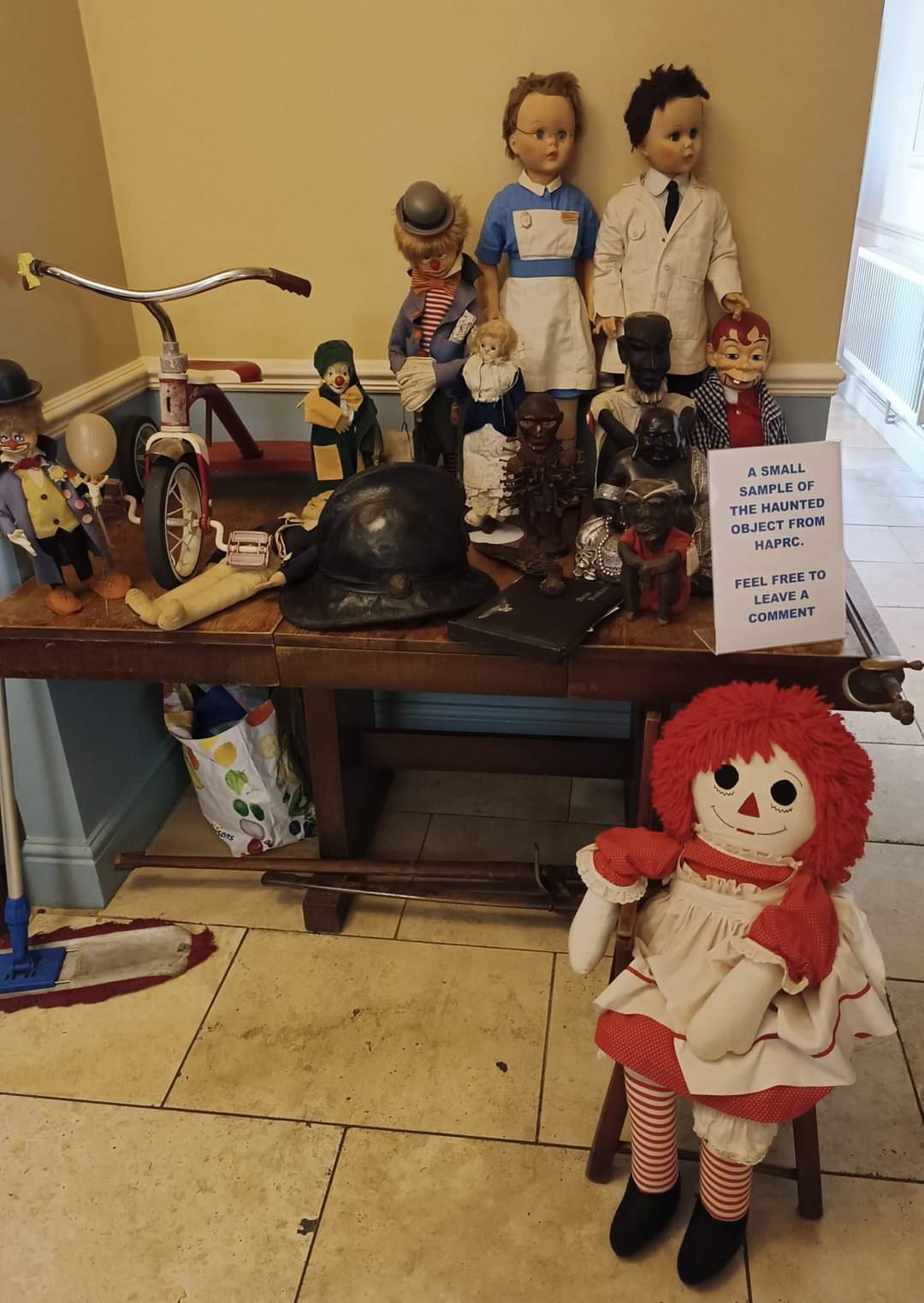
Haunted Items from HAPRC

Also on offer throughout the day were ghost hunt experiences in a haunted room, past life regression sessions, Tarot readings, and mediumship readings. We could also check out a selection of haunted objects from HAPRC, including some extremely creepy dolls.

Although we regrettably couldn’t stay for the evening events, our day at ParaMeet South was nothing short of exhilarating. The friendly atmosphere among fellow attendees, the wealth of knowledge shared by the excellent team of speakers, and the allure of the paranormal made for an unforgettable experience.

Learn More