Welcome to Ghost Catcher Isles, chronicling the weird, wonderful and eerie of the isles of Great Britain and the Republic of Ireland. Come with me on my adventures into the strange and paranormal
A Gothic Tale of Secrets and Victorian Spiritualism
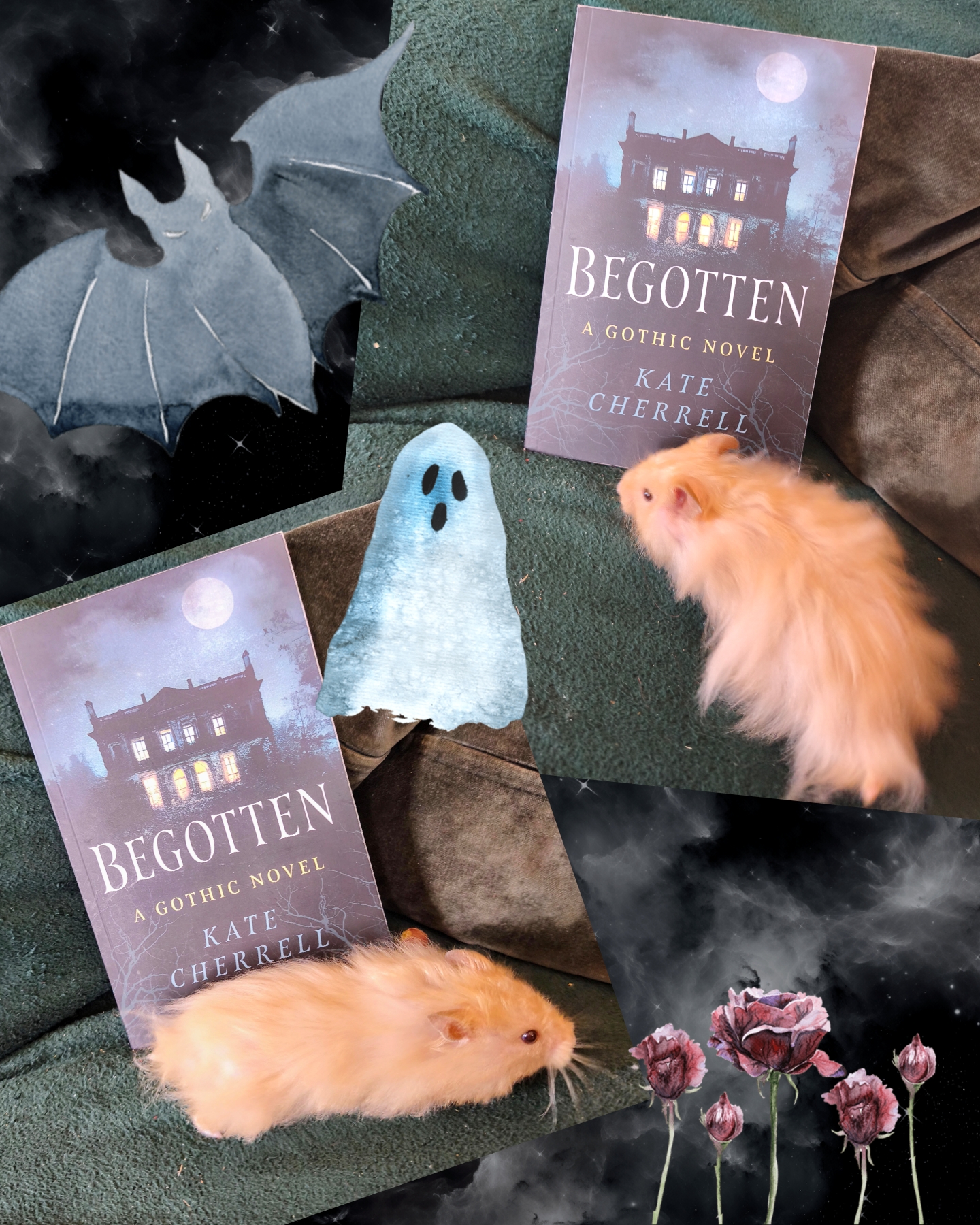
(Image: Begotten, and avid reader, the late Nimbus. Source: E.Holohan 2025)
I’ve always been a fan of a good ghost story, especially when there’s some interesting history behind it. I don’t tend to dip into a lot of Gothic horror, but my curiosity was captured by the premise of Begotten, which places Victorian spiritualism at its heart. This is the debut novel of Dr Kate Cherrell, writer of Burials and Beyond blog, and there are plenty of nods to the history of spiritualism throughout.
The story follows Alice Crofton, a young woman who returns to her family’s ancestral home in Ireland after the recent death of her father. The house is bleak and isolated and is filled with secrets and strange events. While Alice tries to make sense of things, she finds herself surrounded by a cast of rather odd characters. As the story builds pace, it becomes increasingly more difficult for Alice to tell what might be supernatural and what might have a more ordinary explanation. I won’t say too much about the plot, as I don’t want to spoil it for you, and I think it’s better to discover things yourself as the story unfolds.
One of the things I particularly enjoyed was the atmosphere. Kate does an excellent job of bringing the old ancestral pile and its gloomy surroundings to life. There’s a real underlying sense that something isn’t quite right going on. Her writing is descriptive without being unnecessarily complicated, and I found some parts very creepy indeed.
I also really liked the way she incorporated Victorian spiritualism and paranormal history into the story. Kate clearly has expertise and excellent knowledge of the subject and it shows in the historical detail included. I felt this really added depth to the book. I have an interest in this type of history myself, so I enjoyed seeing how it was woven into the fictional story, rather than simply being dropped in as background information.
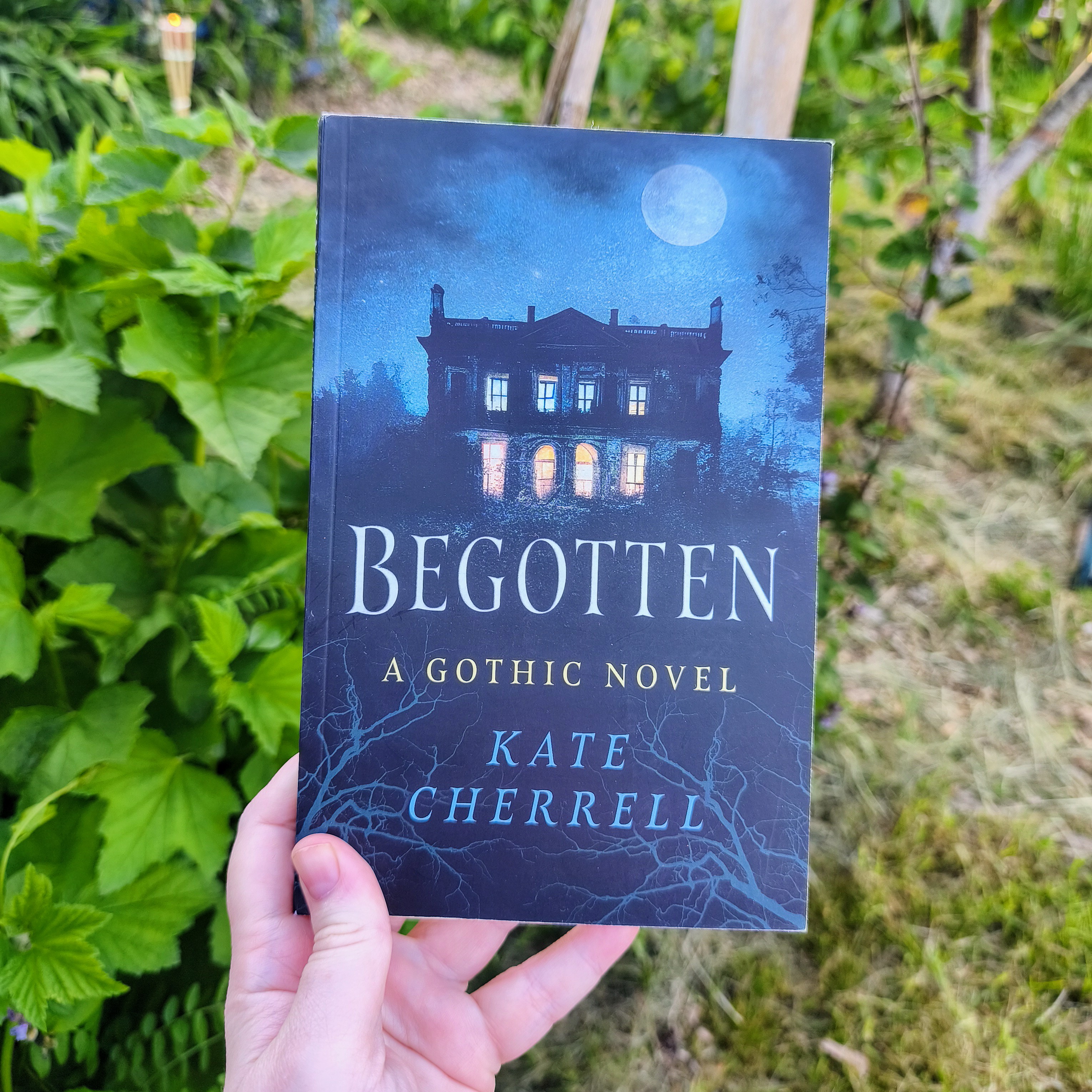
(Image: Begotten book cover. Source: E.Holohan 2025)
Another aspect of the book I enjoyed was Kate’s sense of humour. I appreciate a bit of dark, macabre, dry humour and there are plenty of amusing moments and wry turns of phrase amongst the unsettling storyline. I thought this worked well in providing a contrast to the darker aspects of the story.
Begotten is something of a slow burner. It takes its time building up the atmosphere and suspense, rather than charging forward with constant scares and dramatic events. I was keen to find out what was really happening and there were certainly some moments of unease along the way. It’s also one of those books that left me pondering it for a long time after I’d finished reading.
Overall, I enjoyed Begotten and thought it was a creepily good read. I especially appreciated the mix of paranormal history, supernatural mystery, Gothic atmosphere and Kate’s slightly dark, dry sense of humour. If you enjoy ghost stories, creepy old mansions and Victorian spiritualism, I’d highly recommend giving this a read. I’ll certainly be interested to see what Kate writes next.
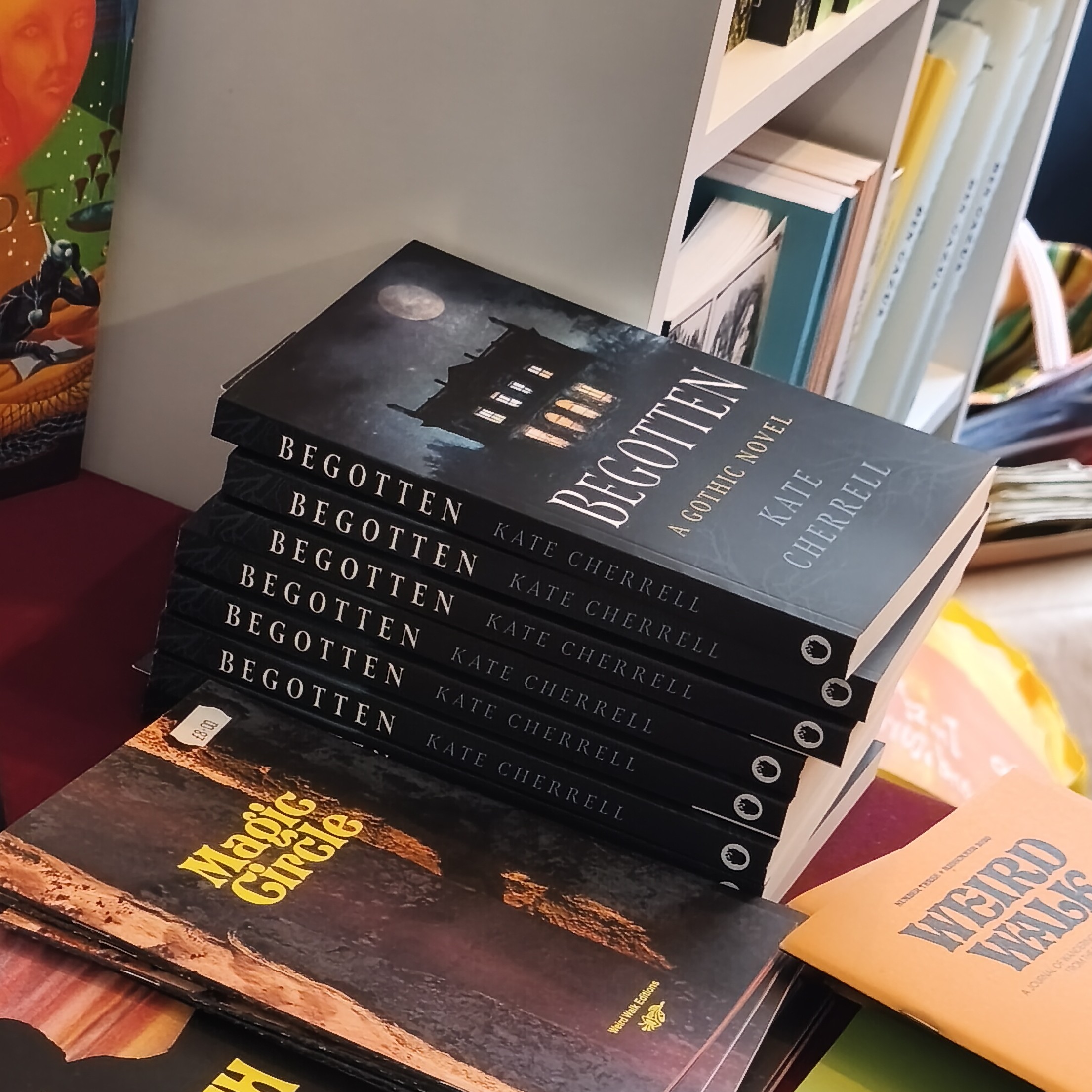
(Image: Begotten book pile. Source: E.Holohan 2025)
Begotten by Kate Cherrell
Published by Roundfire Books (2025)
If you’re interested in reading it yourself, you can find Begotten here.
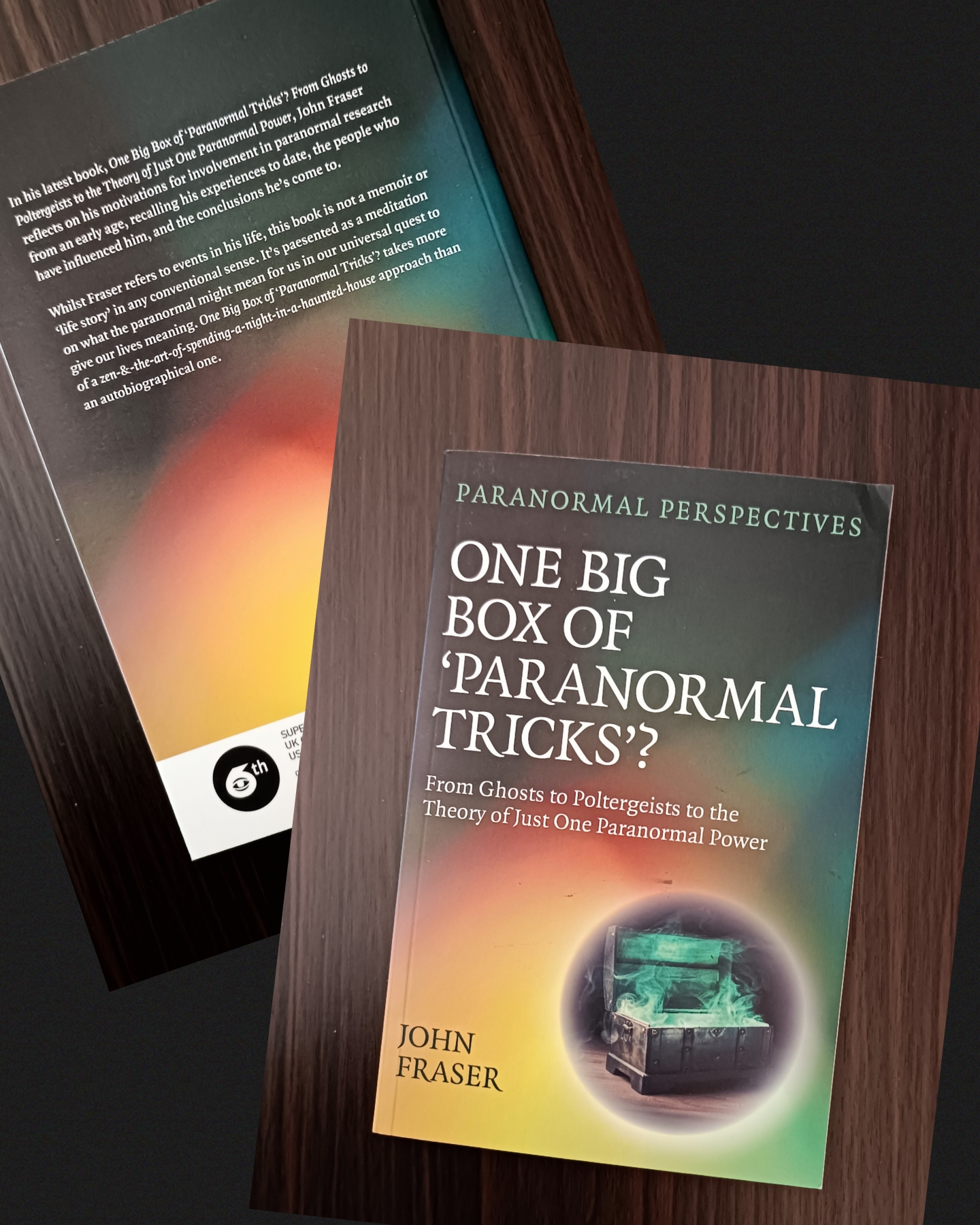
Have you ever wondered if ghosts, poltergeists, and all things that go bump in the night are connected by a single unseen force? John Fraser’s book, “One Big Box of ‘Paranormal Tricks’? From Ghosts to Poltergeists to the Theory of Just One Paranormal Power” dives headfirst into this idea, taking readers on a journey through the unexplained with a perfect blend of curiosity and critical thinking. Whether you’re a seasoned paranormal enthusiast or just stepping into the eerie world of the unknown, this book has something for everyone.
John Fraser is a Council member of the Society for Psychical Research and former Vice Chair for Investigations at the Ghost Club, the two oldest paranormal research groups in the UK. His studies have covered hypnotic regressions, vampire folklore, and conventional paranormal research.
Active in the field since the 1980s, John took part in long-running hypnotic regression experiments and later conducted research into supernatural events at Sandwood Bay. Since 2015, he has been investigating witness testimony related to paranormal activity at The Cage in St Osyth. He has also contributed to media discussions on the paranormal.
John Fraser’s book is part of the ‘Paranormal Perspectives’ series, which seeks to investigate what the paranormal means to a selection of writers from various backgrounds. Fraser explores paranormal phenomena under a unified theory, the theory of ‘one paranormal power’. He does this while detailing his personal journey into the paranormal, from his early sparks of interest as a youngster to his time as a seasoned researcher and Society for Psychical Research Council member. This book has appeal to paranormal believers and sceptics alike, as it is an engaging investigation that offers readers a unique blend of philosophical investigation and memoir.
A Journey Through the Unexplained
Fraser begins by explaining how it all began for him. At university, he studied philosophy and economics. He resigned from his position as an internal auditor and organised a road trip that included stops at several haunted places. He then discusses the important paranormal figures who have impacted him, like Guy Lyon Playfair and Harry Price.
Fraser then explores the nature of paranormal phenomena in chapter three, looking at hypnotic regression, ghosts, poltergeists, and other unexplained events, such as the encounter in Rendlesham Forest. Fraser concludes by discussing his theory of the “One Paranormal Power”, which proposes that there is a single underlying force that underlies all paranormal activity.
What Makes This Book Stand Out?
Fraser has a gift for balancing scepticism with an open mind, something that’s not always easy in the paranormal field. He doesn’t just present eerie encounters and theories; he challenges them, inviting readers to explore every possibility. Are poltergeists separate from ghosts, or could they be different manifestations of the same mysterious force? If there’s just one underlying paranormal power at work, what could it be? These are the kinds of questions Fraser poses, leaving you pondering long after you’ve turned the final page.
His writing style is conversational and immersive, making even the most complex theories easy to digest. Fraser’s account is well-written, thoroughly researched, and adopts an engaging and thought-provoking approach, employing great storytelling to make sure the book is not just informative but also entertaining and easy to read. Every chapter skillfully blends reflective analysis of paranormal phenomena along with personal tales.
One of the most interesting aspects of the book for me is Fraser’s recounting of his initial plunge into the paranormal field, in which he gives vivid accounts of his early experiences. Here, he describes the events and encounters that sparked his interest in the unexplained. These explanations are complemented by his comments on mentors and role models who had a significant impact on his approach and knowledge.
Notably, Fraser honours well-known paranormal individuals such as Harry Price and Colin Wilson, whose pioneering work served as the foundation for his own investigations. I relished the narrative of his interactions with Peter Underwood, which demonstrated their genuine connection and friendship. This examination of his own influences gives readers an understanding of the intellectual heritage that informs his viewpoints.
One of the most intriguing aspects of Fraser’s book is how it subtly engages with the long-standing debate between psychological explanations and supernatural interpretations of paranormal phenomena. While he presents compelling cases for the existence of ghosts and poltergeists, he also acknowledges alternative explanations, such as environmental factors (electromagnetic fields, infrasound, or other environmental conditions), cognitive and neurological perspectives and parapsychological explanations (e.g., psychokinesis—particularly in relation to poltergeist activity).
(Author John Fraser. Image Source: J.Fraser)
This balanced approach makes the book appealing to both believers and sceptics. However, a deeper engagement with scientific and psychological studies on anomalous experiences would have added even more weight to his arguments.
Where the Book Could Go Further
While the book is packed with intriguing insights, some of the scientific explanations could go deeper. If you’re the type who loves diving into parapsychological research, you might find yourself wanting a bit more hard data and experimental analysis. Of course, there are many other books out there already that cover such aspects in more detail that the reader can seek out for further research if required.
If you’re new to the paranormal field, this book is an excellent gateway. Fraser keeps the tone inviting and avoids overwhelming jargon, making it easy to follow even if you’ve never read a book on the subject before. For the seasoned enthusiasts, even if you’ve been delving into the paranormal for years, you’ll appreciate Fraser’s fresh take on long-standing debates. While some sections may feel like familiar ground, the way he ties different phenomena together offers new food for thought.
Final Verdict: A Must-Read for Paranormal Enthusiasts?
Fraser’s Paranormal Perspectives isn’t just a book—it’s an invitation to think, question, and explore. It challenges readers to reconsider what they believe, weigh the evidence, and entertain new possibilities. Whether you’re in it for the eerie case studies, the deep theoretical discussions, or just the thrill of the unknown, this book delivers. So, what do you think—could all paranormal phenomena really be part of one great mystery? Or are we only scratching the surface of something even stranger?


Leave a Reply