Welcome to Ghost Catcher Isles, chronicling the weird, wonderful and eerie of the isles of Great Britain and the Republic of Ireland. Come with me on my adventures into the strange and paranormal
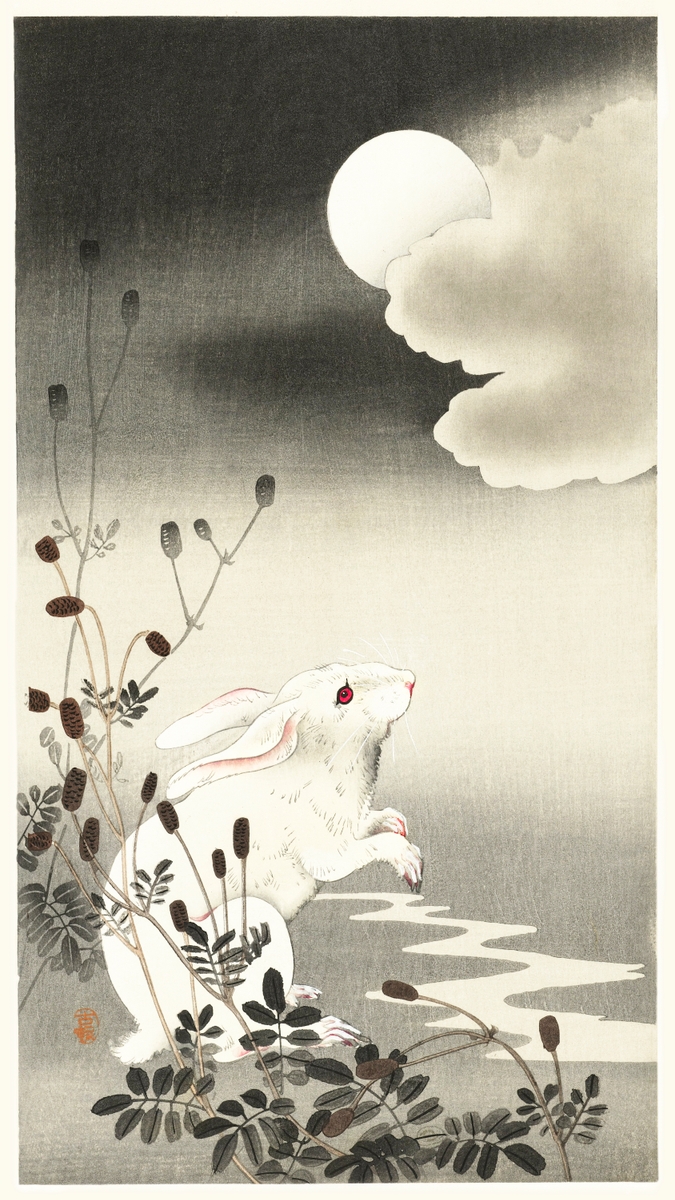
(Image: Rabbit at full moon (1900 – 1930) by Ohara Koson (1877-1945). Source: The Rijksmuseum. Digitally enhanced by rawpixel.)
On quiet spring evenings, when the light begins to fade into dusk, hares emerge at the edges of fields and lope out from the hedgerows. For centuries, people across Britain and Ireland have watched these mysterious creatures and wondered if what they were seeing was just an animal, or something more.
At Easter, the cheerful Easter bunny visits, bringing us gifts of colourfully wrapped chocolate eggs. Children run in excitement around gardens, peering under hedges and amongst the golden daffodils, looking for these jolly treats left by the benevolent bunny. The Easter Bunny is the soft and fluffy, Victorian popularised version of something much older that has haunted the human imagination since ancient times. The hare bounds out to us from the shadows of Easter folklore as a symbol of renewal, fertility, and spring abundance. Beneath these positive symbols, however, there lies something far darker and much more superstitious. Across Britain and Ireland, we find that stories persist of spectral hares glimpsed from the dark treelines at dusk, tales of long-eared restless spirits still bound to the land, and beliefs that these creatures are portents of ill fortune. From the rugged cliffs of Cornwall to the windswept coastal tracks of Cumbria, these uncanny creatures blend both folklore and haunting.
The White Dobbie of Bardsea, Cumbria
Our first legend takes place on stormy nights on the coastal road between Bardsea and Ramside in Cumbria. Here, local lore tells of a sinister phantom known as “White Dobbie”. This is no kindly household spirit. This is something far more disturbing. The White Dobbie appears as a gaunt, sorrowful-looking pilgrim with feverish eyes. Running ahead of him is a ghostly-looking scraggy white hare with bloodshot eyes. The mere sight of this ghoulish hare is said to be enough to terrify dogs and cause them to run away howling.
One local tale involving the White Dobbie happened within the sanctity of the church in Bardsea. A female bellringer here witnessed the spectral white hare leaping around the belfry as she tolled the passing bell for a death. The ominous White Dobbie stood next to her, sinisterly whispering, “Who for this time?” The phantom hare then leapt into the Dobbie’s pocket and stared out at her menacingly. The spectres only disappeared when two other people arrived at the belfry, surprising them. However, stories still tell of the Dobbie and the hare making appearances when the passing bell is rung or haunting the coastal roads. Local theories suggest that the Dobbie is the ghost of a murderer doomed to forever wander as punishment for their sin, while the hare contains the restless soul of their unfortunate victim. Cumbria, however, is not the only place where hares take on a more sinister form.
The Bolingbroke Hare, Lincolnshire
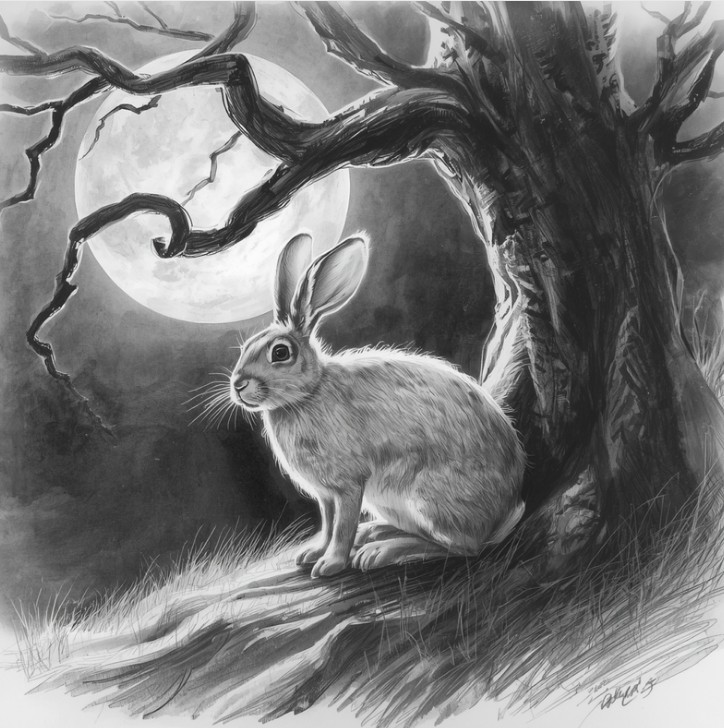
We turn our gaze across the country to Bolingbroke Castle in Lincolnshire, which is famously associated with a phantom white hare. In the 17th century, antiquarian Gervase Holles described a hare spirit that frequented the castle and grounds as “a certain truth” known to the local people. Local legend tells us that the hare is a transformed witch who had once been imprisoned at the castle. Historical accounts suggest the ghostly hare would leap over people or run between their legs, while any dogs sent after it would return to their owner crying. The spectral hare was frequently hunted by hounds, but could never be caught. Even to this day, some claim that the hare can be seen in the area during March, a month often linked with hares in folklore.
(Image: Hare at night. Source: Canva 2026)
Spectral Hares of Cornwall
Cornwall is rich in ghostly hare legends, but one such old traditional Cornish story tells the sad tale of “The Maiden’s Ghost”. A young woman who loved unwisely, died broken hearted after being deceived by her lover. Still forlorn, she is said to haunt her former suitor in the guise of a hare. The phantom hare was said to follow him everywhere, but could not be seen by anyone but him. As with all folklore, there are different versions of the tale. While the spectral hare sometimes saves her betrayer’s life, the haunting ultimately leads to his doom.
The “White Hare of Looe” is one fine example of the Maiden’s Ghost. The white hare here is a ghostly apparition that is said to be the spirit of a girl who took her own life after being jilted by a local man. The hare is said to roam the road between Talland Bay and one of the oldest pubs in Looe, The Jolly Sailor.
According to tradition, the white hare is the ghost of a girl called Sarah who fell head over heels in love with a local lad. Sadly, that local lad was handsome, easily bored, and had a roving eye. Despite promising to marry Sarah, he called off the wedding as he had fallen for the barmaid of the Jolly Sailor. This was too much for Sarah to bear, and stricken with heartbreak, she took her own life.
Sarah’s grief was too strong and extended beyond death, as her spirit returned in the form of a ghostly white hare. The apparition haunted the old road, and she would follow her former lover to and from the pub.
The hare would sometimes appear in front of her ex-lover and his new lady, and he began to suspect that the hare was much more than a curious living animal. The hare would gaze at him with sorrowful eyes, and guilt and shame weighed on him. After a time, the lad became sick and died from an unknown illness. Since then, it is said that meeting a white hare in this region may bring bad luck, misfortune, and sometimes death. Just imagine walking along that coastal road at night and catching a glimpse of something white moving ahead of you…
Shapeshifting, Otherworldly Beings
Hares lead a shadowy existence, preferring to feed in the fading light of dusk or at night, which lends a natural air of mystery to them as animals. The ancient Celts, for example, revered them as sacred creatures that were connected to divination and the otherworld. Hares roam on the periphery of our vision and between the boundaries of day and night. Perhaps that’s why they are sometimes viewed as liminal beings, creatures that exist in the boundary between this world and the otherworld. This makes them ideal animals for ghost stories as they travel easily through the night, passing through the veil.
These curious creatures are also famous in northern European folklore as being one of the most common disguises of witches. In the past, it was widely believed that witches could shapeshift by transforming into animals, especially hares, so they could roam the countryside unseen. Some historical court records even highlight this belief, for example, at the trial of Julian Cox in 1663, where witnesses claimed to have seen a hare disappear only to be replaced by a woman. Another recurring theme in shapeshifting stories involves hunters wounding a fleeing hare, only to later find a local woman with an identical wound. The connection to shapeshifting blurs the line between human and animal, and human and spectral. Does this link to witches, therefore, reinforce hares as a symbol of the supernatural?
Unlike many other animals, hares may more often appear as ghosts and apparitions because of the transition in their status from revered, almost deity creatures, to devilish monsters. Some folklorists note that the gods of one era often become the devils of another. It’s not hard to imagine that hares may have once been seen as divine animals by early peoples, but later became objects of fear, suspicion, and ill omens under new belief systems as new religions took over.
Phantom hares are sometimes believed to contain the souls of the dead. In the Bardsea legend, for example, the white hare was thought to hold the unquiet spirit of the murdered victim. They are also seen as omens of tragedy, as their appearance in folklore is often a warning of a fatal accident or approaching storm. Rather than just a common animal ghost, this makes them a source of omens and portents. It was considered especially unlucky to see white hares at the turn of the 19th century, as they were believed to foretell misfortune or doom to the onlooker.
No Ordinary Animal
Hares have always existed on the edge of things. They move between the boundaries between field and woodland, day and night, and the familiar and the unknown. It is therefore no surprise that folklore places them between two worlds as well: part animal, part spirit, and sometimes even containing a human’s soul.
From melancholy ghost stories in Cornwall to ominous sightings on quiet Cumbrian roads, these creatures carry more than just the symbolism of spring with them. They encapsulate something older and something less simple to explain. They bring unease and a feeling that not everything we see in the gloaming belongs entirely to this world. If you happen to catch sight of one at dusk, and see it watching back, you might hesitate and wonder whether you’ve seen just an ordinary animal, or something more.
A tale of jealousy, violence, and a spectral hound.
(Image: Dead Maids Junction on the A36. Source: Maurice Pullin 2008)
Some place names are scenic. Others are puzzling. And then there are those that stop you mid-journey.
“Dead Maids.”
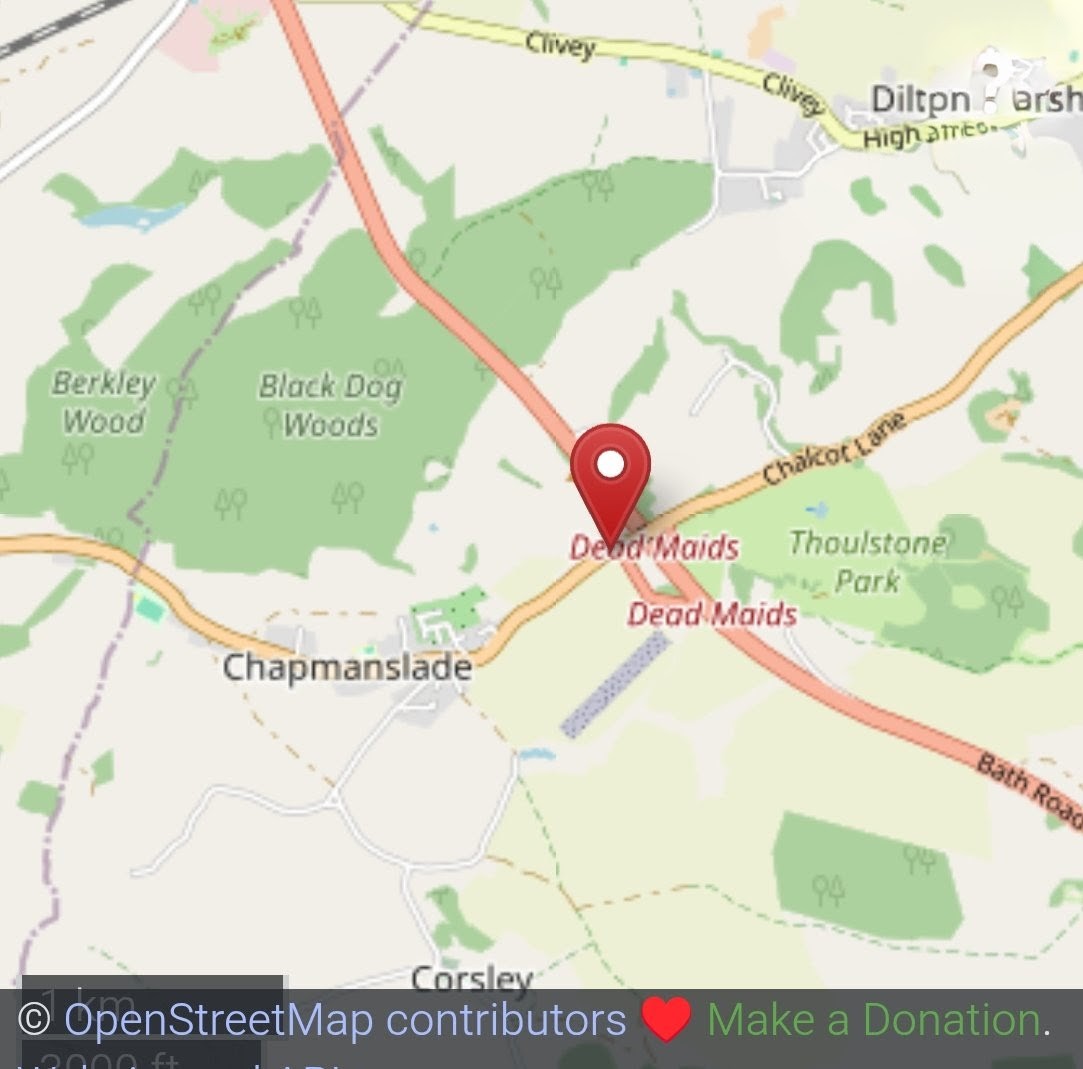
I first noticed the name while travelling through the quiet Wiltshire countryside near Salisbury, at a crossroads on the A36. Surrounded by rolling fields and woodland, nothing about the landscape seems sinister at first glance. Yet names like Dead Maids Crossroads, Black Dog Woods, and Black Dog Hill suggest something darker beneath the surface: a story rooted in violence, grief, and restless spirits.
In this stretch of countryside between Warminster and Bath, folklore seems to cling to the hedgerows, and the veil between history and haunting feels unnervingly thin.
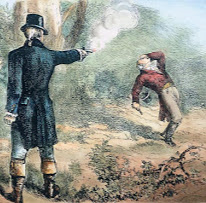
The most widespread legend of the area at Chapmanslade and Dilton Marsh is linked to the crossroads, known as “Dead Maids”. Local folklore tells of a farmer’s daughter, perhaps from what is now called “Dead Maids Farm”, who found herself in a love triangle, pursued by two eligible suitors between the late eighteenth and early nineteenth centuries. Initially, neither man knew of the other, and the farmer’s daughter enjoyed the affections of both for a time. Inevitably, this deception was unmasked, and the men quarrelled over who should win the hand of the girl in marriage. The girl could not choose between them, and it was agreed that a duel would decide the issue once and for all.
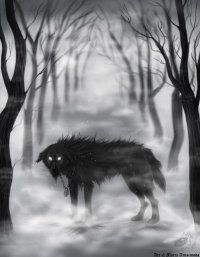
At dawn, the two suitors faced one another on a windswept hill while the faithful black dog of one of the men quietly watched on. The pistols were fired, and one of the men fell, shot through and killed instantly. As he fell, his trusty dog, driven by despair, exacted immediate justice on the apparent victor of the duel. The beast, desperate to avenge his master, savaged the victor and tore out his throat before vanishing into the dense, shadowed woods: never to be seen alive again.
Buried at the Crossroads
After the duel, the farmer’s daughter, grief-stricken and distraught at the violence she had incited, tragically took her own life. In those days, people who had ended their own lives were denied burial in consecrated ground, sometimes being interred at parish boundaries or crossroads. The multiple directions of crossroads were believed to confuse any troubled spirit, preventing it from rising and finding its way back to haunt the living.
It is from this tragedy that the crossroads got its name, and it is said that the unfortunate dog later died of grief in those same woods, now named “Black Dog Woods”, and haunts them even to this day.
(Image: Map of Black Dog Wood & Dead Maids. Source: OpenStreetMap 2025)
The Black Dog of the Hill
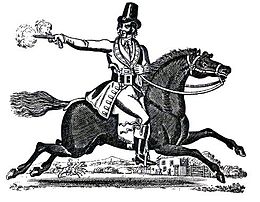
Yet the tale of the duel and the grieving dog is not the only explanation for the name “Black Dog Hill”. Some claim it was the very hill where the sad duel was fought, but others tell the tale of a dastardly highwayman who hid in the shadows here. Before the A36 was straightened in the 1970s, the road here used to twist and turn up the hill. These sharp bends provided ideal cover for highwaymen.
One particular rogue would lie in wait in the darkness with his companion, a large, highly trained black dog. As a stagecoach slowed down to navigate the bend, the beast would leap onto the vehicle and sink its teeth into the driver’s neck, bringing the coach to a halt. While the carriage was at a standstill, the highwayman would rob the passengers with little resistance.
One day, however, the highwayman’s reign of fear was cut short when he was eventually shot dead. The fate of his trusty canine accomplice remains a mystery, but there are those who say Black Dog Hill is now haunted by a spectral black hound.
Whether born from tragedy at dawn or the violence of highway robbery, the black dog lingers here in local memory. Perhaps it is merely the human need to impose meaning on cruel twists of fate such as these. Or perhaps something older moves through these woods after dark.
Today, traffic passes quickly over Dead Maids Crossroads. Drivers rarely slow, and few know the stories attached to the name on the signpost. But folklore has a way of outlasting roads, maps, and modern scepticism.
And if you find yourself travelling that stretch at dusk, you might glance towards the treeline. Just in case something dark and doglike is watching from the shadows.
Gothic horror and Gothic romance movies are once again gaining popularity following the release of series such as ‘Penny Dreadful’, ‘The Haunting of Hill House’ and recent movies such as Crimson Peak. These movies usually contain motifs such as death, love, sexual repression, and jealousy, and are often centred around a large house where ghosts haunt. These ghosts may be real or imagined. Often there is a love triangle or unnatural relationship element, and a climactic plot twist at the end. These movies tend to be sumptuous and beautifully shot, heightening the sense of unease and terror in the viewer.
Here is a selection of some of the classic Gothic horror movies for you to consider watching:
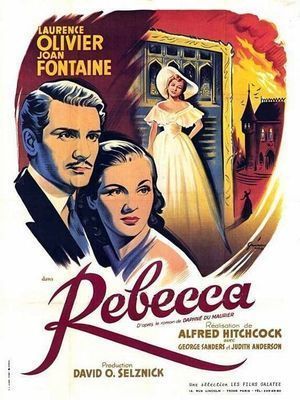
Rebecca (1940)
Rebecca is one of the definitive Gothic horror movies. Alfred Hitchcock and producer David O. Selznick brought this haunting adaptation of Daphne du Maurier’s literary Gothic classic to the big screen: the first Hollywood movie for Hitchcock.
Joan Fontaine stars as the innocent and child-like unnamed second Mrs de Winter; our heroine. Laurence Olivier plays the brooding and stern Maxim de Winter, who sweeps his new bride off her feet and brings her to live at Manderley, an imposing mansion on a hill. Judith Anderson plays the sinister housekeeper, Mrs Danvers, who will do anything to disrupt the life of the new Mrs de Winter.
The memory of Maxim’s first wife Rebecca, and her mysterious death haunts Manderley and impinges on the happiness of the newlyweds. All the Gothic elements are there: a looming mansion, haunting memories of the past, portraits of those who are now dead, portentous dreams, and winding staircases.
Rebecca’s perversity contrasts with the new Mrs de Winter’s innocence in the Gothic film masterpiece.
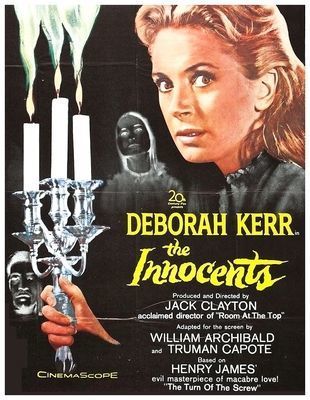
The Innocents (1963)
The Innocents is based on the novella, ‘The Turn of the Screw’ by Henry James. Deborah Kerr plays Miss Giddens, the temperamental and sexually repressed governess of two adopted orphans. Miss Giddens comes to Bly House, a brooding and gloomy mansion, to watch over her new little charges.
The children’s behaviour becomes increasingly more unusual, and gradually Giddens comes to believe that the children are possessed by the depraved spirits of two former servants: a valet and the previous governess. The two were once lovers, and Giddens believes they are continuing their wicked love affair through the children.
The superb cinematography and eerie set join to create the suggestion that there are things lurking just beyond the range of vision; creating a feeling of dread and unease.
The Innocents contains Gothic themes of repressed sexual desire, memories of the past influencing the present, depravity, and death. You are left wondering if it was real or all in the mind of Miss Giddens.
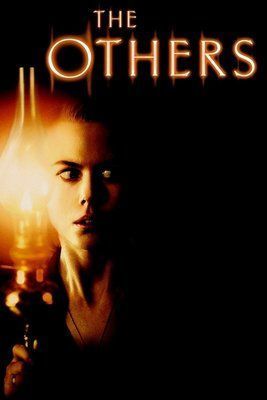
The Others (2001)
In The Others, Nicole Kidman plays our neurotic and ethereal protagonist, Grace, who resides in a dark, creepy old mansion with her two young children and servants. The children’s photosensitive condition means they must always stay indoors, exposed to nothing more than candlelight.
Grace and her children begin to notice eerie goings-on in the house; piano music coming from an empty locked music room, the trembling of a chandelier, and visits from a child ghost named Victor. The themes of this movie include obsessive parental love, death, tragedy, grief, and guilt.
There is an expert twist at the end, and although all the signs are there, the viewer does not see it coming. This is a movie that warrants a second viewing to pick up the subtleties and clues that may have been missed at first.
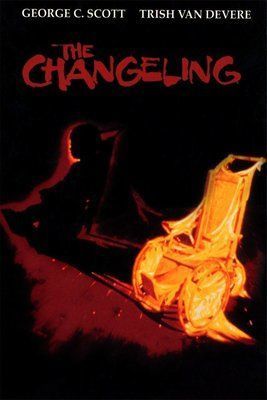
The Changeling (1980)
The Changeling is an underrated Gothic horror gem of a movie. George C. Scott plays composer John Russell, who has recently lost his wife and child during a horrible accident he witnessed. This tragedy haunts him and leaves him vulnerable and susceptible to believing his new home may be haunted by long-dead occupants. The unquiet spirit searches for peace through contacting Russel, our stoic and practical protagonist, who uncovers the truth behind its demise.
This movie, set in the late 1970s, manages to include all the traditional Gothic horror essentials: a creepy old house, séances, dark dusty attics, mysterious noises, unsafe staircases, nightmares, a haunted wheelchair, and spooky children’s toys.
Although a little dated, The Changeling remains a genuinely terrifying movie steeped in mourning and sadness.
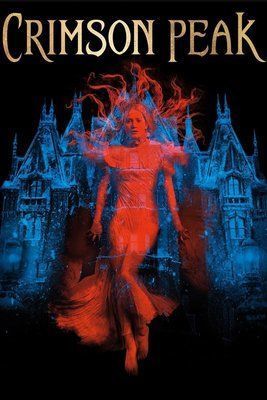
Crimson Peak (2015)
In Crimson Peak, Edith Cushing, played by Mia Wasikowska, is an aspiring writer and the daughter of an American industrialist. Edith is seduced by the charms of Sir Thomas Sharpe (Tom Hiddleston), an English aristocrat who has travelled to the USA to secure funding for an invention to help finance his family’s mine.
Despite Edith’s father’s reservations and untimely death, she marries Sharpe and is swept away to England to live with him and his domineering, icy sister Lucille (Jessica Chastain) in their towering Gothic mansion.
It is here that the new Mrs Sharpe encounters the terrifying spirits of the mansion who warn her of sinister goings on, which she must eventually uncover. Crimson Peak plays on the traditional Gothic horror tropes: portraits of people long dead, creaking staircases, unquiet spirits, treacherous staircases, blood red clay soaking snow, and fluttering moths. This film also contains strong,g horrific elements that stem from that which we do not see.
Themes heavily emphasised in this film are unnatural relationships, jealousy, death, decay, and the destruction of innocence. Crimson Peak is a beautifully shot film and a modern classic Gothic horror romance film that should not be missed.
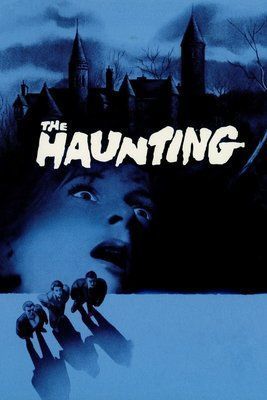
The Haunting (1963)
The Haunting is a 1960s adaptation of Shirley Jackon’s novel, “The Haunting of Hill House”. Parapsychologist Dr Markway, played by Richard Johnson, invites a handful of recruits to explore a haunted mansion with him, and conduct paranormal experiments.
Julie Harris plays the main character, spinster ‘Nell’, who is neurotic, sheltered,d and sexually repressed. She is counterbalanced by the self-confident and domineering Theodora, played by Claire Bloom.
Nell, Markway and the other recruits gradually learn the secrets of the house and experience its eerie occupants. Nell is emotionally frail and appears vulnerable to the powers of the house, which does not want to let her go. The manifestations in the house also appear to mirror Nell’s own neuroses and psychic assault on herself.
The cinematography of this movie adds to the unease, creating a terrifyingly atmospheric psycho-horror treat, and although the style is a bit dated and some of the acting verges on hammy, this only adds to the film’s charm.
What are your top Gothic horror movie picks? Please comment below.
Great Yarmouth isn’t just a seaside town of sugar donuts and amusement arcades; it’s a place rich in weird tales, ghostly sightings, and strange histories. From pirates to witches, from mystics to mummies, the town bubbles with secrets that float through its streets and graveyards. Join me as we walk through Great Yarmouth’s darker side, exploring haunted corners, overlooked tragedies, and uncanny stories.
Our journey begins in the heart of Great Yarmouth, where the imposing St Nicholas’ Church stares out over the town like a sentinel. Its stones have witnessed hundreds of years of worship, but it has also seen scenes of witchcraft, piracy, and ghostly happenings.
Stop 1: St Nicholas Church, Great Yarmouth
(Image: St Nicholas Church, Gt Yarmouth. Source: E.Holohan 2023)
This church is said to be the biggest parish church in the United Kingdom. Once belonging to a Benedictine priory, its construction of was completed in 1119. Although very little of the original Benedictine church now stands, the base of the current tower is Norman. Expansions and changes were made during the Middle Ages. In the 13th century, the aisles were widened. In the 14th century, the south porch was constructed. In the 15th century, the north wall was equipped with additional windows.
In the 16th century, the church was split into three sections, each of which was used by a different denomination. When the church was renovated in the 19th century, these sections were once again connected. However, a large portion of this work is no longer visible because the majority was completely destroyed by bombing and fire in 1942. Reconstruction of the inside took place from 1957 to 1960.
In the graveyard: English Pirate Attack
(Image: Headstone of David Bartleman. Image: E.Holohan 2023)
In the graveyard here, we find a gravestone that has a rare inscription that refers to an English pirate attack:
“To the memory of David Bartleman, Master of the Brig Alexander and Margaret of North Shields, who on the 31st of Jan 1781 on the Norfolk Coast with only three 3 pounders and ten men and boys nobly defended himself against a cutter carrying eighteen 4 pounders and upwards of a hundred men commanded by the notorious English pirate Fall and fairly beat him off. Two hours after the enemy came down upon him again, when totally disabled, his mate Daniel MacAuley, expiring with the loss of blood and himself dangerously wounded, he was obliged to strike and ransome. He brought his shattered vessel into Yarmouth with more than the honour of a conqueror and died here in consequence of his wounds. On the 14th of February following in the 25th year of his age”.
This stone, dedicated to the remembrance of David Bartleman, Master of the brig Alexander & Margaret of North Shields, is tucked away in the old church graveyard. On 31st January, 1781, Bartleman bravely defended himself against a cutter with eighteen four-pounder cannons and a crew of up to 100 men while sailing the Norfolk coast with a crew of ten men and boys and only light armament of three-pounders. Fall, an infamous English pirate, commanded the Cutter attacking.
This triumph was fleeting, though, as two hours later Fall’s Cutter struck the unfortunate Brig once more. The battle raged on until the Alexander & Margaret was fully incapacitated. Captain Bartleman found himself in a desperate situation; he had no choice but to surrender and pay a ransom to ensure the safety of his ship and crew. His first mate, Daniel MacAulay, was seriously injured and rapidly losing blood, leaving the captain with little choice to make the difficult decision to pay to secure their release. Then, on 14th February 1781, at the age of 25, he brought his proud but broken vessel into Yarmouth, where he passed away from his wounds.
A stone was placed above the tomb by his father, Alexander Bartleman, to honour the bravery of his son’s death, the courage of his loyal mate, and the notoriety of Fall the Pirate.
Daniel Fall, also known as Fall the Pirate or John Fall, first gained fame in November 1780 when he captured two colliers from Lowestoft South Roads. At that time, he was known as “the noted Daniel Fall, a smuggler and captain of a large privateer.” The frigate Pegasus set sail from Yarmouth in pursuit but failed to locate him. An article in the Ipswich Journal reported that a 20-gun American cutter privateer had seized two large merchant ships off Pakefield, but the man-of-war ‘Fly’ from Hollesley Bay intercepted and took back the stolen goods.
Fall was known to sail under American colours, suggesting that the privateer mentioned might have been his ship. By February 1781, around the time of the attack on the brig Alexander & Margaret and death of David Bartleman, he was spotted on one of the Harwich packet ships, where he raised the American flag and displayed letters of marque from America, France, and Holland. Shortly after, it was reported that Fall, now known as the ‘rebel commodore’, was operating off Orford Ness with a squadron of Dunkirk-based privateers.
In early June 1781, Fall captured the Prince of Wales using two cutters: the Liberty, which he had recently stolen from a Scottish port, and the Fearnought, which he commanded.
By April 1782, Fall was reported to be heading into the Irish Sea, but after that, he seemed to disappear from the pages of history. No further sightings or reports of his activities surfaced along the East Coast. What happened to the notorious pirate Fall after his last raid: did he perish in battle like his poor opponent David Bartleman, or vanish into obscurity?
Witches Memorialised
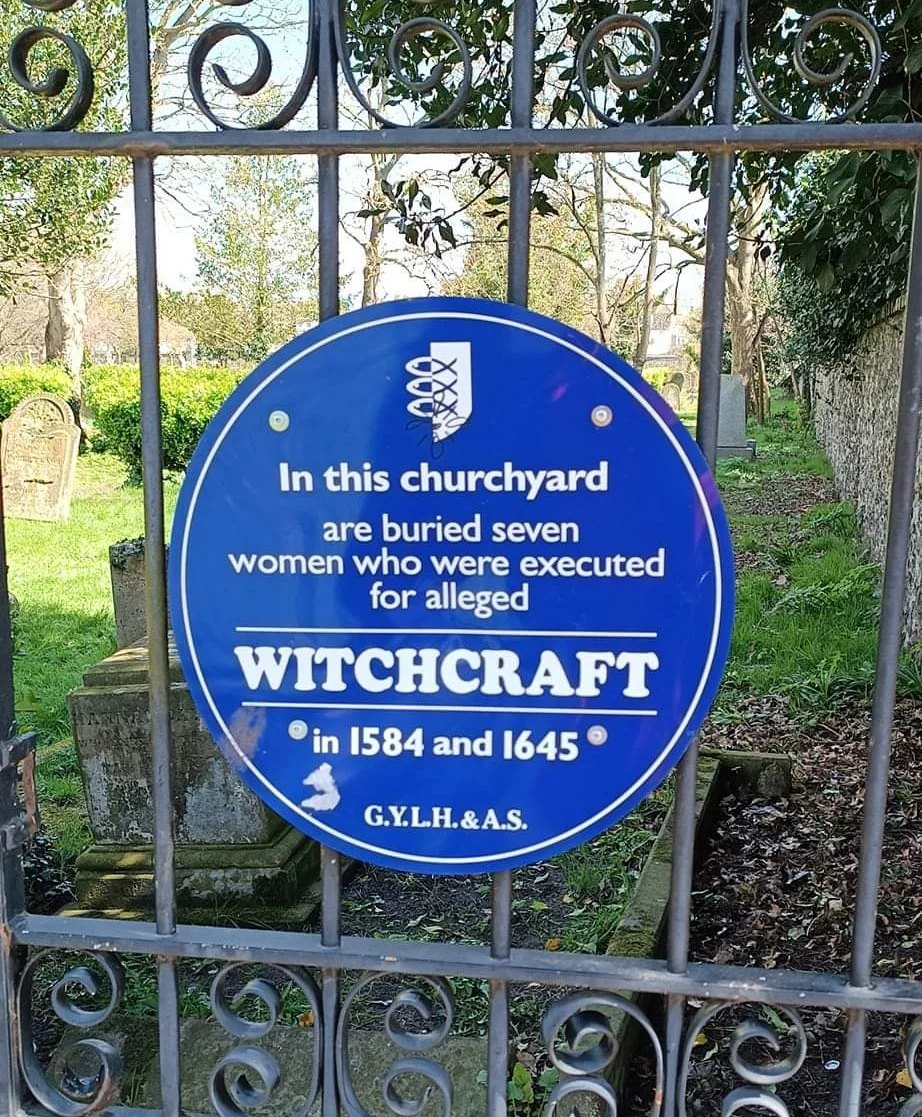
Also in the churchyard we find the memorial plaque commemorating the five women hanged at North Denes during the Matthew Hopkins Witch Trials who were buried here; Bridget Howard, Margaret Blackbourne, Alice Clisswell, Elizabeth Bradwell, and Elizabeth Dudgeon. They are located in the churchyard’s north side. Why were the supposed witches buried here, in consecrated ground, when most others accused of such crimes were cast out to the crossroads?
(Image: Witches Memorial plaque. Source: E.Holohan 2023)
The history of Great Yarmouth is associated with the 17th-century witch hunts, especially in 1645 when Matthew Hopkins, the so-called Witchfinder General, paid the town a visit. Many people, both men and women, were tried for witchcraft at this time, and some of them were found guilty and put to death. The five women were hanged at nearby North Denes during these Witch Trials. Many of the accused in Great Yarmouth, according to historians, were simply social misfits or victims of unrelated disputes, not actual practitioners of witchcraft.
It has never been explained why the supposed witches were buried in the churchyard. According to a long-standing custom, people who are found guilty of crimes, including witchcraft, are typically buried in unconsecrated ground or at a crossroads, where their spirits would be flummoxed and unable to return and cause trouble in a society that values godliness.
In reality, according to Christian tradition, outcasts and suicides were the only people buried on the north side of a churchyard. The unbaptised, excommunicated, strangers, vagrants, executed criminals, and people suspected of practicing witchcraft were all included in this proclamation. This was frequently called “lying out of the sanctuary” or “burial without the sanctuary.” The saying “the devil walks in dark places” stems from ancient times, and was initially used to describe the darker parts of a churchyard, particularly the north side of a building.
Thomas Vaughn: Body Snatcher
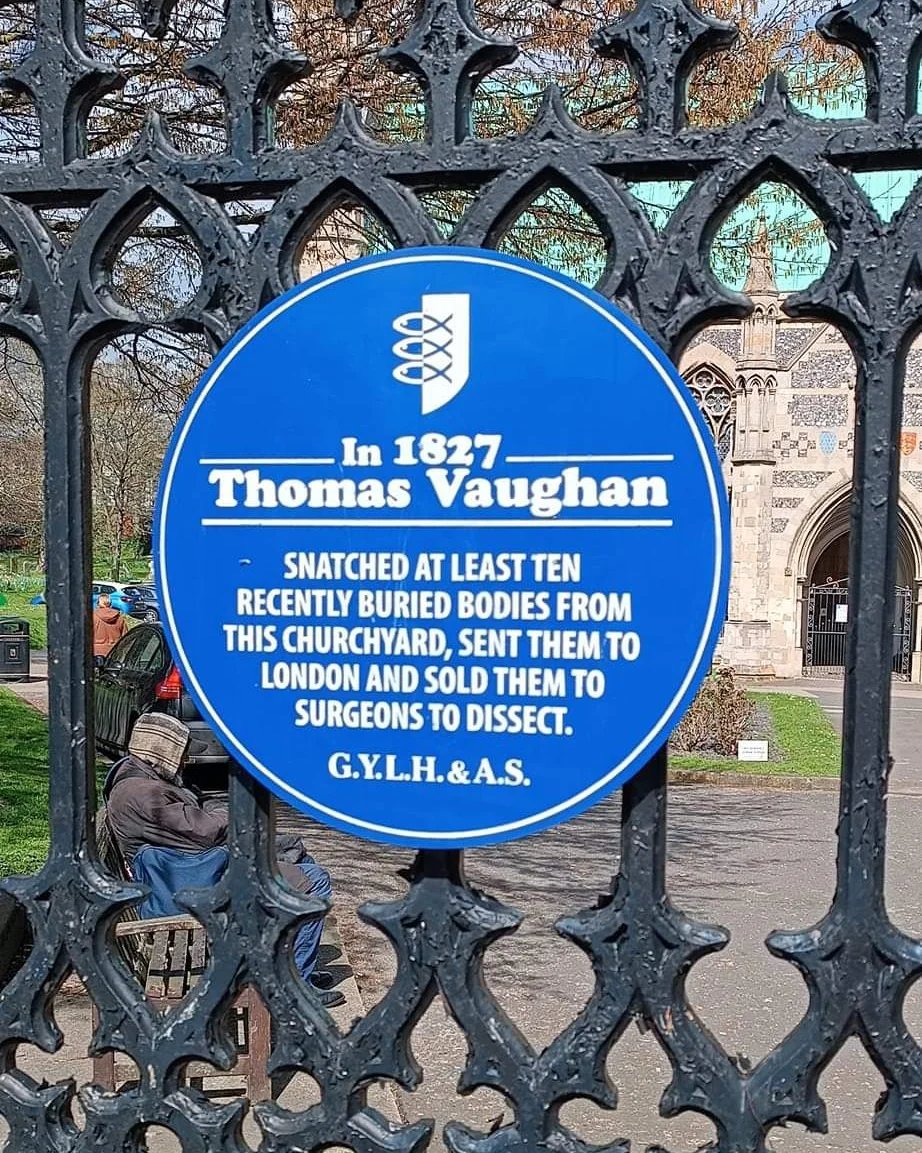
Also at the graveyard we can see the plaque remembering local body snatcher, Thomas Vaughn. Ten remains were taken from Great Yarmouth’s St. Nicholas Churchyard in 1827 by Thomas Vaughn and his two accomplices. In the end, he was imprisoned, but only for half a year! For more on this, read on for Body Snatchers Row 6.
(Image: Thomas Vaughn plaque. Source: E.Holohan 2023)
Oliver Tomkins: Cannibal Victim
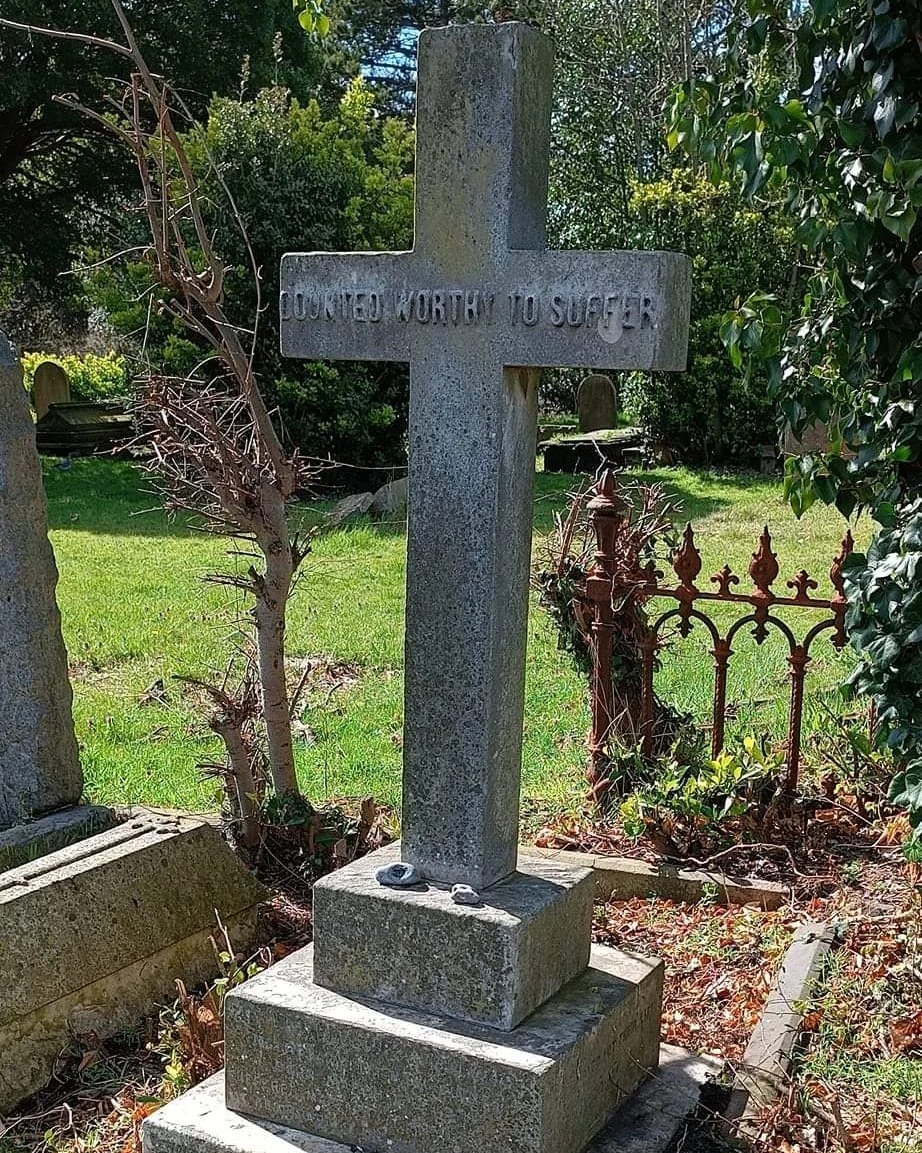
Situated in the graveyard you can see the grave marker of Oliver Tomkins. There is likely no body buried under the marker, as this Great Yarmouth citizen, about 120 years ago, was rewarded by cannibals for his attempts to spread the word of God by being killed, dismembered, cooked, and eaten. This was all within hours of Oliver Tomkins’ final diary entry following his arrival on a Papua New Guinean island inhabited by cannibals: “they tried hard to persuade us to come ashore…we promised we would visit their village in the morning.” The reward for his visit to the village was to be his host’s dinner!
(Image: grave marker of Oliver Tomkins. Source: E.Holohan 2023)
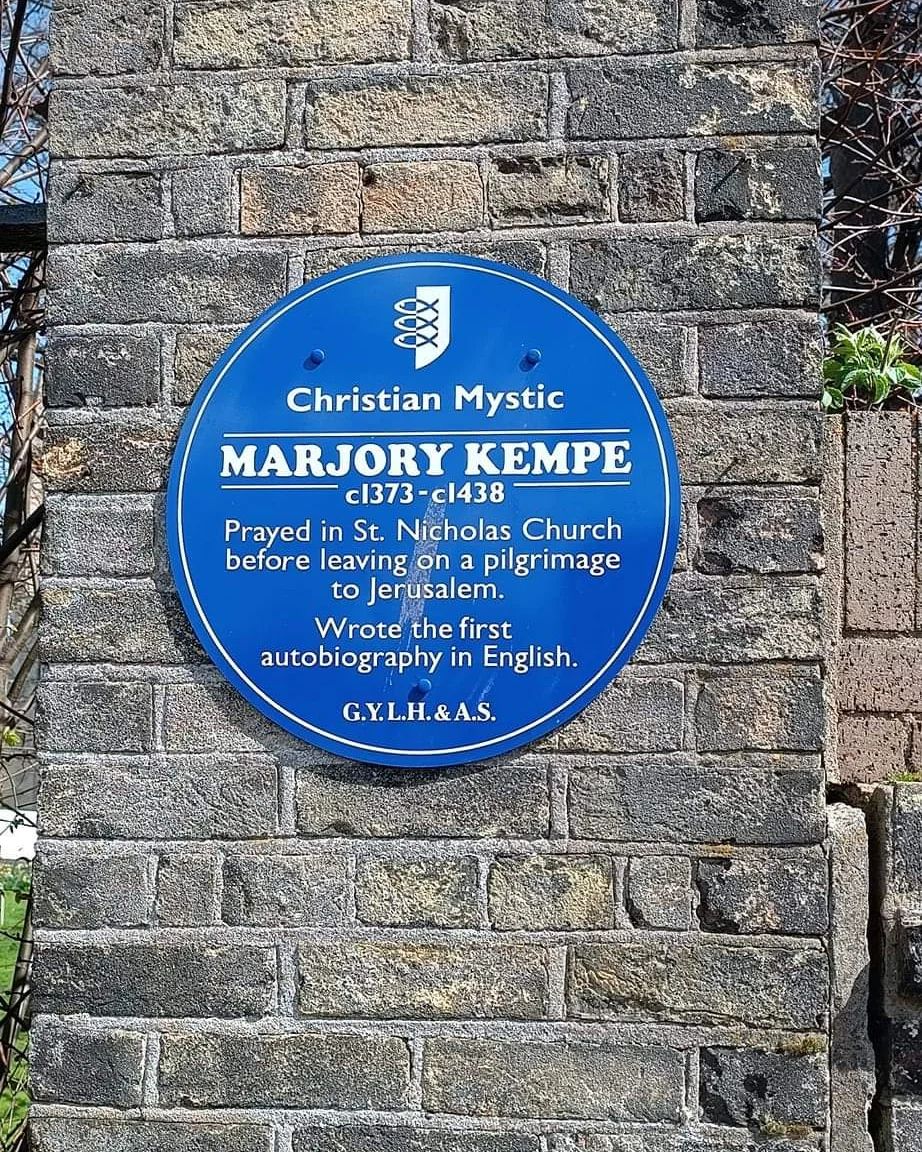
Next up at St Nicholas’ Churche we find Margery Kempe’s blue plaque.
Many believe that “The Book of Margery Kempe,” written by the English Christian mystic Margery Kempe (c. 1373–after 1438), is the first autobiography in the English language. Kempe’s domestic struggles, her extensive pilgrimages to holy sites in Europe and the Holy Land, and her mystical interactions with God are all chronicled in her book.
Margery Kempe was considered a mystic due to her profound and personal relationship with God. This was marked by visions, conversations with Jesus, Mary, and other religious figures, and via active participation in biblical events through these visions. She also embraced a highly devotional and pious lifestyle, which included prolonged weeping, fasting, and pilgrimages, which were all seen as evidence of her spiritual connection
Kempe prayed in St Nicholas church before leaving on a pilgrimage to Jerusalem and a blue plaque now commemorates this.
Churchyard Hauntings
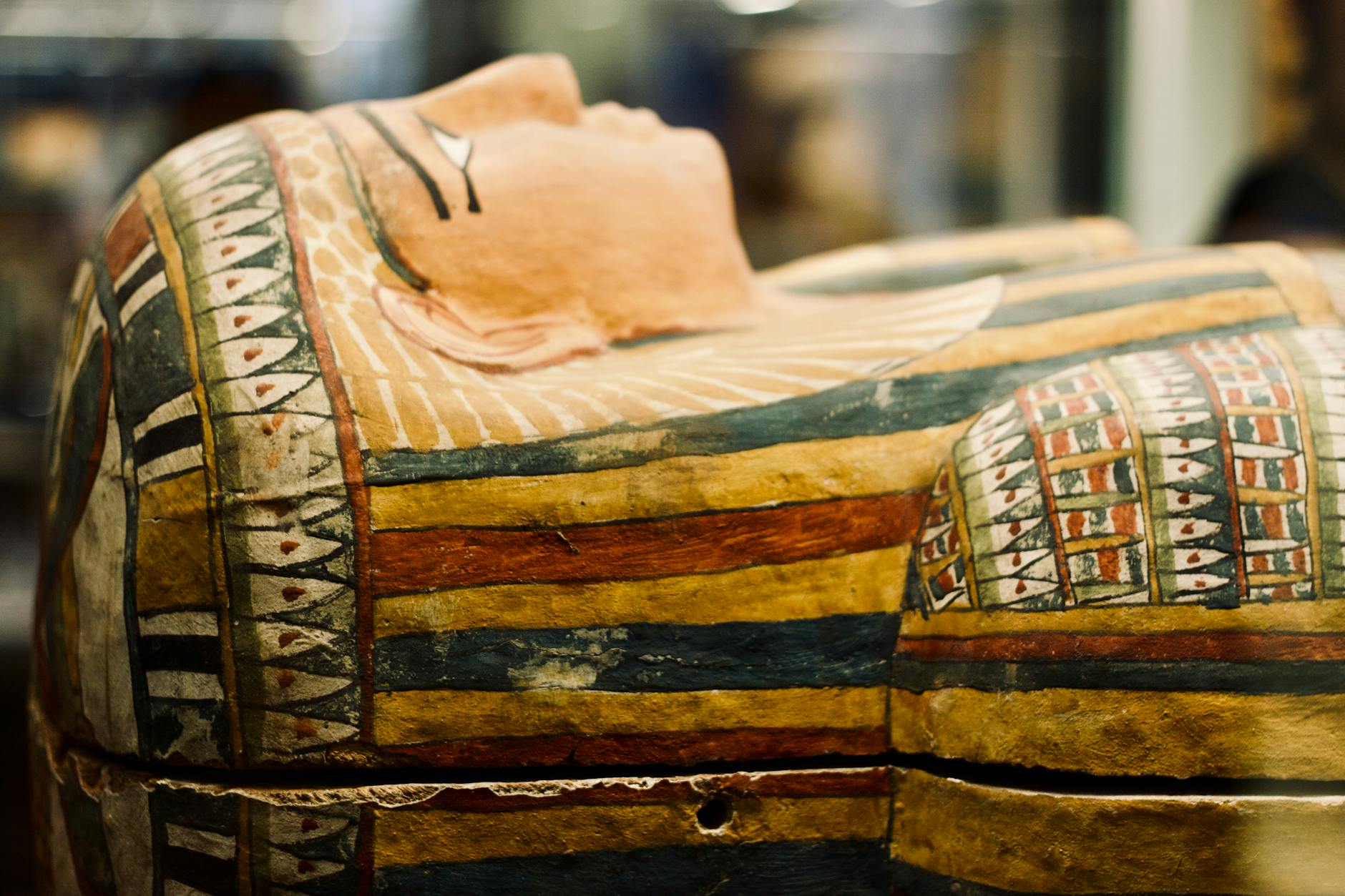
As well as being a place of rest, the church graveyard is also known for its unquiet residents. According to legend, at the height of “Egyptomania,” in the 1900s, a well-wisher donated the coffin of an ancient Egyptian princess to the Priory school next door to Great Yarmouth Minster. People were fascinated by mummies in this period because they believed that the ancient bodies had supernatural abilities. Some mummies were even ground into a dust for use as medicine or shown at gruesome “unwrapping parties.” Mummies were the height of fashion at this time!
Unfortunately, many mummies suffered in Europe’s humid environment after being removed from their natural hot, dry resting places. The princess mummy was kept in its case on display in a classroom, but it was eventually agreed that the only sensible thing to do when the mummy inside started to smell was to bury it in the church graveyard.
The Vicarage and St. Nicholas’ Church started to experience after dark knocking noises on their doors shortly after the burial; an investigation into the tapping noises revealed no reason.
The vicar was frequently confused and anxious when he answered the vicarage door to no one after hearing loud bangs. A decision was made to return the mummy to its casket since the noises were becoming unbearable and seemed to be coming from nowhere.
A mummified arm that had been mistakenly left behind when the body was hurriedly buried in the middle of the night was discovered when the box was opened. It seems, it had been begging to be freed and reunited with its body! The noises stopped and there was finally peace once the arm was interred with the rest of the body. The arm left behind; was it an accident, or something more sinister keeping the dead from their rest?
(Image: Ghostly knights. Source: WordPress 2025)
Along with tales of unquiet mummies, the churchyard also has takes of spectral horsemen. Ghostly apparitions were allegedly wreaking havoc in the graveyard in October 1922. A woman reported to the local police that she had witnessed three ghosts in shining armour riding horses across the churchyard.
As word spread, hundreds of people returned night after night to catch a glimpse through the railings, wanting to see these spirits for themselves. However, no further apparitions were seen. A bet was made to anyone who would camp out in the churchyard and to keep watch for the knights, but it was never taken up and the town’s citizens ultimately lost interest.
From the graveyard’s shadowy corners, we make our way down to Row Six. At first glance, it’s just another of Great Yarmouth’s narrow passageways, but this one earned a gruesome reputation as ‘Body Snatcher’s Row’.
Stop 2: Row Six- Body Snatcher’s Row
(Image: Body Snatchers Row sign. Source: E.Holohan 2023)
Row six, Body Snatchers’ Row, leads from St Nicholas’ churchyard to Northgate Street and is a reminder of when human bodies were stolen to order for anatomical dissection in London. In 1827, Thomas Vaughn, a resident of Row six, and his two henchmen, stole ten bodies from the churchyard. Vaughan was employed by Sir Astley Cooper, a surgeon to Queen Victoria. Vaughan used sawdust to conceal the bodies and transported them to London, where they were used for medical training purposes. Vaughan was tried at the Norwich assizes and received only 6 months imprisonment for this offence. He was later transported to Australia having been caught in possession of clothing he had taken from a corpse. In those days, sadly, theft of property was seen as a far more serious offence than stealing dead bodies.
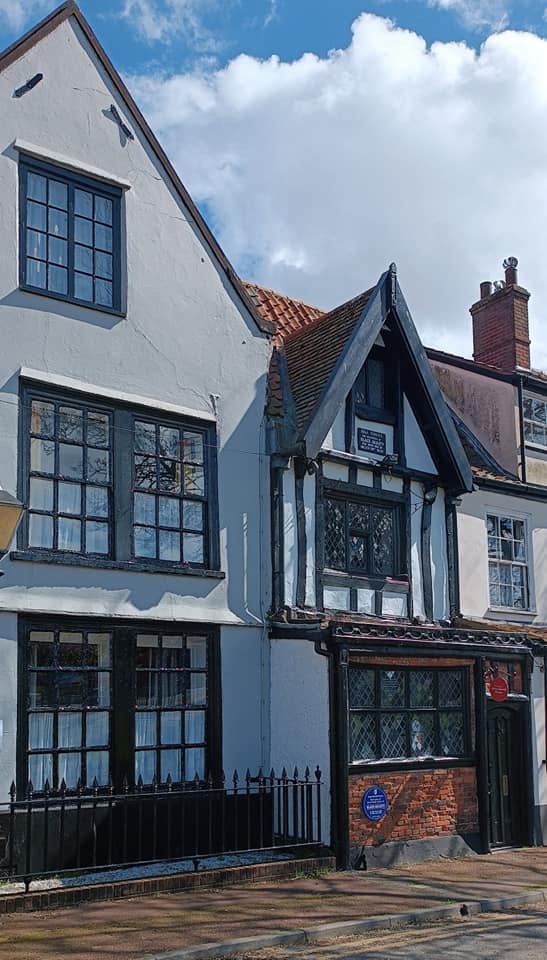
Leaving behind the grisly world of stolen corpses, we come to a calmer, more literary stop. At 37–39 King Street, we arrive the birthplace of Anna Sewell, the author of Black Beauty. This is a house where tales of compassion for animals meet stories of ghostly presences
Stop 3: Anna Sewell House and The Man in the Window
The author of Black Beauty was born at Anna Sewell House on Church Plain, in Great Yarmouth. In 2021, Redwings Horse Sanctuary purchased the house, which dates to the 16th or 17th century. The property is now used by Redwings to highlight Anna Sewell’s renowned novel and her influence in animal protection.
(Image: Anna Sewell’s birthplace in Church Plain. Source: E.Holohan 2023)
On 24 November 1877, for just £40 and without a royalty condition, Anna Sewell sold Jarrold & Sons the entire rights to her book “Black Beauty”. “Black Beauty: his grooms and Companions, the autobiography of a horse” was the title under which the book was published. Since then, the book has sold about 30 million copies worldwide, making it the sixth best-selling book in the English language.
The adventures and misfortunes of a horse named Beauty are the subject of Anna’s tale, which was penned at the White House on Spixworth Road in Old Catton. The story was written in the first person from Beauty’s point of view. Anna survived long enough to learn of its success, but she was never able to witness the book’s eventual bestseller status. In April 1878, she passed away in Old Catton, Norwich, and was buried at the Quaker Chapel in nearby Buxton Lamas, where Anna had family.
In Great Yarmouth, a woman once reported that she saw a strange apparition in the window of the birthplace of the Black Beauty author. According to the eyewitness, Professional psychic medium Freda Joy, a man with “period features” who may have been the sibling of author Anna Sewell can be seen in photos shot seconds apart. Joy stated: “I couldn’t believe what I saw. I took the pictures within seconds apart and saw what looked like an image of man in the window.”
From this modest town house to a building spectacle, our path now takes us to the Hippodrome, Britain’s only surviving purpose-built circus, where sounds of joyful laughter mingle with shadows of the ghost of its flamboyant creator
Stop 4: The Hippodrome Circus, Where the Showman Goes On
The Great Yarmouth area has a long history of circuses, with travelling circuses appearing as early as 1815 and resident circuses from 1845.
(Image: Hippodrome Circus, Great Yarmouth. Souce: E.Holohan 2023)
The Great Yarmouth Hippodrome, built in 1903, is a landmark and Britain’s only surviving purpose-built circus building that still regularly hosts circus performances. Designed by Ralph Scott Cockrill, it features a unique, sinking ring that can be transformed into a pool for water spectacles. The Hippodrome was the inspiration of George Gilbert, a former circus performer who became a successful showman. The building’s facade features Art Nouveau details, including terracotta and brickwork.
The Hippodrome has hosted a variety of entertainment, including water shows, stage plays, cinema, and cine variety. During wartime, the Hippodrome was even used as a military practice shooting range. The ghost of showman George Gilbert is also said to walk the upper balcony of the Hippodrome.
Peter Jay bought the building in 1979, restoring the circus floor that sinks into a water feature in 1981 when he presented his first show. The Jay family continue to produce Circus Spectaculars four times a year, with Jack Jay as ringmaster and producer and Ben Jay as manager. The Hippodrome houses a collection of historical artifacts, props, and other circus memorabilia, curated by Peter Jay.
From the Hippodrome Circus, we make our way walking south on St George’s Road, turn left onto South Quay. Here we enjoy the scenic views along the quay.
Stop 5: A Stroll Along the South Quay
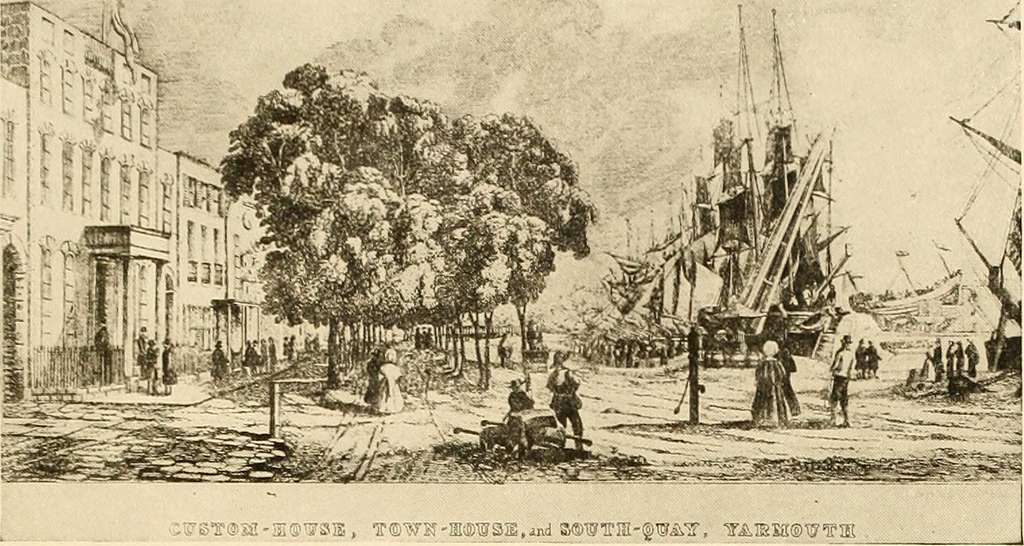
Take a stroll down the historic South Quay. It has been said that there were so many boats leaving Yarmouth in 1913 that you could cross the river from by leaping from one boat to another. The magnificent buildings along the river are a reminder of this port’s history. The Old Merchant’s House and the Great Yarmouth Row Houses are located just off South Quay.
The Rows were a network of winding alleyways where port workers lived.
(Image: The South Quay, circa 18th or 19th Century. Source: getarchive.net 2025)
The South Quay Elizabethan House has a reputation for being haunted. Some have called it a “hotbed of paranormal activity”. The Elizabethan House Museum is a historic 16th-century house, which showcases Elizabethan domestic life. It was constructed by affluent trader Benjamin Cowper in 1596, and when Cowper’s fortune grew, it was expanded in the early 1600s. In 1635, the mansion was bought by the town bailiff and local businessman, John Carter. Shortly before the Civil War, it developed as a meeting spot for Parliamentarians, most famously hosting a meeting in 1648 to discuss the future of King Charles I. John Carter’s sons, John and Nathaniel, inherited the house after his death in 1667 and remained there until their deaths in the early 1700s.
The house is said to have a history of paranormal events, including sightings of a ghostly woman, and reports of disembodied voices and unexplained noises The Elizabethan House is a popular location for ghost hunts and paranormal investigations due to its reputation as a haunted location.
As we continue west along the South Quay and head a little deeper through the side streets, we now encounter the Time and Tide Museum, located at 5 South Quay.
The Time and Tide Museum is housed in one of the best-preserved Victorian herring curing facilities in the United Kingdom.
The Tower Fish Curing Works, which was first constructed in the mid 1800s and expanded in 1880, is now home to the Time and Tide Museum. The works finally closed their doors in 1988 and The Tower Fish Curing Works was acquired in 1998 with the goal of turning it into a museum. This museum now showcases the history of Great Yarmouth, its herring business and social history.
At this museum you can discover Great Yarmouth’s varied history, its rich maritime and fishing heritage and some of the fascinating characters who made their living from the sea. You can even wander through a reconstructed Victorian ‘Row’ and see inside a fisherman’s home. You can soak in the atmosphere of the 1950s quayside, and hear exciting tales of shipwrecks and gripping rescues. The museum also contains some items of Fortean interest, such as the walking cane of Robert Hales, the East Somerton Giant.
Finally, we retrace our steps by walking north along South Quay, turning right onto St Nicholas Road and then heading back to the church.
And so, our walk comes full circle, to St Nicholas’ Church. In just a short wander through Great Yarmouth’s streets, we’ve uncovered tales of pirates and body snatchers, witches and mystics, circus ghosts and cannibal victims. This is a town where history and folklore blur, where the past is never quite at rest. Next time you stroll along these cobbles or pause by the quay, perhaps you’ll sense it too: the unseen layers of Great Yarmouth’s darker side.
(Image: The Spook Express, Joyland. Source: E.Holohan 2023)
Time and Tide – Norfolk Museums Service. (2024). Time and Tide – Time and Tide – Norfolk Museums Service. [online] Available at: https://www.timeandtide.norfolk.gov.uk/.
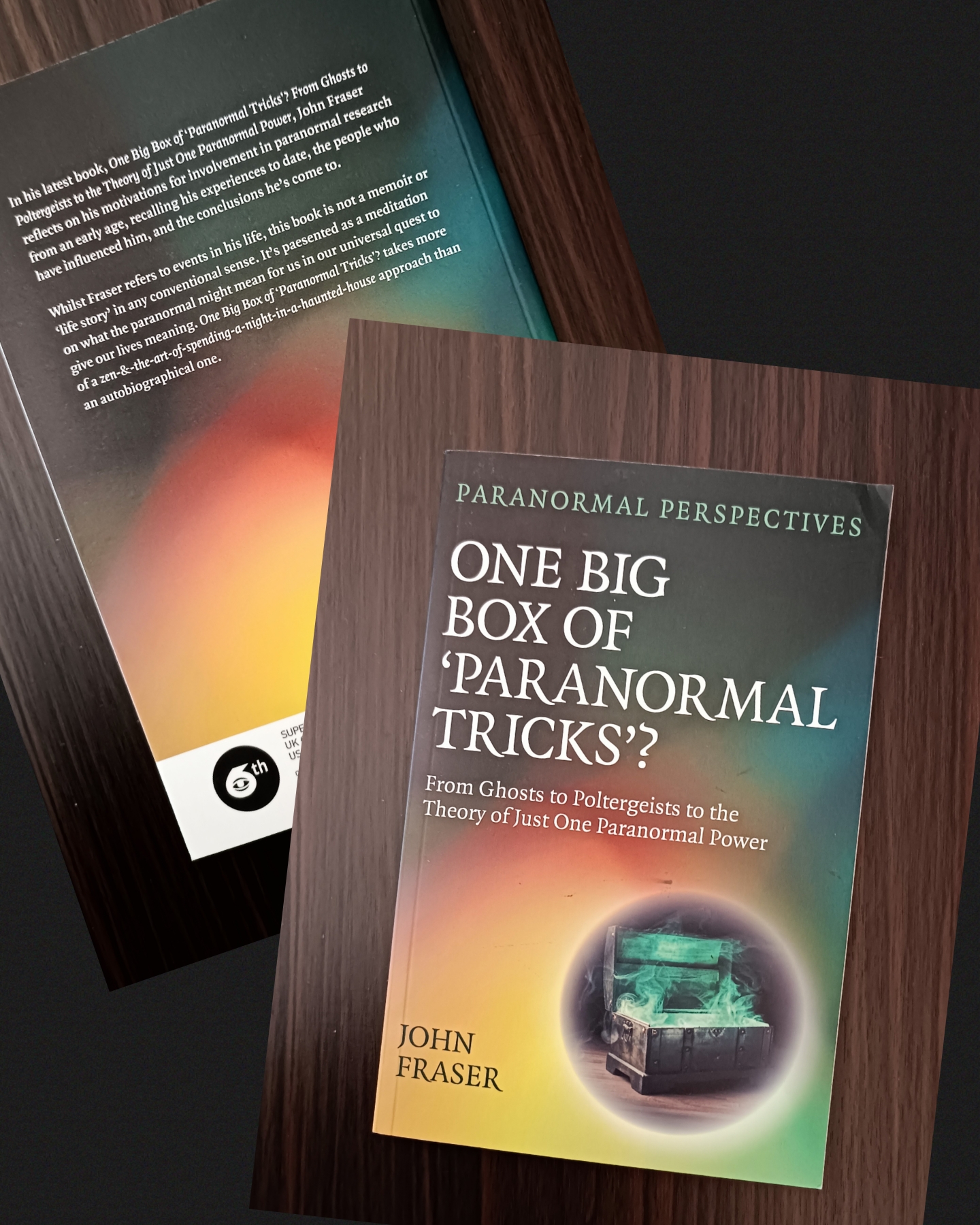
Have you ever wondered if ghosts, poltergeists, and all things that go bump in the night are connected by a single unseen force? John Fraser’s book, “One Big Box of ‘Paranormal Tricks’? From Ghosts to Poltergeists to the Theory of Just One Paranormal Power” dives headfirst into this idea, taking readers on a journey through the unexplained with a perfect blend of curiosity and critical thinking. Whether you’re a seasoned paranormal enthusiast or just stepping into the eerie world of the unknown, this book has something for everyone.
John Fraser is a Council member of the Society for Psychical Research and former Vice Chair for Investigations at the Ghost Club, the two oldest paranormal research groups in the UK. His studies have covered hypnotic regressions, vampire folklore, and conventional paranormal research.
Active in the field since the 1980s, John took part in long-running hypnotic regression experiments and later conducted research into supernatural events at Sandwood Bay. Since 2015, he has been investigating witness testimony related to paranormal activity at The Cage in St Osyth. He has also contributed to media discussions on the paranormal.
John Fraser’s book is part of the ‘Paranormal Perspectives’ series, which seeks to investigate what the paranormal means to a selection of writers from various backgrounds. Fraser explores paranormal phenomena under a unified theory, the theory of ‘one paranormal power’. He does this while detailing his personal journey into the paranormal, from his early sparks of interest as a youngster to his time as a seasoned researcher and Society for Psychical Research Council member. This book has appeal to paranormal believers and sceptics alike, as it is an engaging investigation that offers readers a unique blend of philosophical investigation and memoir.
A Journey Through the Unexplained
Fraser begins by explaining how it all began for him. At university, he studied philosophy and economics. He resigned from his position as an internal auditor and organised a road trip that included stops at several haunted places. He then discusses the important paranormal figures who have impacted him, like Guy Lyon Playfair and Harry Price.
Fraser then explores the nature of paranormal phenomena in chapter three, looking at hypnotic regression, ghosts, poltergeists, and other unexplained events, such as the encounter in Rendlesham Forest. Fraser concludes by discussing his theory of the “One Paranormal Power”, which proposes that there is a single underlying force that underlies all paranormal activity.
What Makes This Book Stand Out?
Fraser has a gift for balancing scepticism with an open mind, something that’s not always easy in the paranormal field. He doesn’t just present eerie encounters and theories; he challenges them, inviting readers to explore every possibility. Are poltergeists separate from ghosts, or could they be different manifestations of the same mysterious force? If there’s just one underlying paranormal power at work, what could it be? These are the kinds of questions Fraser poses, leaving you pondering long after you’ve turned the final page.
His writing style is conversational and immersive, making even the most complex theories easy to digest. Fraser’s account is well-written, thoroughly researched, and adopts an engaging and thought-provoking approach, employing great storytelling to make sure the book is not just informative but also entertaining and easy to read. Every chapter skillfully blends reflective analysis of paranormal phenomena along with personal tales.
One of the most interesting aspects of the book for me is Fraser’s recounting of his initial plunge into the paranormal field, in which he gives vivid accounts of his early experiences. Here, he describes the events and encounters that sparked his interest in the unexplained. These explanations are complemented by his comments on mentors and role models who had a significant impact on his approach and knowledge.
Notably, Fraser honours well-known paranormal individuals such as Harry Price and Colin Wilson, whose pioneering work served as the foundation for his own investigations. I relished the narrative of his interactions with Peter Underwood, which demonstrated their genuine connection and friendship. This examination of his own influences gives readers an understanding of the intellectual heritage that informs his viewpoints.
One of the most intriguing aspects of Fraser’s book is how it subtly engages with the long-standing debate between psychological explanations and supernatural interpretations of paranormal phenomena. While he presents compelling cases for the existence of ghosts and poltergeists, he also acknowledges alternative explanations, such as environmental factors (electromagnetic fields, infrasound, or other environmental conditions), cognitive and neurological perspectives and parapsychological explanations (e.g., psychokinesis—particularly in relation to poltergeist activity).
(Author John Fraser. Image Source: J.Fraser)
This balanced approach makes the book appealing to both believers and sceptics. However, a deeper engagement with scientific and psychological studies on anomalous experiences would have added even more weight to his arguments.
Where the Book Could Go Further
While the book is packed with intriguing insights, some of the scientific explanations could go deeper. If you’re the type who loves diving into parapsychological research, you might find yourself wanting a bit more hard data and experimental analysis. Of course, there are many other books out there already that cover such aspects in more detail that the reader can seek out for further research if required.
If you’re new to the paranormal field, this book is an excellent gateway. Fraser keeps the tone inviting and avoids overwhelming jargon, making it easy to follow even if you’ve never read a book on the subject before. For the seasoned enthusiasts, even if you’ve been delving into the paranormal for years, you’ll appreciate Fraser’s fresh take on long-standing debates. While some sections may feel like familiar ground, the way he ties different phenomena together offers new food for thought.
Final Verdict: A Must-Read for Paranormal Enthusiasts?
Fraser’s Paranormal Perspectives isn’t just a book—it’s an invitation to think, question, and explore. It challenges readers to reconsider what they believe, weigh the evidence, and entertain new possibilities. Whether you’re in it for the eerie case studies, the deep theoretical discussions, or just the thrill of the unknown, this book delivers. So, what do you think—could all paranormal phenomena really be part of one great mystery? Or are we only scratching the surface of something even stranger?
DATE: December 2024 SUBJECT: The Uncanny Convergence
Summary of Findings
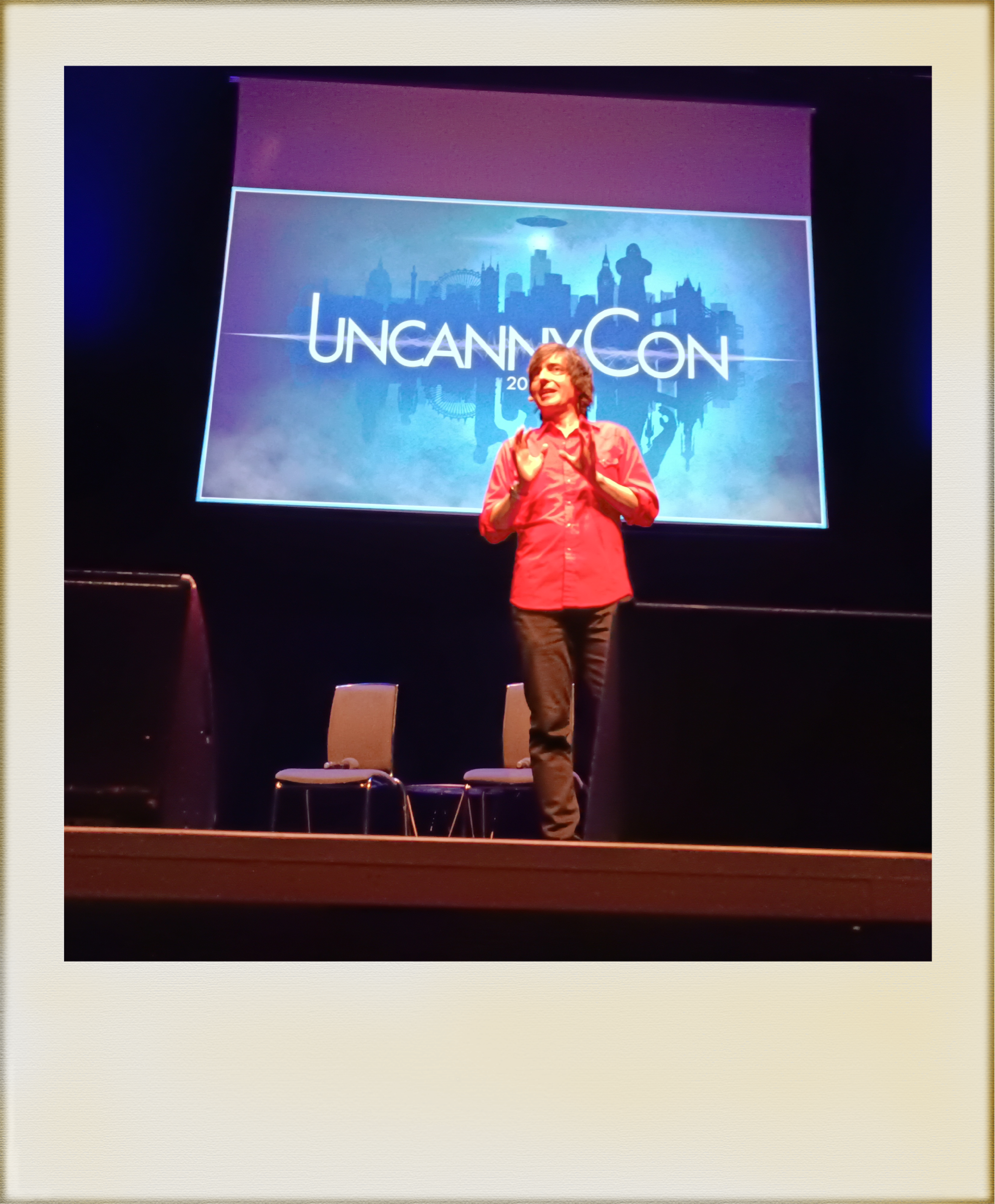
Experts, enthusiasts, and witnesses of the unexplained converged at the Southbank Centre this past weekend for UncannyCon 2024, an extraordinary gathering dedicated to uncovering the truths behind our world’s mysteries. What unfolded was a mix of chilling revelations, healthy debates, and eerie encounters that left attendees both spellbound and intrigued. Below, you will find a dossier summarising the key phenomena from this event. Proceed with caution: the uncanny lingers within.
Case Note #1: Meet the Witnesses – The Haunted Speak
Subjects: Heather (Oxford Exorcism), Vee (Ghost Horses of Averham), Amanda (Elton’s Phone), Helen (Meadow Cottage).
Details: Witnesses to some of Uncanny’s most infamous cases convened to share their harrowing encounters. The session began with an unsettling energy, as each witness recounted experiences ranging from spectral riders to haunted phones and poltergeist-ridden cottages. The air grew heavier as Heather’s recounting of The Oxford Exorcism induced chills throughout many in the audience. The session raised a terrifying question: how does one live when haunted by the inexplicable?
Case Note #2: Borley Rectory – Hoax or Haunting?
Subjects: Sean O’Connor, Jon Culshaw, Ciaran O’Keeffe, Deborah Hyde.
Analysis: Dubbed “Britain’s Most Haunted House,” Borley Rectory’s lore was dissected in forensic detail. Paranormal sceptics Ciaran O’Keeffe and Deborah Hyde faced off with Sean O’Connor, author of The Haunting of Borley Rectory. Comedian Jon Culshaw deftly moderated the session, keeping the debate both lively and gripping. Was the rectory a hotspot for spirits, or merely the stage for an eerie hoax? Verdict: inconclusive.
Case Note #3: Ask the Experts – A Spirited Discussion
Subjects: Evelyn Hollow, Chris French, Richard Freeman, Deborah Hyde, Ciaran O’Keeffe.
Highlights: This fiery panel saw believers and sceptics clash in a battle of logic and belief. From poltergeists to cryptids, no stone was left unturned. Folklorist Deborah Hyde’s sceptical takes clashed delightfully with cryptozoologist Richard Freeman’s zoological expertise and field knowledge of the Hairy Man. Chris French’s sharp insights added gravitas to the debate, particularly when UFOs entered the conversation. The crowd erupted when tensions boiled on the topic of Bigfoot—a rare moment when both believers and sceptics seemed to partially agree: something is out there.
Case Note #4: The Uncannyversity Challenge Quiz – A Battle of Wits
Teams: Team Believer (Captained by Evelyn Hollow) vs. Team Sceptic (Captained by Ciaran O’Keeffe).
Outcome: In this fiercely competitive showdown, paranormal prowess was tested as teams answered questions on the podcast’s most enigmatic cases. The questions were expertly written by a member of the Uncanny Community, and kept participates on their toes. Team Believer triumphed; their victory cemented by an unshakable knowledge of the paranormal. The atmosphere was electric, with cheers, groans, and a sense of camaraderie pervading the room. Evidence suggests this was one of the most enjoyable highlights of the weekend.
Case Note #5: The Return to Luibeilt
Subjects: Danny Robins, Phil (Don’t Sleep in This House, The Curse of Luibeilt).
Evidence Presented: A gripping video chronicled Danny and Phil’s perilous return to the desolate ruins of Luibeilt, site of The Curse of Luibeilt. The footage revealed chilling new discoveries at this forboding spot. Danny and Phil’s firsthand account of the expedition left the audience glued to their seats. Questions linger: has Luibeilt’s curse remained?
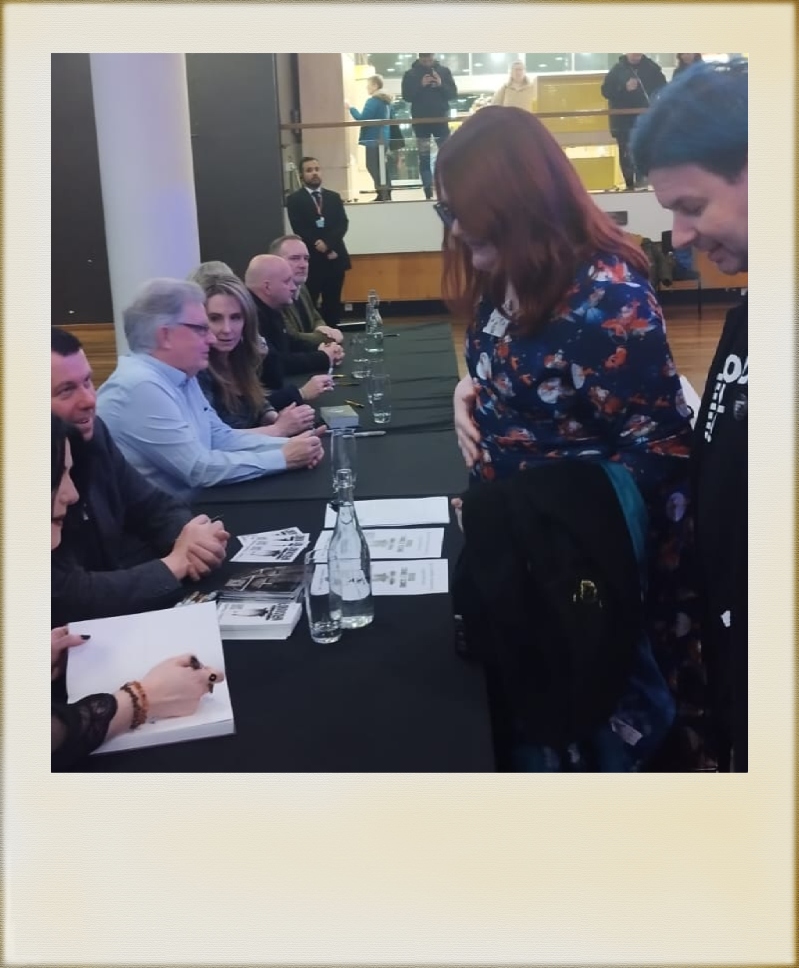
Case Note #6: Signing Sessions – Close Encounters
Observations: Fans flocked to meet their favourite witnesses and experts during signing sessions. Unexpected phenomena: numerous attendees reported unprompted chills and goosebumps when recounting their own paranormal experiences to the panel. Was this coincidence, or something more?
Case Note #7: The Christmas Special Live Recording
Subjects: Reece Shearsmith, Evelyn Hollow.
Notable Occurrence: Anticipation reached fever pitch during this live recording of the upcoming Uncanny Christmas Special. Attendees became part of the story as they witnessed eerie events unfold in real time. Notably, questions remain regarding an audience member’s experience of the mysterious activation of an Alexa by a terrifying voice. This sent shivers through the room. Coincidence? The audience left with more questions than answers.
Case Note #8: A Community United
Observation: Beyond the scheduled programming, the true phenomenon of UncannyCon 2024 was the palpable sense of connection among attendees. Enthusiasts swapped stories, debated theories, and forged new alliances in their shared pursuit of the unexplained. This collective energy resonated throughout the venue, creating a unique atmosphere that attendees described as both invigorating and enriching.
Special Eyewitness Report
Filed by: The Goblin.
Observations: The Uncanny phenomenon extends well beyond the day’s events and into the vibrant community that has coalesced around this core. This was an opportunity to form new friendships, and to cement existing ones. The carousing extends late into the night, after the events of the day are now mere memories, lubricated perhaps with a drop too much of potent gooseberry wine. Whilst we are all maybe a touch worse for wear in the morning, we wouldn’t swap a treasured moment of this time spent in excellent company for the world. *hic*
Conclusion:Why UncannyCon 2024 Will Haunt Us
UncannyCon 2024 wasn’t merely an event; it was an initiation into a deeper realm of curiosity and wonder. By blending chilling tales, rigorous debate, and communal spirit, it captured the essence of what makes the Uncanny phenomenon so captivating. For believers, sceptics, and the simply curious, this convention offered an experience that will linger in their minds like a half-remembered dream—or perhaps, a whisper from beyond.
Until we gather again: stay curious, stay sceptical, and, above all, stay Uncanny.
(Neopagans in Ireland celebrating Samhain. Image Credit: Unknown author, CC BY-SA 4.0, via Wikimedia Commons)
Tucked away in the beautiful scenic landscape of County Roscommon, Ireland, lies a mysterious and legendary cave known as “Oweynagat” (pronounced “Oen-na-gat”), also known as ‘Cave of the Cats’. This ancient cave is believed to be the mythical entrance to the Otherworld, Ireland’s Gate to Hell, a supernatural realm in Irish mythology. Oweynagat is one of the most important places linked to the ancient Celtic festival of “Samhain”, the forerunner to the modern Halloween. Steeped in lore and shrouded in mystery, Oweynagat is a powerful symbol of Ireland’s ancient spiritual heritage and the very origins of Halloween.
The Mythology of Oweynagat
Oweynagat is part of Rathcroghan, a major archaeological complex that served as a royal site for the ancient Irish kingdom of Connacht. This area comprises over 250 archaeological features; it is an area surrounded by many ancient sites, monuments, holy wells and standing stones. Rathcroghan is deeply linked to Queen Medb, a famous warrior queen in Irish mythology, and features heavily in stories of the “Ulster Cycle”, one of the four great story cycles of Irish mythology.
(An ogham stone which forms the lintel of Oweynagat Cave. Image Credit: Cathalpeelo, CC BY-SA 4.0, via Wikimed)
Oweynagat is often described in these tales as the “gateway to the Otherworld.” Irish mythology describes the cave as a place where powerful forces of the supernatural were said to reside. During Samhain, it was believed that the veil between the human world and the Otherworld was at its thinnest, allowing spirits, fairies, and other entities to pass through more easily. The cave itself was seen as a physical gateway through which supernatural beings could enter the mortal realm, making it a focal point for rituals and lore featuring Samhain.
One of the most famous legends associated with Oweynagat in relation to Samhain is known as ‘The Adventures of Nera”. One Samhain night, Ailill and Medb, ancient rulers of Rathcroghan, dared anyone to tie a rope around the foot of a captive hanging on a nearby gallows. They promised a reward to anyone who succeeded. Nera, a brave warrior, accepted this challenge. Decked out in his armour, he approached the captive and managed to tie the rope, only for the captive to come to life, asking Nera for a drink as a last request.
Nera agreed and carried the captive on his back to find water. As they passed three houses, each were marked by strange omens such as a lake of fire surrounding one, the captive finally drank from a slop bucket in one of the homes. In a final act of revenge, he spat his last sip on the faces of the house’s occupants, who died instantly. Returning the captive to his execution site, Nera then witnessed a horrifying vision of his home in flames and his people slain by an otherworldly army. When he followed this mysterious army into the underworld of Oweynagat, he found himself before a faery king.
(Underworld Army. Image Credit: Bing AI)
The faery king ordered Nera to bring wood daily to a house within the faery mound, where Nera met and married a faery woman. She shared many of the secrets of the faery world, warning him that his vision of his people’s demise could come true if he didn’t alert them. When Nera finally returned, only moments had passed in the human world despite his long stay in the faery mound.
Ailill and Medb, taking Nera’s warning seriously, prepared to attack the faery mound the next Samhain. Nera returned to his faery wife, who revealed she was pregnant with his child and encouraged him to escape with his family from the faery realm before the attack. He agreed and watched as the men of Connacht destroyed the faery mound, retrieving the powerful Crown of Briun, one of Ireland’s three great treasures.
Nera, however, remained forever tied to the faery world, never to be seen again in the mortal realm. The tale ends with his fate sealed, waiting in the faery mound until the end of time. The cave has since been claimed to be the birthplace of Halloween due to this story being set at Samhain.
Another legend relating to the cave at Oweynagat is that it is the home of the Morrígan, a Celtic war goddess who, according to tradition, emerges from the cave each Samhain to bring chaos to the land. Ailill and Medb’s cats, who were supposed to roam out of Oweynagat on Samhain, are among the other mythological animals connected to the cave. They represent the chaos and the forces of nature that were thought to be let loose on this night.
Samhain: The Roots of Halloween
Samhain celebrations have a long history that predates written records. Samhain heralded the start of the dark of winter and the conclusion of the harvest season for the Celts. It was thought to be observed between October 31st and November 1st, sunset to sunset. Due to it being a transitional period, there was thought to be little separation between this world and the Otherworld. The veil thinned, enabling communication between living people and supernatural entities.
According to legend, Oweynagat cave is thought to become a portal to the otherworld at this time of year, where faeries and mortals may enter each other’s respective worlds. According to folklorist and professor, Dorothy Bray, “Samhain was a time charged with great supernatural energy and ordinary natural laws were suspended. The idea of the otherworld developed into the idea of the afterlife, so Samhain became a time when the worlds of life and death meet, when the souls of the dead return and can be seen.”
According to local archaeologist and historian, Daniel Curley, “Monsters and manifestations would emerge, led by the goddess Morríghan, to create a world ready for winter, including birds with foul breath that would strip leaves from trees. Locals would stay indoors in fear of being dragged into the other world when the ghouls had finished ravaging the land. If you had to go outside you wore a costume and mask to look hideous. That way you would be left alone and not dragged into the otherworld.”
Feasting, bonfires, and rituals honouring the ancestors were all part of Samhain. People made food and drink offerings outside their homes to calm any wandering spirits who were thought to be free to roam on this night. People sometimes wore frightening masks or costumes to either ward off or blend in with any supernatural creatures that had passed over into our world, and bonfires were lit to guide the way to lost spirits.
From Samhain to Halloween
Many ancient traditions were adapted and reinterpreted to conform to Christianity as it expanded over Ireland. On November 1st, the Church created All Saints’ Day, which is a day to commemorate saints and martyrs. The night before was called All Hallows’ Eve, which later transformed to “Halloween.”
Samhain rituals gave rise to modern Halloween traditions including trick-or-treating, pumpkin carving, and the wearing of spooky costumes. Wearing costumes to ward off any lost spirits gave rise to the Halloween custom of dressing up as monsters, ghosts, or other terrifying creatures. The modern custom of “trick-or-treating,” in which youngsters knock on doors looking for sweet treats, evolved from the habit of leaving out food offerings.
(Jack-O-Latern. Image Credit: Toby Ord, CC BY-SA 2.5, via Wikimedia Commons)
The jack-o’-lantern, another popular Halloween custom, has Irish origins too. In order to ward off evil spirits, people in Ireland used to carve swedes and place candles inside to make glowing lanterns. This custom was carried to America by Irish immigrants in the 19th century, and it eventually developed into the pumpkin lanterns we are accustomed to today
Oweynagat Cave Today
A trip to Oweynagat Cave provides a window into the past for those who are interested in learning more about the Irish origins of Halloween. Although the cave appears to be damp, murky and unassuming, it is simple to see why ancient humans sensed a power in its presence. Visitors may feel the weight of centuries’ worth of history, rituals and legend hanging in the air when they first enter Oweynagat cave.
Today, Halloween is mainly about entertaining costumes, sweets and light-hearted frights. However, Halloween’s origins lie much deeper; it has to do with ancestors, the cycles of nature, and myths surrounding the invisible realm. Oweynagat Cave is a mysterious reminder of the mythical beginnings of this well-known festival, as well as Ireland’s contributions to a festival now observed world over.
It is easy to imagine the ghosts of Rathcroghan’s ancient lands and possibly the cave’s mythical cats emerging from the depths of Oweynagat cave as Samhain draws near, serving as a powerful reminder that the real spirit of Halloween continues to reverberate throughout Ireland’s ancient landscapes.
















 Ghost Catcher Isles


Leave a comment