Welcome to Ghost Catcher Isles, chronicling the weird, wonderful and eerie of the isles of Great Britain and the Republic of Ireland. Come with me on my adventures into the strange and paranormal
(Image: Before the Tide Takes Them. Source: Places Remember, N.Higgins, 2026)
I recently had the chance to take a small part in a new audio drama podcast called Places Remember. The first episode, “Before the Tide Takes Them”, takes us to Happisburgh on the Norfolk coast and into the rather dark story of Jonathan Balls, better known as the Happisburgh Poisoner.
Happisburgh has always had a special place in my heart. My mum Sue was born there and spent her early years living in a little cottage in the village with my grandma Jean and my Irish grandad Terry. My great grandma, Nanny Winnie, also lived in Happisburgh and once worked as a barmaid at the Hill House pub. I grew up in a nearby village and have lots of childhood memories of visiting relatives in Happisburgh and playing at Nanny Winnie’s house. She now rests with her second husband Bob in St Mary’s churchyard.
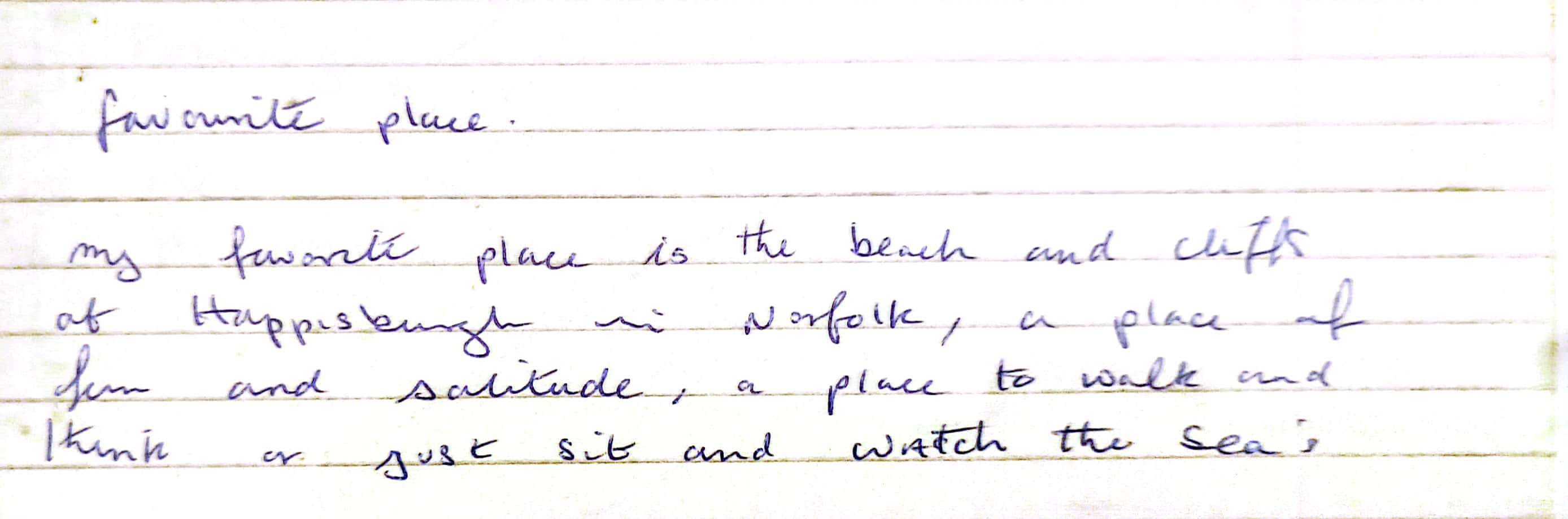
When I think of Happisburgh I think most of all of the beach. It was one of my mum’s favourite places, her “happy place”, and I have many memories of walking there with her. Then there is the wonderful candy-cane red and white lighthouse, standing like a lone sentinel over the village and coastline.
(Image: Handwritten extract from Susan M. Gayfer’s personal notebooks. Source: E.Holohan personal collection 2026)
Sadly it is also a coastline that is gradually disappearing. Coastal erosion has long been part of Happisburgh’s story, which makes the title “Before the Tide Takes Them” feel particularly appropriate. There is something quite poignant about preserving the stories of a place where the landscape itself is being slowly and steadily lost.
My mum loved the paranormal, Forteana, true crime and dark history, and she was fascinated by Happisburgh’s many strange stories. Jonathan Balls was a particular favourite of hers.
The story takes us back to the 1840s, when a disturbing series of deaths among Balls’ family and others in the village eventually raised suspicions of poisoning. Arsenic was discovered, questions began to be asked, and the story became considerably darker.
And then there is Jonathan Balls’ burial. Why, according to local tradition, did he want to be buried with a Bible, a plum cake, a fire iron, coal tongs and handkerchiefs?
I’m not going to tell you. You’ll have to listen!
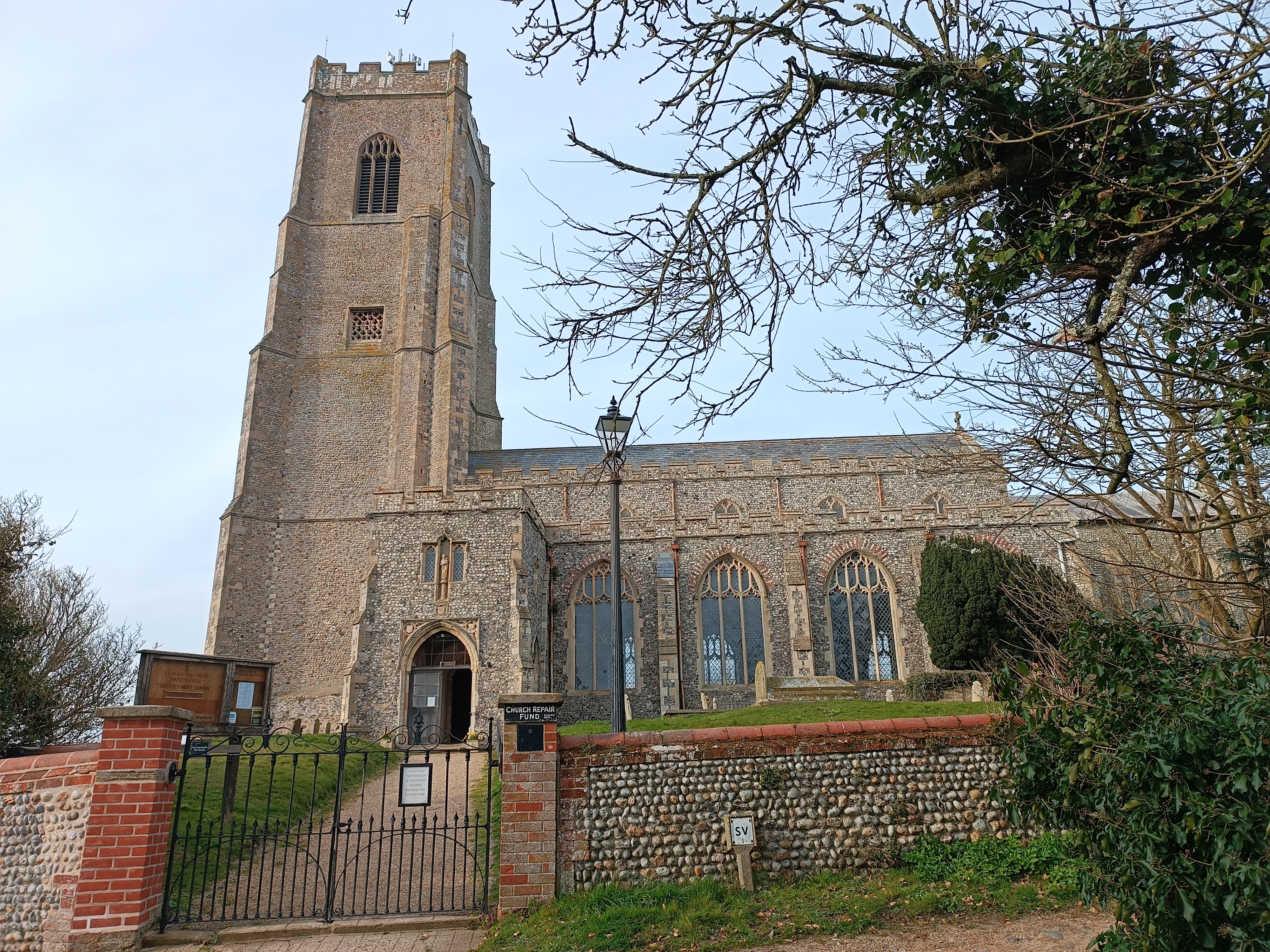
(Image: St Mary’s, Happisburgh. Source: E.Holohan 2025)
My mum always wanted to know more about the case and, for reasons probably best described as dark tourism, was particularly keen to discover exactly where Balls was buried in Happisburgh churchyard. I think she would have been rather excited that I ended up taking part in an audio drama about him. She’d certainly have been grilling me for more information and poring over all the research on the website. And I strongly suspect she’d still be asking me where his grave was so we could go and find it.
So when Nigel told me he was thinking about a new project based around Happisburgh, I really wanted to be involved. I asked for a small role and ended up playing Maria Lambert, one of the gossiping villagers. It seems quite appropriate that my first venture into voice acting involved gossiping about suspicious happenings in a Norfolk village!
Some of the scenes were recorded online with other members of the cast, while for others I recorded my lines separately and sent them in. My husband Ed also got involved by playing Reverend Birch, so it was a first venture into voice acting for both of us. I was slightly nervous about hearing myself in the finished episode, but I was actually quite pleased with how I sounded. Even a little of my original Norfolk accent crept back in. I’m Norfolk Broads born and bred, although these days my accent is fairly neutral most of the time.
The whole cast did a great job, particularly considering that many of us hadn’t done voice acting before. The music and sound effects really bring it together, and I loved hearing the story gradually unfold. Nigel and Allison rounded it all off perfectly with their narration and deeper discussion at the end.
And this is only the beginning. Before the Tide Takes Them is the first part of a Happisburgh trilogy, combining original audio drama with discussion of the real history and research behind the story. The drama is based on historical events and contemporary newspaper reports, although characters, dialogue and some events have been imagined or adapted.
For me, being involved means a little more than simply having a small part in a podcast. Happisburgh is part of my family history and part of my childhood. It is the beach with memories of my mum, Nanny Winnie resting in the churchyard and that familiar lighthouse watching over a coastline that is slowly changing.
Being able to play even a tiny part in keeping one of its stranger stories alive feels rather special.
You can listen to “Places Remember: Before the Tide Takes Them” here:
It is also available through Spotify and Apple Podcasts.
There is also a new accompanying Places Remember website. This is still being populated, but Nigel and Allison are gradually adding historical sources, research and further information uncovered during their investigations, so it is well worth keeping an eye on as it develops:
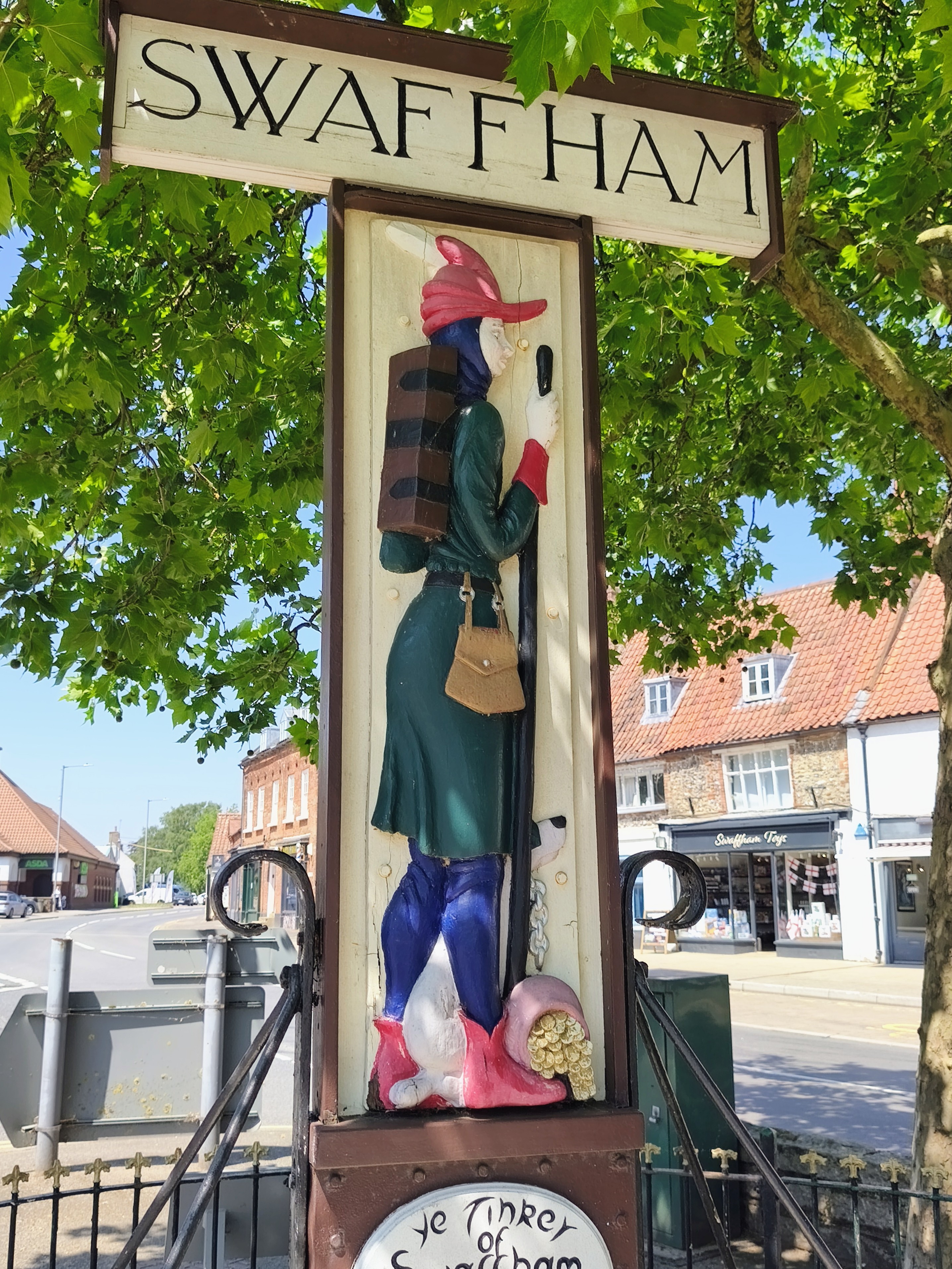
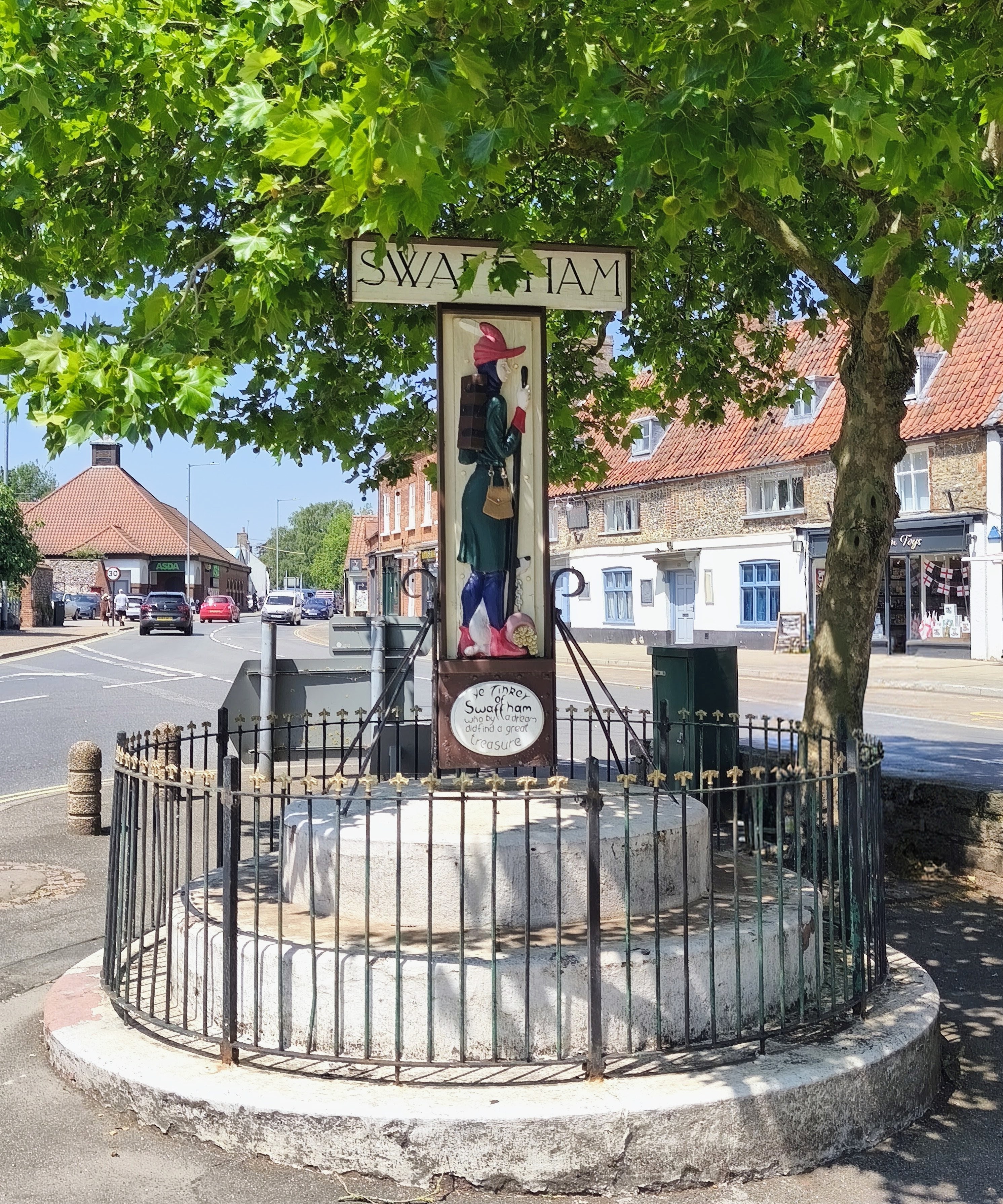
(Image: Swaffham Town Sign. Source: E.Holohan 2026)
A Story That Stayed With Me
When I was at primary school in rural Norfolk I remember hearing one of the first Norfolk folktales that ever captured my imagination: the Pedlar of Swaffham.
The story fascinated me. Over the years, I came to realise that although it felt so familiar to me, it was not nearly as well known elsewhere. Many people had heard of the famous tale of Dick Whittington and his cat, but very few people I met had ever heard of the Pedlar of Swaffham and his hound. Yet, as we shall discover, this story belongs to a much wider tradition of folklore and shares surprising similarities with legends from elsewhere.
I can still picture myself sitting cross legged on the classroom floor, listening intently as my teacher recounted the almost magical story of a poor pedlar whose life was transformed after following a dream. Then came the part that amazed me. My teacher told us that the story was based on a real person, and that the pedlar had paid for the rebuilding of the church in Swaffham. Better still, she said, you could still see him on the town sign.
To a child, that was extraordinary. How could someone who seemed to belong in a fairy tale have actually existed?
Stories like this have a way of staying with you, lodging themselves in your imagination. The Pedlar of Swaffham certainly did for me. Decades later while visiting Norfolk, I decided it was finally time to visit Swaffham itself to see whether I could still find traces of the legend and perhaps even of the man behind it.
Looking for the Pedlar
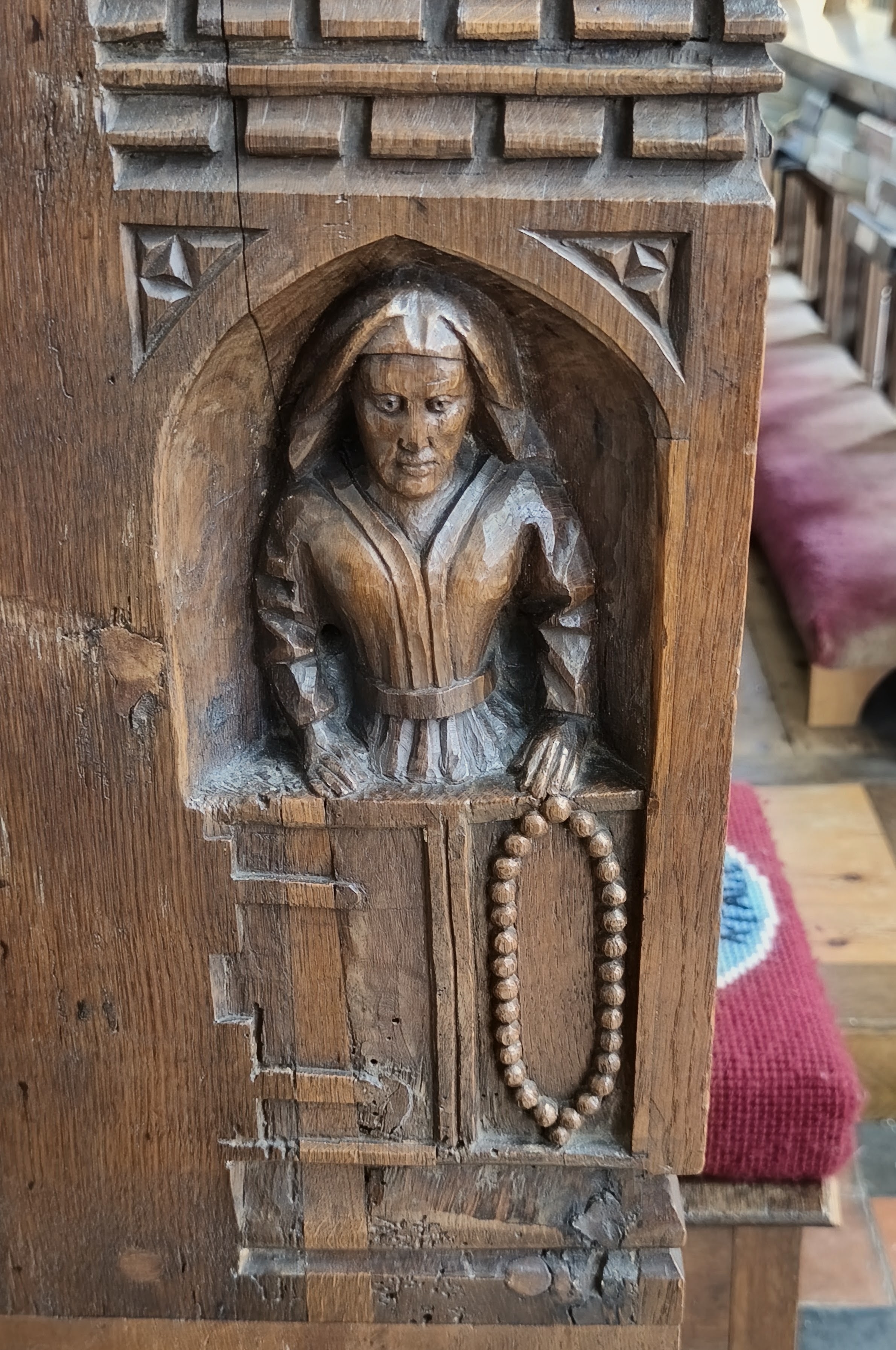
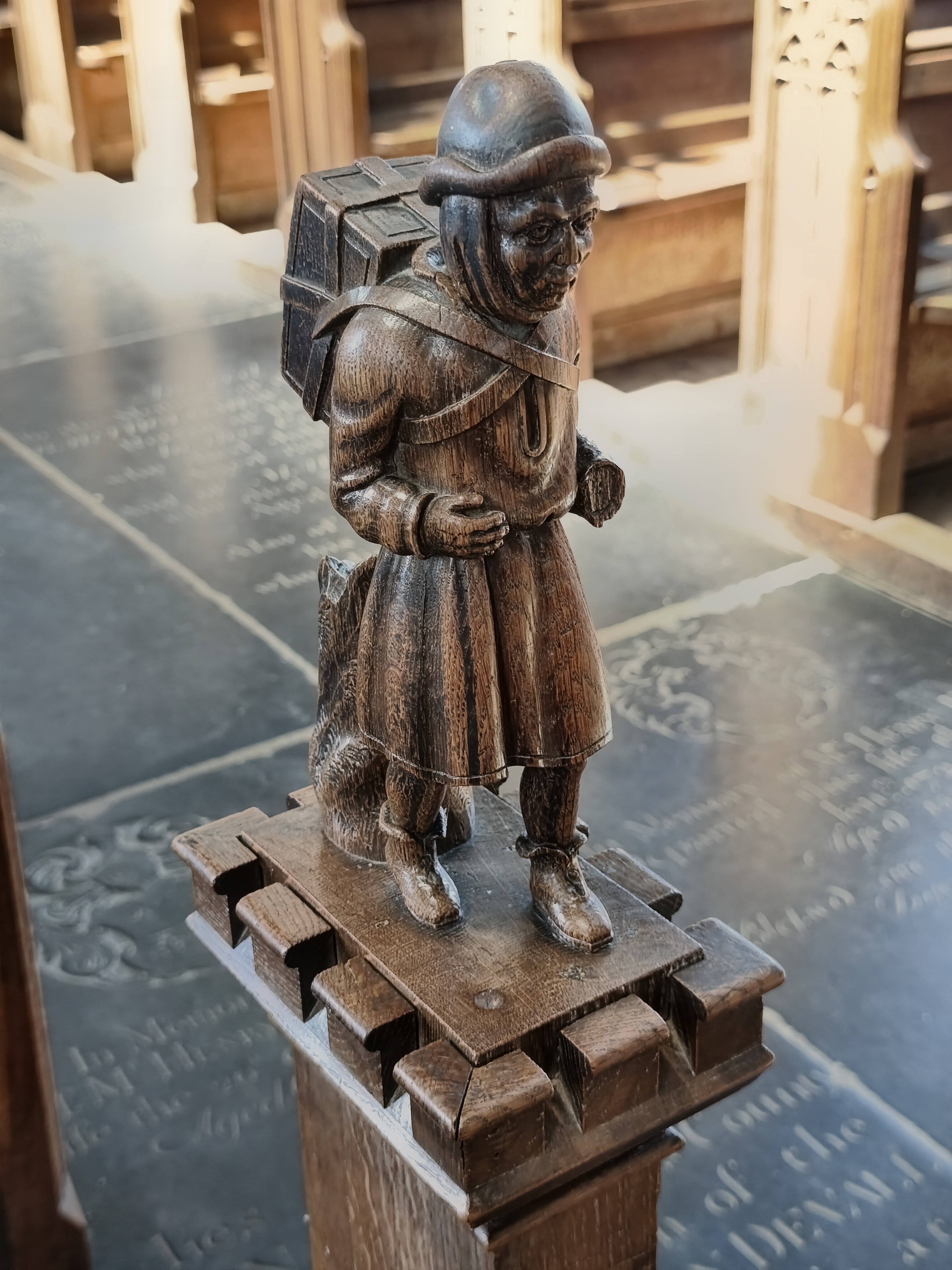
(Image: Carving believed to be John Chapman. Source: E.Holohan 2026)
While researching both the folklore and the historical origins of the Pedlar of Swaffham, I discovered that St Peter and St Paul’s Church contains carvings believed to depict the historical John Chapman, the man thought to have inspired the legend. That made the church my first destination.
Walking from the marketplace down a wide lane, the great tower of St Peter and St Paul’s gradually came into view, rising above the surrounding buildings. Stepping inside, I was immediately struck by the magnificent hammerbeam roof stretching overhead. The church was quiet, filled with the sort of peaceful atmosphere that encourages you to slow down and take everything in with reverence.
I then began my search for the famous carvings.
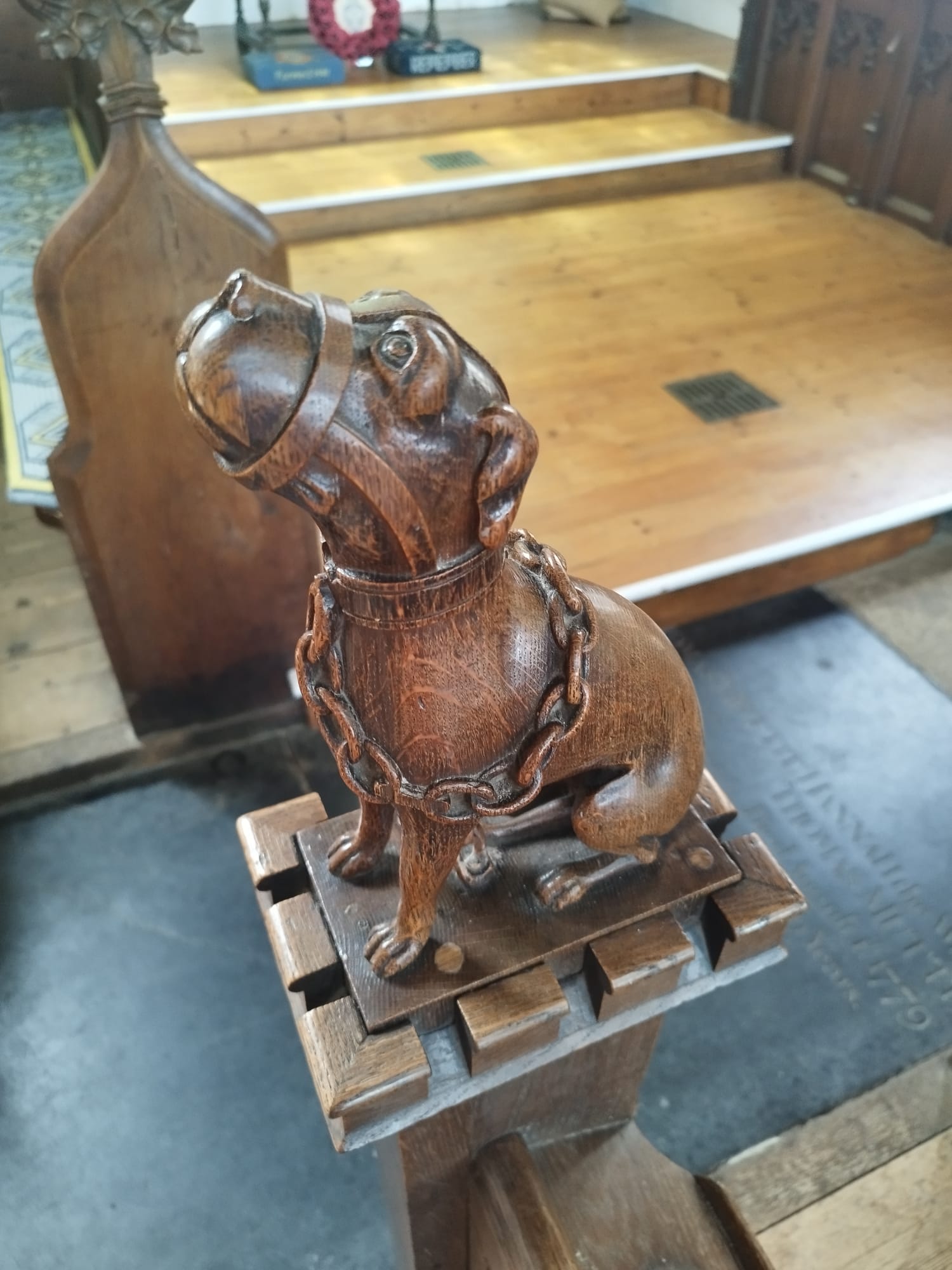
The first I found were on the bench ends. Some showed a folkloric depiction of the Pedlar of Swaffham wearing his close fitting rolled brim hat and carrying his pack. Nearby were carvings of his faithful dog. They were wonderful to see, but they were not the figures I had come looking for.
Further into the church, I finally found them. The carvings believed to represent the historical John Chapman show him peering from a window, while his wife looks out from a balcony above. It felt strangely moving to come face to face with someone who had lived in my imagination since childhood.
The Church Behind the Legend
The history of the man in the carving is closely linked to the history of the church itself.
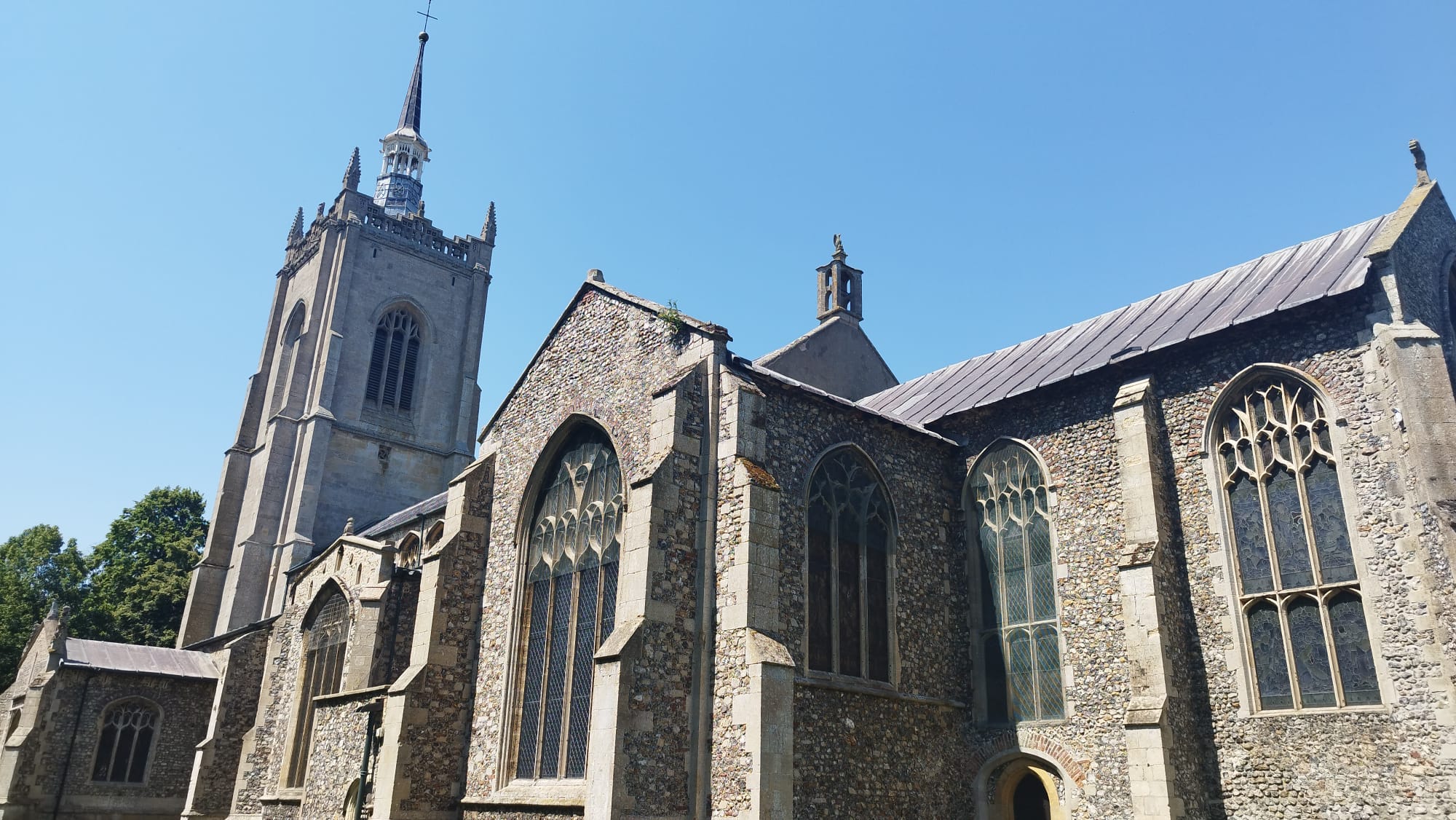
(Image: St Peter and St Paul’s Church, Swaffham. Source: E.Blackshaw 2026)
St Peter and St Paul’s Church was rebuilt during the fifteenth century, funded by a number of wealthy local benefactors. Among them was John Chapman, whose generosity helped finance the work and whose likeness is thought to survive within the church.
It is here that history and folklore begin to merge. The documented life of John Chapman became entwined with the local legend until it became difficult to separate the historical benefactor from the legendary pedlar. Together, they created one of Norfolk’s most loved folk stories.
Who was John Chapman? Why did he become known as the Pedlar of Swaffham? How did the story of one Norfolk merchant become one of England’s most enduring folktales?
Settle in and let us follow the dream that turned an ordinary pedlar into a legend.
The Pedlar’s Dream
John Chapman was a pedlar, a travelling merchant, who wandered around Norfolk in the fifteenth century, taking his goods from one market to another. On market days he would join the other traders selling everything from brooches and combs to silver mirrors, eggs, spices, mustard and freshly baked bread. With his packhorse loaded with wares, John would leave Swaffham early in the morning and spend the day selling what he could. He’d then stay overnight in simple lodgings and return home the next day.
One day he came home tired and disappointed. Business had been very poor and he had not sold a single thing, not even one copper pan.
After his meal he complained to his wife that money was becoming short and trade was getting harder. The long journey had worn him out, so he went straight upstairs to bed.
That night he had the strangest dream.
(Image: Pedlar of Swaffham bench end. Source: E.Holohan 2026)
The dream was so vivid that it felt completely real. A man appeared to him over and over again, telling him that if he travelled to London Bridge and stood there, he would hear something that would lead him to his fortune.
When he woke the dream stayed with him. He tried to put it out of his mind, but it kept returning. The next day he thought about it again. Then the day after that. The more he tried to ignore it, the more it seemed to pop into his head.
Eventually he could stand it no longer.
“I have to go to London Bridge,” he told his wife.
She thought the whole idea sounded preposterous, but she could see he had made up his mind. If travelling all that way would finally put the dream to rest, then she was not going to stop him.
So John packed a few clothes and some food for the journey, called to his faithful dog, and set off on the long road to London.
After many days of walking he finally arrived in the hustle and bustle of the great city. Before long he found London Bridge, but it was nothing like the bridge we know today. In those days it was lined with houses and shops, with people living and working all along it. It was one of the busiest places in England.
John found a place to stand and waited.
He watched everyone who passed, listening carefully to every conversation. Surely someone would say the words he had travelled all this way to hear.
One day passed. Then another. Still nothing happened.
On the third day a shopkeeper noticed him and asked why he had been standing on the bridge for so long.
John admitted that he was there because of a dream. The shopkeeper just laughed.
“My friend,” he said, “if I believed dreams, I’d be as foolish as you. Only a few nights ago I dreamed I should travel to the home of a man called John Chapman in Swaffham and dig beneath the tree behind his house. According to my dream, I’d find a great treasure there. But you don’t see me rushing off to Norfolk, do you?”
(Image: Chapman’s dog. Source: E.Holohan 2026)
The shopkeeper laughed again and went back to his business.
John stood speechless, scarcely believing his own ears. Without wasting another moment, he turned around and began the journey home.
As soon as he reached Swaffham he grabbed a spade and hurried to the apple tree behind his house. He dug as quickly as he could, hardly expecting to find anything, yet still hoping.
Then his spade struck something hard.
He uncovered a chest buried beneath the earth, filled with gold coins. He and his wife were overjoyed. But carved into the lid was an inscription in Latin that neither he nor his wife could understand. He started to worry that this might not be his fortune, but perhaps a curse inscribed. Hoping someone might recognise the words, John placed the chest in his window.
It wasn’t long before some educated young men who knew the language happened to pass by. They read the inscription and translated it.
“Under me doth lie, another much richer than I.”
John didn’t need telling twice.
He returned to the tree and dug even deeper. Soon he pulled up another chest, this one far larger than the first. Inside were coins, jewels and riches beyond anything he had ever imagined.
The pedlar’s fortune had finally been found.
According to the legend, John Chapman became one of Swaffham’s wealthiest men. Grateful for his good fortune, he helped pay for the rebuilding of St Peter and St Paul’s Church.
Whether every detail really happened is impossible to know. Over the centuries, history and folklore have become intertwined. More than five hundred years later, the pedlar remains a symbol of Swaffham and is immortalised on the town sign. Visitors can still find the carvings said to represent the pedlar and his loyal dog, and his story continues to be told in Swaffham and far beyond.
As I walked from the church, I thought my journey with the Pedlar had come to an end. In reality, it was only just beginning. While researching the Swaffham legend I had come across another story of a prophetic dream and hidden treasure, but this time from a place with a very personal connection to my own life.
It made me wonder whether the Pedlar of Swaffham is just one version of a much older story, one that has travelled across countries and centuries.
That is a journey I’ll be exploring in the next part of this series.
(Image: Swaffham Town Sign. Source: E.Holohan 2026)
Sources
Dixon, Geoffrey M. Folk Tales and Legends of Norfolk. Minimax Books Ltd, 1 Dec. 1998.
Westwood, Jennifer, and Jacqueline Simpson. The Lore of the Land : A Guide to England’S Legends, from Spring-Heeled Jack to the Witches of Warboys. London, Penguin Books, 2006.




Leave a Reply